Ports, Power, and the Red Sea: Why Somaliland Now Sits at the Center of Global Strategy.
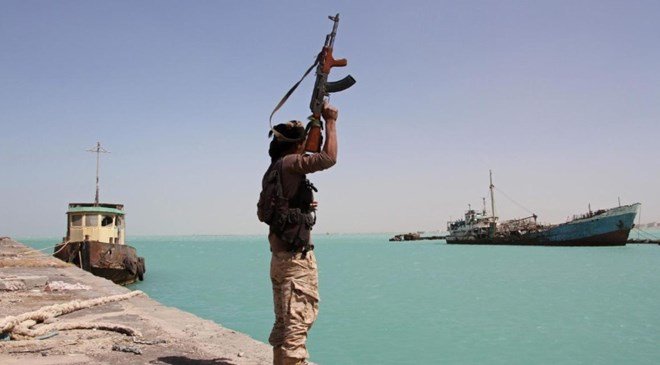
Somaliland sits beside the Bab el-Mandeb, a maritime chokepoint so critical that its geography transcends regional relevance and becomes a lever of global power. In today’s geopolitical climate, the Red Sea is rapidly evolving into a corridor of coercion, where the ability to keep transit open determines the flow of trade, energy, and strategic timelines. This is not a localized contest but a global one, and the absence of sustained Western engagement is quietly opening space for revisionist powers to shape the rules.
China, Russia, and Turkey are steadily expanding their footprint across the Horn of Africa, converting presence into basing options and diplomatic gravity. Their method is not built on democratic persuasion but on structural entanglement: ports that double as political leverage, security dependencies that translate into elite patronage networks, and narratives that rebrand coercion as partnership.
The challenge they pose to the West is blunt—either compete for these chokepoints or consent to being governed by them.
For too long, Western policy has treated Somaliland as a diplomatic anomaly rather than what serious strategists recognize: essential terrain. International recognition remains trapped in procedural inertia, but on the ground Somaliland operates as a functioning, secure polity. In contrast to Somalia’s ongoing struggle with terrorism, Somaliland has cultivated internal stability capable of supporting durable partnerships.
That stability carries regional consequences. It offers Ethiopia—landlocked, rapidly growing, and precariously dependent on Djibouti—a critical outlet through the Berbera corridor, reducing the vulnerability of a national economy exposed to chokepoint politics.
Here lies a rare strategic opening for the United States. Somaliland has signaled, through institutional development and a market-oriented outlook, that it is prepared to integrate into a rules-based trade and security architecture. U.S. recognition should be understood not as diplomatic charity but as strategic alignment with the entity that actually governs and secures the territory.
Prolonged ambiguity does not preserve neutrality; it rewards adversaries who entrench influence without waiting for perfect paperwork.
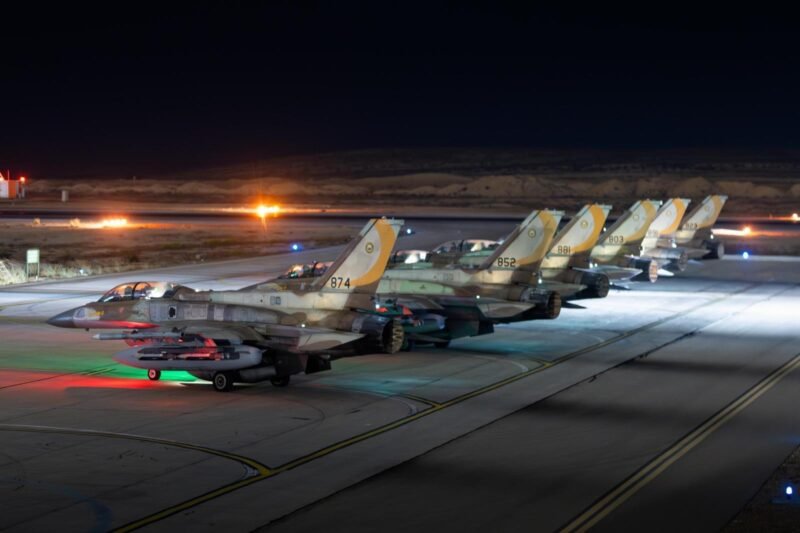
That alignment is further reinforced by an emerging convergence between Somaliland, the United Arab Emirates, and Israel. Each contributes a distinct pillar to regional stability: Somaliland supplies the geography and resource potential; the UAE brings capital and logistical sophistication; Israel offers security innovation and technological expertise in water and agriculture—capabilities essential for sustaining a desert economy. Together, they raise the operational costs for any hostile actor seeking to manipulate the Red Sea corridor.
Taiwan’s engagement adds another revealing dimension. By bypassing traditional diplomatic constraints, Taipei has helped build Somaliland’s digital and health infrastructure, demonstrating that in contested environments, influence flows most durably from those who expand tangible state capacity. It is a model of functional diplomacy adapted to a competitive era.
Ultimately, the traditional diplomatic map is being replaced by one defined by logistics and infrastructure. The United States must move beyond viewing the Horn of Africa as a zone of episodic crisis and recognize it as a primary theater of strategic competition. That means deepening maritime security cooperation, backing transparent investment frameworks, and accepting a simple reality: if the West remains absent, the Red Sea corridor will not stay neutral. It will become hostile by default.
Power today speaks through ports and corridors. And nowhere is that language more fluently articulated than in Somaliland.