Off the sun-bleached coasts of the Horn of Africa, a ghost from the past has returned to haunt global trade. Over a decade after international armadas declared Somali piracy effectively dead, deep-water hijackers are back—and this time, they are playing a much larger geopolitical game.
Since the outbreak of the US-Iran war in February 2026 and the total closure of the Strait of Hormuz, the sea lanes of the western Indian Ocean have deteriorated into a high-seas battlefield.
What appears at first glance to be a resurgence of desperate coastal crime is in reality something far more dangerous: a coordinated proxy alliance. Modern intelligence reveals that Somali pirate action groups have been weaponized by a triangular network linking Yemen’s Houthi movement and the militant group Al-Shabab.
Between January and May 2026, roughly 20 piracy incidents were recorded across the region. Highly coordinated deep-water operations demonstrate a structural evolution in tactics, techniques, and procedures.
On April 22, 2026, armed hijackers boarded the product tanker Honor 25 carrying 18,500 barrels of fuel, subsequently redirecting it to anchorages off the Somali coast. On May 2, 2026, pirates operating via ocean-going dhows acting as motherships seized the Togo-flagged tanker MT Eureka in the Gulf of Aden near Qana, moving it directly into Somali waters.
Most strikingly, on July 17, 2026, pirates executed an intercept of the tanker MT Asana 50 kilometers off the coast of Hadhramawt in southeastern Yemen—illustrating an operational reach hundreds of miles beyond traditional coastal boundaries.
By utilizing satellite communications, heavy weaponry, and advanced tracking intelligence supplied via Houthi and Iranian pipelines, pirate action groups can now execute long-range deep-water intercepts rather than relying solely on coastal skiff raids.
Five converging factors have enabled this rapid comeback after seven years of zero successful hijackings.
First, the triangular nexus between the Houthis, Al-Shabab, and pirate syndicates creates a self-sustaining cycle where the Houthis supply arms and tech to Al-Shabab, and Al-Shabab provides logistical safe havens to pirates in exchange for a cut of ransom spoils.
Second, the integration of modern satellite communication and heavier weaponry allows precision tracking of commercial targets deep in the Indian Ocean.
Third, a 70 percent decline in Bab El-Mandeb transit forces commercial shipping to reroute around the Cape of Good Hope, adding over 3,000 nautical miles and 10 to 14 days of travel time, which significantly expands the temporal window of vulnerability for slow-moving cargo.
Fourth, the Somali Federal Government faces severe internal strain from Al-Shabab, Daesh, and political instability, drastically reducing its capacity to police coastal territorial waters. Finally, global energy shortages and elevated oil prices post-Hormuz closure raise the financial return for hijacked fuel tankers.
Defeating this resurgence requires returning to the multi-pronged strategy that successfully eradicated piracy between 2011 and 2013. A purely reactive naval stance is no longer sufficient when confronting an integrated proxy network.
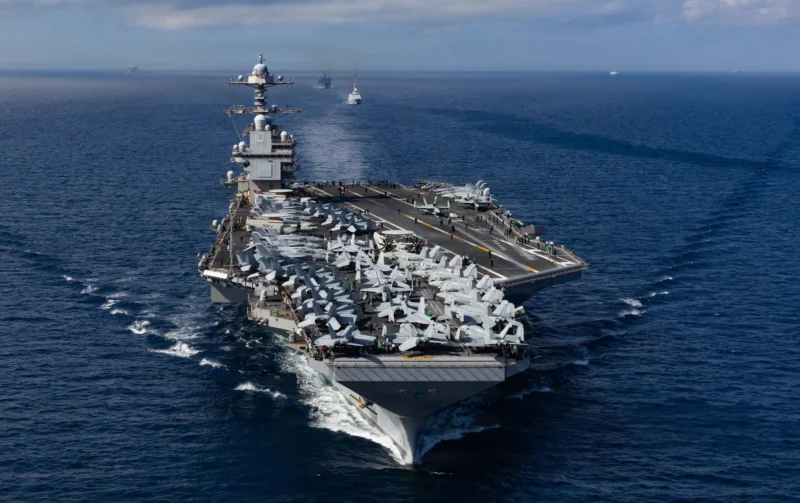
The Combined Maritime Forces task forces, alongside regional partners, must expand their operational mandate beyond Red Sea anti-missile defense to actively patrol deep-water corridors and intercept pirate motherships.
Furthermore, enforcing and tightening UN Security Council Resolution 2216 arms embargoes on the Houthis is mandatory to stop the flow of tactical gear, satellite hardware, and heavy weapons reaching Al-Shabab and pirate syndicates.
Finally, direct security and intelligence support must be channeled to counter-terrorist operations in southern and central Somalia to dismantle the land-based logistics nodes that sustain hijacked vessels.
Without decisive, coordinated international intervention on both land and sea, the convergence of regional conflict and commercial piracy risks establishing a permanent, unnavigable threat zone across the western Indian Ocean.