Saudi Arabia vs. UAE: The Quiet Gulf Rivalry Reshaping Middle East Power Politics.
The once-solid partnership between Saudi Arabia and the United Arab Emirates, long seen as the driving force behind Gulf interventionism, is now showing visible cracks. Both governments still project unity in public. Yet diplomatic exchanges, battlefield choices, and economic decisions reveal growing tension. Riyadh and Abu Dhabi are no longer aligned on several of the region’s most pressing strategic issues.
Sudan exposes the rift most clearly. When the 2023 war erupted, Saudi Arabia backed the Sudanese Armed Forces. The UAE, however, faced mounting accusations that it supplied weapons and logistical support to the Rapid Support Forces.
During his recent visit to Washington, Crown Prince Mohammed bin Salman reportedly urged President Donald Trump to pressure Abu Dhabi over its alleged role. That appeal, delivered at the highest diplomatic level, signals a sharp decline in trust.
UAE President Mohammed bin Zayed chose silence, denying involvement while working to keep the dispute from escalating.
Sudan is only one example. The two states split over Yemen when the UAE supported southern separatists, while Saudi Arabia insisted on maintaining a unified Yemeni state.
Energy policy also became a battlefield. In 2021, the UAE resisted Riyadh’s efforts to cut oil production within OPEC.
The disagreement was brief, but it exposed an expanding pattern: each country now prioritizes its national interests, even at the expense of close coordination.
These differences are structural, not accidental. Saudi Arabia’s Vision 2030 and the UAE’s 2031 plan both aim to build diversified, technology-driven economies.
Each country is competing to lead the region in artificial intelligence, logistics, and global investment.
As their ambitions grow, friction becomes harder to avoid. Both are more confident, more assertive, and more committed to independent strategic paths.
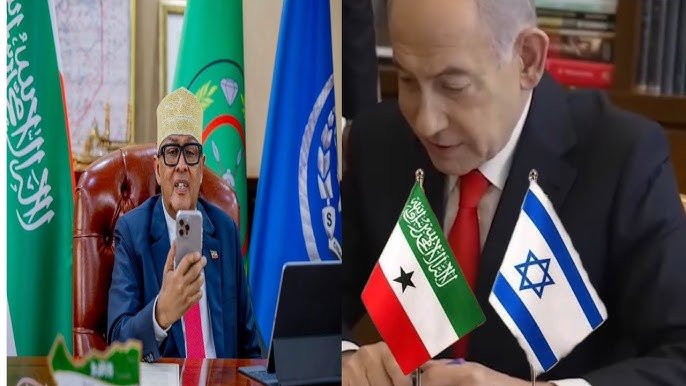
The question of Israel adds another layer of strain. The UAE normalized relations in 2020 and prefers to maintain that partnership quietly. Saudi Arabia paused its own negotiations after the October 7 attacks.
Crown Prince Mohammed bin Salman now insists he will recognize Israel only if there is meaningful progress for Palestinians—a position Israel’s leadership rejects.
This divergence places Riyadh and Abu Dhabi on different tracks at a crucial diplomatic moment.
Even with rising tensions, neither country wants a direct confrontation. The Gulf remains vulnerable to shocks from Iran, Israel, and shifting global alliances.
The United States, Turkey, and China all play expanding roles in the region, and both Riyadh and Abu Dhabi recognize that fragmentation would weaken their influence.
Their partnership still stands, built on shared history and overlapping interests. But the era of complete alignment is over. What remains is a managed rivalry—quiet, calculated, and shaped by the evolving power politics of the Middle East.