
Top stories
Pope Leo Says He Has ‘No Fear’ of Trump

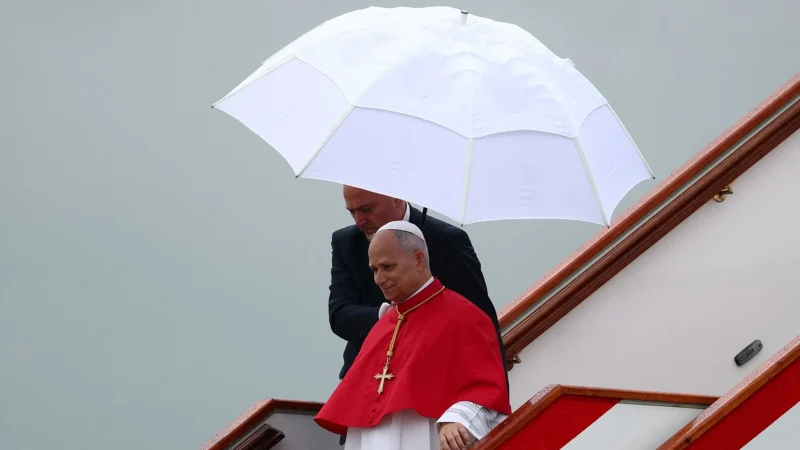
The Pope speaks peace. Trump fires back. A rare global clash unfolds.
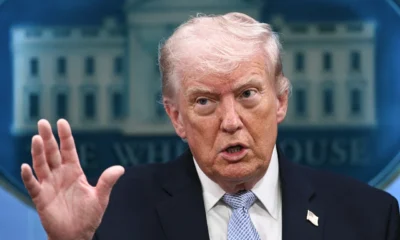
A rare and highly public clash between the Vatican and Washington has unfolded, as Pope Leo declared he has “no fear” of the Trump administration following a sharp personal attack from Donald Trump over his criticism of the Iran war.
Speaking to reporters aboard a flight to Algeria, the pontiff made clear he would not retreat from his message. His role, he said, is not political confrontation but moral clarity. Still, he underscored his determination to continue speaking out against war and what he described as the human cost of escalating conflict.
“I have no fear… of speaking out loudly,” he said, emphasizing that too many civilians are suffering and that global leaders must seek alternatives to violence.
The exchange marks an unusual escalation in rhetoric. While popes have historically commented on global conflicts, direct rebuttals to sitting U.S. presidents remain rare. The tension intensified after Trump launched a scathing social media attack, calling the Pope “weak” and “terrible for foreign policy,” and later doubling down in remarks to reporters.
At the center of the dispute is the war with Iran. Pope Leo has repeatedly condemned the conflict, describing Trump’s earlier threat to destroy Iranian civilization as “unacceptable” and urging an immediate diplomatic “off-ramp.” His position aligns with a long-standing Vatican emphasis on de-escalation, humanitarian protection, and negotiated peace.
Trump, by contrast, framed the Pope’s stance as dangerously naïve, arguing that a softer approach risks empowering adversaries pursuing nuclear capabilities. The president also suggested—without evidence—that the Pope’s election carried political implications tied to U.S. leadership, further inflaming the dispute.
The clash has drawn strong reactions globally, particularly among Catholic communities. Analysts note that such direct criticism of a pope by a major world leader is highly unusual in modern times, underscoring how deeply polarized the geopolitical moment has become.
The tension also highlights a broader divide: moral authority versus strategic power. While Washington focuses on deterrence and military leverage, the Vatican continues to frame the conflict in humanitarian and ethical terms.
For Pope Leo, the message is consistent. He has avoided engaging in a personal debate with Trump, instead returning to a broader appeal for peace.
But the confrontation itself signals something larger. As the Iran conflict reshapes global alliances and rhetoric hardens, even traditionally cautious institutions like the Vatican are stepping more directly into the geopolitical arena.
And in this moment, the language of diplomacy is being challenged not just between nations—but between fundamentally different visions of leadership.













Orbán’s Defeat Sends Shockwaves Through Trump’s Political Orbit and Global Conservative Movement.
A political titan falls in Europe—and Washington feels the tremor.
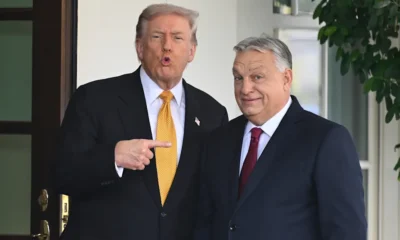
The electoral defeat of Viktor Orbán after 16 years in power is reverberating far beyond Hungary, shaking the political imagination of conservatives in the United States and raising new questions about the durability of populist strongman models in democratic systems.
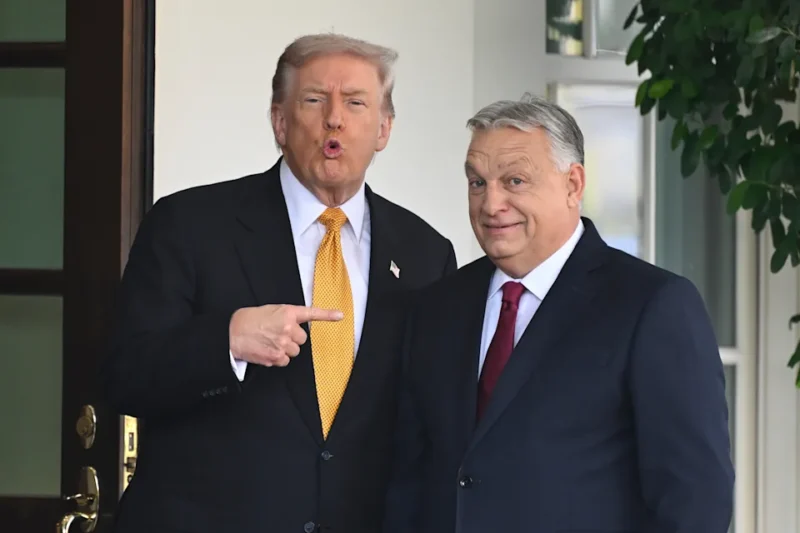
For Donald Trump and his allies, Orbán had long stood as both partner and prototype—a leader who fused nationalism, anti-immigration policies, and institutional control into a durable political system. His loss to opposition leader Péter Magyar now complicates that narrative.
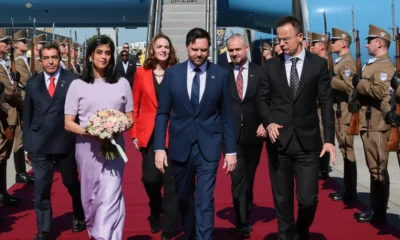
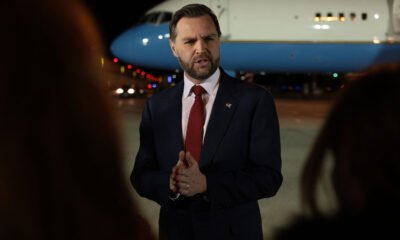
The timing is particularly striking. Trump had openly backed Orbán’s reelection and dispatched Vice President JD Vance to campaign in Budapest just days before the vote, even as the United States remained deeply engaged in the Iran conflict. The intervention, intended to reinforce ideological alignment, instead underscored the limits of political influence across borders.
Analysts say the outcome reflects a broader global pattern: rising voter fatigue with entrenched incumbents, regardless of ideology. Economic strain, inflation, and geopolitical instability—exacerbated by the Middle East war—appear to have outweighed Orbán’s long-standing grip on Hungary’s political machinery.
“Oppositions can win despite a tilted playing field,” said political scientist Steven Levitsky, noting that even systems designed to entrench power remain vulnerable when public dissatisfaction reaches a tipping point.
Orbán’s political legacy remains significant. Over more than a decade, he reshaped Hungary’s institutions—tightening control over the judiciary, media, and electoral system while promoting what he called an “illiberal democracy.” His model inspired a generation of right-wing movements globally, particularly within segments of the American conservative base.
Yet his defeat exposes a critical vulnerability: structural control cannot fully insulate leaders from economic pressures and shifting public sentiment.
The implications for Washington are immediate. Trump’s alignment with Orbán now risks becoming a political liability, particularly as critics draw parallels between the Hungarian model and concerns about democratic institutions in the United States. Some Republicans have already distanced themselves, warning against overt interference in foreign elections.
At the same time, Orbán’s loss weakens a key European ally who had often blocked European Union initiatives, including support for Ukraine. His departure could reshape EU dynamics and reduce friction between Brussels and Budapest.
Still, the broader lesson is more complex than a simple rejection of populism. Orbán conceded defeat quickly, reinforcing the resilience of electoral systems even under strain. For both supporters and critics, the message is clear: political dominance, no matter how entrenched, remains contingent.
For Trump and his movement, the Hungarian result offers both a warning and a test. If Orbán’s system could be undone at the ballot box, the question now echoes across the Atlantic—how durable is the model when voters decide it’s time for change?
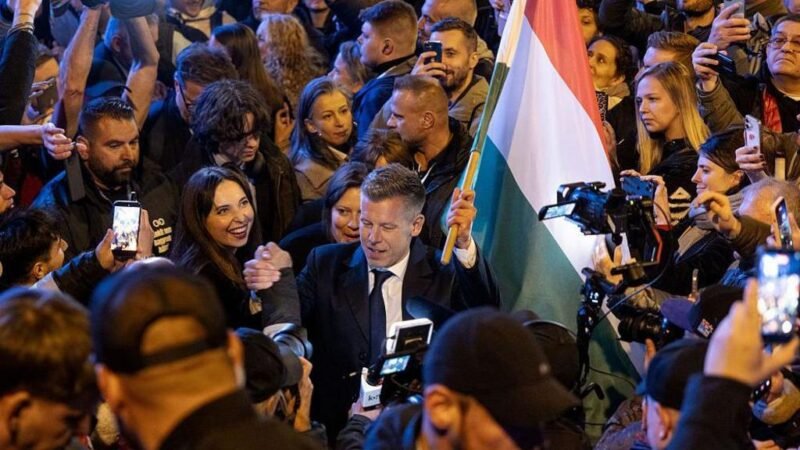
Hungary’s Orbán Ousted After 16 Years as Péter Magyar Secures Landslide Victory.
In a political upset with global implications, Hungary’s long-serving prime minister Viktor Orbán has conceded defeat, ending a 16-year hold on power after a sweeping victory by opposition leader Péter Magyar and his Tisza party.
With nearly all votes counted, Tisza secured a commanding parliamentary supermajority—138 out of 199 seats—giving it the power not only to govern but to rewrite key laws and potentially dismantle elements of Orbán’s political system. Orbán’s Fidesz party was reduced to 55 seats, marking one of the most decisive electoral reversals in modern Hungarian history.
In a brief but telling concession speech, Orbán acknowledged what he called a “painful but unambiguous” result, pledging to continue serving from the opposition. For a leader who reshaped Hungary’s political landscape—tightening control over media, judiciary, and electoral rules—the moment signals more than a loss. It marks the collapse of a political model that had come to define Europe’s illiberal turn.
Magyar, 45, struck a sharply different tone. Addressing tens of thousands of supporters in Budapest, he framed the result as a national reset. His campaign centered on restoring ties with the European Union, tackling corruption, and reinvesting in public services neglected during years of centralized rule. The scale of his victory suggests voters were not merely seeking change—but a reversal.
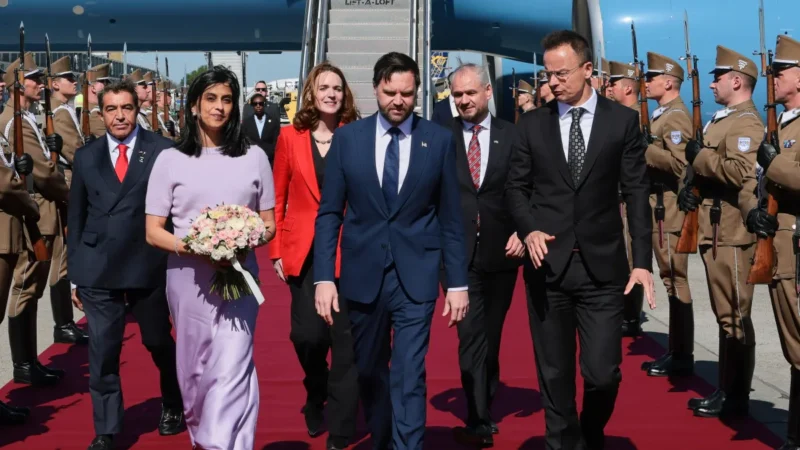
The implications stretch far beyond Hungary. Orbán had long positioned himself as a leading figure in the global populist movement, drawing support from allies such as Donald Trump and Marine Le Pen. Days before the vote, JD Vance traveled to Budapest in a show of support—underscoring how closely the election was watched in Washington.
European leaders were quick to respond. Ursula von der Leyen hailed the outcome as a return to “Europe’s path,” while Keir Starmer called it a “historic moment for European democracy.” The result is widely expected to unlock frozen EU funds and reset relations between Budapest and Brussels after years of confrontation.
Yet the transition will not be simple. Analysts warn that Orbán’s network of loyalists—embedded across state institutions, media, and business—remains intact. Dismantling that system will take time, and expectations for rapid change are high.
Still, the message from voters was unmistakable. Record turnout, driven in part by younger voters, signaled a decisive rejection of the status quo. For many, the vote was less about ideology than accountability.
Hungary has not just changed governments. It has entered a new political era—one that could reshape both its domestic trajectory and its place in Europe.
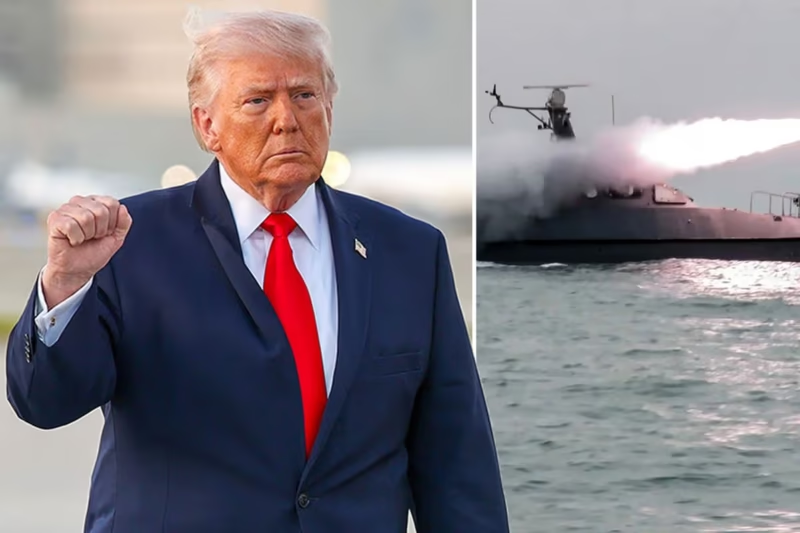
The war just escalated again—this time, through the world’s most critical oil artery.
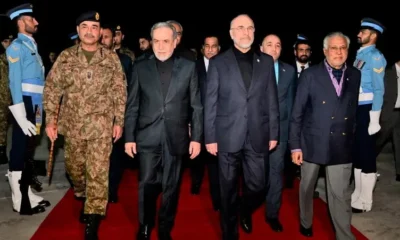
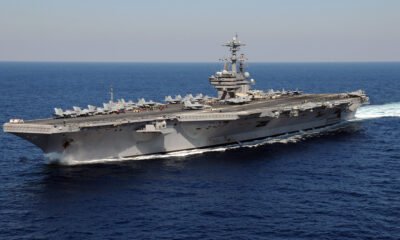
In a dramatic escalation following failed peace talks in Islamabad, Donald Trump has ordered the United States Navy to begin a blockade of the Strait of Hormuz—one of the most consequential moves of the war so far.
“Effective immediately,” Trump announced, U.S. forces will interdict “any and all ships” entering or leaving the strategic waterway. The declaration comes just hours after negotiations led by JD Vance collapsed without agreement, leaving the fragile ceasefire hanging by a thread.
The Strait of Hormuz is not just another maritime corridor. Roughly one-fifth of the world’s oil and liquefied natural gas passes through it under normal conditions. Even partial disruption has already driven prices sharply higher. A full blockade risks something far more severe: a sustained global energy shock.
Trump’s strategy appears aimed at cutting off Iran’s economic lifeline—its oil exports—while forcing Tehran back to the negotiating table. But the move carries immediate and far-reaching consequences. By targeting all shipping, including vessels that comply with Iran’s controversial toll system, Washington is effectively expanding the conflict beyond a bilateral confrontation into a broader challenge to global trade flows.
The risks are not theoretical. Enforcing a blockade in or near the strait could place U.S. naval assets within range of Iranian missiles and drones. While Washington could attempt enforcement farther out in the Arabian Sea, the message remains the same: the United States is prepared to escalate economic warfare to secure strategic leverage.
Allies appear cautious. Despite Trump’s suggestion of coordinated action, British officials have signaled they will not participate directly in the blockade, limiting their role to potential mine-clearing operations if a broader international plan emerges.
For Iran, the stakes are equally high. The country has managed to sustain oil exports near pre-war levels, benefiting from surging prices even as regional rivals saw production disrupted. A blockade threatens to reverse that advantage—yet it also reinforces Tehran’s narrative that global energy flows are now a battlefield.
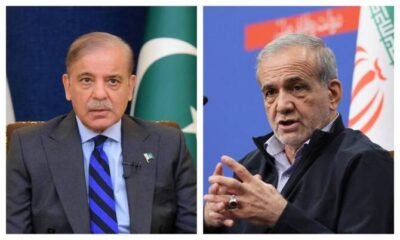
The timing underscores a deeper shift. What began as a military campaign has evolved into a contest over economic control and maritime dominance. The failed talks in Pakistan exposed how far apart the two sides remain—not only on nuclear issues, but on the fundamental question of who controls the Strait.
Trump framed the move in absolute terms: “all in and all out.” But such clarity in rhetoric may mask growing strategic ambiguity. A blockade could pressure Iran—but it could just as easily strain alliances, disrupt markets, and widen the conflict.
The ceasefire, already fragile, now faces its most serious test. The next phase of the war may not be decided by missiles alone, but by who can endure—and control—the global consequences of economic escalation.
Victory or Illusion? Trump says he won. The battlefield says something more complicated.
When Donald Trump declared a “total and complete victory” in the six-week war against Iran, the statement landed at a moment of uneasy calm—a fragile ceasefire holding just long enough to pause the fighting. But beneath the rhetoric lies a more complex reality. The war did not end with clear outcomes; it exposed the limits of military power against a resilient adversary.
From the outset, the administration framed the conflict around five ambitious goals: dismantling Iran’s missile program, destroying its navy, neutralizing regional proxies, halting its nuclear ambitions, and ultimately triggering regime change.
On paper, progress has been made. In practice, each objective remains only partially fulfilled.
The most visible gains came at sea. U.S. officials say Iran’s naval fleet has been largely destroyed, with major vessels sunk and mine capabilities severely degraded. Analysts broadly agree that Iran’s conventional naval strength has suffered a significant blow. Yet the strategic impact is less decisive.
Iran has continued to disrupt shipping in the Strait of Hormuz—not with warships, but through missiles, drones, and asymmetric tactics. Control of the waterway, not fleet size, remains the real lever of power.
A similar pattern emerges in the missile campaign. U.S. defense officials claim Iran’s missile infrastructure has been “functionally destroyed.” And yet, Tehran continues to launch strikes, albeit at reduced volume. Experts note that Iran’s decades-old, largely domestic missile industry is difficult to eliminate entirely. What has been achieved is degradation—not elimination.
On the nuclear front, the picture is even more uncertain. Airstrikes have damaged facilities and delayed progress, but they have not erased Iran’s technical capability or stockpile of enriched uranium. Without a verified dismantling process, the core objective—preventing a nuclear-armed Iran—remains unresolved and now tied to uncertain negotiations.
Perhaps the clearest gap lies in the regional dimension. The war did little to directly dismantle Iran’s network of allied groups. Hezbollah remains active, and fighting in Lebanon has continued despite the ceasefire. The conflict, rather than containing proxy warfare, has redistributed it across multiple fronts.
And then there is regime change—the most ambitious and least realized goal. The killing of Ali Khamenei marked a dramatic escalation, but power did not collapse. Instead, it consolidated under Mojtaba Khamenei, signaling continuity rather than transformation. The system endured.
The result is a paradox. Iran emerges militarily weakened—its infrastructure damaged, its capabilities reduced—but strategically intact. It retains leverage over global energy routes, maintains internal control, and continues to shape the regional battlefield.
For Washington, the war achieved disruption, not resolution. It demonstrated overwhelming force but fell short of delivering a decisive strategic outcome.
The ceasefire, in this sense, is not the end of the conflict. It is a transition point—where military gains must now confront political reality.
And that is where the real test begins.

This isn’t the future—it’s already here. One AI tool can expose flaws in nearly every system on Earth.
A powerful new artificial intelligence system developed by Anthropic is triggering urgent warnings across governments and industries, after demonstrating an ability to uncover software vulnerabilities at an unprecedented scale.
The model, known as Mythos, has already identified thousands of weaknesses across major operating systems and web browsers, according to the company. While that capability could strengthen cybersecurity defenses, it also raises a stark possibility: the same tool could be weaponized to attack critical infrastructure worldwide.
Anthropic has opted not to release Mythos publicly. Instead, it is sharing access with a small group of major corporations—including Amazon, Apple, Cisco, JPMorgan Chase, and Nvidia—under an initiative called Project Glasswing. The goal is to help these firms reinforce their systems before similar tools become widely available.
Security experts say the decision reflects a growing recognition that artificial intelligence has fundamentally changed the cyber threat landscape. What once took teams of hackers weeks or months can now be executed in minutes.
“This is a wake-up call,” said cybersecurity executive Alissa Valentina Knight. “The storm isn’t coming—the storm is here.”
Concerns have reached the highest levels of government. U.S. Treasury Secretary Scott Bessent and Federal Reserve Chair Jerome Powell recently met with top banking leaders to assess the risks posed by AI-driven cyberattacks. Meanwhile, Kristalina Georgieva warned that the global financial system is not yet equipped to withstand large-scale cyber threats powered by advanced AI.
The concern is not theoretical. Cybercriminals are already using AI to automate phishing attacks, deploy malware, and generate convincing deepfakes. According to industry reports, the time between the release of new AI capabilities and their exploitation by attackers is shrinking rapidly.
Mythos amplifies that risk. By scanning vast amounts of code in seconds, it can identify flaws that human developers might never detect. That efficiency, experts say, could dramatically accelerate both defensive patching—and offensive attacks.
Anthropic insists its cautious rollout aligns with its focus on AI safety. But some analysts question whether the limited release also serves a strategic purpose, as the company positions itself ahead of a potential public offering.
Regardless of motive, one reality is clear: the cybersecurity race has entered a new phase—one where machines are not just defending systems, but probing them faster than humans ever could.

China helped pause the war—now it must decide how far to go. Peace, power, or profit?
China is recalibrating its strategy in the Middle East as a fragile ceasefire between the United States and Iran holds, with Beijing weighing how deeply to engage in shaping a longer-term settlement.
Officials and diplomats say China played a quiet but significant role in encouraging Iran to accept the temporary truce, using its economic leverage as Tehran’s largest oil customer. That involvement has elevated Beijing’s diplomatic profile at a critical moment in the conflict.
The next phase, however, is more complex.
China’s primary concern remains the Strait of Hormuz, where disruptions have threatened global energy flows and placed pressure on Asian economies. With roughly 20 percent of global oil passing through the strait, prolonged instability directly impacts Chinese growth, already under strain from slowing domestic conditions.
Chinese officials have publicly emphasized diplomacy, with foreign ministry spokesperson Mao Ning stating Beijing is working to help end the conflict. Behind the scenes, diplomats say China is urging restraint from all sides while avoiding commitments that could draw it into direct confrontation.
That caution reflects competing priorities.
Beijing relies heavily on Iranian oil but also maintains strong ties with Gulf states such as Saudi Arabia and the United Arab Emirates. Preserving those relationships—while protecting energy supply routes—has become central to its calculations.
At the same time, China is reluctant to provide the type of long-term security guarantees Iran has sought. Tehran has pushed for backing from major powers, including China and Russia, but officials in Beijing have so far limited their position to supporting dialogue rather than formal commitments.
The issue is expected to surface in upcoming talks between Donald Trump and Xi Jinping, scheduled for next month. Analysts say China’s role in facilitating the ceasefire could give it leverage in broader negotiations, including trade and sanctions.
Some observers argue Beijing is positioning itself as a stabilizing force, contrasting its approach with Washington’s more confrontational strategy. Others caution that China’s involvement is driven primarily by economic interests rather than a broader commitment to conflict resolution.
For now, China appears to be adopting a wait-and-see approach—supporting the ceasefire, protecting its energy interests, and avoiding deeper entanglement.
But as negotiations progress, its choices could prove decisive.
Whether Beijing steps forward as a guarantor of peace—or remains a cautious stakeholder—may shape not only the outcome of the Iran talks, but the balance of power in the region beyond them.
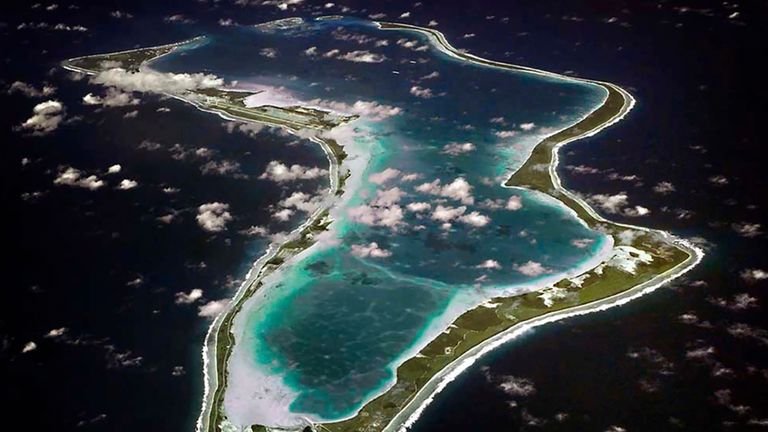
UK Shelves Chagos Islands Handover Plan After US Withdraws Support.
A strategic island, a military base, and a broken alliance—why the UK just backed down.
The United Kingdom has halted its plan to return the Chagos Islands to Mauritius after losing crucial backing from the United States, marking a significant setback for Prime Minister Keir Starmer.
British officials confirmed that legislation required to complete the handover will not pass before the end of the current parliamentary session, effectively shelving the proposal for now.
The agreement would have transferred sovereignty of the archipelago to Mauritius while allowing Britain and the U.S. to retain control of the strategically vital Diego Garcia under a 99-year lease. But London has consistently said it would only proceed with the deal if Washington supported it—a condition that is no longer met.
The reversal follows strong opposition from Donald Trump, who criticized the plan and raised concerns about its impact on Western security interests.
The decision also reflects broader tensions between the U.S. and UK, particularly over the handling of the Iran war. Disagreements over the use of British bases for U.S. operations and shifting diplomatic positions have strained what has traditionally been a close alliance.
Despite shelving the legislation, the British government maintains that securing the long-term future of Diego Garcia remains its top priority. Officials argue the original deal was designed to protect the base from potential legal challenges while preserving its strategic role.
The Chagos Islands have long been a source of dispute. The UK separated the territory from Mauritius in 1965 before Mauritian independence, and thousands of islanders were forcibly displaced—an issue that continues to fuel legal and political challenges today.
For now, the proposed transfer is effectively on hold, with no indication it will be revived in the next legislative agenda.
The outcome leaves the future of the islands—and the balance between sovereignty, security, and international law—uncertain once again.
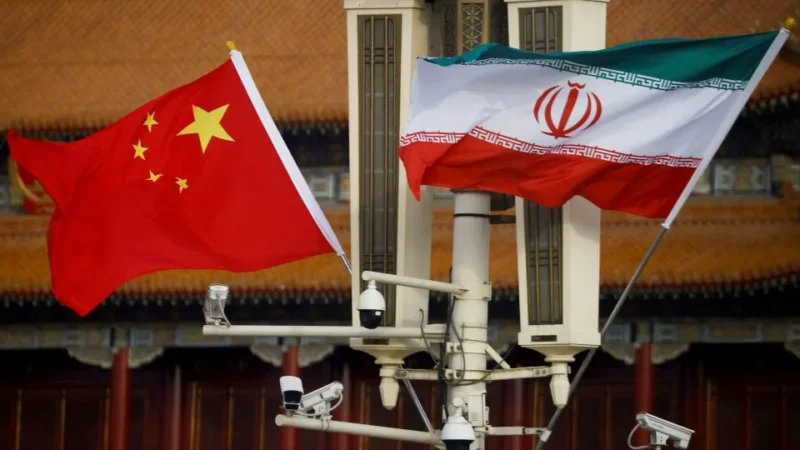
Peace talks on the surface—arms shipments behind the scenes? The Iran crisis just got bigger.
U.S. intelligence agencies have assessed that China may be preparing to deliver air defense systems to Iran in the coming weeks, a move that could complicate efforts to sustain the fragile ceasefire between Washington and Tehran, according to officials familiar with the matter.
The systems under consideration include shoulder-fired missiles, known as MANPADS, which are capable of targeting low-flying aircraft. Analysts say such weapons could pose a renewed threat to U.S. and allied air operations if hostilities resume.
The reported preparations come at a sensitive moment. The ceasefire, reached earlier this week after weeks of conflict, is being tested through ongoing negotiations, with talks underway to secure a longer-term agreement. U.S. officials have made reopening the Strait of Hormuz and addressing Iran’s nuclear program key priorities in those discussions.
China has denied the allegations.
A spokesperson for the Chinese embassy in Washington said Beijing “has never provided weapons to any party to the conflict,” calling the claims baseless and urging the United States to avoid escalating tensions. Chinese officials have previously said they are working to support de-escalation and maintain neutrality.
However, intelligence sources suggest Beijing may be attempting to balance competing interests.
China remains heavily dependent on Iranian oil and has longstanding economic and strategic ties with Tehran. At the same time, it has sought to position itself as a diplomatic actor capable of engaging all sides. According to sources, any potential shipments could be routed through third countries to obscure their origin.
If confirmed, such a transfer would mark a shift in China’s role—from indirect support through trade and dual-use technology to more direct military assistance.
The development also highlights the broader international dimension of the conflict.
Iran has relied on external partnerships throughout the war, including cooperation with Russia, which U.S. officials say has provided intelligence support. In return, Tehran has supplied drones to Moscow for use in its war in Ukraine, reflecting a network of reciprocal military ties.
The potential introduction of additional air defense systems could alter the operational balance, even if only incrementally. During the conflict, Iran demonstrated the ability to challenge advanced aircraft, including the reported downing of a U.S. fighter jet with a shoulder-fired missile.
The issue is likely to feature in upcoming diplomatic engagements, including a planned meeting between U.S. President Donald Trump and Chinese President Xi Jinping next month.
For now, the ceasefire remains in place—but the intelligence assessment underscores how quickly conditions could shift if external support begins to reshape the balance on the ground.

Saudi Arabia Deploys Patriot Batteries Around Mecca

Orbán Falls — Trump’s Model Cracks

Pope Leo Says He Has ‘No Fear’ of Trump


-
 Red Sea7 days ago
Houthis Threaten to Shut Red Sea if War Widens
-
 Terrorism2 weeks ago
Egypt Uncovers Alleged Plan to Down Presidential Plane
-
 Top stories5 days ago
Kremlin Claims EU Is Working Against Orbán
-
 Top stories1 week ago
IRGC Moves to Control Iran’s Future
-
 Top stories2 weeks ago
Saudi Arabia Deepens Defense Ties with Ukraine
-
 US-Israel war on Iran5 days ago
Israel’s War Goals Unmet as U.S.-Iran Ceasefire Shifts Conflict Dynamics
-
 Top stories2 weeks ago
France Leads Talks With 35 Nations to Secure Strait of Hormuz
-
 US-Israel war on Iran1 week ago
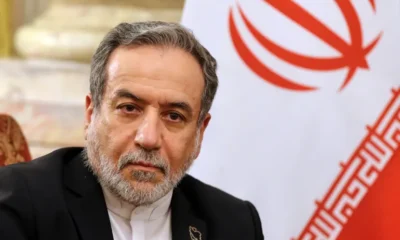
Iran Warns UN Against Hormuz Resolution