Iran Crisis Enters New Phase as War Shakes Regime but Leaves Power Intact.
The ceasefire between Washington and Tehran has paused the war—but it has not resolved it. What it has done, however, is reshape Iran itself.
The conflict has inflicted damage on a scale Iran has not experienced in decades, accelerating a transformation already underway. Leadership losses, military degradation, and sustained strikes have shaken the system at its core. Yet the regime has not collapsed. Instead, it has adapted—shifting from expansion to survival.
This distinction matters.
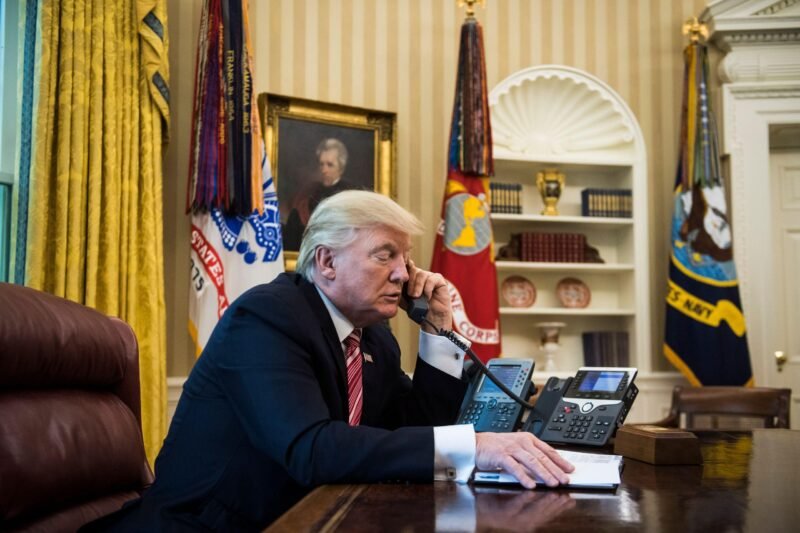
For the United States, under Donald Trump, the objective has been twofold: weaken Iran militarily and force a political shift that ends its long-standing regional posture. The war has made progress on the first goal. Iran’s nuclear infrastructure, missile capabilities, and proxy networks have all been degraded.
But the second objective—transforming the regime—remains incomplete.
In Tehran, power has consolidated under Mojtaba Khamenei, marking a transition to a more hardline and security-driven leadership. The system has absorbed the shock rather than fractured, reinforcing a pattern seen throughout its history: resilience under pressure.
At the same time, Iran’s strategic posture has narrowed. Before the war, it relied on three primary levers—its nuclear program, missile arsenal, and regional proxies. Under sustained attack, these have been weakened. In response, Tehran has turned to more immediate tools of leverage, most notably control over the Strait of Hormuz and direct pressure on Gulf states.
This is not expansion—it is containment by necessity.
The ceasefire itself reflects this shift. Iran’s demands focus heavily on guarantees: no further attacks, sanctions relief, and protection of the regime’s continuity. That emphasis reveals a leadership now prioritizing survival over strategic ambition.
Yet the risks are far from reduced.
A weakened Iran is not a neutralized Iran. Its remaining capabilities, combined with a leadership shaped by war, create the potential for more unpredictable behavior. Internally, the regime faces pressure to project strength, even as it recalibrates. Externally, it must navigate negotiations without appearing to concede.
The result is a fragile equilibrium.
For Washington and its allies, the challenge is equally complex. Military pressure has altered the balance, but it has not produced a decisive end state. Any lasting agreement must address not only Iran’s capabilities, but its motivations—particularly the belief that survival requires deterrence at any cost.
This is where the next phase will be decided.
The ceasefire has opened a window, but it is narrow. Without credible guarantees, enforcement mechanisms, and a shared framework for stability, the pause risks becoming a prelude to renewed confrontation.
Iran has changed—but not in a way that simplifies the conflict.
If anything, it has entered a more dangerous phase: one where the war is quieter, but the stakes remain just as high.