
Top stories
Ukraine Hits Russian Tanker from Libyan Soil

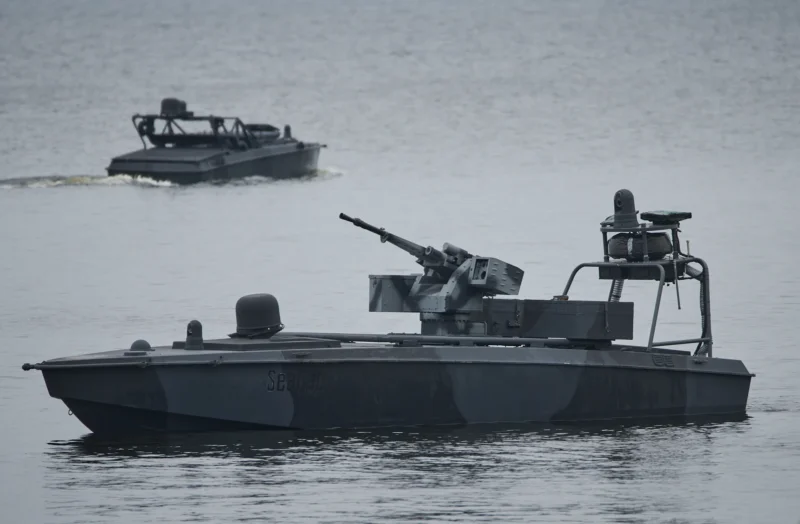
The Ukraine war just crossed into North Africa—and into global energy lanes.
TRIPOLI — Ukrainian forces have quietly opened a new front in their war against Russia, conducting a drone strike on a Russian tanker from western Libya, according to Libyan officials—an escalation that pushes the conflict beyond Eastern Europe and into the Mediterranean.
The Russian-flagged vessel, carrying tens of thousands of tons of liquefied natural gas, was damaged in early March by what officials described as a sea drone attack near Maltese waters. The tanker remained afloat and later drifted toward Libya’s coast, with all crew members evacuated.
According to officials, the operation was launched from facilities in Tripoli, where Ukrainian personnel—primarily drone specialists—have been operating in coordination with authorities aligned to Prime Minister Abdul-Hamid Dbeibah. Their presence, described as part of a covert arrangement supported by Western partners, marks a notable expansion of Ukraine’s operational reach.
Ukrainian teams are reportedly stationed across multiple locations in western Libya, including the port city of Misrata. Their mission reflects a broader shift in strategy—taking the fight beyond traditional theaters and targeting Russia’s economic lifelines, including its so-called “shadow fleet” used to circumvent sanctions.
As Russia adapts in the Black Sea—hardening defenses and limiting exposure—Ukraine is seeking alternative arenas where asymmetric tools, particularly naval drones, can still deliver impact. The Mediterranean, with its dense shipping lanes and proximity to European energy markets, offers both opportunity and risk.
Since the fall of Moammar Gadhafi, the country has remained divided between rival administrations, creating space for external actors to operate. Western-aligned authorities in Tripoli and Russia-linked forces in the east have turned Libya into a proxy battleground—one now intersecting directly with the Ukraine war.
A conflict framed as regional is becoming increasingly global. Ukrainian forces, defending their own territory, are now projecting power into North Africa. Russia, facing sanctions in Europe, finds its maritime supply lines targeted in distant waters.
The tanker attack underscores how energy infrastructure and shipping routes are becoming central targets. With global markets already strained by disruptions elsewhere, any sustained campaign against maritime assets could amplify volatility in energy supply and pricing.
Neither Moscow nor Kyiv has publicly confirmed the operation. But the emerging pattern is harder to ignore: the battlefield is expanding, the tools are evolving, and the lines between regional conflicts are blurring.
What began as a war over territory is increasingly a contest over reach.
And Libya has become its latest proving ground.













No missiles, no drones—but no illusions. The UAE is preparing for what comes next.
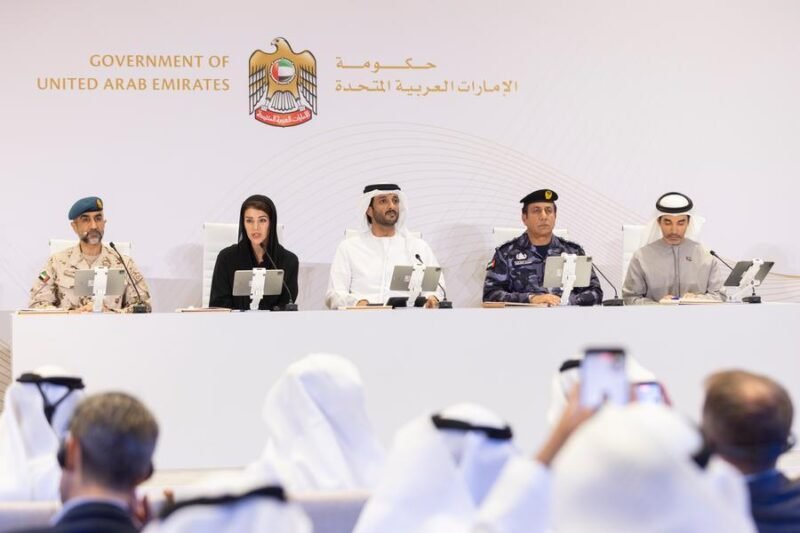
The United Arab Emirates has reported a temporary lull in hostilities, with its air defense systems detecting no new Iranian missile or drone threats in recent hours—an early sign that the fragile ceasefire may be holding, at least for now.
According to the UAE Ministry of Defense, no ballistic missiles, cruise missiles, or unmanned aerial vehicles were launched toward the country during the latest monitoring period. The update also confirmed no new casualties, with total injuries remaining at 224 and no fatalities recorded in recent hours.
But the calm masks the scale of what preceded it.
Since the conflict began, UAE defenses have intercepted hundreds of threats—over 500 ballistic missiles, dozens of cruise missiles, and more than 2,200 drones launched from Iran. The figures underscore both the intensity of the campaign and the country’s reliance on layered air defense systems to protect critical infrastructure and population centers.
The current pause comes amid a two-week ceasefire between Iran and the United States, following weeks of escalation that began with U.S. and Israeli strikes on Iranian targets. Tehran’s response extended beyond Israel, targeting Gulf states seen as aligned with Washington.
Despite the absence of immediate threats, the UAE’s posture remains cautious. Officials have emphasized full operational readiness and a willingness to respond decisively to any renewed attacks, signaling that the ceasefire has not altered the underlying risk environment.
That caution extends to diplomacy. Abu Dhabi has called for greater clarity on the terms of the ceasefire, stressing the need for a comprehensive and lasting framework that addresses not only direct conflict, but also broader regional threats linked to Iran’s capabilities and network.
The message is clear: a pause in attacks does not equal security.
For the UAE, the experience of absorbing sustained missile and drone barrages has reinforced a strategic lesson—deterrence must be constant, even when the skies are quiet.
The ceasefire may be holding in the moment. But for Gulf states on the front line, stability will only come when the conditions behind the conflict are resolved—not just temporarily contained.
A Chinese firm, a U.S. startup on the brink, and lobbyists with political ties—Washington’s influence game is back in the spotlight.
A little-known lobbying effort has delivered a rare victory for a Chinese company in Washington—raising new questions about influence, access, and national security oversight.
At the center of the case is China’s Grand Pharmaceutical Group, which successfully fended off a U.S. startup’s attempt to trigger a national security review of its investment. The decision by the Committee on Foreign Investment in the United States effectively allowed the Chinese firm to maintain its stake—despite concerns raised by the American company.
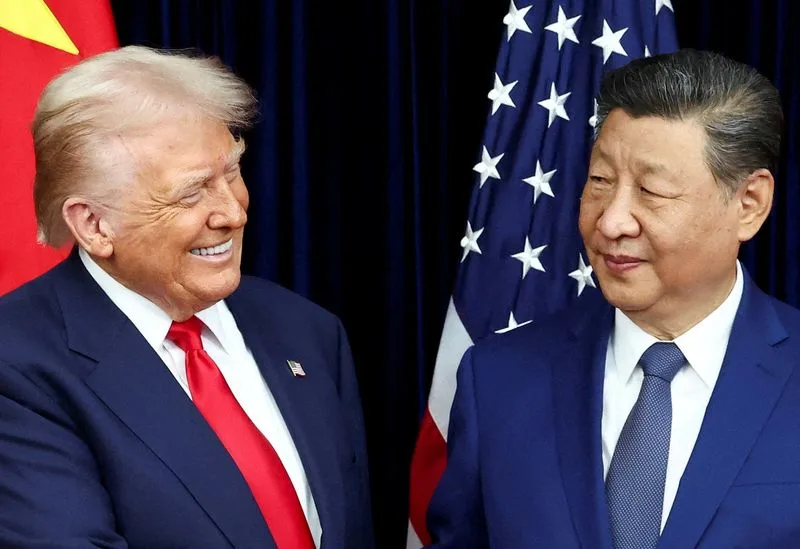
The turning point came after Grand Pharma hired a lobbying firm with personal ties to Donald Trump Jr.. The firm helped arrange a high-level meeting with senior U.S. officials, giving the Chinese company direct access to decision-makers at a critical moment.
Soon after, the watchdog rejected the filing brought by Minnesota-based FastWave—not on national security grounds, but over what it described as “material misstatements” in the company’s submission. The ruling avoided addressing whether the Chinese investment posed any strategic risk.
For FastWave, the consequences have been severe. The company, which develops laser-based medical technology with potential dual-use applications, now faces financial collapse. Its leadership had argued that the Chinese investor’s involvement risked intellectual property exposure and could hinder future funding.
Grand Pharma disputes those claims, framing the case as a commercial disagreement rather than a security threat.
The broader concern, however, goes beyond a single dispute.
Experts and lawmakers warn the episode highlights a structural vulnerability: that foreign companies can navigate U.S. political systems by leveraging connections within the governing orbit. While such lobbying is legal and common, critics argue the stakes are higher when national security questions intersect with foreign investment.
The White House has rejected those concerns, insisting that CFIUS processes remain rigorous and independent.
Still, the optics are difficult to ignore. A Chinese firm gained access, made its case at the highest level, and secured a favorable outcome—while its U.S. counterpart struggled to reach the same decision-makers.
Whether coincidence or influence, the episode underscores a shifting reality in Washington: access matters.
And in a system where policy, politics, and security overlap, who gets heard—and when—can shape outcomes as much as the facts themselves.

War in the Middle East, pressure in Europe. Italy is already preparing for the fallout.
Europe is beginning to price in the economic consequences of the Iran crisis—and Italy is among the first to say it out loud.
Prime Minister Giorgia Meloni has called on the European Union to consider suspending its strict budget deficit rules if the conflict escalates again, warning that the economic shock could require extraordinary measures.
Her proposal targets the Stability and Growth Pact, which limits member states’ deficits to 3 percent of GDP. Meloni argues that, in a crisis driven by external shocks—particularly energy disruptions—these rules may need to be temporarily set aside at the EU level, rather than relaxed country by country.
The signal is significant. It suggests European governments are preparing for a scenario in which energy markets remain unstable, growth slows, and fiscal flexibility becomes essential.
Italy is already feeling the strain. The government is preparing to revise down its 2026 growth forecasts, reflecting rising uncertainty linked to global energy prices and supply disruptions tied to tensions in the Middle East. If the crisis deepens, bringing deficits below EU thresholds will become even more difficult.
Meloni’s warning also points to a second risk: market behavior. Her government has signaled readiness to intervene against speculative spikes in energy prices, including the possibility of imposing windfall taxes on energy companies—an approach previously used during the COVID-era energy crisis.
The comparison is deliberate. During the pandemic, the EU activated a “general escape clause,” suspending fiscal rules to allow governments to respond to economic collapse. While current forecasts do not yet anticipate a similar downturn, Meloni’s remarks suggest policymakers are increasingly concerned that the Iran conflict could trigger a comparable shock—this time through supply constraints rather than demand collapse.
The debate now shifts to Brussels. Any suspension of rules would require broad agreement among member states, many of which remain cautious about loosening fiscal discipline.
But the direction is clear. Europe is moving from reaction to anticipation—preparing tools before the crisis fully unfolds.
Because if energy flows remain disrupted and prices continue to rise, the impact will not stay confined to the Middle East.
It will be felt in European budgets, markets, and households—and governments are already positioning for that reality.
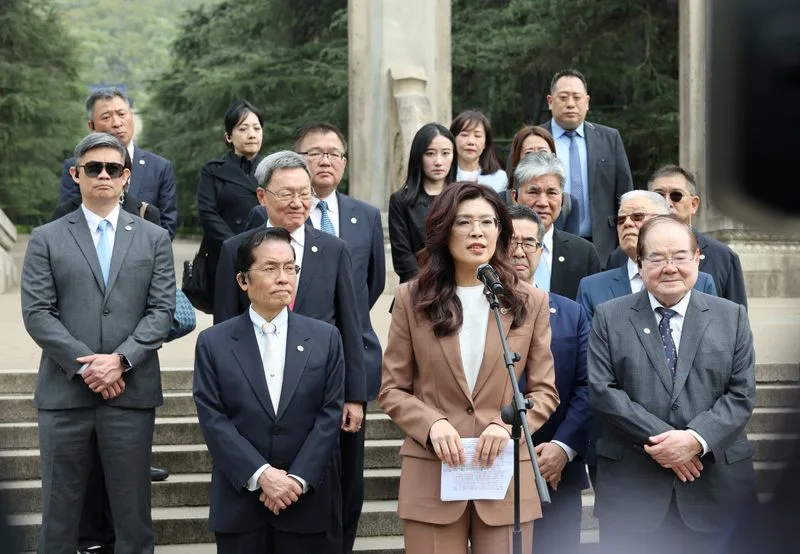
While missiles circle Taiwan, its opposition is in Beijing talking peace. Strategy—or risk?
Taiwan’s political divide is widening at a critical moment, as opposition leader Cheng Li-wun travels to China advocating dialogue—while her party faces backlash at home for stepping away from key defence talks.
Speaking in Shanghai, Cheng framed her visit as a mission to lower tensions with Beijing, delivering a symbolic message: “What should fly in the sky are birds, not missiles.” Her outreach comes as China intensifies military pressure around the island, underscoring the delicate balance between diplomacy and deterrence.
Her trip may soon carry even greater weight. Cheng is expected to travel to Beijing, where a potential meeting with Xi Jinping is being closely watched. If confirmed, it would mark a rare high-level political engagement between China and Taiwan’s opposition, bypassing the island’s elected government.
That dynamic is fueling anger in Taipei.
Lawmakers aligned with President Lai Ching-te have criticized Cheng’s party, the Kuomintang (KMT), for skipping parliamentary discussions on a proposed $40 billion defence spending package. For the ruling Democratic Progressive Party (DPP), the timing is not coincidence—it is concern.
Officials argue that Taiwan faces escalating military pressure, with Chinese aircraft and naval vessels operating near the island on a near-daily basis. In that context, delaying defence planning while engaging Beijing risks sending mixed signals about Taiwan’s priorities.
The KMT rejects that accusation, insisting its support for defence spending remains intact while opposing what it describes as unchecked or poorly structured budgets. It maintains that Cheng’s visit is separate from domestic policy debates.
Beijing, for its part, has not softened its stance. It continues to reject dialogue with Lai, labeling him a separatist, while maintaining military activity around Taiwan—even as Cheng calls for peace.
That contradiction highlights the central tension. Diplomacy without reciprocal de-escalation raises questions about leverage. Military pressure without dialogue increases the risk of miscalculation.
Taiwan now finds itself navigating both paths at once—internal political division on one side, external pressure on the other.
Whether Cheng’s outreach opens a meaningful channel or deepens strategic ambiguity will depend on what follows next.
For now, the message from Beijing’s actions is clear: even as words of peace are spoken, the military posture remains unchanged.
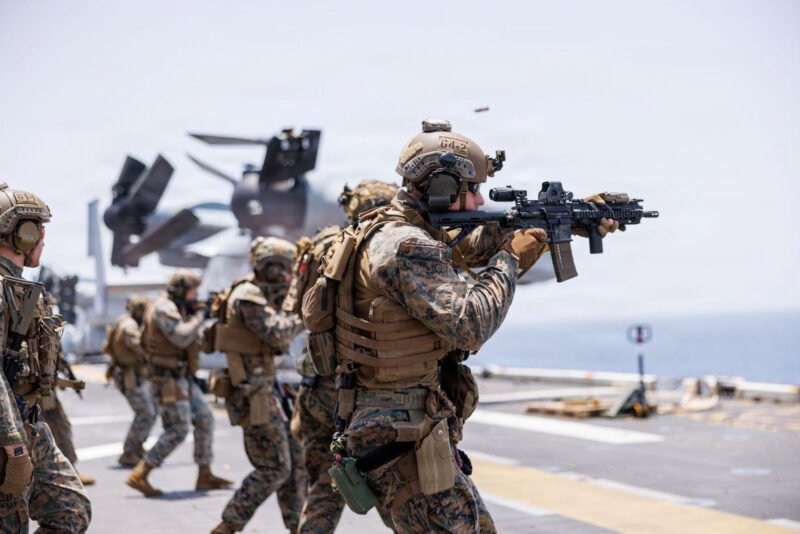
Ceasefire on paper—military buildup in reality. The U.S. is preparing for what comes next.
Even as a fragile ceasefire takes shape, the United States is signaling readiness for escalation. New footage released by United States Central Command shows U.S. Marines conducting live-fire exercises aboard the USS Tripoli (LHA-7) in the Arabian Sea—a clear reminder that diplomacy and deterrence are moving in parallel.
The drills, carried out on April 2, involved Marines firing live ammunition from the ship’s deck during amphibious assault training. The exercises were not symbolic. They reflect operational preparation by forces already deployed in a region still on edge.
At the center of this deployment is the 31st Marine Expeditionary Unit, a rapid-response force previously stationed in Okinawa, Japan. Its presence underscores the U.S. military’s ability to project power quickly across theaters—from the Indo-Pacific to the Middle East—at a time when tensions with Iran remain unresolved.
A Marine Expeditionary Unit is not a routine deployment. It is a self-contained force built for crisis response, combining command, ground combat, air support, and logistics into a single, flexible structure. In practical terms, it allows Washington to conduct everything from evacuation operations to full-scale amphibious assaults with minimal notice.
The timing is critical. While Washington is engaged in ceasefire talks with Tehran, it is also reinforcing its military posture. This dual-track approach—negotiation backed by visible force—signals that the U.S. is preparing for both outcomes: a diplomatic breakthrough or a rapid return to conflict.
The choice of platform also matters. The USS Tripoli is designed to operate as a mobile base for air and ground forces, capable of launching aircraft, deploying Marines, and sustaining operations in contested environments. Its positioning in the Arabian Sea places it within operational reach of key regional flashpoints.
The message is unmistakable. The ceasefire may have paused direct confrontation, but it has not reduced the underlying risk.
Instead, the region now sits in a state of suspended tension—where talks continue, but forces remain ready.
And in that environment, preparation is not precaution. It is strategy.
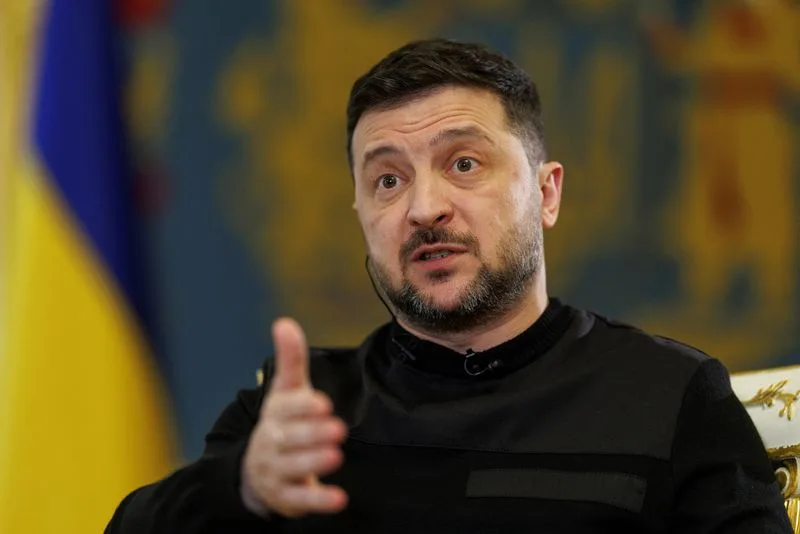
Ukraine says Russia is helping Iran target U.S. bases—and Washington is looking the other way.
Ukrainian President Volodymyr Zelenskyy has issued one of his sharpest warnings yet to Washington: that Russia is actively assisting Iran’s military operations—and the United States is failing to respond.
Speaking on a political podcast, Zelenskyy said Kyiv had presented evidence that Vladimir Putin’s government used military satellites to map critical infrastructure across the Middle East, including Gulf energy facilities, Israeli targets, and U.S. military bases. According to Zelenskyy, this intelligence was then shared with Tehran to support its strikes.
His frustration is directed not only at Moscow, but at Washington. The core of his argument is blunt: the U.S. is underestimating Russia—and overestimating its ability to trust Putin.
“The problem is they trust Putin,” Zelenskyy said, questioning why there had been no visible U.S. response to what he described as direct Russian involvement.
The claim, if substantiated, would significantly deepen the geopolitical stakes of the Iran conflict—transforming it from a regional confrontation into a broader axis of coordination between Moscow and Tehran.
Zelenskyy’s criticism extends to the inner circle of Donald Trump. He argued that key figures, including envoys Steve Witkoff and Jared Kushner, have spent more time engaging with Russian leadership than understanding Ukraine’s position. In his view, this imbalance has led to a misreading of Russia’s long-term intentions.
At the center of that concern is a familiar warning: that concessions will not end the conflict. Zelenskyy insists that even if Ukraine were to cede territory in the Donbas region, Russia would push further—targeting major cities such as Dnipro and Kharkiv.
His remarks come at a moment of widening uncertainty in transatlantic relations. U.S. pressure on Ukraine to consider territorial concessions, combined with signals about a potential reduction in NATO commitments, has raised alarm in Kyiv and across Europe.
Zelenskyy is now advocating for a broader security architecture—one that extends beyond the United States. He envisions closer military coordination between the European Union, Ukraine, the United Kingdom, Turkey, and Norway, arguing that such a coalition could provide a more reliable deterrent against Russian expansion.
The warning is clear: the battlefield is no longer confined to Ukraine—or even to Eastern Europe.
If Russia is indeed aligning more closely with Iran in the Middle East, the conflict is evolving into a multi-theater challenge—one that tests not just military strength, but strategic judgment.
And Zelenskyy’s message to Washington is unmistakable: misreading Putin now could carry consequences far beyond Ukraine.
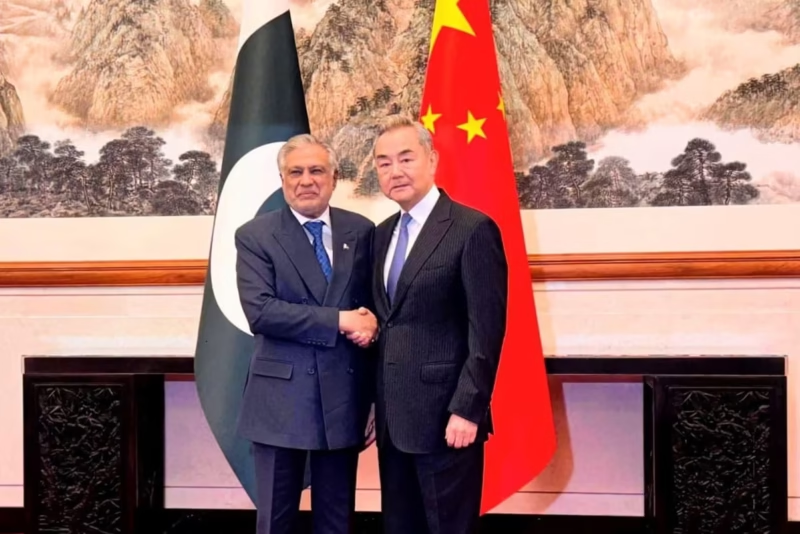
The war slowed down—but nothing was solved. The next phase may be even more dangerous.
The two-week ceasefire between the United States and Iran has brought a moment of relief—but little clarity. Beneath the pause lies a deeper truth: the conflict has not been resolved, only deferred.
As of April 8, the Strait of Hormuz remains only partially reopened, the very issue that triggered the crisis still unsettled. Talks scheduled in Islamabad offer a diplomatic opening, but the fundamentals remain unchanged. This is not a peace agreement—it is a tactical pause shaped by mutual exhaustion.
Neither side emerges with a decisive victory. Donald Trump has framed the campaign as a strategic success, yet the core objective—transforming Iran’s political structure—remains unmet. Instead, power in Tehran has consolidated under Mojtaba Khamenei, a more hardline figure whose rise underscores the system’s resilience rather than its collapse.
Iran, however, has paid a steep price. Its military infrastructure, nuclear facilities, and economic networks have been significantly degraded. Yet it retains enough capability—missiles, drones, and strategic leverage over Hormuz—to remain a central player. What Tehran gained in leverage, it lost in stability, now facing internal strain alongside external pressure.
The conflict has also expanded far beyond its original scope. Gulf states absorbed direct attacks, Israel remains engaged on multiple fronts, and global energy markets continue to feel the aftershocks. The war exposed a central vulnerability: the world’s economic system remains tightly bound to a narrow maritime corridor that can be disrupted with relative ease.
The ceasefire reflects this reality. For Washington, escalation carried rising risks—legal, political, and economic. For Tehran, prolonged conflict threatened deeper internal and regional consequences. The result is a convergence of limits, not a convergence of goals.
The upcoming talks will test whether this fragile alignment can evolve into something more durable. Key issues remain unresolved: securing reliable access through Hormuz, defining limits on Iran’s nuclear program, and addressing the broader regional conflict—particularly Israel’s ongoing operations beyond the ceasefire’s scope.
External actors, including European powers and China, are likely to play a growing role, reflecting a shift toward a more complex, multipolar negotiation environment.
What lies ahead is uncertain. The ceasefire could hold and lead to incremental progress—or collapse under pressure, miscalculation, or competing agendas.
What is clear is this: the crisis has entered a new phase, not ended. And the window for turning pause into progress is narrow.
If it closes, the next round of escalation may come faster—and hit harder—than the last.
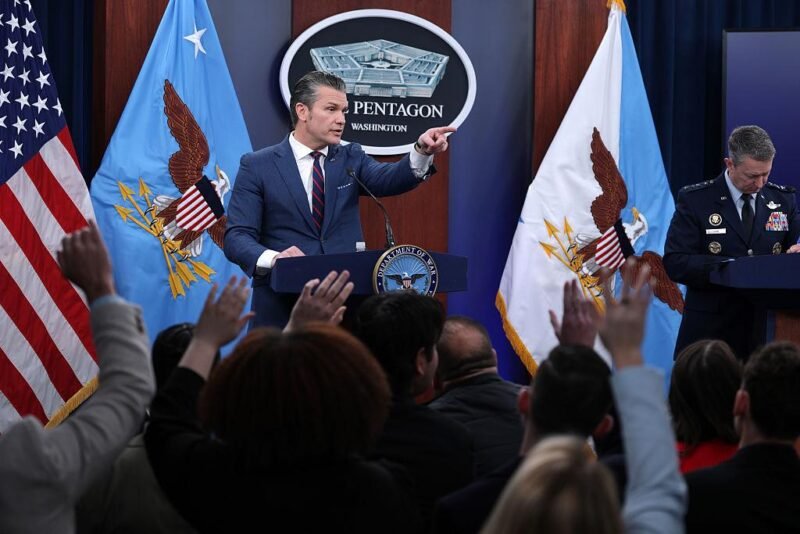
No One Thinks This War Ends Cleanly. From Washington to Beijing to the Gulf—analysts agree on one thing: the damage is just beginning.
Across leading editorial boards, think tanks, and policy institutions, a rare consensus is emerging: the Iran war may pause, but its economic and geopolitical consequences are only deepening.
At The Wall Street Journal, opinion writers have taken direct aim at Donald Trump’s strategy, describing it as inconsistent and reactive. The critique is not simply about tone—it is about clarity. Repeated ultimatums and shifting deadlines, they argue, risk civilian infrastructure without guaranteeing strategic outcomes, particularly the reopening of the Strait of Hormuz. The underlying concern: economic pain will ultimately fall on American households.
Economic analysts at Reuters Breakingviews go further, warning that even a ceasefire will not restore normalcy. Insurance costs, depleted reserves, and persistent risk premiums are likely to keep energy markets unstable. In their view, the idea that reopening Hormuz alone can resolve the crisis is a dangerous oversimplification.
Meanwhile, the U.S.-China Economic and Security Review Commission highlights a structural shift in the conflict: China’s role as Iran’s economic lifeline. By purchasing the bulk of Iranian oil and facilitating sanctions evasion, Beijing is not just mitigating pressure—it is reshaping the limits of U.S. economic power.
Strategic analysts at the Atlantic Council frame the war in even broader terms. Their assessments suggest the conflict is accelerating a global realignment, exposing vulnerabilities in energy security and forcing new alliances to emerge beyond traditional Western frameworks.
From the region itself, Al Jazeera offers a different lens: one centered on local agency. Commentators argue that lasting stability will not come from external military pressure, but from a Gulf-led security framework that includes Iran—warning that exclusion risks prolonging instability.
Think tanks such as Brookings Institution and Center for Strategic and International Studies push the analysis deeper. Their focus is not just on the war’s trajectory, but its unintended consequences: strengthening hardliners in Tehran, triggering proliferation risks, and setting off longer-term regional instability.
Taken together, these perspectives converge on a stark conclusion. There is no clean victory in sight. The war is not only reshaping the Middle East—it is redefining the global economic order.
And long after the ceasefire headlines fade, the costs will remain embedded in markets, politics, and everyday life.

UK Says It Foiled Russian Submarine Mission Targeting Undersea Cables

UAE Says No New Iranian Threats Detected as Ceasefire Holds

The war hit Iran hard—but didn’t finish the job


-
 Terrorism2 weeks ago
Egypt Uncovers Alleged Plan to Down Presidential Plane
-
 US-Israel war on Iran3 weeks ago
Former CIA Chief Blames White House for Escalating Iran War Crisis
-
 Top stories2 weeks ago
Saudi Arabia Deepens Defense Ties with Ukraine
-
 Red Sea4 days ago
Houthis Threaten to Shut Red Sea if War Widens
-
 Top stories2 days ago
Kremlin Claims EU Is Working Against Orbán
-
 Analysis3 weeks ago
Inside the IRGC’s Quiet Rebuild of Hezbollah
-
 US-Israel war on Iran3 weeks ago
Iran War Sparks Global Crisis Warning
-
 Top stories2 weeks ago
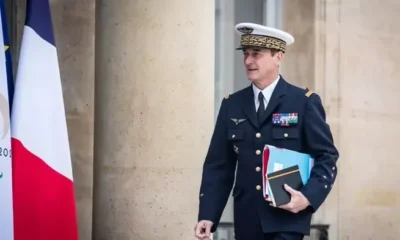
France Leads Talks With 35 Nations to Secure Strait of Hormuz