A chart, a warning, and a chokepoint under threat—Hormuz just became the most dangerous place on Earth again.
Iran has sent one of its clearest signals yet that the fragile ceasefire may not hold—publishing a chart suggesting it may have planted sea mines in the Strait of Hormuz, the world’s most critical energy corridor.
The map, circulated by Iranian media linked to the Islamic Revolutionary Guard Corps, highlights a “danger zone” along the main shipping route, raising fears that naval mines could still be active—or at least deliberately implied as leverage.
Whether the mines are real, cleared, or simply a psychological signal may matter less than the effect. The message is unmistakable: Iran retains the ability to disrupt global oil flows at will.
Markets reacted immediately. Oil prices climbed back toward $100 a barrel, reversing earlier optimism triggered by the ceasefire announcement. Shipping activity remains severely constrained, with only a handful of vessels passing through the strait—far below normal levels.
The chart also suggests ships are being redirected closer to Iran’s coastline, effectively placing maritime traffic under tighter Iranian control. This transforms Hormuz from an international waterway into a managed corridor, where passage is conditional rather than guaranteed.
At the same time, political confusion surrounding the ceasefire continues to deepen. Iran and the United States are advancing conflicting interpretations of the agreement—particularly over control of Hormuz and Iran’s nuclear program. Meanwhile, Israel’s continued operations in Lebanon have further strained the truce.
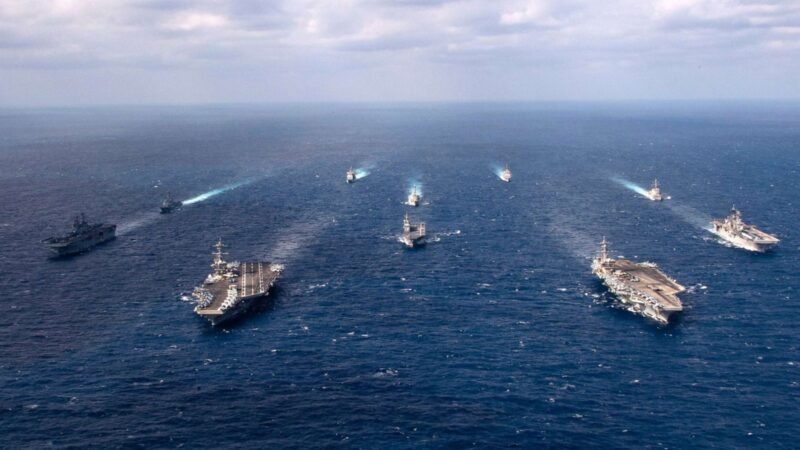
Donald Trump has responded with a warning that U.S. forces will remain in the region until a “real agreement” is fully implemented, signaling readiness to escalate if necessary.
This convergence—military signaling, economic disruption, and diplomatic ambiguity—points to a broader reality: the ceasefire has not stabilized the conflict. It has shifted it into a more uncertain and potentially more dangerous phase.
The presence—or even the suggestion—of sea mines introduces a new level of risk. Unlike missiles or drones, mines are indiscriminate, persistent, and capable of halting traffic without a single shot being fired.
In practical terms, this means the global economy is now operating under a shadow. Energy supplies, shipping lanes, and insurance markets are all reacting to a threat that may not even need to be activated to be effective.
The ceasefire still stands—but it stands on unstable ground.
And in Hormuz, the line between deterrence and disruption is becoming dangerously thin.