Ukrainian President Shakes Hands with Scranton Workers as He Rallies U.S. Support in War Against Russia
Under a veil of extraordinary security, Ukrainian President Volodymyr Zelenskyy made an unannounced stop in Scranton, Pennsylvania—at a place where life and death are forged daily in the shape of artillery shells. The man who has come to symbolize the indomitable Ukrainian spirit stepped into an American factory that’s fueling his nation’s fight for survival against Russia’s relentless onslaught. And he wasn’t just there to shake hands and pose for photos. He was there to say thank you—personally, face to face—with the men and women whose work has become the lifeblood of Ukraine’s resistance.
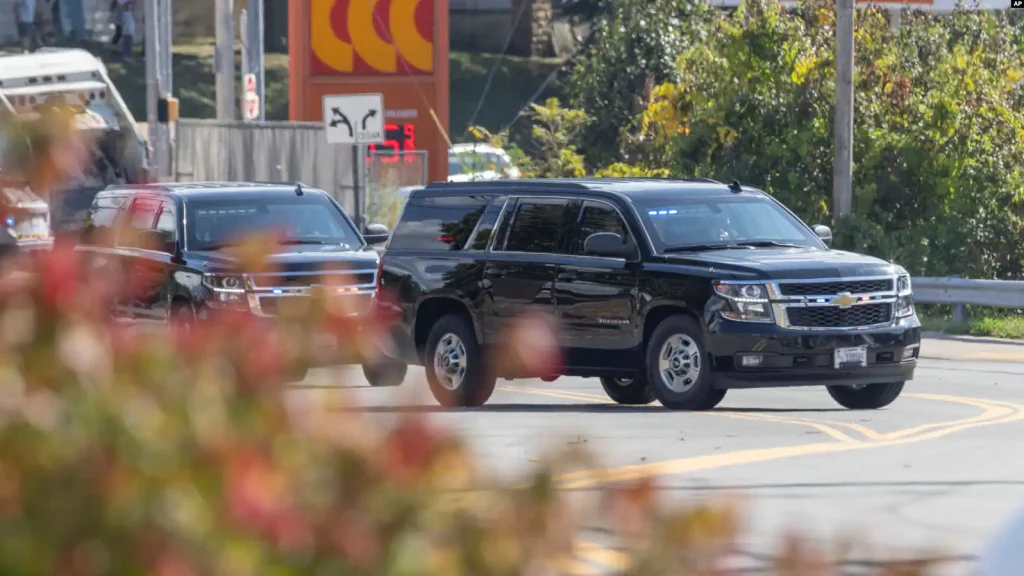
This wasn’t your usual diplomatic pit stop. As Zelenskyy’s motorcade sliced through the streets of Scranton on Sunday, a sense of palpable urgency gripped the air. This is a leader at war, not just with Russia, but with time. With global attention starting to fray, Zelenskyy is doing everything he can to keep Ukraine’s fight burning bright in the minds of American workers and voters.
Outside the Scranton Army Ammunition Plant, the atmosphere was electric. A small but passionate crowd, waving Ukrainian flags, braved tight security to catch a glimpse of the man they see as a hero, not just for Ukraine, but for freedom itself. These weren’t just any bystanders. They were people like Vera Kowal Krewsun, a first-generation Ukrainian American who stood with fierce pride, knowing her own friends’ parents have toiled in that very factory, producing the very ammunition keeping Ukraine alive.
“It’s unfortunate that we need a plant like this,” she said, her voice filled with emotion. “But it’s here, and it’s here to protect the world.”
Zelenskyy’s visit comes at a pivotal moment. Just hours before, he had been preparing for an intense week of meetings at the United Nations General Assembly in New York and high-stakes talks with President Joe Biden and Vice President Kamala Harris in Washington. But first, he needed to be here, in the heart of Pennsylvania, in the gritty reality of America’s industrial might, to meet the people who are quite literally keeping Ukraine’s fight alive, one 155 mm artillery shell at a time.
These aren’t just shells—they’re lifelines. The howitzers they feed can strike targets nearly 32 kilometers away, allowing Ukrainian forces to pound Russian positions from a safe distance. It’s a grim business, but for people like Laryssa Salak, whose parents also immigrated from Ukraine, it’s deeply personal. She stood watching as Zelenskyy’s motorcade rolled by, proud of her heritage but frustrated by the divisions back home. “It upsets me that Americans are divided on this,” she confessed, her voice tinged with sadness. “They don’t realize the money doesn’t just go to Ukraine—it goes to American workers.”
With the war now entering its third brutal year, Zelenskyy is far from finished. His eyes are set on something bigger—securing U.S. permission to use longer-range missiles that could reach deep into Russian territory. But Washington remains hesitant. The Pentagon has been firm: while Ukraine can already strike Moscow with its drones, the use of U.S.-made missiles to hit Russia could trigger catastrophic consequences.
Meanwhile, Russian President Vladimir Putin hasn’t minced words. Allow Ukraine to deploy long-range weapons, he warns, and Russia would consider itself at war with the U.S. and its NATO allies—a nightmare scenario no one wants to see unfold.
The stakes couldn’t be higher. Ukraine has been burning through tens of thousands of artillery rounds a day, leaving U.S. stockpiles dangerously low. That’s why Zelenskyy’s visit to this very plant is so symbolic. The Scranton factory has ramped up production of 155 mm rounds to over 40,000 per month, and the Pentagon has ambitious plans to push that number to 100,000.
Zelenskyy was expected to be joined by some of the Pentagon’s top officials, including Doug Bush, the Assistant Secretary of the Army for Acquisition, and Bill LaPlante, the top weapons buyer. Both men have been instrumental in ramping up production, ensuring that the Ukrainian war machine doesn’t grind to a halt. Also in attendance was Pennsylvania Governor Josh Shapiro, a firm supporter of Ukraine’s struggle.
But the 155 mm shells are just a fraction of what the U.S. has provided. From small arms to F-16 fighter jets, America has given Ukraine over $56 billion in aid since the invasion began. And yet, it’s not just about dollars and cents. It’s about a shared belief that Ukraine’s fight is a fight for the free world. European nations, too, are watching closely, knowing that if Ukraine falls, Putin’s gaze may well shift toward NATO borders.
As Zelenskyy’s week in America continues, he will carry with him the weight of his people’s hope—and the gratitude of those factory workers in Scranton who are helping to make his nation’s defense possible.
What happens next could determine not just the future of Ukraine, but the future of global peace. For now, Zelenskyy’s message is clear: the fight isn’t over, and every shell, every missile, every dollar counts.