Russia’s Largest Ballistic Missile Barrage Signals a New Phase in the Ukraine War
ANALYSIS
Russia’s latest missile assault on Kyiv was more than another night of destruction. It was a demonstration that the Kremlin is reshaping its strategy around one of Ukraine’s greatest vulnerabilities: the growing shortage of ballistic missile interceptors.
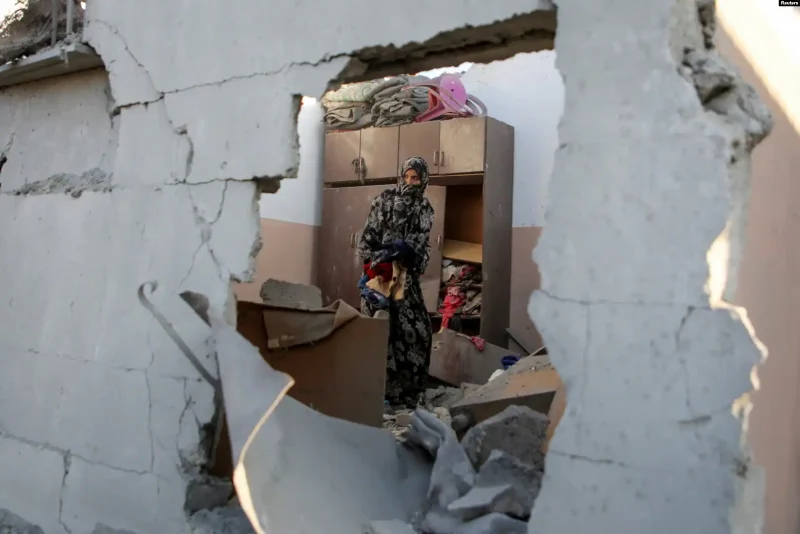
According to Ukrainian officials, Moscow launched more than 40 missiles alongside 120 attack drones, making it one of the largest combined missile and drone attacks since Russia’s full-scale invasion began. While Ukrainian air defenses intercepted many of the incoming weapons, dozens penetrated the defensive shield, striking Kyiv and other regions, killing civilians and damaging critical infrastructure.
The scale of the attack sends a clear strategic message.
Russia is no longer relying solely on attrition along the front lines. It is increasingly seeking to overwhelm Ukraine’s air defense network through saturation attacks that combine ballistic missiles, cruise missiles and large numbers of drones in coordinated waves.
A War of Logistics
The battlefield is no longer confined to trenches in eastern Ukraine.
Instead, it has become a contest of industrial capacity, missile production and logistics.
Every Patriot interceptor fired by Ukraine represents a missile that must eventually be replaced. Every Russian ballistic missile launched forces Kyiv into a difficult calculation: defend military infrastructure, protect civilian population centers or preserve limited interceptor stocks for future attacks.
This is precisely the dilemma Moscow hopes to create.
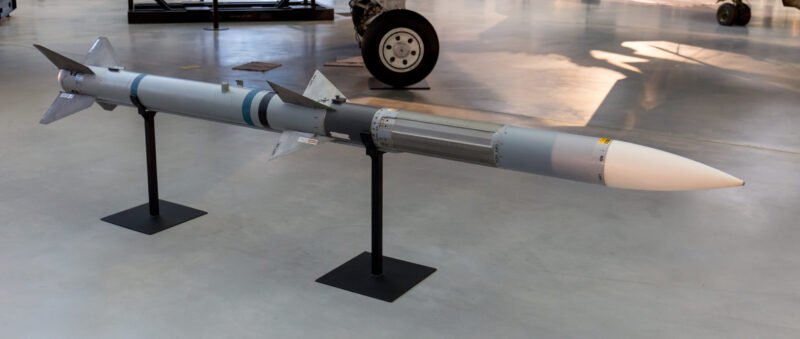
Unlike drones, ballistic missiles travel at extreme speeds and follow trajectories that leave defenders with only seconds to respond. Ukraine’s Patriot systems remain among the few capable of intercepting them consistently, but the supply of interceptors remains limited while global demand continues to grow.
Moscow’s New Strategy
The latest attack illustrates an important evolution in Russian military planning.
Instead of launching isolated missile strikes, Russia is increasingly coordinating ballistic missiles with swarms of drones designed to confuse, saturate and exhaust Ukrainian air defenses.
The drones force radar systems to track hundreds of targets simultaneously.
Ballistic missiles then exploit any remaining gaps.
Even successful interceptions consume expensive defensive missiles that cannot be replenished quickly.
The objective is not simply destruction.
It is the gradual erosion of Ukraine’s defensive capacity.
The Patriot Problem
Ukraine’s dependence on Western air defense has become one of the defining realities of the war.
Patriot missile production is expanding in the United States, but demand now stretches well beyond Ukraine. Growing security concerns in Europe, the Middle East and the Indo-Pacific have placed unprecedented pressure on the limited number of available interceptors.
Alternative systems such as the Franco-Italian SAMP/T provide additional capability but have yet to demonstrate the same consistent effectiveness against high-speed ballistic threats under combat conditions.
The result is a widening gap between Ukraine’s defensive requirements and the pace at which Western industry can replace expended missiles.
For Moscow, this imbalance presents an opportunity.
The Black Sea Remains Active
The air campaign is unfolding alongside an increasingly aggressive maritime conflict.
Ukraine continues targeting Russian oil infrastructure, export terminals and vessels linked to Moscow’s so-called shadow fleet.
Russia has responded by intensifying attacks on Black Sea shipping, including reported strikes on civilian cargo vessels carrying grain from Ukrainian ports.
The Black Sea has therefore become more than a naval theatre.
It is now a critical economic front where both sides seek to disrupt energy exports, commercial shipping and wartime logistics.
WARYATV Strategic Assessment
Russia’s latest offensive suggests the Kremlin believes time is increasingly working in its favor.
Rather than seeking rapid territorial breakthroughs, Moscow appears focused on wearing down Ukraine’s ability to defend its skies while exploiting limitations in Western defense production.
This strategy reflects a broader shift from maneuver warfare toward industrial warfare, where victory depends less on battlefield tactics than on which side can sustain missile production, replace losses and maintain political support over time.
Ukraine has demonstrated remarkable resilience throughout the conflict.
Yet resilience alone cannot substitute indefinitely for interceptor missiles, industrial output and sustained international military assistance.
The coming months may therefore determine whether Russia’s campaign of saturation strikes succeeds in weakening Ukraine’s air defense network faster than the West can rebuild it.
WARYATV Assessment: Russia is no longer attempting to overwhelm Ukraine through manpower alone. It is increasingly targeting the country’s most finite resource—its air defense capacity. The side that wins the race between missile production and missile interception may ultimately shape the next chapter of the war.