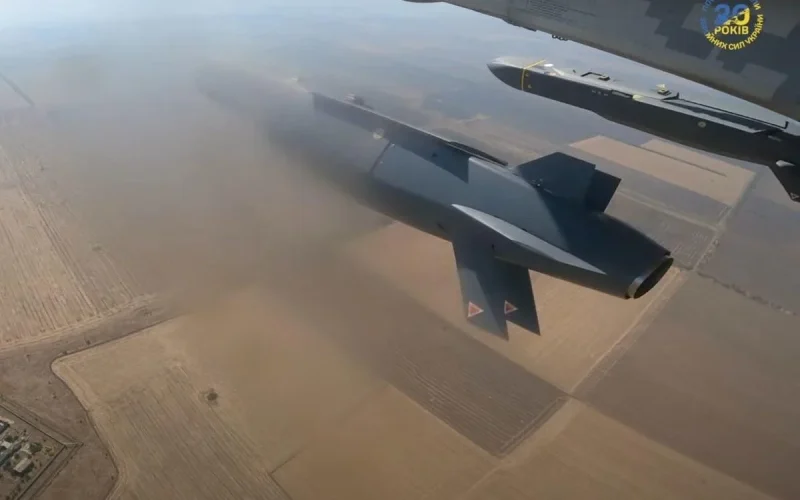
Ukraine’s Suspected FP-9 Ballistic Missile Sparks New Questions After Strike Near Moscow.
No warning sirens. High-altitude interceptions. A strike deep inside Moscow. Military analysts are asking whether Ukraine has quietly introduced a new ballistic missile into the war.
Ukraine may have introduced a new domestically developed ballistic missile into combat, following a strike near Moscow that has fueled intense speculation among military analysts and pro-war bloggers in both Russia and Ukraine.
While there has been no official confirmation from Kyiv, the unusual characteristics of Tuesday’s attack have prompted questions about whether a new phase of the war has begun.
According to Russian and Ukrainian military bloggers, the strike may have involved the FP-9, a Ukrainian-developed short-range ballistic missile reportedly capable of reaching targets up to 850 kilometers (528 miles) away.
The reports remain unverified, but analysts point to several unusual indicators, including the absence of air raid sirens and Russian interception attempts at exceptionally high altitudes—behavior more consistent with defending against ballistic missiles than drones or cruise missiles.
If confirmed, the FP-9 would represent a significant advance in Ukraine’s indigenous missile program.
Reports from Ukraine last week indicated the missile had entered final engine testing, with its developers suggesting that Moscow could become one of its first operational targets once deployment begins.
The speculation comes as Ukraine continues expanding its long-range strike campaign against strategic infrastructure inside Russia. President Volodymyr Zelenskyy confirmed that Ukrainian forces struck one of Russia’s largest oil refineries in Ufa, more than 1,300 kilometers (808 miles) from the front line.
He also announced a separate attack on a military-industrial facility in the Penza region involved in manufacturing components for Russian missile systems.
“This is a just response to everything Russia is doing against us,” Zelenskyy said, arguing that Russia has the ability to end the war if it chooses.
The reported attacks illustrate Ukraine’s evolving military strategy. Rather than focusing solely on frontline operations, Kyiv is increasingly targeting Russia’s energy infrastructure, logistics networks, and defense industry to impose economic costs and complicate Moscow’s ability to sustain its military campaign.
Whether the Moscow strike involved the FP-9 remains uncertain. Neither the Ukrainian government nor Russia’s Defense Ministry has confirmed the weapon used, and independent verification is unavailable.
However, if Ukraine has successfully fielded a domestically produced ballistic missile capable of reaching Moscow, it would mark one of the most significant technological developments of the war and present a new challenge for Russia’s air defense network.
For now, the reports remain speculative. But the growing range and sophistication of Ukraine’s long-range strike capabilities suggest that the battlefield is extending ever deeper into Russian territory, increasing both the military and political pressure on the Kremlin.