Connect with us

US-Israel war on Iran

Iran and Lebanon Take the Heaviest Hits in Missile War

Published

on

7,700 strikes. Two countries hit the hardest. The numbers reveal where the war was really fought.

Iran and Lebanon bore the brunt of a sustained barrage of missiles, drones, and airstrikes during the recent Middle East war, according to new conflict data tracking nearly 7,700 attacks over a six-week period.

An analysis based on data from ACLED, a U.S.-based conflict monitoring group, shows that roughly three-quarters of all recorded strikes targeted either Iran or Lebanon, underscoring the central role both played in the conflict.

The data covers the period from February 28 to April 8, when a fragile ceasefire between Tehran and Washington took effect.

Iran alone accounted for about 40 percent of the strikes. Most of these were attributed to Israeli operations, though only around one-third of targets could be clearly identified as military or linked to the Islamic Revolutionary Guard Corps. A significant portion of strikes had no confirmed target classification.

Lebanon represented roughly one-third of the total attacks, reflecting ongoing hostilities involving Hezbollah. Israeli forces carried out the majority of strikes there, while Hezbollah accounted for a smaller share of attacks targeting Israeli positions.

The data also highlights that the ceasefire between the United States and Iran did not extend to Lebanon, where Israeli operations continued throughout the period.

Beyond the two main theaters, about one in seven attacks targeted Israel itself, most of which were intercepted. These strikes were launched in roughly equal proportions by Iran and Hezbollah.

Other countries were also drawn into the conflict. Iranian strikes targeted Gulf states including the United Arab Emirates, Saudi Arabia, Kuwait, and Bahrain, while additional incidents were recorded in Iraq, Syria, Jordan, and Turkey.

Energy infrastructure emerged as a key target across the region. Facilities in Iran, as well as oil installations in Gulf states, were repeatedly struck, contributing to wider disruptions in global energy markets. ACLED data indicates that around 40 percent of strikes affecting such infrastructure resulted in damage.

Military bases hosting U.S. personnel were also targeted approximately 50 times, particularly during the early phase of the conflict.

The findings provide one of the clearest quantitative pictures of the war’s intensity and geographic spread, highlighting both the concentration of violence in Iran and Lebanon and the broader regional spillover.

While the ceasefire has reduced the pace of attacks, the scale of damage and the distribution of strikes suggest that the conflict’s impact will extend well beyond the battlefield.


Analysis

US-Iran Talks Face Assassination Fears and Risk of Ceasefire Collapse

Published

on

Negotiators are talking—but also watching their backs. If Islamabad fails, the war could return fast.

The high-stakes negotiations between the United States and Iran in Islamabad have entered a tense new phase, where diplomacy is unfolding alongside mounting security fears and the looming risk of renewed conflict.

For the first time in years, elements of direct engagement have emerged between the two sides. The U.S. delegation, led by JD Vance, is facing off with Iranian officials headed by Mohammad Bagher Ghalibaf. Pakistan is playing host and mediator, aiming less for a breakthrough than for preventing total collapse.

But beyond the negotiating rooms, a darker layer of risk is shaping the talks.

Iran has publicly warned of what it calls “incitement to state terrorism,” pointing to commentary in U.S. policy circles suggesting that Iranian negotiators could be targeted if talks fail. Tehran has framed such rhetoric as a dangerous escalation—one that blurs the line between diplomacy and political violence.

Security measures reflect those fears. Pakistani authorities have effectively locked down key zones of the capital, deploying extensive checkpoints, surveillance, and rapid-response units. The precautions are driven not only by concerns over militant attacks or regional spillover, but also by the possibility of targeted strikes aimed at derailing the talks.

Reports circulating in regional media suggest Iran has taken extraordinary steps to protect its delegation, including the use of decoy flights—though such claims remain unverified.

The anxiety is not without precedent. The early phase of the war saw high-profile assassinations of senior Iranian figures, setting a tone that continues to influence Tehran’s threat perception.

Still, there is no credible evidence supporting extreme claims that Iranian nationals broadly face coordinated targeting in Pakistan. Officials view such narratives as exaggerations fueled by an already volatile environment.

What remains real is the risk if diplomacy fails.

At the center of the talks lies the unresolved dispute over the Strait of Hormuz, which Iran has used as leverage throughout the conflict. A breakdown in negotiations would likely trigger renewed pressure on the waterway, disrupting global energy flows and reigniting economic shockwaves.

Washington has signaled little tolerance for prolonged stalemate. Donald Trump has repeatedly warned of large-scale strikes if Iran does not fully reopen Hormuz, while Israel continues military operations in Lebanon outside the scope of the ceasefire.

The likely trajectory, analysts say, is not immediate all-out war—but rapid escalation: missile exchanges, proxy activation, and renewed attacks on regional infrastructure.

Longer term, failure in Islamabad could harden positions on both sides. In Tehran, it would strengthen arguments for accelerating nuclear capabilities under a more hardline leadership. In Washington, it would reinforce a shift back toward coercive pressure.

For now, the talks continue under tight security and heavy expectations.

The outcome may not deliver peace—but it will determine whether the current pause holds, or whether the conflict returns with greater intensity.

Continue Reading

US-Israel war on Iran

US Moves to Reopen Hormuz as War Risks Linger

Published

on

The war may be paused—but the mines remain. Now the US is moving to clear the world’s most critical oil route.

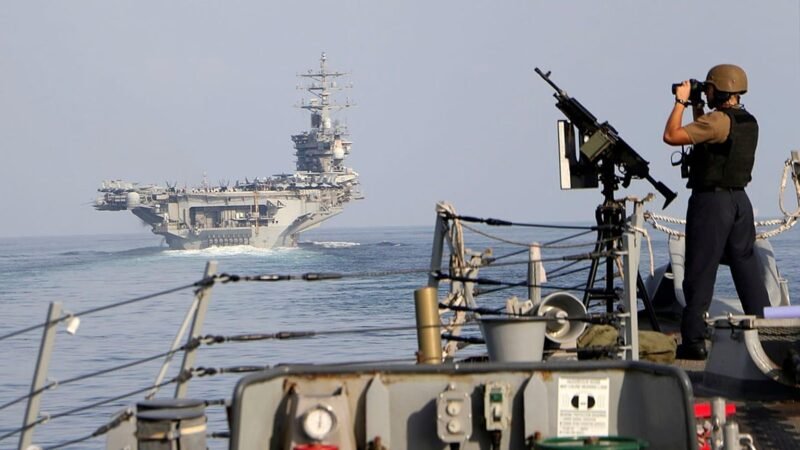
The United States military has begun preparations to clear sea mines from the Strait of Hormuz, a key step toward restoring global shipping flows amid a fragile ceasefire with Iran.

U.S. Central Command said Saturday that two warships—the USS Frank Peterson and USS Michael Murphy—have transited the waterway as part of operations to “set conditions” for mine-clearing efforts. The mission aims to secure the strait following weeks of disruption caused by Iranian mine-laying activities.

Admiral Brad Cooper said forces have begun establishing a safe maritime passage, which will soon be shared with commercial shipping operators to encourage the resumption of trade.

“Today, we began the process of establishing a new passage,” Cooper said, adding that the goal is to ensure the waterway is “fully clear” of mines.

Earlier, Donald Trump said U.S. forces had already taken significant action against Iran’s naval capabilities, including the destruction of vessels used to deploy mines. His comments could not be independently verified.

The Strait of Hormuz, through which about 20 percent of global oil supply typically passes, has been largely disrupted in recent weeks, contributing to volatility in energy markets and rising fuel prices worldwide.

The mine-clearing effort comes as U.S. and Iranian officials meet in Islamabad for negotiations aimed at extending a temporary ceasefire into a broader agreement. Reopening the strait has emerged as a central condition for maintaining the truce.

While the military operation marks progress toward restoring navigation, officials caution that clearing mines is a complex process that could take time.

For now, the effort signals a shift from active conflict to stabilization—though the situation remains uncertain as diplomatic talks continue.

Continue Reading

U.S.–Iran Talks

Strait of Hormuz at Center of U.S.–Iran Talks

Published

on

Iran entered high-stakes negotiations with the United States in Pakistan this weekend holding a key advantage: control over the Strait of Hormuz, a critical route for global energy supplies.

The waterway, which carries about 20 percent of the world’s oil and natural gas, has become a central issue in efforts to turn a fragile two-week ceasefire into a longer-term agreement. U.S. officials have made reopening the strait a top priority in the talks.

Before the war, commercial shipping moved freely through the passage linking the Persian Gulf to the Gulf of Oman. But shortly after the conflict began, Iran restricted access, allowing only limited traffic and reportedly charging fees to vessels seeking passage.

The disruption triggered sharp increases in global energy prices, with oil rising significantly during the height of the conflict before easing following the ceasefire announcement. However, shipping activity remains below normal levels, with many companies waiting for clearer security guarantees.

Iran has signaled it wants to retain some level of control over the strait as part of any final agreement, including the potential right to collect transit fees. U.S. President Donald Trump has sent mixed signals on the issue, at times criticizing the fees while also suggesting they could be part of a negotiated arrangement.

The focus on maritime access has shifted attention away from Iran’s nuclear program, which had been a primary driver of the conflict. While discussions on enrichment and sanctions relief are expected to continue, immediate concerns about energy flows and economic stability now dominate the agenda.

Despite heavy damage to its military during the war, Iran has continued to operate and retains the ability to influence regional dynamics. Analysts say its control over Hormuz provides leverage that could shape the outcome of the negotiations.

The talks come amid broader uncertainty. Differences remain over the terms of the ceasefire, and tensions persist across the region, including ongoing hostilities involving Iran-backed groups.

Officials from both sides have expressed cautious optimism about the negotiations, but significant gaps remain on key issues, raising questions about whether the ceasefire can be sustained.

Continue Reading

Top stories

Starmer Pushes Gulf Powers to Lock In Fragile Ceasefire

Published

on

No Gulf buy-in, no real peace. Britain is now pushing the region to take ownership of the ceasefire.

Britain has emphasized the need for stronger Gulf involvement in stabilizing the U.S.–Iran ceasefire, as Prime Minister Keir Starmer wrapped up a three-day tour of the region.

Speaking after meetings with Gulf leaders, Starmer said participation from regional states is “vital” to turning the temporary pause in fighting into a lasting agreement.

During a stop in Doha, Starmer met Tamim bin Hamad Al Thani to discuss the ceasefire and broader regional tensions. Both sides welcomed the agreement between Washington and Tehran, describing it as an important step toward de-escalation.

Officials also stressed the need for continued coordination with international partners to build on the ceasefire and move toward a more durable peace framework.

Talks focused heavily on safeguarding global energy flows, particularly through the Strait of Hormuz, which remains a central concern for both regional and global markets following weeks of disruption.

Starmer reiterated the United Kingdom’s condemnation of recent Iranian attacks on Qatar and expressed full support for Doha’s efforts to protect its sovereignty and security.

Qatar’s leadership, including Prime Minister and Foreign Minister Mohammed bin Abdulrahman bin Jassim Al Thani, emphasized the importance of joint diplomatic efforts to ensure stability and prevent further escalation.

The visit to Qatar was part of a broader Gulf tour that included Saudi Arabia, Bahrain, and the United Arab Emirates, reflecting London’s push to engage regional powers directly in shaping the outcome of the crisis.

British officials say the strategy is to reinforce a coordinated Western–Gulf approach, ensuring that any long-term agreement addresses both security concerns and economic stability.

While the ceasefire has reduced immediate tensions, leaders on all sides acknowledge that its success will depend on sustained regional cooperation—and the ability to keep critical trade routes open.

For now, the message from London is clear: without Gulf participation, the ceasefire may not hold.

Continue Reading

US-Israel war on Iran

Trump Warns of Renewed Strikes on Iran if Talks Collapse

Published

on

Talks begin—but the weapons are already being loaded. This ceasefire could end fast.

U.S. President Donald Trump has warned that the United States is preparing for a rapid return to military action against Iran if ongoing negotiations fail, signaling that the current ceasefire remains highly fragile.

In remarks made as Vice President JD Vance departed for talks in Islamabad, Trump said U.S. forces are “reloading” with advanced weaponry and stand ready to resume operations at a higher level of intensity.

“We’re loading up the ships with the best weapons ever made,” Trump said, adding that if no agreement is reached, the United States would use them “very effectively.”

The comments underscore the dual-track strategy now defining U.S. policy: diplomacy backed by the threat of overwhelming force.

Vance is leading the U.S. delegation in Pakistan, joined by envoy Steve Witkoff and advisor Jared Kushner, in what are expected to be high-stakes negotiations aimed at turning a two-week ceasefire into a longer-term settlement.

But Trump’s rhetoric highlights the deep mistrust between the sides.

He questioned the credibility of Iran’s leadership, including Foreign Minister Abbas Araghchi and parliamentary speaker Mohammad Bagher Ghalibaf, suggesting that Tehran has sent conflicting messages about its nuclear program.

“To our face, they say everything is gone,” Trump said of Iran’s nuclear activities. “Then they go out to the press and say they want to enrich.”

The president also argued that Iran’s leverage is limited to its ability to disrupt global shipping routes, particularly through the Strait of Hormuz, a critical artery for global oil supplies.

Negotiations are expected to focus on several unresolved issues, including Iran’s uranium enrichment program, sanctions relief, and guarantees for maritime security.

Despite the ceasefire, tensions remain elevated. Both sides have issued conflicting interpretations of the truce, and military forces across the region remain on high alert.

Trump’s latest warning reinforces that the pause in fighting is conditional.

If talks succeed, the ceasefire could evolve into a broader agreement. If they fail, the conflict may resume quickly—and at a potentially higher level of intensity than before.

Continue Reading

ASSESSMENTS

$145 Billion Lost: Iran’s War Leaves Cities Shattered and Power Broken

Published

on

Billions lost. Cities damaged. Military hit hard. But the real story? What Iran still has left.

Iran has emerged from 40 days of war with the United States and Israel facing staggering losses, with economic damage estimated between $140 billion and $145 billion, according to regional reports.

The destruction extends far beyond military targets. Iranian officials say more than 125,000 civilian facilities were damaged, including roughly 100,000 homes and over 23,000 commercial units. Hospitals, schools, and universities were also hit, reflecting the broad impact on daily life and essential services.

Critical infrastructure has taken a severe blow. Power plants, fuel depots, airports, and transport networks were damaged, compounding an already fragile economy and slowing any immediate recovery. Analysts warn the war has deepened economic strain, with unemployment rising and industries disrupted.

Iran’s military capability has also been significantly degraded. Key missile production sites and launch facilities were heavily damaged, with some estimates suggesting more than two-thirds of missile and drone infrastructure was affected.

Satellite analysis indicates that strikes destroyed surface launch systems and disrupted access to underground stockpiles, temporarily limiting Iran’s ability to produce and deploy new missiles.

Despite the scale of destruction, Iran’s core structure remains intact. Its political system, technical expertise, and strategic leverage—particularly over the Strait of Hormuz—continue to shape the post-war balance.

The ceasefire announced by Donald Trump has halted immediate escalation, but the long-term outlook remains uncertain.

Iran now faces a dual challenge: rebuilding a heavily damaged country while navigating intense geopolitical pressure.

The war may be paused, but its consequences are only beginning to unfold.

Continue Reading

US-Israel war on Iran

Petraeus Warns Iran May Gain Strategic Leverage Despite Military Losses

Published

on

Iran may have lost the battle—but could still win the strategy.

Retired U.S. General David Petraeus has raised a critical question about the outcome of the Iran war: can a country lose militarily and still come out strategically stronger?

Speaking in a televised interview, Petraeus said there is “no question” that Iran has been significantly weakened by sustained U.S. and Israeli strikes. Its military infrastructure, capabilities, and regional networks have all taken substantial damage.

But the long-term picture, he argued, is far less clear.

The answer depends largely on one factor—the Strait of Hormuz.

Iran’s ability to disrupt or control this vital chokepoint could reshape the outcome of the conflict. Roughly 20 percent of global oil flows through the strait under normal conditions, making it one of the most critical arteries in the global economy. By restricting traffic, even temporarily, Iran has demonstrated its capacity to influence energy markets far beyond its borders.

That leverage may prove decisive.

Petraeus noted that hundreds of vessels have been delayed or rerouted as shipping companies wait for security guarantees before resuming normal operations. Even with a ceasefire in place, uncertainty continues to limit traffic, keeping pressure on global supply chains.

More importantly, Iran is now exploring ways to formalize that leverage.

A proposed system of transit fees—reportedly linked to the value of oil cargo—could generate substantial revenue. Petraeus warned that such a mechanism, if sustained, could provide Iran with a steady stream of funds to rebuild its damaged infrastructure and military capabilities.

In that scenario, the strategic balance begins to shift.

Despite battlefield losses, Iran would retain—and potentially institutionalize—control over a key global chokepoint. That would give it ongoing influence over energy flows, pricing, and geopolitical negotiations.

The paradox is clear.

Military degradation does not automatically translate into strategic defeat. If the post-war arrangement allows Iran to maintain or expand its role in controlling maritime traffic, it could emerge with greater long-term leverage than before the conflict.

The outcome, Petraeus suggested, will depend on how the ceasefire evolves into a permanent settlement—particularly whether freedom of navigation through Hormuz is fully restored or remains conditional.

Until that question is resolved, the war’s final balance remains uncertain.

Iran may be weaker on the battlefield.

But in the broader strategic landscape, the story is still being written.

Continue Reading

US-Israel war on Iran

Israel Says Iran Weakened but Warns War Could Resume at Any Moment

Published

on

The war paused—but Israel says it can restart anytime. That’s not peace. That’s a warning.

Israel’s military leadership said Thursday that forces remain on high alert and prepared to resume combat despite a newly established ceasefire with Iran, underscoring the fragile nature of the truce.

In a statement, Eyal Zamir said the Israeli military “remains at war,” noting that operations continue against Hezbollah in Lebanon even as direct hostilities with Iran have paused.

“The IDF is at war. We continue to fight against Hezbollah with great intensity,” Zamir said, adding that Israeli forces are ready to escalate again “at any given moment” if required.

A ceasefire between Israel and Iran took effect on Wednesday following weeks of conflict, but Israeli officials have emphasized that the agreement does not extend to operations against Iran-backed groups in the region.

Zamir described Israel’s recent campaign as “unprecedented and historic,” saying it had significantly weakened Iran’s military capabilities.

“Iran before this war is not the same Iran; it is far weaker,” he said.

He also asserted that Hezbollah has been strategically degraded, claiming the group is now “isolated within Lebanon and cut off from its strategic artery in Iran.”

The comments come as tensions remain elevated across the region. While the ceasefire has reduced the risk of direct confrontation between Israel and Iran, ongoing hostilities in Lebanon and unresolved disputes over the terms of the truce continue to threaten its stability.

Israeli officials have indicated that military readiness will remain unchanged during the ceasefire period, reflecting concerns that fighting could resume if negotiations fail or if either side breaches the agreement.

Continue Reading

Most Viewed

error: Content is protected !!