Why Experts Say Moscow Is Fighting a Different War. No Boots, Just Shadows—Russia’s Iran Strategy Is More Dangerous Than Troops.
When Volodymyr Zelensky warned that Russia could expand its military axis with Iran—even to the point of deploying troops—he wasn’t just raising a battlefield scenario. He was reframing the conflict itself.
The concern is straightforward: a deeper Russia-Iran alignment could transform the Middle East into a second front against the West. Signals exist. Joint military exercises. Expanded drone cooperation. Intelligence sharing that may already be shaping strikes across the region. But the question that matters is not whether coordination is growing—it is how far Moscow is willing to go.
On that point, most Western analysts draw a firm line.
Across interviews with U.S. and U.K. experts, a consensus emerges: Russia is unlikely to send ground forces into Iran. Not because the partnership lacks depth, but because the risks outweigh the gains. Direct deployment would bring Russian troops into potential confrontation with the United States and Israel—a scenario that risks rapid escalation beyond controlled limits.
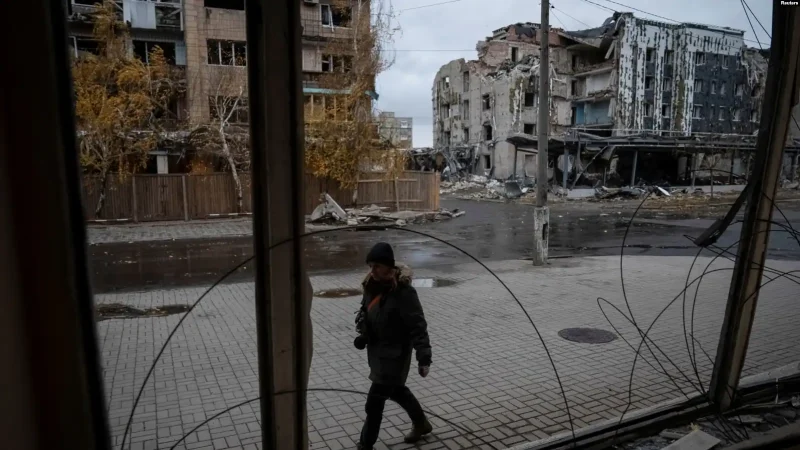
The constraint is also practical. Russia remains heavily committed to its war in Ukraine. Its forces are stretched, its advances limited, and its capacity to open a second front—especially one involving multiple advanced militaries—is constrained. Even if Moscow wanted to escalate, it may not have the bandwidth to do so.
But stopping at that conclusion misses the larger shift.
What is unfolding is not a traditional military expansion. It is a transition toward indirect warfare—where intelligence, technology, and proxy leverage matter more than troop deployments. In this framework, Russia does not need soldiers on Iranian soil to influence the conflict. It needs access, coordination, and plausible deniability.
Evidence of that approach is accumulating. Analysts point to intelligence-sharing that may be improving Iran’s targeting of U.S. defense systems in the region. Cooperation on drones has already made Iranian platforms faster and more precise.
There are also indications of joint efforts in electronic warfare, including attempts to counter satellite systems like SpaceX’s Starlink network.
This model mirrors the broader logic of the conflict: pressure without direct confrontation. During the Cold War, major powers avoided head-on clashes while competing through proxies and technological advantage. The current alignment appears to follow a similar pattern—adapted for a digital and networked battlefield.
There are limits here, too. Some claims—such as Russian support for advanced Iranian intercontinental missile programs—remain unverified or contested. Analysts argue Moscow has little incentive to invest heavily in capabilities that could alter strategic balances beyond its control.
Still, the partnership is evolving. The Islamic Revolutionary Guard Corps continues to benefit from Russian technical input, while Moscow gains from Iranian drone supplies and battlefield experience. It is less an alliance of equals than a transactional alignment shaped by shared opposition to Western power.
The strategic risk lies in how this alignment scales. If Iran shifts toward broader asymmetric tactics—targeting Gulf infrastructure, expanding drone campaigns, or activating covert networks—Russian support could amplify those effects without crossing into direct war.
That is the threshold both sides appear to be managing: how to increase pressure without triggering a confrontation they cannot control.
Zelensky’s warning, then, may be less about imminent troop deployments and more about trajectory. The axis is deepening. The methods are diversifying. The battlefield is widening.
The real question is not whether Russian soldiers will arrive in Iran. It is whether the war itself is moving into a phase where soldiers matter less than systems, signals, and shadows.
And in that kind of conflict, escalation does not announce itself—it accumulates quietly, until it becomes impossible to reverse.