Finland has no direct stake in Hormuz. So why is its president talking about joining the fight?
President Alexander Stubb Signals Openness to Backing U.S. Operations — With Ukraine in Mind.
Finland’s president, Alexander Stubb, has emerged as one of the few European leaders openly suggesting that the European Union should consider supporting U.S. efforts in the Strait of Hormuz. His reasoning has less to do with Iran than with Ukraine.
While most major EU powers — including France, Germany and Italy — have stressed restraint and declined to commit forces to the Gulf, Stubb has said countries with “the capacity and the will” should help Washington secure maritime trade routes.
In London, he went further, reacting positively to the idea that European naval support in the Gulf could be leveraged to extract stronger U.S. backing for Kyiv in its war with Russia.
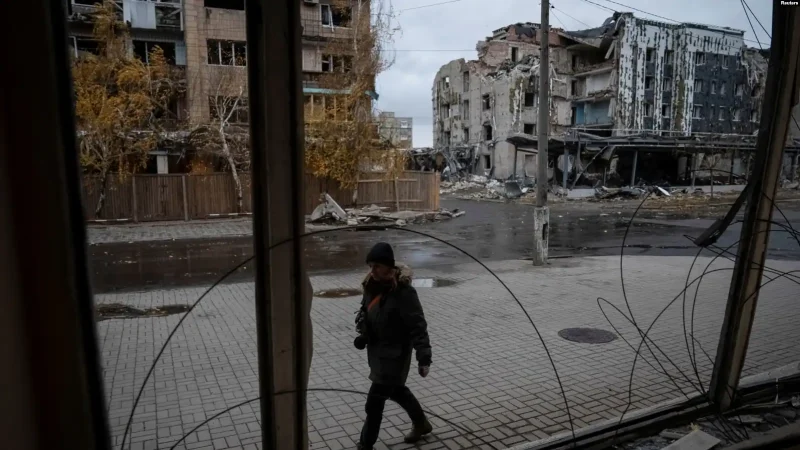
At the heart of Stubb’s calculus is concern that the U.S.-Israeli war with Iran is diverting American military resources and political attention away from Ukraine. Rising oil prices, driven in part by instability in the Strait of Hormuz, also benefit Russia by boosting energy revenues. From Helsinki’s perspective, anything that weakens Western focus on Ukraine strengthens Moscow’s hand.
The proposal has met skepticism inside Europe. German Defense Minister Boris Pistorius publicly questioned what a handful of European frigates could accomplish that the U.S. Navy cannot. European Commission President Ursula von der Leyen has said there is “no appetite” in Brussels to widen EU naval operations beyond existing missions.
Finland’s own naval capabilities are limited: a small fleet of missile boats and minesweepers, designed primarily for Baltic Sea defense. The Baltic states that have echoed Stubb’s posture — Estonia and Lithuania — field similarly modest forces. Any deployment would be symbolic rather than decisive.
Still, symbolism may be the point. For Stubb and like-minded leaders, visible alignment with Washington in one theater could help maintain U.S. engagement in another. The risk, critics argue, is entanglement in a conflict far from Europe’s core security interests.
Public support within the EU for involvement in the Iran conflict remains weak. Larger military powers such as France and Poland have ruled out participation in combat operations, though some have left open the possibility of maritime escort missions once hostilities subside.
For now, Stubb represents a small but vocal bloc that sees strategic linkage between the Gulf and Eastern Europe. Whether that linkage persuades Washington — or alienates other European partners — remains to be seen.