Somaliland Pulls Envoy From Djibouti After Israel Recognition.
The Republic of Somaliland has formally recalled its ambassador to Djibouti for consultations, signaling a sharp escalation in diplomatic tensions following Israel’s recognition of Somaliland as a sovereign state.
In an official statement released Wednesday, the Ministry of Foreign Affairs and International Cooperation confirmed that Somaliland’s representative to Djibouti has returned to Hargeisa “as part of ongoing diplomatic engagements and in line with established diplomatic practice.”
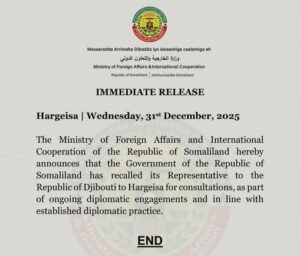
Officials separately confirmed that Djibouti’s ambassador to Somaliland also departed Hargeisa on Wednesday morning for Djibouti, indicating that both governments have summoned their envoys simultaneously—a classic diplomatic signal of protest short of cutting ties.
Regional analysts say the move is directly linked to Djibouti’s public opposition to Somaliland’s growing international recognition, particularly after Israel became the first UN member state to formally recognize Somaliland’s independence.
“This is a calibrated warning shot,” one regional diplomat said. “Recalling ambassadors for consultations is how states signal deep dissatisfaction without crossing into full diplomatic rupture.”
Djibouti has positioned itself firmly against Somaliland’s recognition drive, aligning with Somalia and other regional actors resisting changes to the Horn of Africa’s political map. That stance has increasingly strained relations between the two neighbors, especially as Somaliland gains new strategic relevance along the Gulf of Aden and Red Sea corridor.
The dual recalls underscore how Israel’s recognition has triggered real-world diplomatic consequences across the Horn, reshaping alliances and forcing regional capitals to choose sides.
For now, channels remain open. But the message from Hargeisa is unmistakable:
Somaliland is no longer absorbing opposition quietly—and it expects its sovereignty to be treated as a political reality, not a theoretical debate.