U.S. Strikes Iran Again After Hormuz Ship Attack
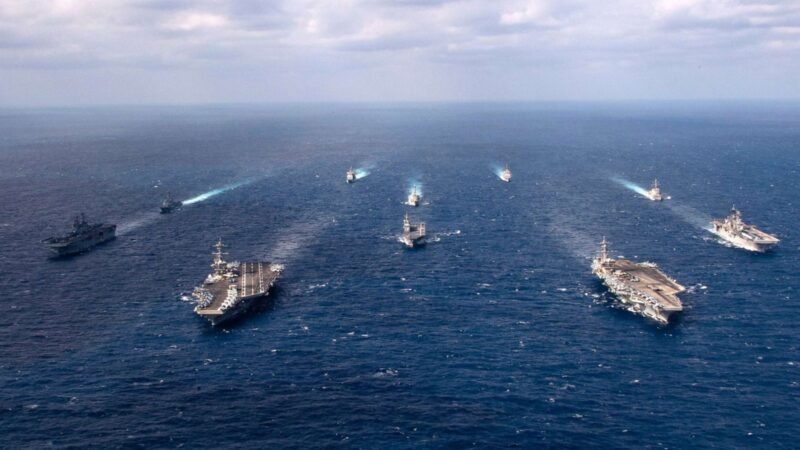
The United States has launched a new round of military strikes against Iran after the Islamic Revolutionary Guard Corps attacked a Cyprus-flagged container ship transiting the Strait of Hormuz, according to U.S. Central Command.
Reuters reported that the vessel suffered an onboard fire and significant engine-room damage, leaving it unable to continue its journey. CENTCOM also said a civilian crew member was missing after the attack. The strikes were carried out at the direction of President Donald Trump.
The latest operation marks another escalation in the widening confrontation over Hormuz, one of the world’s most important energy and shipping corridors.
U.S. forces launched the strikes at 7:15 p.m. Eastern Time in response to the attack on the M/V GFS Galaxy, a Cyprus-flagged container ship. CENTCOM said Iran had been given another chance to follow the memorandum of understanding but had again failed to do so.
The military purpose appears clear: Washington is trying to reduce Iran’s ability to threaten commercial shipping through the strait.
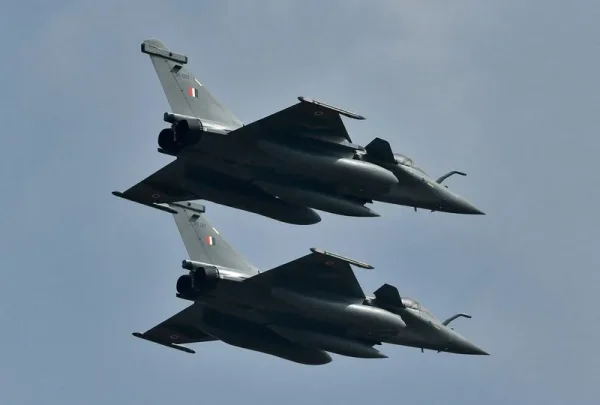
U.S. strikes targeted missile and drone launch sites, ammunition dumps, communication equipment and other military infrastructure. A U.S. official also said some strikes targeted missile and air-defense systems as well as Revolutionary Guard boats.
This was not an isolated incident. CENTCOM previously said Iran had attacked three commercial vessels transiting the strait — the Marshall Islands-flagged M/T Al Rekayyat, the Saudi Arabia-flagged M/T Wedyan and the Liberian-flagged M/T Cyprus Prosperity — calling the attacks a dangerous violation of the ceasefire and a threat to freedom of navigation.
Iran says the strait is closed until calm is restored. The United States rejects that claim and insists commercial traffic can continue.
AP reported that U.S. officials said more than 140 ships had transited the area over the past week, though traffic was moving at reduced levels. Before the war, nearly 140 vessels transited daily, and about one-fifth of traded oil and natural gas moved through the strait.
The military exchange is now threatening the diplomatic process. Mediators including Pakistan, Qatar and Egypt are still trying to keep the ceasefire framework alive, while Oman has continued talks with Iran over safe passage through the strait. But the latest ship attack and U.S. retaliation have pushed those efforts closer to collapse.
The regional risk is already spreading. AP reported that Iran responded to U.S. strikes with attacks on Bahrain, Kuwait, Qatar, Jordan and Oman. Missile alerts sounded in several Gulf states, Qatar said it intercepted incoming fire, and Kuwait reported damage to border posts and an offshore drilling platform. Oman summoned Iran’s ambassador and called the attacks irresponsible.
The strategic issue is no longer only whether the United States and Iran can avoid full-scale war. The issue is whether the Strait of Hormuz can remain a usable international waterway while both sides continue military operations around it.
For Washington, the message is deterrence. Iran’s attacks on commercial shipping are being answered with direct strikes against military assets linked to maritime threats. For Tehran, the message is leverage. Iran is trying to show it can impose costs on shipping, Gulf states and U.S. partners if its demands over the strait are rejected.
That makes Hormuz the center of the crisis.
The strait is not simply a geographic passage. It is an economic pressure point. Any sustained disruption would affect oil prices, LNG markets, shipping insurance, Gulf security, and global inflation. Even when ships continue moving, the perception of danger raises costs and changes behavior.
The immediate danger is escalation by cycle. Iran strikes a vessel. The United States strikes military sites. Iran retaliates against Gulf states or U.S.-linked targets. Washington strikes again. Each side says it is enforcing deterrence, but every round makes diplomacy weaker.
The latest strikes also show how modern conflict is expanding. Military targets, commercial vessels, energy infrastructure, shipping corridors, and diplomatic talks are all now part of the same battlefield. The war is being fought not only through airstrikes, but through pressure on trade, insurance, ports, oil, gas and regional alliances.
For the wider Red Sea and Horn of Africa region, the lesson is direct. When Hormuz becomes unstable, global shipping systems look for alternatives and safer corridors. That raises the importance of maritime security from the Gulf of Aden to Bab al-Mandab, Suez and the Red Sea.
The new U.S. strikes against Iran show that the Hormuz crisis has entered a more dangerous phase. CENTCOM is framing the operation as retaliation for attacks on commercial shipping and as enforcement of the ceasefire framework. Iran is trying to turn the strait into leverage over Washington and Gulf states.
The result is a widening military-diplomatic crisis in which commercial vessels, oil routes, Gulf bases and mediation efforts are all exposed. Unless the attacks on shipping stop, the ceasefire process may survive only on paper.
By WARYATV Intelligence Desk | waryatv@waryatv.com