Connect with us

US-Israel war on Iran

Gulf Demands UN Action as War Spreads to Sea Lanes

Published

on

GCC Calls on UN to Secure Strait of Hormuz as Iran Blockade Deepens Global Energy Crisis.

At the United Nations, the language was urgent. Not diplomatic caution, but escalation framed in legal terms.

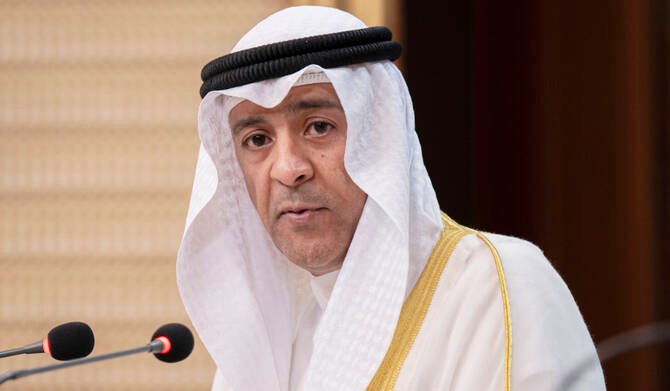
Standing before the Security Council, Jasem Al-Budaiwi called for a binding resolution to guarantee freedom of navigation through the Strait of Hormuz—a waterway now at the center of a widening war.

For Gulf states, the issue is no longer abstract. Iranian strikes, launched in response to U.S.-Israeli attacks earlier this year, have extended beyond direct combat zones, hitting neighboring countries that insist they are not parties to the conflict. The cumulative effect has been to transform the Gulf into a contested space where neutrality offers little protection.

By the third layer of this crisis, the stakes extend far beyond regional security. Hormuz carries roughly a fifth of global oil consumption.

Its disruption is not just a military problem—it is an economic shock with immediate global consequences. Energy prices are rising, supply chains are tightening, and governments far from the Middle East are being pulled into the fallout.

Al-Budaiwi’s appeal reflects a strategic shift. Rather than relying solely on bilateral or regional responses, Gulf states are internationalizing the crisis—seeking to anchor maritime security within the authority of the United Nations Security Council.

The move signals both urgency and limitation: a recognition that no single state, or even regional bloc, can stabilize the waterway alone.

At the same time, the language used—“heinous aggression” and the assertion of a right to self-defense—underscores how sharply positions have hardened. The diplomatic framing now mirrors the intensity on the ground.

There are signs the conflict could widen further. Threats by the Houthis to disrupt the Bab al-Mandeb Strait point to a second critical chokepoint coming under pressure. If both corridors—Hormuz and Bab al-Mandeb—are compromised, the implications for global trade would be severe, effectively squeezing energy flows from two directions.

Still, the path forward remains uncertain. A UN resolution, even if passed, would require enforcement. That raises immediate questions: who secures the strait, under what mandate, and at what risk of direct confrontation with Iran?

There are also political constraints. Major powers remain divided over responsibility and strategy, complicating any unified response. Without consensus, resolutions risk becoming symbolic rather than operational.

Yet for Gulf states, the calculus is shifting. Continued restraint carries its own cost—economic, political, and strategic. Each day the strait remains restricted deepens the pressure on governments that depend on its stability.

What is unfolding is a transition from regional conflict to global concern. Maritime security, once assumed, is now contested. Energy flows, once routine, are now conditional.

The longer the crisis persists, the more it tests not just military capabilities, but the architecture of international cooperation itself.

And at its core lies a fundamental question: can the global system still guarantee open trade routes in times of conflict—or is that assumption now being rewritten in real time?

Analysis

Trump Declares Victory as Iran Proves It’s Not Done

Published

on

Iran Missile Strikes Continue as Trump Claims Tehran Threat Is Nearly Eliminated.

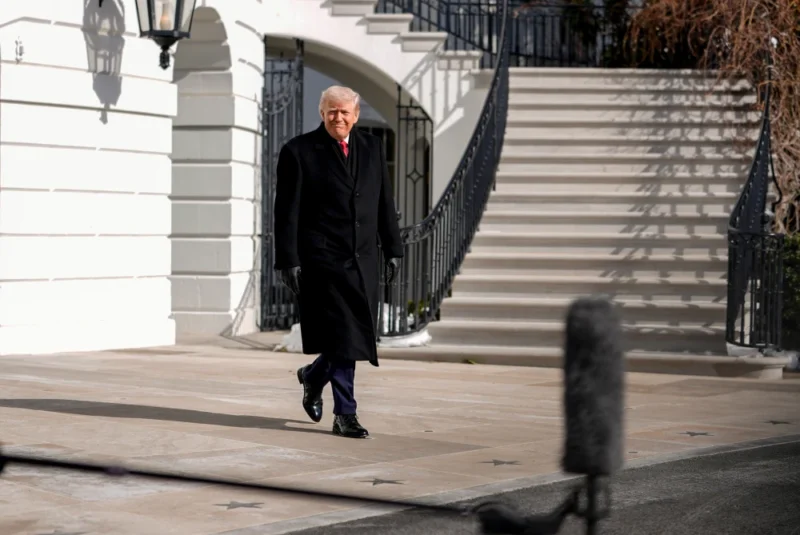
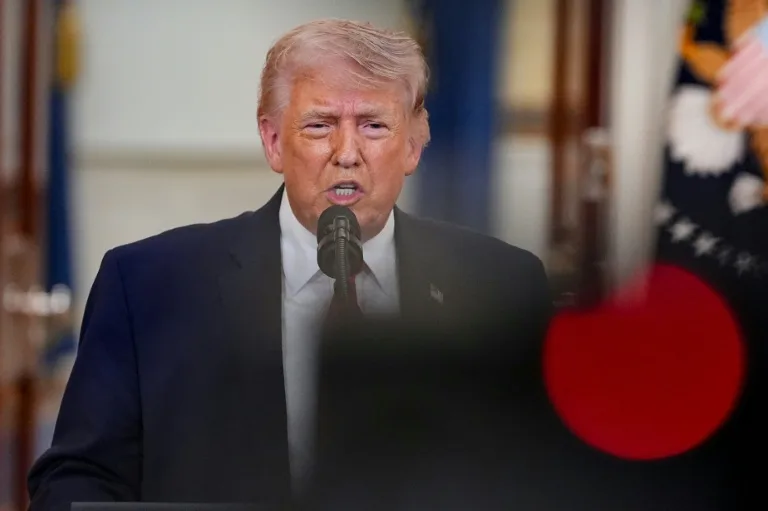
Explosions echoed across multiple cities just as Donald Trump addressed the American public, declaring that Iran was “no longer a threat.” Minutes later, missiles were already in the air.

On Thursday, Iran launched fresh strikes against Israel and Gulf states, underscoring a stark contradiction between political messaging and battlefield reality. Air defenses activated across the region—from Israel to Bahrain—while reports confirmed continued attacks even as Washington framed the war as nearing its strategic conclusion.

The sequence matters. It reveals a conflict operating on two tracks: narrative control and operational persistence.

By the third layer of this escalation, the gap is widening. Trump insists that U.S. and Israeli strikes have significantly degraded Iran’s capabilities. Tehran, however, signals the opposite—pointing to what it claims are intact stockpiles, hidden facilities, and an ongoing capacity to strike across multiple fronts.

The result is not clarity, but strategic ambiguity.

Iran’s approach appears calibrated. Rather than overwhelming force, it is sustaining pressure—targeting regional adversaries, disrupting shipping, and maintaining a tempo that signals resilience. Its most effective lever may not be missiles alone, but control over the Strait of Hormuz, where shipping traffic has dropped dramatically and energy markets remain under strain.

That economic dimension is now central. Oil prices have surged, supply chains are tightening, and countries far from the conflict are absorbing the cost. Even partial disruption has proven enough to reshape global energy flows, with some producers rerouting exports and others seeking alternatives altogether.

At the same time, the battlefield is expanding. In Lebanon, fighting involving Hezbollah continues alongside Israeli operations, while Gulf states remain exposed to Iranian strikes despite not being direct participants in the war. Casualty figures across multiple fronts continue to rise, reflecting a conflict that is both regional and fragmented.

There are also limits to what military action has achieved so far. Iranian officials argue that key facilities hit by U.S. strikes were “insignificant,” suggesting that core capabilities remain intact. Independent verification remains difficult, but the persistence of attacks reinforces the perception that Iran retains operational depth.

Meanwhile, international efforts to stabilize the situation remain cautious. Dozens of countries are exploring diplomatic pathways to reopen shipping routes, yet no major power has moved to forcibly secure the strait while active conflict continues. The risk of escalation remains too high.

The strategic contradiction is now unavoidable. Washington presents a narrative of nearing success. The battlefield presents a pattern of continued engagement.

That tension defines the current phase of the war.

If Iran can continue to strike while maintaining economic leverage through disrupted trade routes, it preserves influence even under sustained attack. If U.S. and Israeli operations intensify without delivering a decisive outcome, the conflict risks shifting into a prolonged phase of managed escalation.

The question, then, is not whether the threat has been reduced.

It is whether it has simply changed form—less visible, more distributed, and potentially harder to eliminate.

And in that shift, declarations of victory may arrive long before the war itself is ready to end.
Continue Reading

Analysis

Peace Broker or Power Player? China Tests Its Limits in the Iran War

Published

on

Can China Broker Peace Between the U.S. and Iran? Strategy, Limits, and Global Stakes.

In Beijing this week, the language was measured, almost careful: ceasefire, dialogue, stability. But behind those words sits a more strategic question—what role is China really preparing to play in a war that is reshaping global power lines?

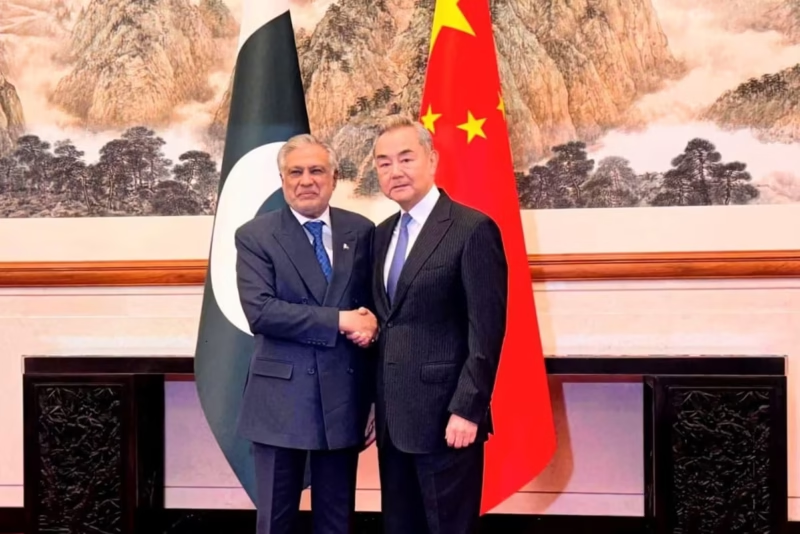
As fighting in the Gulf enters its second month, Wang Yi met Pakistan’s top diplomat, Mohamed Ishaq Dar, to outline a five-point plan calling for an immediate ceasefire, protected shipping lanes, and UN-backed negotiations. It is Beijing’s clearest articulation yet of how the conflict should end.

But the significance lies less in the plan itself than in what it signals: China is positioning itself as a potential broker—without fully committing to the role.

By the third layer of this diplomacy, the pattern becomes clear. Beijing wants to be seen as the stabilizing counterweight to the United States, particularly as Washington deepens its military engagement alongside Israel. The message is subtle but deliberate: while others escalate, China mediates.

That positioning carries advantages. China maintains working relationships with all key players—Iran, the United States, and regional intermediaries like Pakistan. It has already demonstrated its diplomatic reach by helping broker the 2023 rapprochement between Iran and Saudi Arabia, a rare success in Middle East diplomacy.

Yet there are limits—clear ones.

China has shown little appetite for the kind of role that would define a true guarantor. Acting as an enforcer of peace would require security commitments, monitoring mechanisms, and the willingness to confront violations. That would risk direct entanglement with U.S. or regional forces—an outcome Beijing has consistently avoided.

Instead, China’s approach is calibrated. It supports talks, encourages mediation, and amplifies diplomatic frameworks—while avoiding responsibilities that could draw it into the conflict.

There is also a strategic calculation at play. A prolonged war weakens U.S. global standing and diverts attention from other arenas, while simultaneously increasing economic risk for China’s export-driven system. Beijing benefits from a balance: instability that exposes American limits, but not chaos that disrupts global trade.

That tension explains the cautious tone. Even as Masoud Pezeshkian signals openness to ceasefire under guarantees, and Abbas Araghchi prepares for months of continued conflict, China has avoided stepping into a central negotiating role.

Pakistani officials have floated the idea of Beijing acting as a guarantor. Chinese responses have been notably restrained—supportive of mediation, but noncommittal on enforcement.

There are also timing considerations. With expected high-level diplomacy between Washington and Beijing later this year, China is unlikely to take steps that could complicate its broader relationship with the United States.

What emerges is a dual-track strategy. Publicly, China advances a vision of global leadership rooted in diplomacy and stability. Privately, it manages risk—ensuring that any involvement enhances its position without binding it to outcomes it cannot control.

The question, then, is not whether China can broker peace. It is whether it wants to.

For now, Beijing appears content to shape the conversation rather than own it—to be present at the table without carrying the burden of the agreement.

And in a conflict where trust is scarce and enforcement costly, that may be the most strategically advantageous position of all.

Continue Reading

US-Israel war on Iran

Middle East War Intensifies as Oil, Missiles, and Threats Surge

Published

on

In central Israel, sirens cut through the night again—brief, urgent, familiar. Within minutes, reports followed of missile impacts and minor injuries. Hours earlier, oil markets had already reacted, surging on the expectation that the conflict is far from contained.

Across the Middle East, the war is no longer defined by a single front. It is spreading—militarily, economically, and diplomatically—into a layered confrontation with no clear endpoint.

The most immediate pressure point remains the Strait of Hormuz. Even as Iran signals selective flexibility—pledging safe passage for Philippine-linked vessels—the broader blockade continues to choke global shipping. Oil prices have jumped sharply, with Brent crude climbing above $108 per barrel, reflecting both disruption and uncertainty.

By the third layer of the conflict, a pattern emerges: controlled escalation paired with strategic signaling. Iran allows limited transit to friendly states while maintaining overall leverage. The United States escalates military pressure while offering no defined timeline for resolution. Each move adjusts the balance without resolving it.

On the ground, the war’s footprint is widening. Hezbollah has launched drones and rockets toward northern Israel, while Iranian missile strikes continue to test Israeli air defenses. Meanwhile, U.S. warnings of potential militia attacks in Baghdad point to another possible front—one that could further fragment the battlefield.

Inside Iran, the signals are equally complex. Authorities confirmed the execution of an individual accused of collaborating with the United States and Israel, underscoring the regime’s internal security posture as pressure mounts externally. At the same time, Tehran condemned strikes on civilian infrastructure, including damage to the Pasteur Institute, framing the conflict as a broader assault on public health and sovereignty.

Diplomatically, divisions are sharpening. China has openly blamed Washington and Israel for triggering the Hormuz crisis, calling for an immediate halt to hostilities. In contrast, Western-aligned states remain focused on countering Iran’s actions while grappling with the economic fallout.

There are also growing questions among allies. Anthony Albanese publicly questioned what the war is now trying to achieve, suggesting that initial objectives may already have been met—without a clear plan for what comes next.

That uncertainty was evident in remarks from Donald Trump, who reiterated that the United States is “very close” to finishing the job while simultaneously promising additional weeks of intensified strikes. The contradiction—imminent success alongside continued escalation—has left markets and governments searching for clarity.

There are gray areas throughout this conflict. Iran denies restarting uranium enrichment despite accusations and prior concerns about its nuclear capabilities. Claims of decisive military gains coexist with ongoing attacks. Diplomatic assurances of safe passage sit alongside a de facto blockade.

What is taking shape is not a linear war, but a layered one—where military action, economic pressure, and political messaging move in parallel.

The strategic risk lies in how these layers interact. A missile strike triggers market volatility. A shipping disruption reshapes alliances. A diplomatic statement recalibrates expectations. None alone determines the outcome, but together they create a system that is increasingly difficult to control.

The longer this continues, the more the conflict shifts from decisive engagements to sustained pressure.

And in that environment, the defining question is no longer who is winning—but whether anyone involved can still define what “winning” means.

Continue Reading

Top stories

UK Leads 35-Nation Push to Reopen Strait of Hormuz

Published

on

World Without the U.S.—35 Nations Scramble to Break Iran’s Grip on Global Oil Route.

Oil tankers sit idle at the mouth of the Strait of Hormuz, their routes stalled by a war that has turned one of the world’s most critical shipping lanes into a zone of calculated risk. For crews onboard, the threat is immediate. For global markets, the impact is already unfolding.

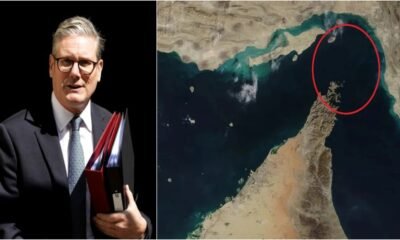
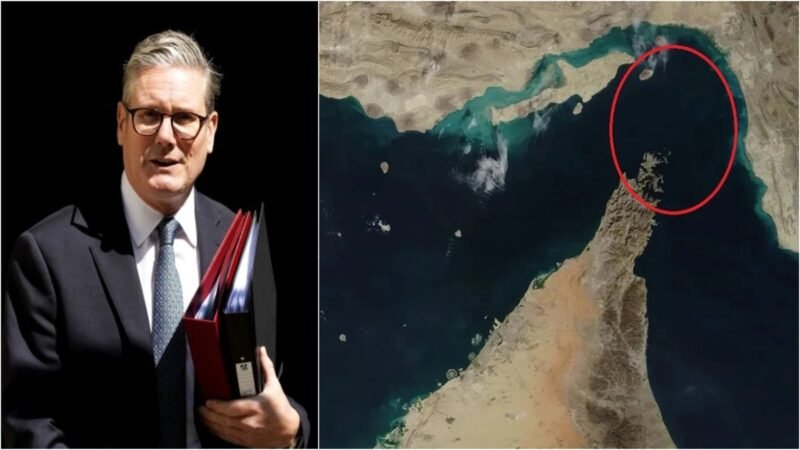
On Thursday, more than 30 countries—led by the United Kingdom—will convene to map out a response. The goal is straightforward, if not simple: restore the flow of commerce through a passage that carries a significant share of the world’s oil.

Keir Starmer framed the meeting as an effort to align diplomatic and political pressure, while also laying the groundwork for eventual security arrangements. Chaired by Yvette Cooper, the virtual gathering will focus on reopening the strait, protecting trapped vessels, and stabilizing energy flows disrupted by Iranian-linked attacks.

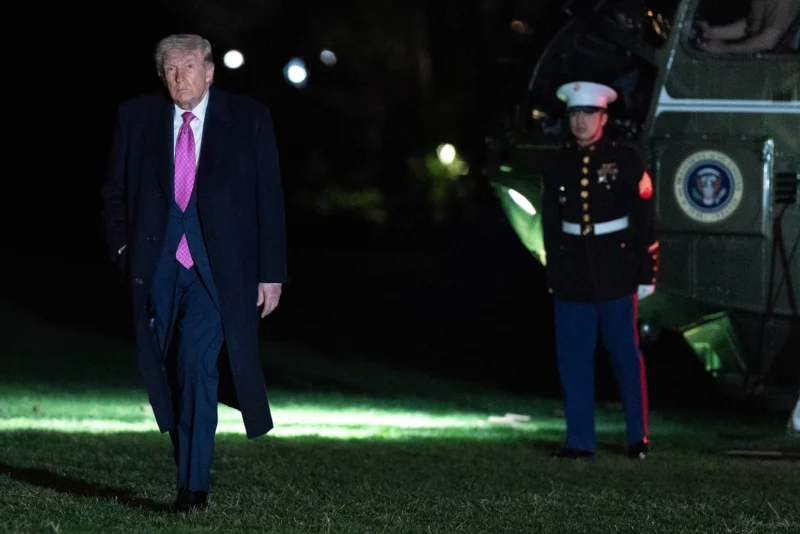
By the third layer of this crisis, the deeper shift becomes clear. This is not only about maritime security—it is about leadership. The absence of the United States from the meeting marks a departure from decades of American dominance in safeguarding global shipping lanes. President Donald Trump has signaled that responsibility now rests with other nations, telling allies to secure their own energy routes.

That decision is forcing a recalibration. Countries including the UK, France, Germany, Italy, Canada, Japan, and the United Arab Emirates have signed onto a joint statement urging Iran to halt its attempts to block the strait and pledging to support efforts to ensure safe passage. The coalition reflects a broad recognition that the economic stakes extend far beyond the region.

Still, the options are constrained. No country appears willing to forcibly reopen the waterway while active conflict continues. Iran retains the capacity to target vessels through missiles, drones, mines, and fast-attack craft—tools that can disrupt shipping without triggering a full-scale naval confrontation.

For now, diplomacy leads. Military planning is being deferred to a later phase, once conditions stabilize. Starmer acknowledged that restoring normal traffic will require both political coordination and eventual security guarantees—likely involving naval deployments and close cooperation with the maritime industry.

There are parallels to earlier coalition-building efforts, including European-led initiatives to support Ukraine’s long-term security. In both cases, the objective is not only operational but symbolic: to demonstrate that Europe and its partners can act collectively in the absence—or retreat—of U.S. leadership.

Yet the risks are immediate. With traffic through Hormuz largely halted, oil prices have surged, and supply chains are tightening. For countries dependent on energy imports, the disruption is not abstract—it translates into higher costs, inflationary pressure, and economic uncertainty.

The emerging coalition faces a narrow path. Move too slowly, and the economic damage deepens. Move too aggressively, and the conflict risks widening.

What is taking shape is a test of whether multilateral coordination can substitute for a single dominant power. If successful, it could mark a shift toward a more distributed model of global security. If not, it may expose the limits of collective action in moments of crisis.

Either way, the stakes extend far beyond the Gulf. The question is no longer just how to reopen a strait—but who, in this new landscape, has both the will and the authority to keep it open.
Continue Reading

US-Israel war on Iran

Trump — No End Date For Iran War

Published

on

No Exit, No Plan—Trump’s War Speech Raises More Questions Than Answers.

As rockets lifted NASA’s Artemis II mission toward the moon, attention inside the White House turned sharply back to Earth—and to a war with no defined end.

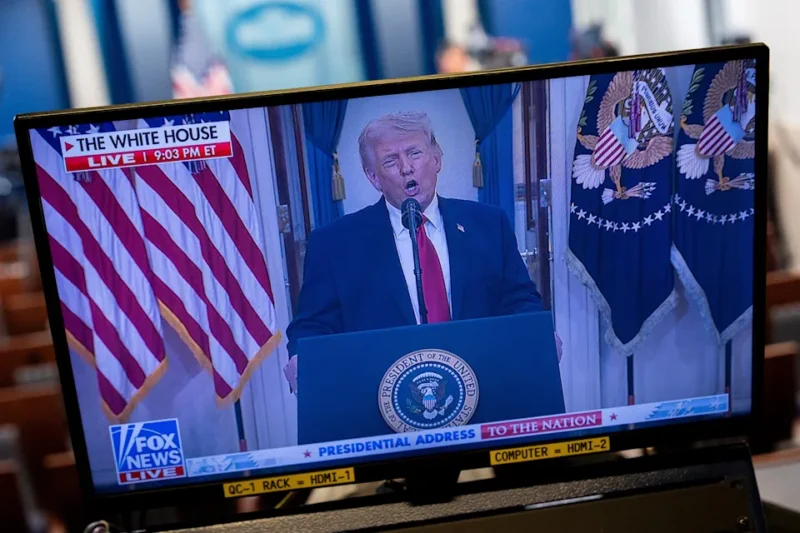
In a primetime address, Donald Trump sought to explain the rationale behind the expanding conflict with Iran. Instead, he delivered a message heavy on resolve but light on detail. The central takeaway was not what he said, but what he did not: no timeline, no clear endgame, and no updated strategy.

The omission matters. At a moment when the war is becoming a defining feature of his presidency, Trump offered reassurance without specificity. He insisted that Iran’s nuclear ambitions remain an “intolerable threat” and framed the campaign—branded “Operation Epic Fury”—as essential to global security. Yet he did not explain how recent strikes have altered Iran’s capabilities, nor how success will ultimately be measured.

By the third layer of the address, the broader pattern becomes clear. This is a war being justified in principle but managed in ambiguity.

Trump emphasized that “core strategic objectives are nearing completion,” even as he signaled further strikes in the coming weeks. The tension between those two claims—progress and escalation—underscores the absence of a defined endpoint.

There were subtle shifts. Trump dropped earlier references to active negotiations with Iran, a notable departure after days of suggesting diplomatic channels were open.

He also avoided renewed attacks on NATO allies, softening rhetoric that had threatened to widen political divisions. And while he ruled out, implicitly, a ground invasion, he offered no alternative pathway to secure critical objectives such as Iran’s enriched uranium or the stability of the Strait of Hormuz.

The result is a strategy defined less by clear milestones than by flexibility—some would say improvisation. Military pressure continues to build, with thousands of additional U.S. troops moving into the region. Yet diplomatic efforts remain largely absent from public view, and the administration has not outlined a framework for de-escalation.

At home, the political and economic stakes are rising. Trump acknowledged concerns over fuel prices, calling them temporary, but offered no concrete measures to cushion the impact. Markets have reacted sharply to shifting signals from Washington, and the cost of energy is already climbing.

There are gray areas in the administration’s case. U.S. intelligence assessments prior to the war indicated Iran had not yet initiated a weapons program, though it had positioned itself closer to that capability. Trump’s assertion that threats have been largely neutralized sits uneasily alongside continued military operations.

The speech also highlighted a deeper institutional shift. Trump’s decision to launch and expand the war without clear congressional backing—and his unprecedented appearance at a Supreme Court hearing earlier the same day—points to a broader consolidation of executive authority during wartime.

Still, for supporters, the message was consistent: strength, speed, and a promise of decisive results. For critics, it reinforced concerns about a conflict advancing without clear boundaries.

The strategic question now is not whether the United States can sustain the campaign—it is whether it knows where it is heading. Wars defined by open-ended objectives tend to evolve on their own terms, shaped as much by reaction as by design.

And in that space between intention and outcome, the risk is not just prolonged conflict—but a gradual shift into a war whose conclusion becomes harder to define than its beginning.

Continue Reading

Analysis

Will Russia Send Troops to Iran?

Published

on

Why Experts Say Moscow Is Fighting a Different War. No Boots, Just Shadows—Russia’s Iran Strategy Is More Dangerous Than Troops.

When Volodymyr Zelensky warned that Russia could expand its military axis with Iran—even to the point of deploying troops—he wasn’t just raising a battlefield scenario. He was reframing the conflict itself.

The concern is straightforward: a deeper Russia-Iran alignment could transform the Middle East into a second front against the West. Signals exist. Joint military exercises. Expanded drone cooperation. Intelligence sharing that may already be shaping strikes across the region. But the question that matters is not whether coordination is growing—it is how far Moscow is willing to go.

On that point, most Western analysts draw a firm line.

Across interviews with U.S. and U.K. experts, a consensus emerges: Russia is unlikely to send ground forces into Iran. Not because the partnership lacks depth, but because the risks outweigh the gains. Direct deployment would bring Russian troops into potential confrontation with the United States and Israel—a scenario that risks rapid escalation beyond controlled limits.

The constraint is also practical. Russia remains heavily committed to its war in Ukraine. Its forces are stretched, its advances limited, and its capacity to open a second front—especially one involving multiple advanced militaries—is constrained. Even if Moscow wanted to escalate, it may not have the bandwidth to do so.

But stopping at that conclusion misses the larger shift.

What is unfolding is not a traditional military expansion. It is a transition toward indirect warfare—where intelligence, technology, and proxy leverage matter more than troop deployments. In this framework, Russia does not need soldiers on Iranian soil to influence the conflict. It needs access, coordination, and plausible deniability.

Evidence of that approach is accumulating. Analysts point to intelligence-sharing that may be improving Iran’s targeting of U.S. defense systems in the region. Cooperation on drones has already made Iranian platforms faster and more precise.

There are also indications of joint efforts in electronic warfare, including attempts to counter satellite systems like SpaceX’s Starlink network.

This model mirrors the broader logic of the conflict: pressure without direct confrontation. During the Cold War, major powers avoided head-on clashes while competing through proxies and technological advantage. The current alignment appears to follow a similar pattern—adapted for a digital and networked battlefield.

There are limits here, too. Some claims—such as Russian support for advanced Iranian intercontinental missile programs—remain unverified or contested. Analysts argue Moscow has little incentive to invest heavily in capabilities that could alter strategic balances beyond its control.

Still, the partnership is evolving. The Islamic Revolutionary Guard Corps continues to benefit from Russian technical input, while Moscow gains from Iranian drone supplies and battlefield experience. It is less an alliance of equals than a transactional alignment shaped by shared opposition to Western power.

The strategic risk lies in how this alignment scales. If Iran shifts toward broader asymmetric tactics—targeting Gulf infrastructure, expanding drone campaigns, or activating covert networks—Russian support could amplify those effects without crossing into direct war.

That is the threshold both sides appear to be managing: how to increase pressure without triggering a confrontation they cannot control.

Zelensky’s warning, then, may be less about imminent troop deployments and more about trajectory. The axis is deepening. The methods are diversifying. The battlefield is widening.

The real question is not whether Russian soldiers will arrive in Iran. It is whether the war itself is moving into a phase where soldiers matter less than systems, signals, and shadows.

And in that kind of conflict, escalation does not announce itself—it accumulates quietly, until it becomes impossible to reverse.

Continue Reading

Analysis

Trump’s Hidden Game Inside Tehran

Published

on

Trump’s Shadow Negotiations Rattle Iran’s Power Structure as War Strategy Shifts Beyond the Battlefield.

When Donald Trump speaks of a “strong” figure inside Iran—unnamed, unseen, and allegedly protected—he is not revealing a diplomatic channel. He is introducing a fault line.

Within hours, speculation filled the vacuum. Israeli media pointed toward Mohammad Bagher Ghalibaf as a possible interlocutor. Tehran denied it. But denial, in this context, does little to contain the damage. The suggestion alone reshapes internal dynamics, casting quiet suspicion across a system already built on layered authority and competing power centers.

By the third beat of this unfolding story, the question is no longer whether negotiations exist. It is what the idea of a “trusted insider” does to Iran’s internal cohesion. In a system where legitimacy is tightly guarded, even the hint of backchannel engagement redistributes power—and doubt.

Who speaks for the state? Who is trusted? Who is exposed?

Signals from the region suggest something is indeed moving beneath the surface. Requests not to target specific individuals. Subtle delays in responses hinted at by Abbas Araghchi. Quiet mediation efforts threading through regional capitals. None confirm a deal—but together, they point to a channel that is deliberately obscured.

At the same time, the war itself is being managed with a dual logic. Publicly, pauses and ceasefire language create the appearance of restraint. In practice, strikes deepen—targeting infrastructure tied to Iran’s military, industrial, and nuclear capacity. The message is calibrated: control the narrative, escalate the pressure.

Regionally, that pressure is reshaping Iran’s network of influence. Hezbollah remains the most viable lever, while Iraqi militias have largely receded under sustained countermeasures.

The Houthis, once positioned as a disruptive force in maritime chokepoints, now appear constrained—focused less on escalation than survival after repeated strikes on leadership and missile capabilities.

There are, however, limits to how much this external pressure can achieve. Iran retains asymmetric options. A shift toward what some analysts describe as “collective damage”—targeting Gulf infrastructure, activating sleeper cells, or expanding drone operations—would move the conflict into a more fragmented and unpredictable phase.

At that point, the battlefield dissolves into dispersed, low-visibility confrontations where deterrence becomes harder to measure.

Attention is already turning to the Strait of Hormuz. The objective may not be outright closure, but something more subtle: raising the risk profile high enough that insurers withdraw, shipping hesitates, and global energy flows tighten without a formal blockade. It is pressure by uncertainty.

Trump’s timeline—framed as a deadline before potential strikes on energy infrastructure—fits within this broader strategy. It is less about forcing an immediate concession than about accelerating the cost curve. At a certain point, continuing the confrontation becomes as costly as stepping back—perhaps more.

What is taking shape is not a conventional war aimed at swift collapse. It is a slow compression. External strikes weaken capacity. Internal suspicion fractures trust. Economic pressure narrows options.

And at the center of it all sits a destabilizing question—not who Washington is speaking to, but whether anyone inside Tehran can still speak with authority.

That is where the real battle is shifting: from missiles and markets to legitimacy itself.
Continue Reading

US-Israel war on Iran

UAE and Trump Align as Iran Expands Regional Strikes

Published

on

UAE and U.S. Leaders Discuss Iran Attacks as Regional Tensions Threaten Global Trade Routes.

The call came at a moment when the Gulf’s airspace has grown quieter—but only on the surface. Beneath it, the pressure is building.

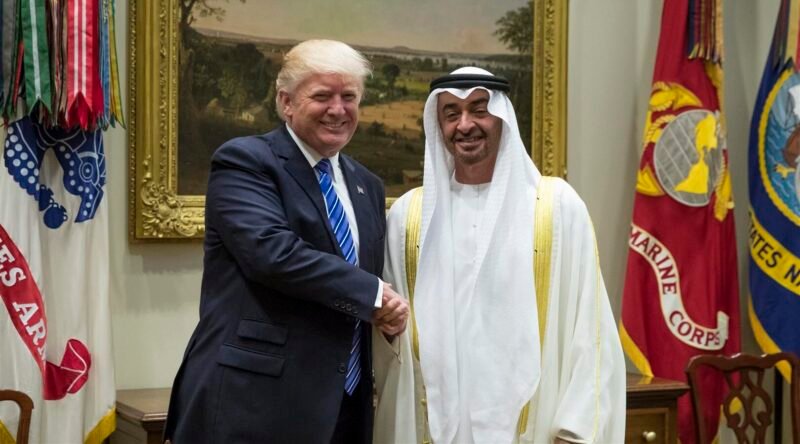
On Wednesday, Mohamed bin Zayed Al Nahyan and Donald Trump spoke by phone as Iranian-linked strikes continued to ripple across the region, according to the Emirati state news agency WAM. The conversation focused on what both sides described as ongoing attacks targeting civilian infrastructure in the United Arab Emirates and neighboring states.

The language was direct. Emirati officials characterized the strikes as “terrorist aggression,” signaling both the severity of the threat and the political framing taking shape among Gulf capitals.

By the third layer of this moment, the significance moves beyond a single call. The Gulf is no longer a peripheral theater—it is becoming central to the conflict’s economic and strategic gravity. What happens here affects not only regional stability, but the flow of global trade.

Both leaders discussed the broader implications, including risks to maritime routes and the global economy. The concern is not hypothetical. Disruptions in key shipping corridors—particularly those linked to energy exports—carry immediate consequences for markets far beyond the Middle East.

The timing underscores the urgency. Since late February, multiple countries in the Gulf Cooperation Council have reported repeated strikes, despite publicly maintaining that they are not parties to the conflict between Iran, the United States, and Israel. That gap—between non-involvement and exposure—has become increasingly difficult to sustain.

For Gulf states, the challenge is strategic as much as defensive. They must protect infrastructure, reassure markets, and avoid deeper entanglement—all while navigating a conflict that is steadily expanding in scope.

For Washington, the calculus is equally complex. Supporting regional partners now involves not only military coordination, but also managing escalation risks that could draw additional actors into the conflict.

There are, however, limits to alignment. Gulf states have historically balanced security ties with the United States against pragmatic engagement with Iran. That balance is now under strain. Each new strike narrows the space for neutrality, pushing countries toward clearer positioning.

At the same time, Iran’s approach appears calibrated. Rather than triggering a single decisive confrontation, the pattern of attacks spreads pressure across multiple fronts—testing defenses, probing responses, and raising the cost of stability.

The result is a region operating under sustained tension rather than open war.

The phone call between Abu Dhabi and Washington reflects that reality. It is less about immediate decisions than about coordination in a landscape where risks are no longer contained.

The longer-term question is whether this pattern can hold. If attacks continue to target civilian infrastructure and critical trade routes, the Gulf may shift from being an exposed bystander to an active front.

And once that threshold is crossed, the conflict’s center of gravity will move—not just geographically, but strategically—reshaping how power is projected and contested across the region.

Continue Reading

Most Viewed

error: Content is protected !!