GCC Calls on UN to Secure Strait of Hormuz as Iran Blockade Deepens Global Energy Crisis.
At the United Nations, the language was urgent. Not diplomatic caution, but escalation framed in legal terms.
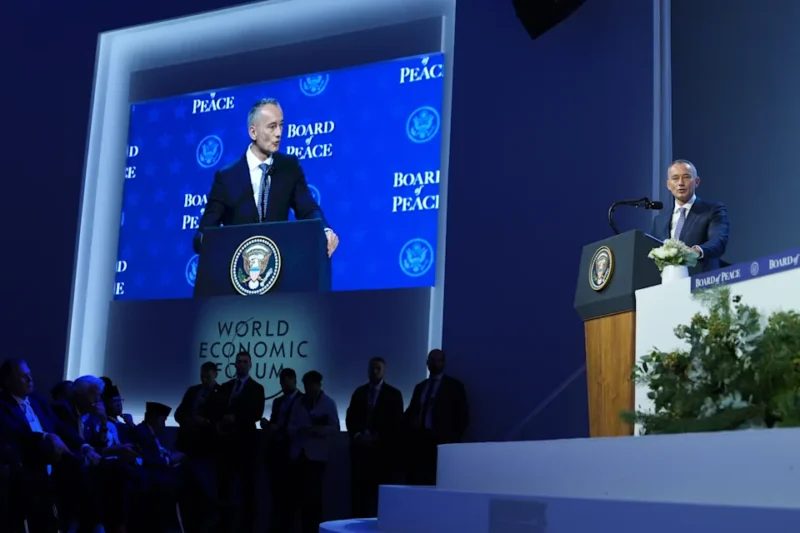
Standing before the Security Council, Jasem Al-Budaiwi called for a binding resolution to guarantee freedom of navigation through the Strait of Hormuz—a waterway now at the center of a widening war.
For Gulf states, the issue is no longer abstract. Iranian strikes, launched in response to U.S.-Israeli attacks earlier this year, have extended beyond direct combat zones, hitting neighboring countries that insist they are not parties to the conflict. The cumulative effect has been to transform the Gulf into a contested space where neutrality offers little protection.
By the third layer of this crisis, the stakes extend far beyond regional security. Hormuz carries roughly a fifth of global oil consumption.
Its disruption is not just a military problem—it is an economic shock with immediate global consequences. Energy prices are rising, supply chains are tightening, and governments far from the Middle East are being pulled into the fallout.
Al-Budaiwi’s appeal reflects a strategic shift. Rather than relying solely on bilateral or regional responses, Gulf states are internationalizing the crisis—seeking to anchor maritime security within the authority of the United Nations Security Council.
The move signals both urgency and limitation: a recognition that no single state, or even regional bloc, can stabilize the waterway alone.
At the same time, the language used—“heinous aggression” and the assertion of a right to self-defense—underscores how sharply positions have hardened. The diplomatic framing now mirrors the intensity on the ground.
There are signs the conflict could widen further. Threats by the Houthis to disrupt the Bab al-Mandeb Strait point to a second critical chokepoint coming under pressure. If both corridors—Hormuz and Bab al-Mandeb—are compromised, the implications for global trade would be severe, effectively squeezing energy flows from two directions.
Still, the path forward remains uncertain. A UN resolution, even if passed, would require enforcement. That raises immediate questions: who secures the strait, under what mandate, and at what risk of direct confrontation with Iran?
There are also political constraints. Major powers remain divided over responsibility and strategy, complicating any unified response. Without consensus, resolutions risk becoming symbolic rather than operational.
Yet for Gulf states, the calculus is shifting. Continued restraint carries its own cost—economic, political, and strategic. Each day the strait remains restricted deepens the pressure on governments that depend on its stability.
What is unfolding is a transition from regional conflict to global concern. Maritime security, once assumed, is now contested. Energy flows, once routine, are now conditional.
The longer the crisis persists, the more it tests not just military capabilities, but the architecture of international cooperation itself.
And at its core lies a fundamental question: can the global system still guarantee open trade routes in times of conflict—or is that assumption now being rewritten in real time?