UAE and U.S. Leaders Discuss Iran Attacks as Regional Tensions Threaten Global Trade Routes.
The call came at a moment when the Gulf’s airspace has grown quieter—but only on the surface. Beneath it, the pressure is building.
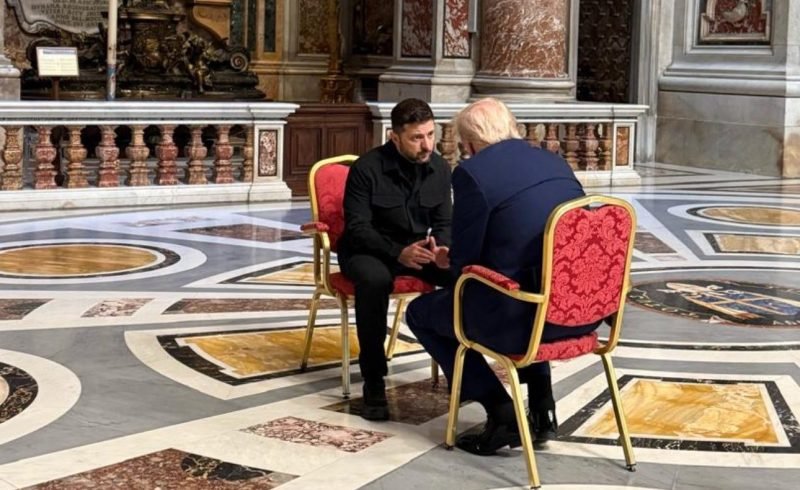
On Wednesday, Mohamed bin Zayed Al Nahyan and Donald Trump spoke by phone as Iranian-linked strikes continued to ripple across the region, according to the Emirati state news agency WAM. The conversation focused on what both sides described as ongoing attacks targeting civilian infrastructure in the United Arab Emirates and neighboring states.
The language was direct. Emirati officials characterized the strikes as “terrorist aggression,” signaling both the severity of the threat and the political framing taking shape among Gulf capitals.
By the third layer of this moment, the significance moves beyond a single call. The Gulf is no longer a peripheral theater—it is becoming central to the conflict’s economic and strategic gravity. What happens here affects not only regional stability, but the flow of global trade.
Both leaders discussed the broader implications, including risks to maritime routes and the global economy. The concern is not hypothetical. Disruptions in key shipping corridors—particularly those linked to energy exports—carry immediate consequences for markets far beyond the Middle East.
The timing underscores the urgency. Since late February, multiple countries in the Gulf Cooperation Council have reported repeated strikes, despite publicly maintaining that they are not parties to the conflict between Iran, the United States, and Israel. That gap—between non-involvement and exposure—has become increasingly difficult to sustain.
For Gulf states, the challenge is strategic as much as defensive. They must protect infrastructure, reassure markets, and avoid deeper entanglement—all while navigating a conflict that is steadily expanding in scope.
For Washington, the calculus is equally complex. Supporting regional partners now involves not only military coordination, but also managing escalation risks that could draw additional actors into the conflict.
There are, however, limits to alignment. Gulf states have historically balanced security ties with the United States against pragmatic engagement with Iran. That balance is now under strain. Each new strike narrows the space for neutrality, pushing countries toward clearer positioning.
At the same time, Iran’s approach appears calibrated. Rather than triggering a single decisive confrontation, the pattern of attacks spreads pressure across multiple fronts—testing defenses, probing responses, and raising the cost of stability.
The result is a region operating under sustained tension rather than open war.
The phone call between Abu Dhabi and Washington reflects that reality. It is less about immediate decisions than about coordination in a landscape where risks are no longer contained.
The longer-term question is whether this pattern can hold. If attacks continue to target civilian infrastructure and critical trade routes, the Gulf may shift from being an exposed bystander to an active front.
And once that threshold is crossed, the conflict’s center of gravity will move—not just geographically, but strategically—reshaping how power is projected and contested across the region.