
US-Israel war on Iran
Houthis Enter Iran War With Missile Strikes on Israel

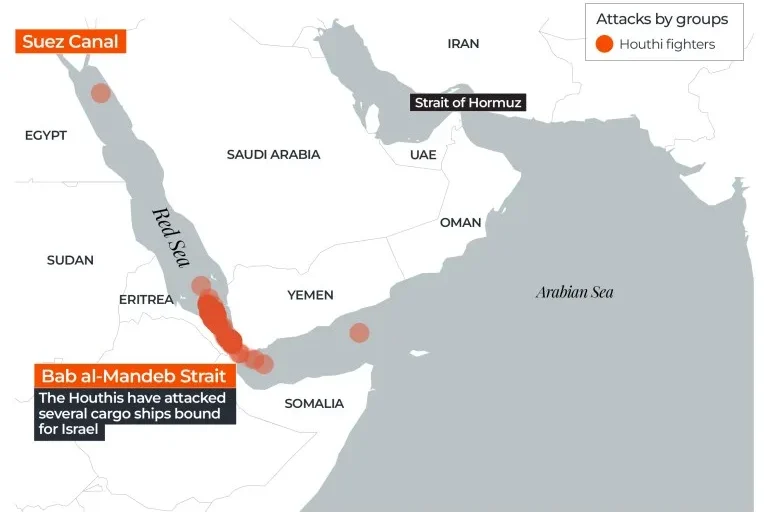
First Hormuz—now Bab al-Mandeb. The war is moving from land to the world’s shipping arteries.
The war surrounding Iran has entered a more dangerous phase, as Yemen’s Houthi movement opens a new front—one that could shift the conflict from regional warfare to global economic disruption.
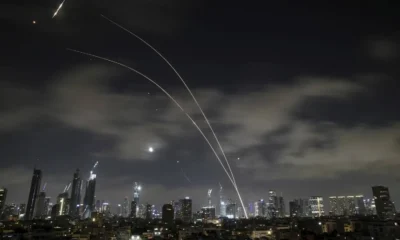
The Houthis launched a barrage of ballistic missiles toward Israel, marking their first direct involvement since the U.S.-Israeli campaign began. While Israeli defenses intercepted at least one missile, the strategic significance lies not in the immediate damage, but in what the attack signals: escalation across multiple theaters.
More consequential than the missiles themselves is the threat tied to them.
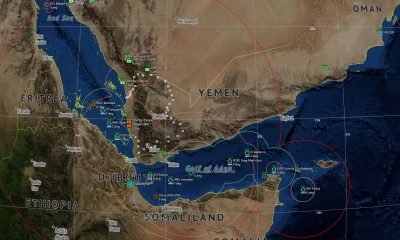
Houthi officials have openly warned that closing the Bab al-Mandeb Strait remains “an option.” This narrow waterway connects the Red Sea to the Gulf of Aden and carries a substantial share of global trade—including a significant portion of Israel’s imports.
If Hormuz is the artery of oil, Bab al-Mandeb is the artery of commerce.
Together, they form a dual chokepoint system. One under pressure is disruptive. Two under threat is systemic.
The Houthis have already demonstrated their capability. Between late 2023 and early 2025, they targeted over 100 commercial vessels, sinking ships and forcing global shipping routes to reroute around Africa—adding time, cost, and risk to international trade. A renewed campaign, now synchronized with a broader regional war, would multiply those effects.
The implications extend far beyond Israel.
A shutdown—or even partial disruption—of Bab al-Mandeb would reverberate through the Suez Canal, European supply chains, and Asian energy markets. Insurance costs would spike. Shipping delays would intensify. Prices of goods—from fuel to food—would rise globally.
Strategically, this marks a turning point.
Iran’s broader approach—leveraging geography and allied actors—appears to be expanding westward. Where the Strait of Hormuz has already been used to pressure energy markets, Bab al-Mandeb offers leverage over trade itself. The battlefield is no longer confined to territory or airspace—it now includes the world’s economic lifelines.
For Israel, the opening of a Yemeni front complicates an already stretched military posture, as it continues operations against both Iran and Hezbollah. For the United States and its allies, it raises a more urgent question: how many fronts can be contained at once?
The risk is no longer hypothetical.
If both chokepoints are disrupted simultaneously, the war will no longer be defined by missiles or strikes—but by who controls the flow of global commerce.
And at that point, the conflict ceases to be regional. It becomes global.









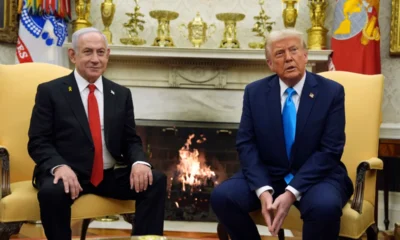



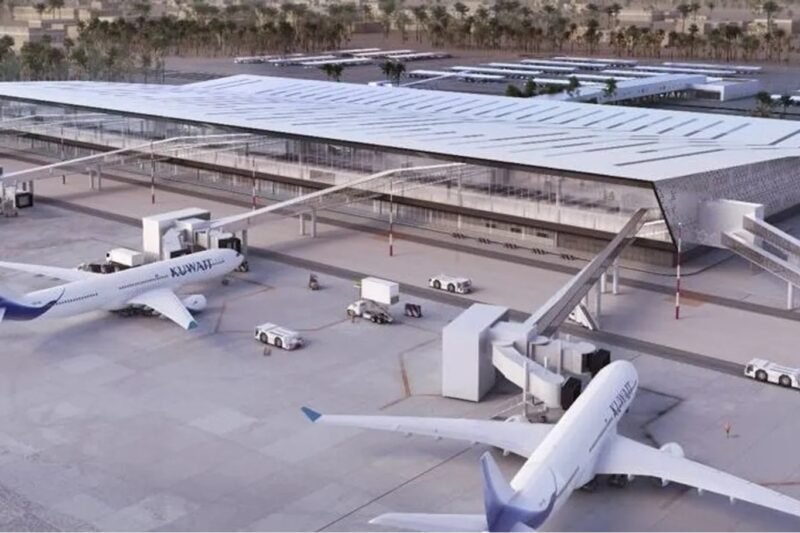
Airports are no longer safe. The war is now targeting the systems that keep the sky alive.
A coordinated drone attack has struck Kuwait International Airport, damaging its radar systems and exposing a new vulnerability at the heart of Gulf infrastructure.
According to Kuwait’s Civil Aviation Authority, the strike caused “significant technical damage” to critical radar equipment used for air traffic control. While no casualties were reported, the impact is far from minor.
Radar systems are the backbone of aviation safety—responsible for tracking aircraft, coordinating landings, and preventing mid-air collisions.
Their disruption sends an unmistakable signal: the battlefield is expanding beyond military targets into civilian systems that sustain everyday life.
Authorities have not identified the source of the drones or explained how they penetrated restricted airspace. An investigation is underway, while emergency efforts are focused on restoring full operational capacity and ensuring the safety of flights.
But the strategic implications are already clear.
This attack fits a broader pattern emerging across the region—where drones are increasingly used not just to inflict damage, but to undermine confidence in state control.
Airports, like oil facilities and ports, represent high-value targets not because of their immediate destruction, but because of the cascading disruption they can cause.
In the Gulf, where economies depend heavily on connectivity, logistics, and global movement, even temporary paralysis can carry outsized consequences.
The timing is critical. The strike comes as the wider conflict involving Iran continues to spill across borders, with missile and drone attacks already reported against multiple Gulf states. Civilian infrastructure—once considered off-limits—is increasingly part of the equation.
This reflects a shift in the nature of warfare.
Rather than decisive battlefield victories, the goal is pressure: degrade systems, create uncertainty, and stretch defenses across multiple fronts. Drones, inexpensive and hard to detect, are ideally suited for this kind of strategy.
For Gulf states, the challenge is immediate and complex. Air defense systems must now protect not only military installations, but also civilian nodes that are far more numerous and harder to secure.
The question is no longer whether such attacks will continue—but how far they will go.
If critical infrastructure becomes a sustained target, the region faces a new phase of conflict—one defined not by frontlines, but by the fragility of the systems that keep modern states functioning.
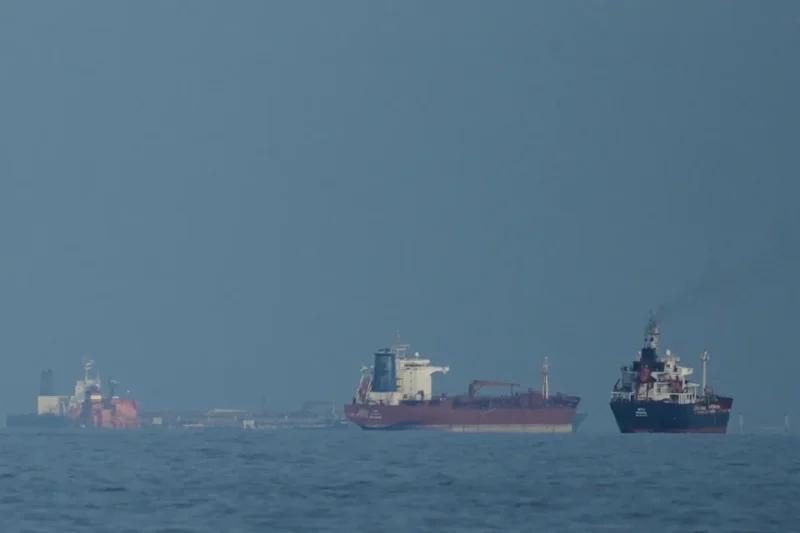
Iran isn’t trying to win the war—it’s trying to outlast it. And the world is paying the price.
One month into the war, the United States and Israel are confronting a paradox: a heavily damaged Iran that is still dictating the tempo of the conflict—and, increasingly, the global economy.
At the center of this strategy lies the Strait of Hormuz, the narrow maritime corridor through which a significant share of the world’s energy supply once flowed. By restricting access and threatening shipping, Tehran has transformed a regional war into a global economic shock.
Oil prices have surged, supply chains have tightened, and inflation pressures are re-emerging across multiple continents.
What makes this moment strategically significant is not Iran’s conventional strength—but its adaptation.
Rather than fighting as a traditional state, Iran is operating with the logic of an insurgency. It relies on dispersed assets, mobile missile launchers, underground facilities, and what military analysts describe as “shoot-and-scoot” tactics.
Even after sustained airstrikes, these methods allow Tehran to maintain a persistent, if limited, capacity to strike—and to threaten.
This asymmetry explains the current imbalance. While Washington and Tel Aviv dominate the battlefield in terms of firepower, Iran is shaping the strategic environment. By targeting economic pressure points rather than military parity, it raises the cost of war for everyone involved.
The objective is not victory in the conventional sense. It is survival.
As long as Iran can endure, it can claim success—particularly if the war continues to strain global markets and political stability in rival states. This logic echoes patterns seen in Iran-aligned groups across the region, from Yemen to Iraq, where persistence has often outweighed firepower.
Yet this strategy is not without risk.
Internally, Iran faces mounting pressure. Economic hardship, leadership uncertainty, and a population still scarred by recent crackdowns create vulnerabilities that prolonged conflict could deepen. Reports of recruitment drives, including among younger populations, suggest strain within its security apparatus.
Externally, the stakes are rising. The United States is weighing whether to escalate further—potentially forcing open Hormuz—or to pursue a negotiated exit. Each path carries consequences. Escalation risks widening the conflict. De-escalation risks validating Iran’s approach.
The war has therefore entered a new phase—less about territory, more about endurance and leverage.
The central question is no longer who can strike harder, but who can sustain pressure longer without breaking.
For now, Iran has found a way to fight a stronger adversary without matching its strength—by turning geography, economics, and time into weapons.
And in doing so, it has shifted the battlefield from the skies of the Middle East to the foundations of the global economy.
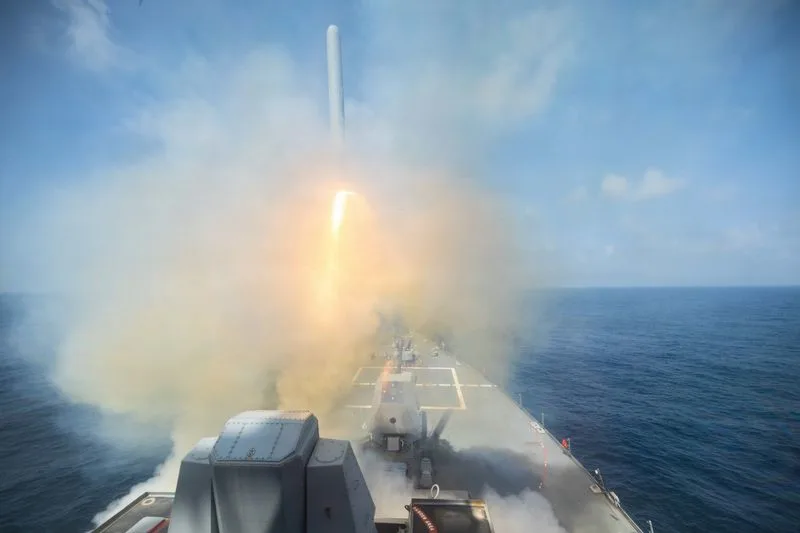

War without invasion? Rubio says yes—but warns every option is still on the table.
U.S. Secretary of State Marco Rubio said Washington believes it can achieve its military objectives in Iran without deploying ground troops, even as the administration keeps all options open amid a rapidly evolving conflict.
Speaking after a Group of Seven meeting near Paris, Rubio emphasized that the United States is advancing faster than expected and expects the operation to conclude “in weeks, not months.” While he acknowledged that President Donald Trump retains the authority to escalate—including the potential use of ground forces—he framed such a move as unnecessary under current conditions.
The remarks reflect a strategic preference for a limited war model: relying on airpower, naval dominance, and precision strikes rather than a large-scale ground invasion.
At the same time, Rubio signaled that diplomatic channels remain active, though uncertain. He said Iran has not formally responded to a U.S. proposal to end the war but has sent indirect messages suggesting openness to negotiations.
That ambiguity mirrors the broader state of the conflict—caught between escalation and negotiation.
Rubio also warned that Iran could attempt to impose fees or restrictions on vessels transiting the Strait of Hormuz, a move that would further disrupt global energy markets.
He called for coordinated international efforts to ensure the waterway remains open, while clarifying that Washington is not currently asking allies to intervene militarily during active hostilities.
Instead, discussions with partners—including the United Kingdom—have focused on potential roles in stabilizing the region after the conflict subsides.
In a sign of the war’s expanding global impact, Rubio acknowledged that the United States may consider redirecting weapons originally intended for Ukraine to support operations in the Middle East, though no such decision has been made yet.
The possibility highlights how overlapping conflicts are beginning to compete for the same military resources.
Meanwhile, G7 foreign ministers issued a joint statement calling for an immediate halt to attacks on civilians and civilian infrastructure, underscoring growing international concern about the humanitarian toll of the war.
They also stressed the urgent need to restore secure navigation through Hormuz—a reminder that the conflict’s economic consequences are now as significant as its military dimensions.
Rubio’s message ultimately captures the current U.S. posture: confident in achieving its goals without a ground war, open to diplomacy, but prepared to escalate if necessary.
The challenge, as the war enters a critical phase, is whether that balance can be maintained—or whether events on the ground will force a more consequential choice.
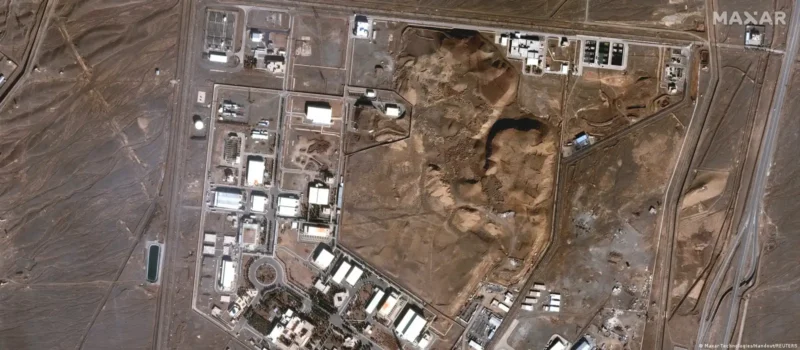
From energy to nuclear sites—this war just crossed into its most dangerous phase.
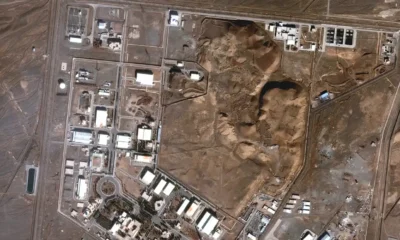
The Israeli military has confirmed it carried out strikes on two key nuclear-related facilities in Iran, marking a sharp escalation in a war already reshaping the region’s strategic landscape.
According to official statements, the Israeli Air Force targeted a heavy water reactor at Arak—also known as the Khondab complex—and a uranium processing facility near Yazd. Both sites are considered critical components of Iran’s nuclear infrastructure, though their exact operational status remains contested.
The Arak facility, long a point of international concern, was originally designed to produce plutonium—a material that can be used in nuclear weapons. However, under the 2015 nuclear agreement, its core was removed and rendered inoperable.
The International Atomic Energy Agency has previously assessed that the reactor has not been fully operational in recent years.
Iranian authorities said the strikes caused no casualties and did not result in any radioactive leakage—an outcome that, if confirmed, may have prevented a far more severe humanitarian and environmental crisis.
Still, the symbolism of the attack is unmistakable.
By striking nuclear-linked facilities, Israel is signaling that it is willing to push beyond conventional military targets—into areas that carry global security implications. For Israel, the objective remains clear: to prevent Iran from acquiring nuclear weapons capability.
Tehran, however, continues to insist that its nuclear program is strictly civilian, focused on energy and medical research.
This latest development raises the stakes dramatically.
Attacks on nuclear infrastructure carry inherent risks—not only of radiation release but also of triggering broader international involvement. Any escalation involving nuclear sites tends to draw heightened scrutiny from global powers and watchdog agencies, given the potential for long-term consequences beyond the battlefield.
The strikes also come amid an already volatile environment, where the war—sparked by joint U.S.-Israeli attacks in late February—has expanded to include missile exchanges, maritime disruptions, and cyber operations.
In strategic terms, the conflict is entering a new phase.
What began as an effort to degrade military capabilities is now touching the core of Iran’s long-contested nuclear program. That shift increases both the pressure on Tehran and the risks of miscalculation.
The immediate question is whether this escalation forces Iran toward restraint—or provokes a broader retaliation that could pull more actors into the conflict.
Either way, the line between conventional war and strategic confrontation is becoming increasingly blurred.
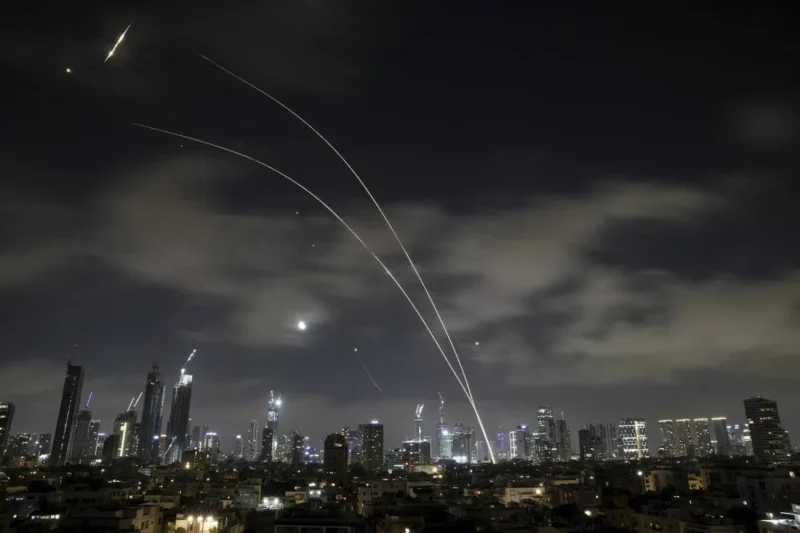
Missiles fall. Air defenses rise. The Gulf fights back—while calling for diplomacy.
As the war between Iran and the United States stretches into its fourth week, Gulf states are confronting an intense wave of missile and drone attacks—while insisting that diplomacy, not escalation, remains their preferred path.
The Gulf Cooperation Council says roughly 85 percent of Iranian strikes have targeted Gulf countries, compared to a smaller share aimed at Israel, underscoring how the conflict has expanded far beyond its original front lines.
Across the region, defense systems have been working at full capacity.
In Saudi Arabia, authorities said more than 20 drones were intercepted over the Eastern Province within a single 24-hour period. Officials warned that Tehran’s continued attacks would deepen its political and economic isolation rather than yield strategic gains.
Kuwait reported shooting down multiple drones while simultaneously dismantling a suspected militant network linked to Hezbollah, accused of planning assassinations targeting state leadership.
In Bahrain, prosecutors referred 14 suspects to court on espionage charges tied to Iran’s Revolutionary Guard. The country’s military says it has intercepted more than 150 missiles and hundreds of drones since the conflict began.
United Arab Emirates reported one of the highest interception rates, dealing with hundreds of ballistic missiles and nearly two thousand drones. Despite these defenses, casualties have been recorded, highlighting the persistent risks to civilian populations.
Meanwhile, Qatar has intensified defense coordination with Washington, reinforcing its role as a key strategic partner amid rising regional tensions.
Beyond the battlefield, Gulf governments say they are also dismantling espionage networks and “sleeper cells,” signaling a parallel internal security effort to counter infiltration and destabilization.
Despite the scale of the attacks, Gulf leaders continue to emphasize restraint.
The GCC has outlined a three-part strategy: ensuring a clear understanding of the conflict’s realities, building a unified international stance against Iranian actions, and securing a role in shaping any post-war regional order.
At the same time, the United Nations Human Rights Council has condemned strikes targeting Gulf infrastructure and called for an immediate halt to hostilities, including Iran’s disruption of shipping through the Strait of Hormuz.
The stakes extend far beyond the region.
Officials warn that continued escalation could disrupt global energy flows, destabilize supply chains, and transform critical maritime routes into conflict zones. The Gulf, long a pillar of energy stability, is now at the center of a widening geopolitical storm.
Yet even under sustained attack, the message from Gulf capitals remains consistent: military defense is necessary—but a political solution is essential.
The question is whether diplomacy can keep pace with a conflict that is expanding faster than efforts to contain it.
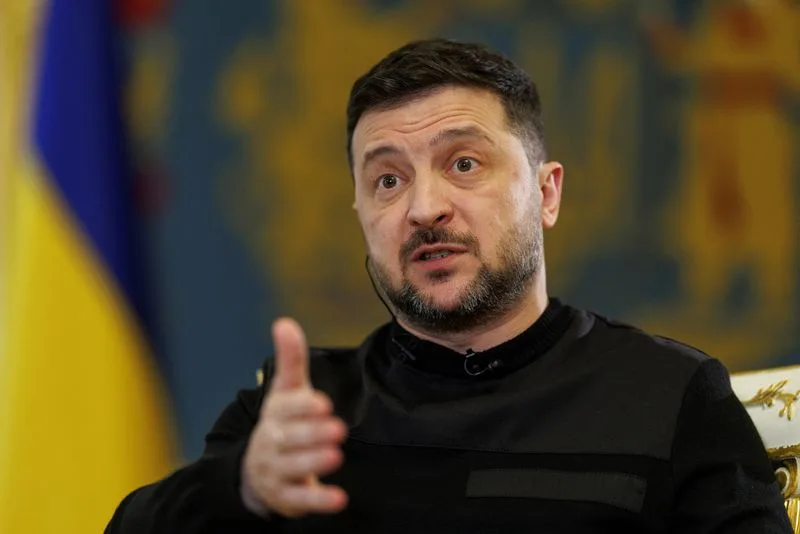
From Kyiv to Tehran—Zelenskyy claims Russia tried to bargain intelligence like a weapon.
President Volodymyr Zelenskyy has accused Russia of attempting to leverage its ties with Iran in a high-stakes geopolitical exchange—offering to limit intelligence support to Tehran if the United States reduced its own intelligence sharing with Ukraine.
Speaking from Kyiv, Zelenskyy said Ukrainian intelligence services had gathered what he described as “irrefutable” evidence that Moscow continues to provide military intelligence to Iran amid the ongoing Middle East war. He did not publicly release the data but insisted the information had been verified at the highest levels.
“I have reports from our intelligence services showing that Russia is doing this,” Zelenskyy said. “Isn’t that blackmail? Absolutely.”
The allegation, if substantiated, would point to a widening strategic overlap between two major conflicts: Russia’s war in Ukraine and the escalating confrontation involving the United States, Israel, and Iran.
Zelenskyy’s claim suggests that Moscow is attempting to convert its influence in one theater into leverage in another—turning intelligence flows into bargaining chips in a broader contest with Washington.
The Kremlin has denied providing support to Iran, a position it has previously communicated directly to U.S. officials. Still, concerns about growing military cooperation between Moscow and Tehran have intensified in recent months.
Ukrainian officials say some drones used in attacks across the Middle East contain Russian components, raising questions about technological exchange and coordination between the two countries. Iran-designed Shahed drones have already played a central role in Russia’s campaign against Ukraine since 2022.
The overlap is increasingly operational as well as strategic.
Zelenskyy said Ukraine is now assisting Gulf states—including Saudi Arabia, the UAE, and Qatar—in defending against drone threats linked to the broader conflict.
That support underscores Kyiv’s evolving role, not only as a recipient of international aid but as a security partner in a rapidly expanding network of conflicts.
The implications extend beyond the battlefield.
If intelligence-sharing becomes a tool of coercion between global powers, it could complicate alliance structures and deepen mistrust across multiple regions.
For the United States, any attempt to link support for Ukraine with Middle East dynamics would present a difficult strategic dilemma—forcing policymakers to balance commitments across two critical fronts.
For Zelenskyy, the message is clear: the war in Ukraine cannot be viewed in isolation.
Instead, it is increasingly part of a larger geopolitical contest, where alliances shift, conflicts intersect, and leverage is exercised not only through force—but through information, influence, and timing.
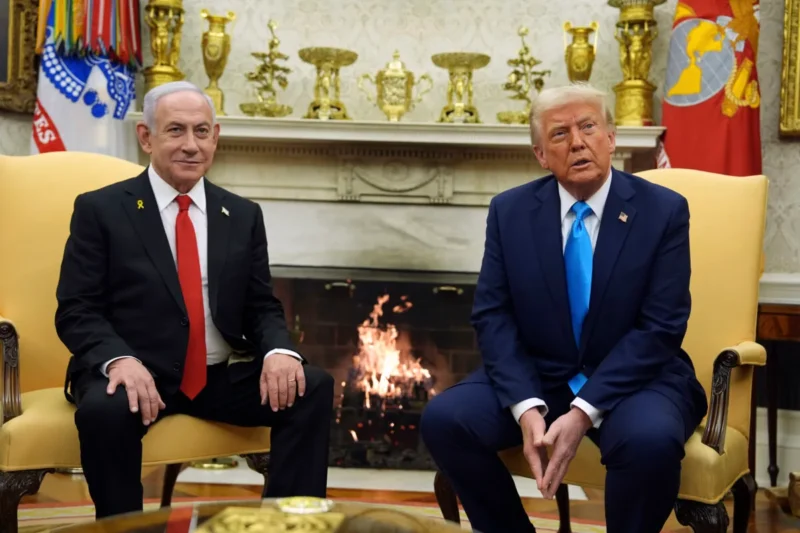
Trump refuses Netanyahu’s plan—fearing civilians would pay the price.
In a revealing glimpse into wartime decision-making, President Donald Trump has reportedly rejected a proposal from Israeli Prime Minister Benjamin Netanyahu to encourage mass protests inside Iran—warning the move could put civilian lives at extreme risk.
According to officials familiar with the conversation, Netanyahu suggested urging Iranians to take to the streets in a bid to destabilize the government. Trump, however, pushed back sharply.
“Why the hell should we tell people to take to the streets when they’ll just get mowed down,” Trump reportedly said, underscoring concerns that such a strategy could trigger a violent crackdown.
The exchange highlights a growing divergence between Washington and Tel Aviv—not over military operations, but over the political endgame of the war.
Both countries remain aligned on weakening Iran’s military capabilities. But their approaches to regime change differ significantly.
For Netanyahu, creating conditions for internal unrest appears to be a core objective. For Trump, U.S. officials say, regime change is secondary—an outcome that might emerge, but not one worth pursuing at the cost of widespread civilian casualties or uncontrollable instability.
This divide has surfaced repeatedly in recent weeks.
Trump has also expressed unease over Israeli strikes on Iran’s energy infrastructure, warning that such attacks risk triggering global economic fallout, including surging oil prices and broader market instability. His administration has instead leaned—at least intermittently—toward diplomatic openings, including pauses in planned strikes and proposals for negotiations.
The disagreement reflects a deeper strategic question: how far should external powers go in attempting to reshape a rival state from within?
Historically, efforts to incite uprisings under external pressure have produced mixed—and often dangerous—results. Without guarantees of protection or sustained support, civilian movements can face severe repression, sometimes strengthening rather than weakening entrenched regimes.
For Trump, the calculus appears rooted in that risk.
Encouraging protests without the means to protect those who answer the call could not only lead to mass casualties but also damage U.S. credibility—turning a strategic gamble into a humanitarian and political liability.
As the war grinds on, the episode underscores a broader reality: even among close allies, agreement on tactics can fracture when the consequences—human, economic, and geopolitical—become too high to ignore.

Drone Attack Disables Kuwait Airport Radar

Houthis Enter Iran War With Missile Strikes on Israel

Iran Turns the Global Economy Into Its Battlefield


-
 Terrorism2 months ago
America Pulls Back From Somalia but Doubles Down Next Door
-

 Analysis2 months ago
How Chinese Speculators Set the Stage for the Gold and Silver Crash
-

 Top stories2 months ago
Rubio Signals Preemptive Military Option as U.S. Tightens Pressure on Iran
-

 Russia-Ukraine War1 month ago
Russian General Boasted of Torture and Killing of Ukrainian Prisoners
-

 US-Israel war on Iran1 month ago
UK Refuses Iran Strike Access, Trump Fires Back
-
 Russia-Ukraine War1 month ago
Europe’s Spies Challenge Trump’s Ukraine Peace Optimism
-
 Top stories4 weeks ago
War Expands Across Region as Iranian Militias Join Fight
-
 US-Israel war on Iran4 weeks ago
Iran Pledges ‘Never, Ever’ to Hold Bomb-Grade Material