Trump refuses Netanyahu’s plan—fearing civilians would pay the price.
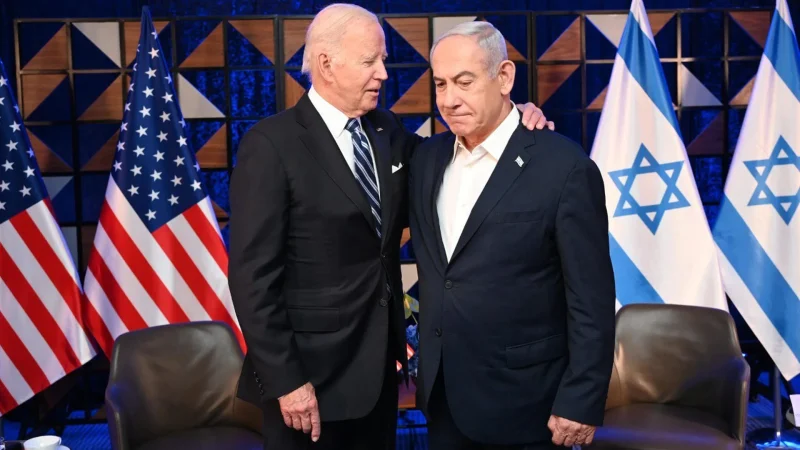
In a revealing glimpse into wartime decision-making, President Donald Trump has reportedly rejected a proposal from Israeli Prime Minister Benjamin Netanyahu to encourage mass protests inside Iran—warning the move could put civilian lives at extreme risk.
According to officials familiar with the conversation, Netanyahu suggested urging Iranians to take to the streets in a bid to destabilize the government. Trump, however, pushed back sharply.
“Why the hell should we tell people to take to the streets when they’ll just get mowed down,” Trump reportedly said, underscoring concerns that such a strategy could trigger a violent crackdown.
The exchange highlights a growing divergence between Washington and Tel Aviv—not over military operations, but over the political endgame of the war.
Both countries remain aligned on weakening Iran’s military capabilities. But their approaches to regime change differ significantly.
For Netanyahu, creating conditions for internal unrest appears to be a core objective. For Trump, U.S. officials say, regime change is secondary—an outcome that might emerge, but not one worth pursuing at the cost of widespread civilian casualties or uncontrollable instability.
This divide has surfaced repeatedly in recent weeks.
Trump has also expressed unease over Israeli strikes on Iran’s energy infrastructure, warning that such attacks risk triggering global economic fallout, including surging oil prices and broader market instability. His administration has instead leaned—at least intermittently—toward diplomatic openings, including pauses in planned strikes and proposals for negotiations.
The disagreement reflects a deeper strategic question: how far should external powers go in attempting to reshape a rival state from within?
Historically, efforts to incite uprisings under external pressure have produced mixed—and often dangerous—results. Without guarantees of protection or sustained support, civilian movements can face severe repression, sometimes strengthening rather than weakening entrenched regimes.
For Trump, the calculus appears rooted in that risk.
Encouraging protests without the means to protect those who answer the call could not only lead to mass casualties but also damage U.S. credibility—turning a strategic gamble into a humanitarian and political liability.
As the war grinds on, the episode underscores a broader reality: even among close allies, agreement on tactics can fracture when the consequences—human, economic, and geopolitical—become too high to ignore.