
US-Israel war on Iran
Blasts Rock Dubai as U.S. Warplane Crashes in Iraq

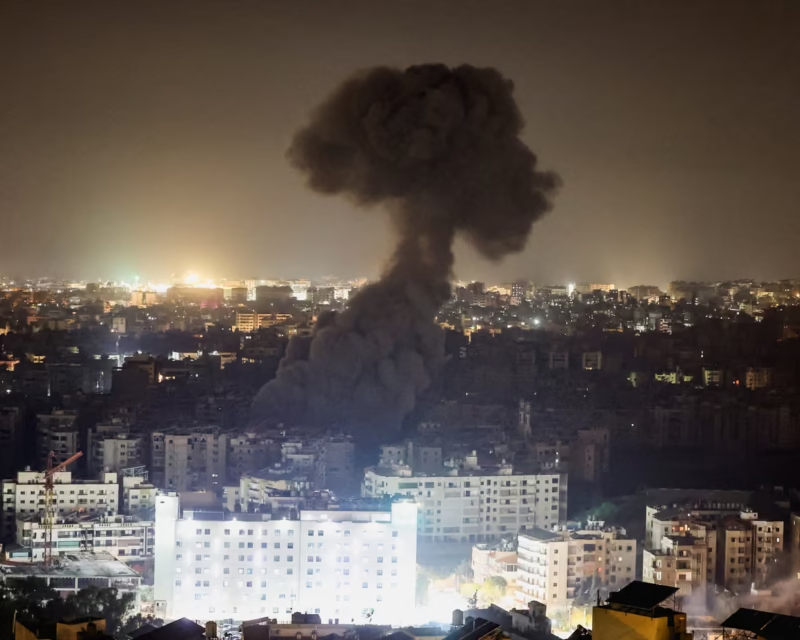
Explosions in Dubai. A U.S. military plane down in Iraq. And the Middle East war shows no sign of slowing.
Smoke Rises Over Financial Hub While U.S. Central Command Confirms Refueling Aircraft Downed in “Friendly Airspace”.
Explosions rattled parts of Dubai early Friday as thick black smoke billowed across the skyline of the Gulf financial hub, while U.S. forces confirmed the crash of a military aircraft in Iraq amid an intensifying regional conflict.
Authorities in Dubai said a fire broke out in the Al Quoz industrial district after debris from what officials described as a “successful interception” struck the façade of a building in central Dubai. The city’s media office said there were no reported injuries. Smoke drifted across the skyline, visible as far as the sail-shaped Burj Al Arab hotel.
Police cordoned off the affected area, preventing journalists and bystanders from approaching the scene. Witnesses reported hearing blasts before the fire erupted, though officials have not released further details about the interception.
Separately, U.S. Central Command confirmed that a KC-135 refueling aircraft crashed in what it described as “friendly airspace” in Iraq. The command said the incident was not caused by hostile or friendly fire. At least five crew members were aboard the aircraft, according to a U.S. official speaking on condition of anonymity. A second aircraft involved in the incident landed safely.
Rescue operations were ongoing.
The developments came as the U.S.–Israeli military campaign against Iran entered another volatile phase. Israeli forces launched new strikes on Tehran and Beirut, while Iranian-backed groups continued attacks across the region.
President Donald Trump said the United States was “totally destroying” Iran’s ruling system “militarily, economically and otherwise,” describing the campaign as his “great honour.” Israeli Prime Minister Benjamin Netanyahu used his first press conference since the start of the war to defend the joint offensive and issued a thinly veiled warning toward Iran’s new leadership.
In Iraq’s autonomous Kurdistan region, French President Emmanuel Macron confirmed that a French soldier was killed in a drone attack near Erbil — the first French military fatality of the conflict. Several others were wounded during training operations with Iraqi forces.
The violence has also raised tensions at NATO facilities. Sirens were reported at Incirlik Air Base in southern Türkiye, where U.S. troops are stationed, though officials offered no immediate explanation.
As oil markets remain volatile, U.S. Treasury Secretary Scott Bessent said Washington plans to escort vessels through the Strait of Hormuz once it secures full air superiority and degrades Iran’s missile capabilities.
For now, smoke over Dubai and the downed aircraft in Iraq underscore the widening reach of a conflict that is increasingly touching multiple fronts — military, economic and diplomatic — across the Middle East.

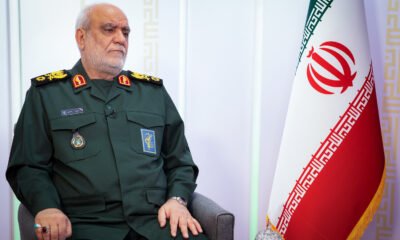











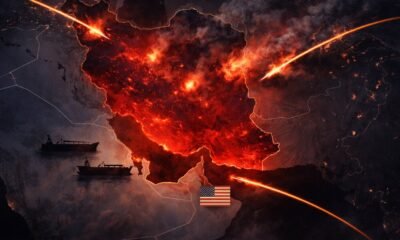

US-Israeli Strikes Kill IRGC Intelligence Chief in Latest Escalation. Another senior figure down. The war is moving deeper into Iran’s power structure.
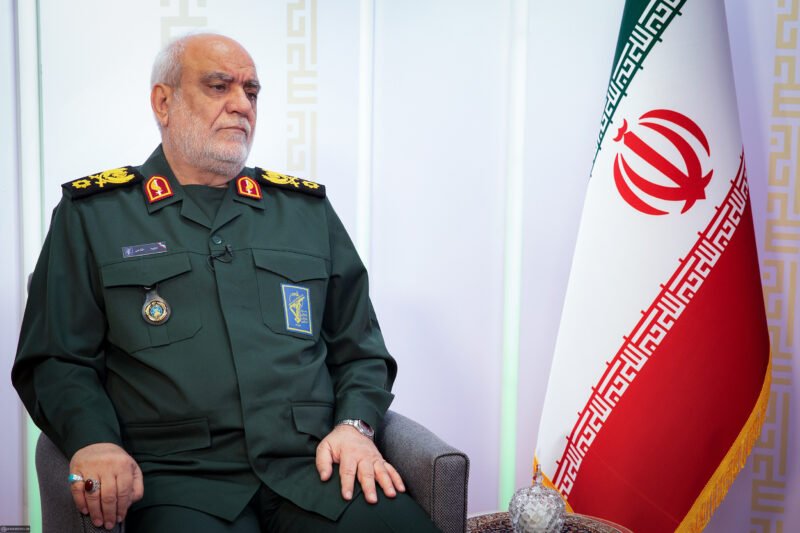
TEHRAN — U.S. and Israeli strikes have killed the intelligence chief of Iran’s Islamic Revolutionary Guard Corps (IRGC), Iranian authorities said Monday, marking a further escalation in the conflict now entering its sixth week.
The IRGC said Major General Majid Khademi, head of its intelligence organization, was killed in an early-morning strike. In a statement posted on its official channels, the Guards described the attack as a “criminal” operation carried out by U.S. and Israeli forces.
Israeli Defense Minister Israel Katz later confirmed the killing and said Israel would continue targeting senior Iranian figures, vowing to pursue leaders “one by one.”
Khademi was a senior figure within the Islamic Revolutionary Guard Corps, overseeing intelligence operations tied to internal security and regional activities. His death follows a series of strikes targeting high-ranking officials since the war began on February 28.
Among those killed in earlier attacks was Iran’s Supreme Leader, Ali Khamenei, along with several senior military commanders.
The latest strike comes as fighting between Iran, the United States, and Israel continues across multiple fronts, including missile exchanges and airstrikes targeting military and infrastructure sites.
Iran has responded to the campaign with missile and drone attacks against Israel and regional targets, raising concerns about further escalation.
There was no immediate comment from U.S. officials on the reported killing.

One war just became two. Lebanon is now burning—and the region is stretching toward something bigger.
BEIRUT / TEL AVIV — What began as a war centered on Iran has now spilled decisively into Lebanon, opening a second front that is rapidly reshaping the trajectory of the wider conflict.
As fighting enters its sixth week, Hezbollah’s intervention has transformed the war from a contained confrontation into a multi-theater crisis—one that is stretching military resources, deepening humanitarian costs, and complicating any path to de-escalation.
The escalation was swift. Within days of U.S. and Israeli strikes on Iran, Hezbollah launched rockets and drones into northern Israel, framing the move as solidarity with Tehran. Israel responded with sustained airstrikes across Lebanon, followed by ground incursions into the south.
Since then, the conflict has intensified into a grinding exchange.
Israeli forces have targeted Hezbollah’s infrastructure, command centers, and weapons depots across Beirut’s southern suburbs, Tyre, and Nabatieh, while expanding operations along the border. Hezbollah, in turn, has deployed rockets, drones, and anti-armor strikes, aiming to impose costs and divert Israeli focus from the Iran theater.
The human toll is rising sharply. More than 1,000 people have been killed in Lebanon, according to local authorities, with hundreds of thousands displaced in a country already strained by economic crisis. In northern Israel, communities have again been pushed into a cycle of sirens and sheltering, reviving memories of previous wars.
At the strategic level, the second front introduces a dangerous paradox.
Hezbollah entered the fight weakened from earlier confrontations, yet still capable of sustaining prolonged pressure through its arsenal of rockets and drones. Israel, while maintaining air superiority, now faces a more complex battlefield—one that divides attention between Iran and Lebanon while raising the risk of overextension.
For Lebanon, the consequences are existential. The government has attempted to distance itself from Hezbollah’s actions, even moving to restrict its military activities, but its ability to assert control remains limited. The result is a familiar but increasingly fragile reality: a state pulled into war by forces it does not fully command.
Regionally, the implications are widening. The Lebanon front risks drawing in additional actors, from Syria to other non-state groups, while reinforcing the interconnected nature of the conflict. What happens in southern Lebanon now directly affects calculations in Tehran, Washington, and Tel Aviv.
The broader outcome is becoming clearer.
This is no longer a single war with multiple incidents. It is an interconnected conflict system—where escalation in one theater fuels escalation in another, and where local battles carry global consequences.
And as the second front intensifies, one conclusion is hard to ignore: the longer the war expands, the harder it becomes to contain.
Week six—and the war is widening, not ending. Cities targeted, infrastructure threatened. Where does this stop?
TEL AVIV / TEHRAN — The war between Iran, the United States and Israel has entered its sixth week with no sign of de-escalation, as airstrikes deepen inside Iranian territory and missile fire continues to reach Israeli towns, underscoring a conflict expanding in both scope and risk.
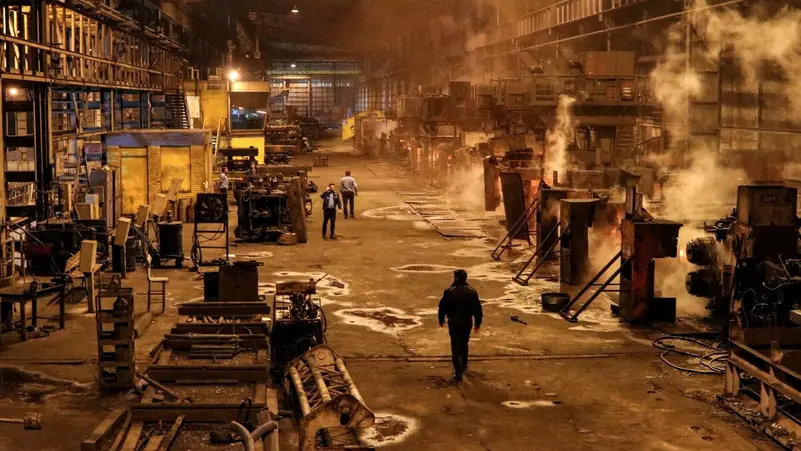
Iranian state media reported that U.S. and Israeli strikes targeted Qassem Soleimani International Airport in Ahvaz, a key facility in the southwestern province of Khuzestan. Local officials described the strike as part of a sustained campaign against strategic infrastructure. Additional attacks were reported near Isfahan, where Iranian sources said at least five people were killed, while explosions in Karaj—near Tehran—highlighted the growing proximity of strikes to the capital.
The U.S. military, through United States Central Command, released footage showing the interception and destruction of Iranian drones it said were targeting American personnel across the region.
Iran responded with missile launches toward Israel. Air defense systems intercepted projectiles over Haifa, according to Israeli authorities, though debris fell in multiple locations. Sirens sounded across northern and southern Israel, reflecting the continued reach of Iran’s retaliatory capabilities despite weeks of sustained bombardment.
Israeli Defense Minister Yisrael Katz signaled a further escalation, warning that Israel would intensify strikes on Iranian leadership, military assets and critical infrastructure if attacks persist. His remarks point to a strategy that increasingly blends battlefield pressure with targeted decapitation of command structures.
At the same time, Donald Trump renewed threats to expand the conflict’s scope, warning that U.S. forces could strike Iranian power plants and bridges if Tehran does not reopen the Strait of Hormuz. The warning marks a potential shift toward targeting infrastructure with civilian impact—raising the stakes of an already volatile conflict.
Since the war began on February 28, both sides have broadened their targeting frameworks. U.S. and Israeli operations have focused on degrading Iran’s missile systems, industrial base and command networks. Iran, in turn, has pursued a strategy of distributed retaliation, using missiles and drones to strike Israel and regional actors while maintaining pressure on global energy routes.
The result is a war without a clear off-ramp.
The continued closure of the Strait of Hormuz remains a central flashpoint, amplifying economic risks and increasing the likelihood of wider international involvement. Meanwhile, the geographic spread of strikes—from Ahvaz to Haifa—signals a shift toward deeper, more sustained confrontation.
Six weeks in, the trajectory is clear: diplomacy is absent, escalation is accelerating, and the conflict is moving toward a broader and more dangerous phase.

A deadline. A warning. And a region on edge. What happens Tuesday could reshape the war.
TEHRAN / WASHINGTON — The war rhetoric between Iran and the United States escalated sharply on Sunday, with Mohammad Bagher Ghalibaf warning that the entire Middle East could “burn” if tensions continue to spiral, just as Donald Trump set a firm deadline for Iran to reopen the Strait of Hormuz.
In a public message directed at Trump, Ghalibaf accused Washington of pushing the region toward catastrophe, saying the U.S. president’s “reckless moves” risk dragging both countries—and their allies—into a broader and more destructive conflict. He also criticized Trump for aligning closely with Benjamin Netanyahu, arguing that the current trajectory would destabilize the entire region.
“The whole region is going to burn,” Ghalibaf wrote, framing Iran’s position as a defensive response to external pressure and calling instead for recognition of Iranian rights and an end to escalation.
The warning came as Trump raised the stakes with a new ultimatum. In an interview, he said Iran has until Tuesday evening to reopen the Strait of Hormuz—a critical global energy chokepoint—or face direct U.S. strikes on key infrastructure.
“If they don’t do something by Tuesday evening, they won’t have any power plants and they won’t have any bridges standing,” Trump said, signaling a potential shift toward targeting assets with significant civilian impact.
He later reinforced the message in a brief social media post: “Tuesday, 8:00 P.M. Eastern Time!”
The exchange highlights a rapidly narrowing window for de-escalation.
At issue is the Strait of Hormuz, through which a substantial portion of the world’s oil and gas flows. Iran’s effective closure of the route since late February has triggered sharp increases in energy prices and intensified global concern over supply disruptions.
The confrontation now reflects more than a military standoff—it is a strategic test of resolve on both sides.
Iran appears to be leveraging the blockade as a pressure tool, while the United States is signaling willingness to escalate beyond military targets into economic and infrastructure warfare. That shift raises the risk of a wider regional conflict, especially as allied states and non-state actors remain on high alert.
The immediate question is whether either side steps back before the deadline.
The broader concern is what happens if neither does.
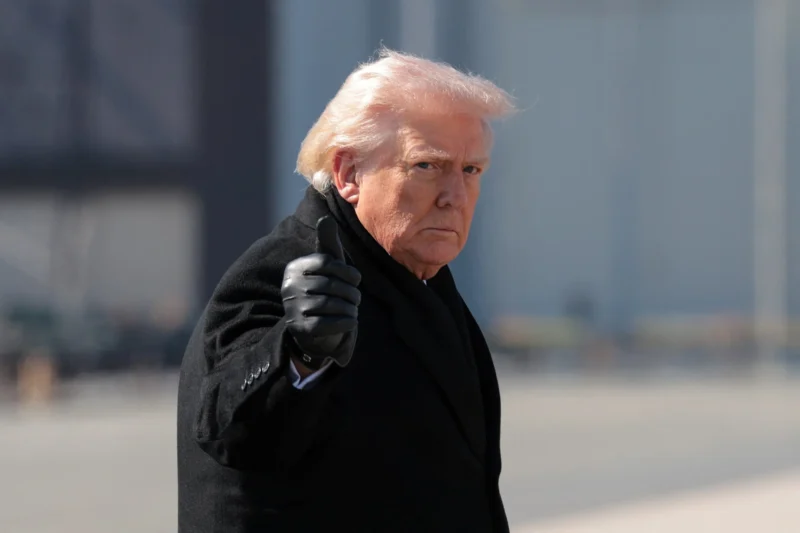
Ultimatums are getting louder. Strategy is getting quieter. This war is drifting into something bigger.
WASHINGTON / GULF — Six weeks into the war between the United States, Israel, and Iran, the conflict is no longer defined by a single battlefield. It is now a layered crisis—military, economic, and psychological—spreading faster than any coherent strategy to contain it.
At the center of the latest escalation is a familiar pattern: deadlines without resolution. President Donald Trump has issued repeated ultimatums demanding Iran reopen the Strait of Hormuz, warning of strikes on critical infrastructure if compliance does not follow. Tehran has rejected the pressure, framing the blockade as leverage rather than retreat.
The result is a standoff that is no longer just geopolitical—it is economic. With energy flows disrupted, the war is feeding directly into global price shocks, from fuel to food, turning distant military decisions into immediate pressure on households worldwide.
At the same time, the battlefield itself is becoming harder to interpret. Iranian claims of downing additional U.S. aircraft—beyond the confirmed F-15E incident—remain contested, highlighting a growing “fog of war” where information is weaponized alongside missiles.
More consequential, however, is the shift in targeting.
Recent strikes have moved beyond traditional military objectives to include bridges, industrial facilities, and research centers—sites that blur the line between civilian and strategic infrastructure. Critics warn this trend risks normalizing a broader definition of acceptable targets, one that could deepen humanitarian costs and complicate any future diplomatic settlement.
Inside policy circles, the biggest concern is not escalation alone—but direction.
There is no clear end state. Analysts increasingly argue that prolonged pressure may not weaken Iran’s strategic posture but instead harden it, potentially accelerating nuclear ambitions rather than deterring them. At the same time, domestic skepticism in the United States is growing, with lawmakers questioning both the objectives and the absence of a defined exit strategy.
The paradox is becoming unavoidable.
The war is expanding in scope—geographically, economically, and politically—while strategic clarity is shrinking. Military operations continue to intensify, yet diplomacy remains fragmented and reactive.
Even as global attention briefly shifts to moments of progress elsewhere—such as renewed space exploration—those contrasts only sharpen the reality on the ground: a conflict moving forward without a roadmap.
The longer this imbalance holds, the greater the risk that the war stops being a campaign—and becomes a condition.
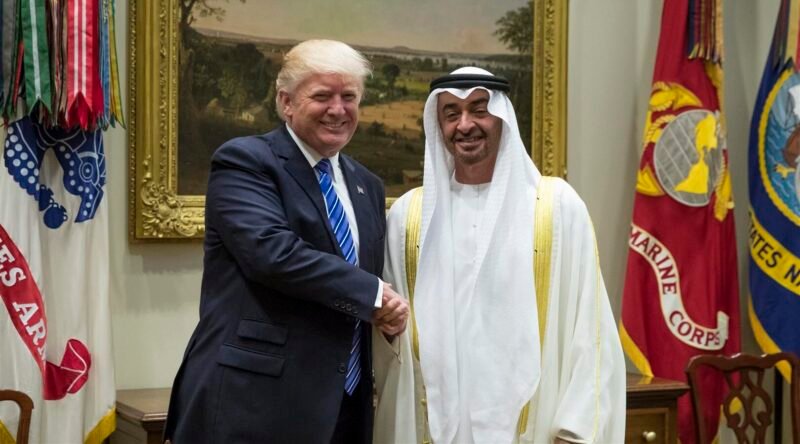

Energy Shockwave—War Sends Oil Surging and Global Economy to the Edge.
The world’s oil market is no longer reacting to the war—it is being reshaped by it.
Since strikes began on February 28, the conflict between the United States, Israel, and Iran has triggered what analysts describe as the most severe supply disruption in modern oil market history. At the center of the shock is the effective closure of the Strait of Hormuz, a narrow maritime corridor that normally carries roughly one-fifth of global oil supply.
The impact has been immediate and global.
Shipping traffic through the strait has slowed dramatically, as attacks on vessels, soaring insurance costs, and security risks forced operators to halt or reroute shipments. While Gulf producers have attempted to redirect exports through alternative pipelines, those routes can replace only a fraction of the lost volume—leaving a daily shortfall estimated in the tens of millions of barrels.
Prices have surged accordingly.
Brent crude, which traded around $70 per barrel before the war, has climbed above $100 and at times pushed toward $120, with sharp daily swings driven by military developments and political statements. In extreme trading moments, regional crude benchmarks have spiked even higher, reflecting the uncertainty surrounding supply.
For consumers, the effects are already visible.
Fuel prices have risen sharply across major economies, with gasoline costs climbing by as much as 30 percent in some markets. Higher diesel and jet fuel prices are feeding into transportation and logistics costs, raising the price of goods and tightening household budgets.
The disruption extends beyond oil.
Liquefied natural gas exports from the Gulf have been interrupted, sending prices in Europe and Asia sharply higher. Petrochemical and fertilizer markets are also under strain, creating ripple effects across agriculture and manufacturing sectors worldwide.
The broader economic consequences are beginning to take shape.
Rising energy costs are fueling inflation just as central banks were attempting to stabilize prices. Economies heavily dependent on energy imports—particularly in Asia—face the risk of shortages, rationing, and slower growth. Financial markets have responded with volatility, while energy companies have seen gains tied to higher prices.
For policymakers, the options are limited.
Strategic reserves can provide temporary relief, and increased production outside the Gulf offers some buffer. But neither can fully compensate for prolonged disruption in one of the world’s most critical energy corridors.
The outlook now hinges on the trajectory of the war.
A partial reopening of the Strait of Hormuz could ease prices later this year, though recovery would likely be gradual. A prolonged conflict—or further escalation affecting additional chokepoints—could push prices significantly higher, raising the risk of a broader global slowdown.
Strategic Reflection
The energy shock reveals a deeper shift.
For decades, the global economy operated on the assumption that key energy routes, however vulnerable, would remain open. That assumption no longer holds.
The war has transformed energy flows into strategic leverage—tools of pressure rather than passive channels of trade.
And in doing so, it has exposed a central vulnerability of the global system:
A single chokepoint, once disrupted, can ripple through every economy—faster than diplomacy can contain it.
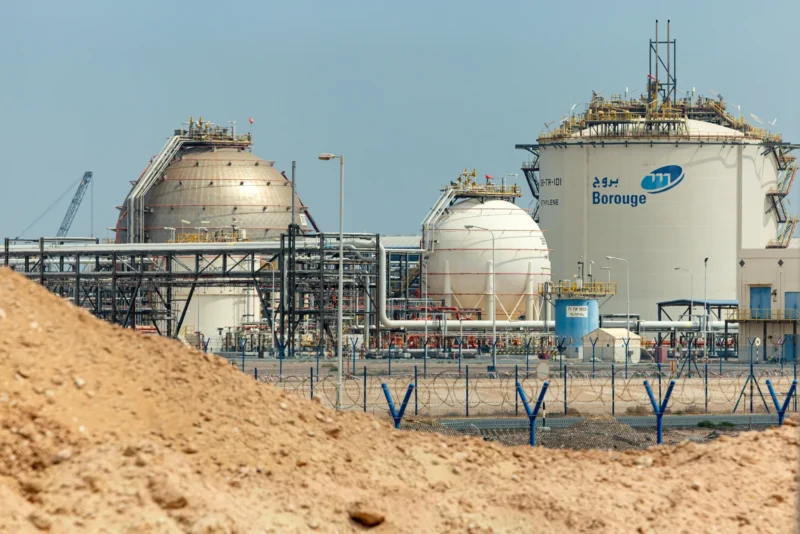
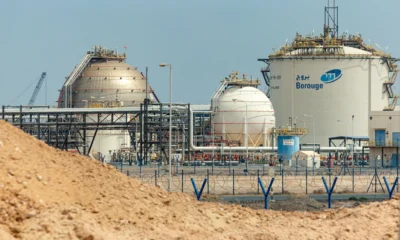
Gulf Energy Hit Indirectly as UAE Halts Borouge After Air Defense Interceptions.
Operations at a major petrochemical facility in the United Arab Emirates were suspended Sunday after falling debris from intercepted missiles and drones sparked fires at the site, authorities said.
Officials in Abu Dhabi confirmed that multiple fires broke out at the Borouge petrochemicals plant following what they described as “successful interceptions” by air defense systems responding to incoming threats.
Emergency teams were deployed to contain the fires, and no injuries were reported.
The UAE’s defense ministry said its air defenses were actively engaging missile and drone attacks launched from Iran, as the regional conflict enters its sixth week and continues to expand beyond direct military targets.
Authorities said operations at the Borouge facility have been halted while damage assessments are carried out. The plant is a key part of the UAE’s petrochemical sector, producing materials used across global manufacturing supply chains.
The incident highlights a growing pattern across the Gulf, where infrastructure has been affected not only by direct strikes but also by debris from intercepted projectiles.
Across the region, governments have reported similar incidents involving damage to energy facilities and industrial sites as air defense systems respond to incoming attacks.
The latest developments come amid heightened tensions tied to the ongoing U.S.-Israel war with Iran, which has disrupted shipping routes, increased pressure on energy markets and drawn Gulf states further into the conflict.
Officials have not indicated how long operations at the Borouge plant will remain suspended.

Top Iranian Spy Chief Eliminated as War Targets Inner Circle

Tariffs Reversed, Uncertainty Remains: Billions at Stake in U.S. Refund Push

Lebanon War Expands a Conflict Already Spinning Out of Control


-
 TECH3 weeks ago
China Bets on an AI-Powered Military Future
-
 US-Israel war on Iran2 weeks ago
Waves of Mystery Drones Breach U.S. Nuclear Base Airspace
-
 Terrorism1 week ago
Egypt Uncovers Alleged Plan to Down Presidential Plane
-
 US-Israel war on Iran3 weeks ago
Saudi Arabia Warns of Military Action After Iranian Missile Strike
-
 US-Israel war on Iran2 weeks ago
Former CIA Chief Blames White House for Escalating Iran War Crisis
-
 Top stories1 week ago
Saudi Arabia Deepens Defense Ties with Ukraine
-

 US-Israel war on Iran2 weeks ago
Iran’s Guard Leadership Hit Hard in Escalating Strikes
-
 Analysis2 weeks ago
Inside the IRGC’s Quiet Rebuild of Hezbollah