“Europe needs leadership, not vassals.” Spain’s deputy prime minister openly challenges Brussels over its response to Trump’s Iran war.
Yolanda Díaz Accuses Brussels of ‘Servile’ Stance as Rift Deepens Over U.S.–Israeli Campaign.
Spain’s Deputy Prime Minister Yolanda Díaz has accused European Union leaders of allowing themselves to be “held hostage” by U.S. President Donald Trump over the escalating war with Iran, warning that Brussels’ approach risks deepening public disillusionment with the bloc.
In an interview published Thursday by Politico, Díaz described the European Union as “an orphan at a moment of historic gravity,” arguing that it should assert an independent foreign policy rather than defer to Washington.
She criticized what she called a “servile” attitude toward the United States, saying such deference is misguided because Trump “does not respect those who attempt to be his vassals.”
Her remarks reflect mounting tensions within Europe over how to respond to the U.S.–Israeli military campaign against Iran. Díaz labeled the intervention “completely illegitimate” and faulted European Commission President Ursula von der Leyen for failing to swiftly condemn the strikes.
The criticism comes as Madrid’s standoff with Washington intensifies. Trump has threatened to cut off trade with Spain after Prime Minister Pedro Sánchez refused to allow U.S. forces to use joint military bases for operations against Iran and rejected NATO’s new 5% of GDP defense spending target as excessive.
Sánchez has insisted Spain will not be “complicit” in actions it views as harmful to global stability.
Earlier this week, Spain permanently withdrew its ambassador from Israel and downgraded diplomatic relations, further underscoring its opposition to the campaign.
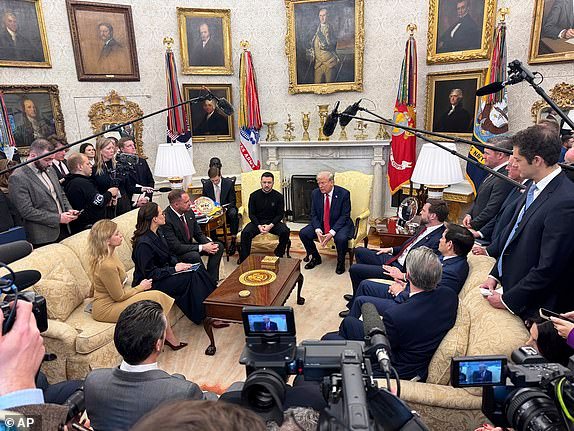
Díaz also took aim at German Chancellor Friedrich Merz, criticizing him for remaining silent during a White House meeting in which Trump threatened Spain. She argued that Europe needs stronger leadership at a time of geopolitical upheaval.
The Iran conflict has exposed wider fractures within the EU. Italian Prime Minister Giorgia Meloni, despite maintaining cordial ties with Trump, has described the strikes as evidence of a “crisis of international law.” Other European governments have called for restraint but stopped short of direct condemnation.
As the war reshapes alliances and energy markets, Díaz’s intervention highlights a deeper question confronting Europe: whether the bloc can maintain strategic autonomy in an era of renewed great-power confrontation — or whether internal divisions will leave it reacting to events driven from Washington.