
Top stories
Puntland and Jubaland Presidents Return to Mogadishu

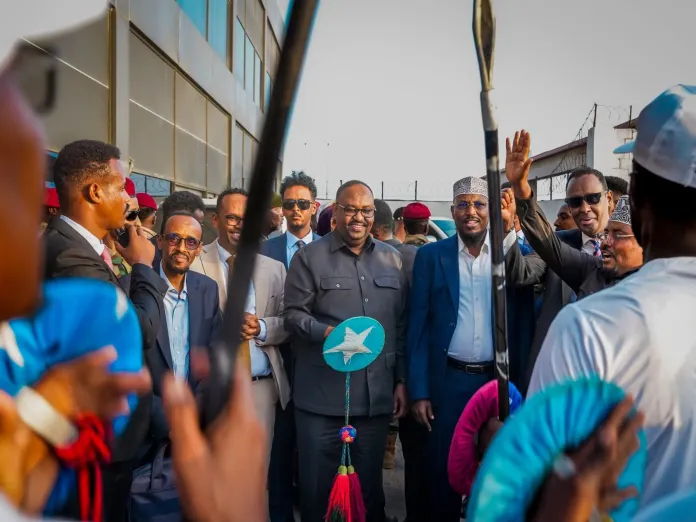
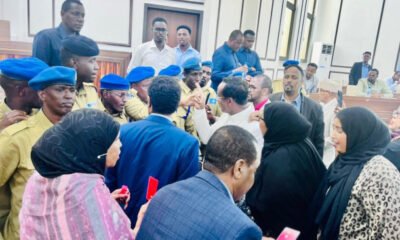
Puntland President Said Abdullahi Deni and Jubaland President Ahmed Mohamed Islam arrived in Mogadishu on Tuesday, marking a rare joint return to the capital after a prolonged political standoff with the federal government.
President Deni landed at Aden Adde International Airport accompanied by a delegation that included security officials. He was received by members of parliament, senators, opposition figures and representatives of civil society before being escorted to his residence at the Halane camp.
His arrival followed that of President Ahmed Madobe, who reached Mogadishu earlier in the day after an absence of roughly 18 months. Madobe was similarly welcomed by senior officials and community representatives at the airport.
Both leaders are attending a conference convened by Somali President Hassan Sheikh Mohamud, bringing together Villa Somalia and members of the Future Council. The talks are expected to focus on national priorities, including elections, constitutional disputes, unity, security, the fight against Al-Shabaab and the broader governance crisis.
Deni and Madobe have largely stayed away from Mogadishu in recent years due to escalating tensions with the federal government, which at times led to a breakdown in cooperation between the centre and key federal member states.
The conference, scheduled to begin imminently, is being closely watched as a potential turning point in strained federal-state relations. Both presidents are expected to address the media and outline their positions as discussions get under way.



















Victory or Illusion? Trump says he won. The battlefield says something more complicated.
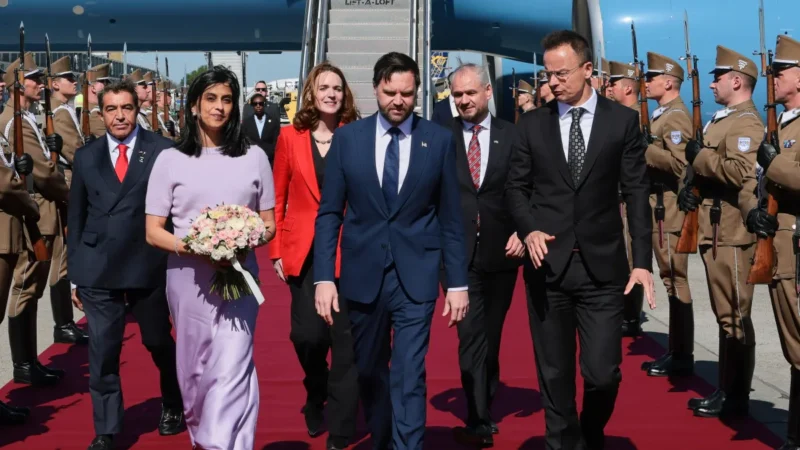
When Donald Trump declared a “total and complete victory” in the six-week war against Iran, the statement landed at a moment of uneasy calm—a fragile ceasefire holding just long enough to pause the fighting. But beneath the rhetoric lies a more complex reality. The war did not end with clear outcomes; it exposed the limits of military power against a resilient adversary.
From the outset, the administration framed the conflict around five ambitious goals: dismantling Iran’s missile program, destroying its navy, neutralizing regional proxies, halting its nuclear ambitions, and ultimately triggering regime change.
On paper, progress has been made. In practice, each objective remains only partially fulfilled.
The most visible gains came at sea. U.S. officials say Iran’s naval fleet has been largely destroyed, with major vessels sunk and mine capabilities severely degraded. Analysts broadly agree that Iran’s conventional naval strength has suffered a significant blow. Yet the strategic impact is less decisive.
Iran has continued to disrupt shipping in the Strait of Hormuz—not with warships, but through missiles, drones, and asymmetric tactics. Control of the waterway, not fleet size, remains the real lever of power.
A similar pattern emerges in the missile campaign. U.S. defense officials claim Iran’s missile infrastructure has been “functionally destroyed.” And yet, Tehran continues to launch strikes, albeit at reduced volume. Experts note that Iran’s decades-old, largely domestic missile industry is difficult to eliminate entirely. What has been achieved is degradation—not elimination.
On the nuclear front, the picture is even more uncertain. Airstrikes have damaged facilities and delayed progress, but they have not erased Iran’s technical capability or stockpile of enriched uranium. Without a verified dismantling process, the core objective—preventing a nuclear-armed Iran—remains unresolved and now tied to uncertain negotiations.
Perhaps the clearest gap lies in the regional dimension. The war did little to directly dismantle Iran’s network of allied groups. Hezbollah remains active, and fighting in Lebanon has continued despite the ceasefire. The conflict, rather than containing proxy warfare, has redistributed it across multiple fronts.
And then there is regime change—the most ambitious and least realized goal. The killing of Ali Khamenei marked a dramatic escalation, but power did not collapse. Instead, it consolidated under Mojtaba Khamenei, signaling continuity rather than transformation. The system endured.
The result is a paradox. Iran emerges militarily weakened—its infrastructure damaged, its capabilities reduced—but strategically intact. It retains leverage over global energy routes, maintains internal control, and continues to shape the regional battlefield.
For Washington, the war achieved disruption, not resolution. It demonstrated overwhelming force but fell short of delivering a decisive strategic outcome.
The ceasefire, in this sense, is not the end of the conflict. It is a transition point—where military gains must now confront political reality.
And that is where the real test begins.

This isn’t the future—it’s already here. One AI tool can expose flaws in nearly every system on Earth.
A powerful new artificial intelligence system developed by Anthropic is triggering urgent warnings across governments and industries, after demonstrating an ability to uncover software vulnerabilities at an unprecedented scale.
The model, known as Mythos, has already identified thousands of weaknesses across major operating systems and web browsers, according to the company. While that capability could strengthen cybersecurity defenses, it also raises a stark possibility: the same tool could be weaponized to attack critical infrastructure worldwide.
Anthropic has opted not to release Mythos publicly. Instead, it is sharing access with a small group of major corporations—including Amazon, Apple, Cisco, JPMorgan Chase, and Nvidia—under an initiative called Project Glasswing. The goal is to help these firms reinforce their systems before similar tools become widely available.
Security experts say the decision reflects a growing recognition that artificial intelligence has fundamentally changed the cyber threat landscape. What once took teams of hackers weeks or months can now be executed in minutes.
“This is a wake-up call,” said cybersecurity executive Alissa Valentina Knight. “The storm isn’t coming—the storm is here.”
Concerns have reached the highest levels of government. U.S. Treasury Secretary Scott Bessent and Federal Reserve Chair Jerome Powell recently met with top banking leaders to assess the risks posed by AI-driven cyberattacks. Meanwhile, Kristalina Georgieva warned that the global financial system is not yet equipped to withstand large-scale cyber threats powered by advanced AI.
The concern is not theoretical. Cybercriminals are already using AI to automate phishing attacks, deploy malware, and generate convincing deepfakes. According to industry reports, the time between the release of new AI capabilities and their exploitation by attackers is shrinking rapidly.
Mythos amplifies that risk. By scanning vast amounts of code in seconds, it can identify flaws that human developers might never detect. That efficiency, experts say, could dramatically accelerate both defensive patching—and offensive attacks.
Anthropic insists its cautious rollout aligns with its focus on AI safety. But some analysts question whether the limited release also serves a strategic purpose, as the company positions itself ahead of a potential public offering.
Regardless of motive, one reality is clear: the cybersecurity race has entered a new phase—one where machines are not just defending systems, but probing them faster than humans ever could.

China helped pause the war—now it must decide how far to go. Peace, power, or profit?
China is recalibrating its strategy in the Middle East as a fragile ceasefire between the United States and Iran holds, with Beijing weighing how deeply to engage in shaping a longer-term settlement.
Officials and diplomats say China played a quiet but significant role in encouraging Iran to accept the temporary truce, using its economic leverage as Tehran’s largest oil customer. That involvement has elevated Beijing’s diplomatic profile at a critical moment in the conflict.
The next phase, however, is more complex.
China’s primary concern remains the Strait of Hormuz, where disruptions have threatened global energy flows and placed pressure on Asian economies. With roughly 20 percent of global oil passing through the strait, prolonged instability directly impacts Chinese growth, already under strain from slowing domestic conditions.
Chinese officials have publicly emphasized diplomacy, with foreign ministry spokesperson Mao Ning stating Beijing is working to help end the conflict. Behind the scenes, diplomats say China is urging restraint from all sides while avoiding commitments that could draw it into direct confrontation.
That caution reflects competing priorities.
Beijing relies heavily on Iranian oil but also maintains strong ties with Gulf states such as Saudi Arabia and the United Arab Emirates. Preserving those relationships—while protecting energy supply routes—has become central to its calculations.
At the same time, China is reluctant to provide the type of long-term security guarantees Iran has sought. Tehran has pushed for backing from major powers, including China and Russia, but officials in Beijing have so far limited their position to supporting dialogue rather than formal commitments.
The issue is expected to surface in upcoming talks between Donald Trump and Xi Jinping, scheduled for next month. Analysts say China’s role in facilitating the ceasefire could give it leverage in broader negotiations, including trade and sanctions.
Some observers argue Beijing is positioning itself as a stabilizing force, contrasting its approach with Washington’s more confrontational strategy. Others caution that China’s involvement is driven primarily by economic interests rather than a broader commitment to conflict resolution.
For now, China appears to be adopting a wait-and-see approach—supporting the ceasefire, protecting its energy interests, and avoiding deeper entanglement.
But as negotiations progress, its choices could prove decisive.
Whether Beijing steps forward as a guarantor of peace—or remains a cautious stakeholder—may shape not only the outcome of the Iran talks, but the balance of power in the region beyond them.
UK Shelves Chagos Islands Handover Plan After US Withdraws Support.
A strategic island, a military base, and a broken alliance—why the UK just backed down.
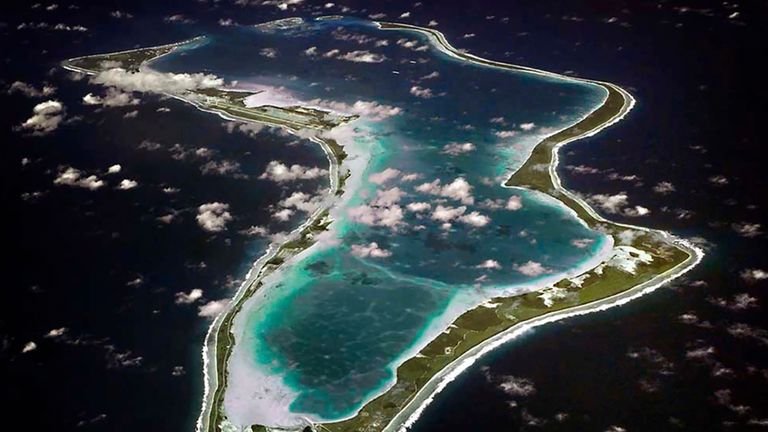
The United Kingdom has halted its plan to return the Chagos Islands to Mauritius after losing crucial backing from the United States, marking a significant setback for Prime Minister Keir Starmer.
British officials confirmed that legislation required to complete the handover will not pass before the end of the current parliamentary session, effectively shelving the proposal for now.
The agreement would have transferred sovereignty of the archipelago to Mauritius while allowing Britain and the U.S. to retain control of the strategically vital Diego Garcia under a 99-year lease. But London has consistently said it would only proceed with the deal if Washington supported it—a condition that is no longer met.
The reversal follows strong opposition from Donald Trump, who criticized the plan and raised concerns about its impact on Western security interests.
The decision also reflects broader tensions between the U.S. and UK, particularly over the handling of the Iran war. Disagreements over the use of British bases for U.S. operations and shifting diplomatic positions have strained what has traditionally been a close alliance.
Despite shelving the legislation, the British government maintains that securing the long-term future of Diego Garcia remains its top priority. Officials argue the original deal was designed to protect the base from potential legal challenges while preserving its strategic role.
The Chagos Islands have long been a source of dispute. The UK separated the territory from Mauritius in 1965 before Mauritian independence, and thousands of islanders were forcibly displaced—an issue that continues to fuel legal and political challenges today.
For now, the proposed transfer is effectively on hold, with no indication it will be revived in the next legislative agenda.
The outcome leaves the future of the islands—and the balance between sovereignty, security, and international law—uncertain once again.
Peace talks on the surface—arms shipments behind the scenes? The Iran crisis just got bigger.
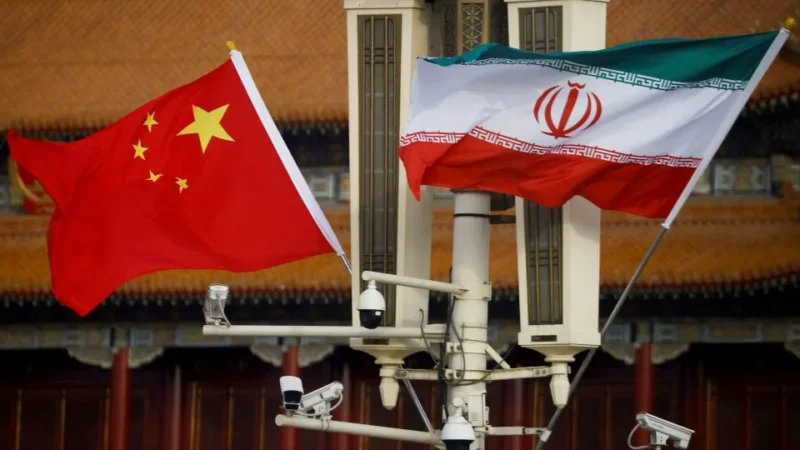
U.S. intelligence agencies have assessed that China may be preparing to deliver air defense systems to Iran in the coming weeks, a move that could complicate efforts to sustain the fragile ceasefire between Washington and Tehran, according to officials familiar with the matter.
The systems under consideration include shoulder-fired missiles, known as MANPADS, which are capable of targeting low-flying aircraft. Analysts say such weapons could pose a renewed threat to U.S. and allied air operations if hostilities resume.
The reported preparations come at a sensitive moment. The ceasefire, reached earlier this week after weeks of conflict, is being tested through ongoing negotiations, with talks underway to secure a longer-term agreement. U.S. officials have made reopening the Strait of Hormuz and addressing Iran’s nuclear program key priorities in those discussions.
China has denied the allegations.
A spokesperson for the Chinese embassy in Washington said Beijing “has never provided weapons to any party to the conflict,” calling the claims baseless and urging the United States to avoid escalating tensions. Chinese officials have previously said they are working to support de-escalation and maintain neutrality.
However, intelligence sources suggest Beijing may be attempting to balance competing interests.
China remains heavily dependent on Iranian oil and has longstanding economic and strategic ties with Tehran. At the same time, it has sought to position itself as a diplomatic actor capable of engaging all sides. According to sources, any potential shipments could be routed through third countries to obscure their origin.
If confirmed, such a transfer would mark a shift in China’s role—from indirect support through trade and dual-use technology to more direct military assistance.
The development also highlights the broader international dimension of the conflict.
Iran has relied on external partnerships throughout the war, including cooperation with Russia, which U.S. officials say has provided intelligence support. In return, Tehran has supplied drones to Moscow for use in its war in Ukraine, reflecting a network of reciprocal military ties.
The potential introduction of additional air defense systems could alter the operational balance, even if only incrementally. During the conflict, Iran demonstrated the ability to challenge advanced aircraft, including the reported downing of a U.S. fighter jet with a shoulder-fired missile.
The issue is likely to feature in upcoming diplomatic engagements, including a planned meeting between U.S. President Donald Trump and Chinese President Xi Jinping next month.
For now, the ceasefire remains in place—but the intelligence assessment underscores how quickly conditions could shift if external support begins to reshape the balance on the ground.
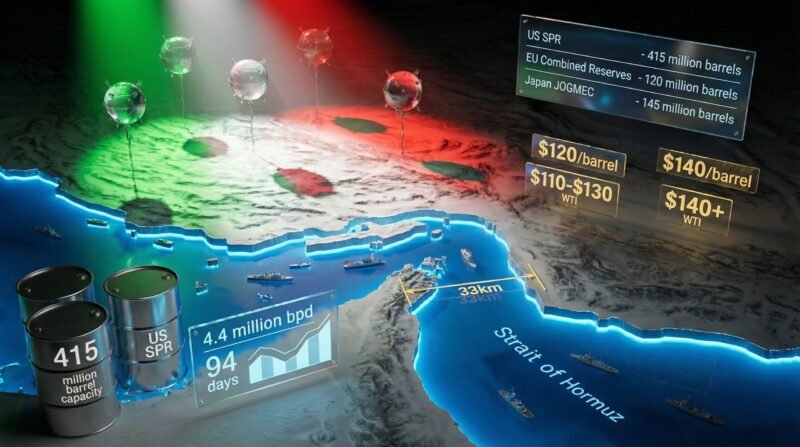
Iran’s Hormuz Minefield Undermines Its Leverage in High-Stakes Ceasefire Talks.
Iran’s biggest weapon just backfired. The mines meant to block the world are now blocking Tehran itself.
Iran’s effort to weaponize the Strait of Hormuz has become a growing liability, as unaccounted sea mines now complicate its position in critical ceasefire negotiations with the United States.
U.S. officials say Iran is unable to locate all the mines it deployed during the early phase of the war, when small boats scattered explosives across the narrow waterway in response to U.S. and Israeli strikes. Some of those mines were reportedly laid without precise coordinates or may have drifted, leaving sections of the strait unsafe and unpredictable.
The consequence is immediate: Iran cannot fully reopen the passage—even if it wants to.
Iranian Foreign Minister Abbas Araghchi has indicated that ships could transit the strait “with due consideration of technical limitations,” a phrase U.S. officials interpret as a reference to the unresolved mine threat.
This reality undercuts one of Iran’s central war strategies.
Tehran had sought to control access to Hormuz, even proposing a toll system requiring tankers to submit cargo details and pay fees—reportedly in cryptocurrency—before passage. In theory, such a system could generate billions in revenue annually. In practice, however, the presence of uncharted mines makes safe navigation—and enforcement—highly uncertain.
The issue now sits at the heart of negotiations in Islamabad.
The U.S. delegation, led by JD Vance alongside envoy Steve Witkoff and advisor Jared Kushner, is pressing for the “complete, immediate, and safe” reopening of the strait. Iran’s team, led by Mohammad Bagher Ghalibaf and Araghchi, faces mounting pressure to deliver.
Yet neither side appears fully equipped to resolve the problem quickly.
Mine-clearing operations are complex and time-consuming, and both U.S. and Iranian capabilities in this area are limited. Without a coordinated effort—or external assistance—the process of securing the waterway could extend well beyond the current ceasefire window.
The economic stakes are high.
Even partial disruption of Hormuz has already strained global supply chains, affecting not only oil but also key commodities such as fertilizers and industrial materials. Prolonged uncertainty risks deepening those impacts, particularly for energy-dependent economies.
What began as a tactical move to pressure global markets has evolved into a strategic constraint.
Iran’s control of Hormuz gave it leverage. Its inability to fully manage that control now complicates its negotiating position, raising questions about how quickly—and under what terms—the strait can return to normal operations.
The outcome of the Islamabad talks may hinge less on political will than on technical reality.
And for now, that reality remains buried beneath the waters of Hormuz.
Pakistani Military Deploys to Saudi Arabia Under Strategic Defense Pact.
New forces, new signal: Pakistan and Saudi Arabia tighten military coordination amid regional tensions.
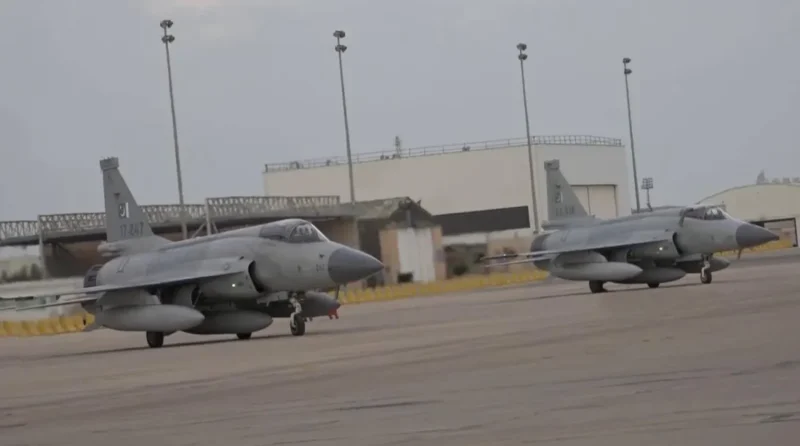
Pakistani military units, including fighter jets, have arrived in Saudi Arabia as part of a bilateral defense agreement aimed at strengthening joint readiness, Saudi officials said Saturday.
In a statement, the Saudi Ministry of Defense confirmed that forces from Pakistan were deployed to King Abdulaziz Air Base in the Eastern Province, describing the move as part of the Strategic Mutual Defense Agreement between the two countries.
The deployment includes combat and support aircraft and is intended to “enhance joint military coordination and raise the level of operational readiness” between Saudi and Pakistani forces, the ministry said.
The agreement, signed in September 2025, formalizes defense cooperation between Saudi Arabia and Pakistan, with provisions that treat an attack on one country as an attack on both.
The arrival of Pakistani forces comes at a time of heightened regional tensions following weeks of conflict involving Iran, the United States, and Israel. While Saudi officials did not directly link the deployment to the ongoing crisis, the move is likely to reinforce the kingdom’s defensive posture amid broader uncertainty.
Saudi Arabia and Pakistan have long maintained close military ties, including joint exercises, training programs, and security cooperation. The latest deployment signals a deepening of that partnership, particularly in the context of regional security challenges.
Officials said the presence of Pakistani forces will support coordination between the two militaries and contribute to overall stability, though no timeline for the deployment was disclosed.
No Gulf buy-in, no real peace. Britain is now pushing the region to take ownership of the ceasefire.
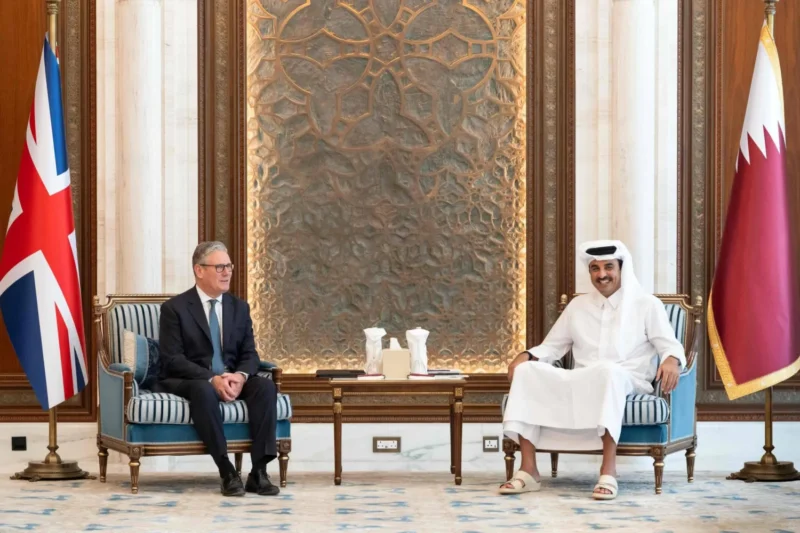
Britain has emphasized the need for stronger Gulf involvement in stabilizing the U.S.–Iran ceasefire, as Prime Minister Keir Starmer wrapped up a three-day tour of the region.
Speaking after meetings with Gulf leaders, Starmer said participation from regional states is “vital” to turning the temporary pause in fighting into a lasting agreement.
During a stop in Doha, Starmer met Tamim bin Hamad Al Thani to discuss the ceasefire and broader regional tensions. Both sides welcomed the agreement between Washington and Tehran, describing it as an important step toward de-escalation.
Officials also stressed the need for continued coordination with international partners to build on the ceasefire and move toward a more durable peace framework.
Talks focused heavily on safeguarding global energy flows, particularly through the Strait of Hormuz, which remains a central concern for both regional and global markets following weeks of disruption.
Starmer reiterated the United Kingdom’s condemnation of recent Iranian attacks on Qatar and expressed full support for Doha’s efforts to protect its sovereignty and security.
Qatar’s leadership, including Prime Minister and Foreign Minister Mohammed bin Abdulrahman bin Jassim Al Thani, emphasized the importance of joint diplomatic efforts to ensure stability and prevent further escalation.
The visit to Qatar was part of a broader Gulf tour that included Saudi Arabia, Bahrain, and the United Arab Emirates, reflecting London’s push to engage regional powers directly in shaping the outcome of the crisis.
British officials say the strategy is to reinforce a coordinated Western–Gulf approach, ensuring that any long-term agreement addresses both security concerns and economic stability.
While the ceasefire has reduced immediate tensions, leaders on all sides acknowledge that its success will depend on sustained regional cooperation—and the ability to keep critical trade routes open.
For now, the message from London is clear: without Gulf participation, the ceasefire may not hold.

Most Americans Think Iran Ceasefire Won’t Last

Ukraine and Russia Edge Toward Possible Peace Deal

Iran Says US Failed to Build Trust in Islamabad Talks


-
 Red Sea6 days ago
Houthis Threaten to Shut Red Sea if War Widens
-
 Terrorism2 weeks ago
Egypt Uncovers Alleged Plan to Down Presidential Plane
-

 Top stories4 days ago
Kremlin Claims EU Is Working Against Orbán
-
 Top stories1 week ago
IRGC Moves to Control Iran’s Future
-
 Top stories2 weeks ago
Saudi Arabia Deepens Defense Ties with Ukraine
-
 US-Israel war on Iran4 days ago
Israel’s War Goals Unmet as U.S.-Iran Ceasefire Shifts Conflict Dynamics
-
 Top stories2 weeks ago
France Leads Talks With 35 Nations to Secure Strait of Hormuz
-
 US-Israel war on Iran1 week ago
Iran Warns UN Against Hormuz Resolution