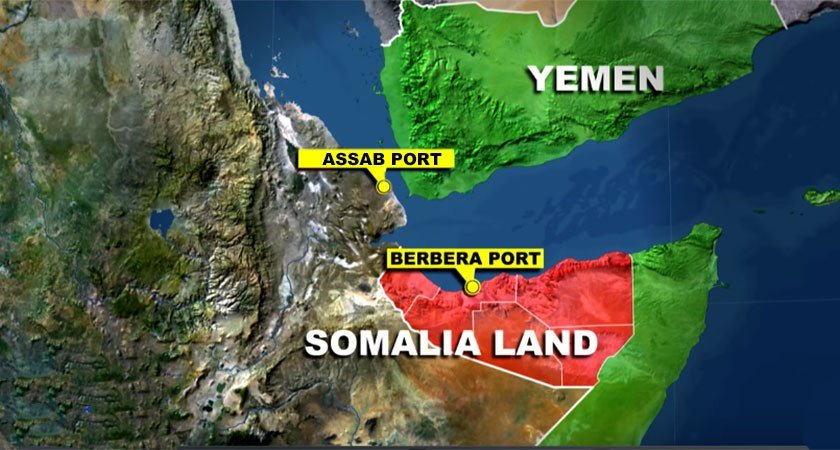
The $1 Million Signal: Why Washington Is Raising the Stakes in Kismayo.
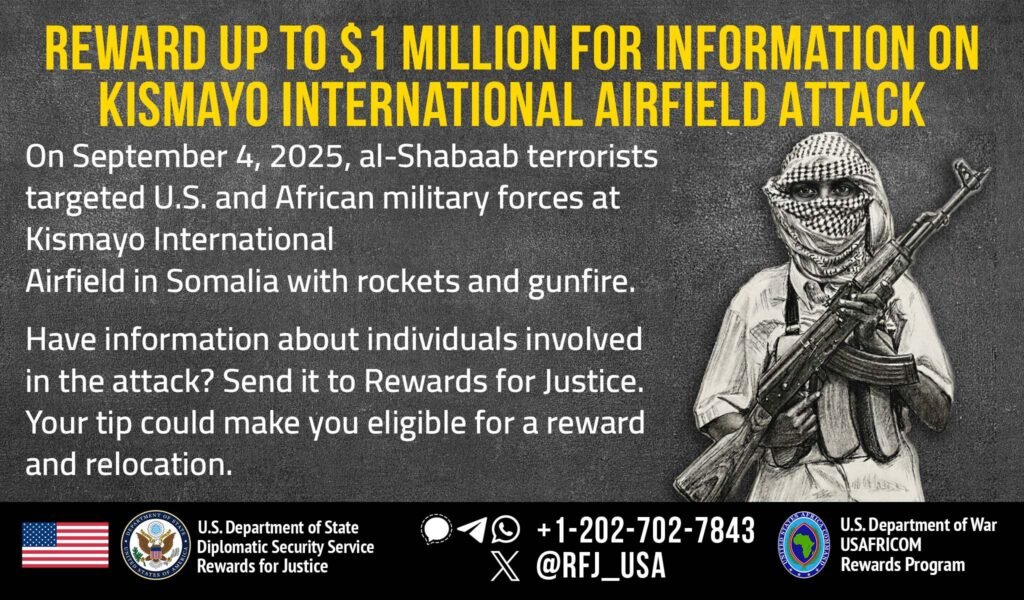
The United States’ decision to offer a $1 million reward for information on the al-Shabab attack at Kismayo International Airport is less about the rockets that landed — and more about the message they sent.
The attack itself caused no casualties and inflicted no damage on U.S. facilities. But in counterterrorism logic, restraint is not reassurance. For Washington, the assault underscored a deeper concern: al-Shabab’s continued ability to probe hardened targets, test defenses, and remind both local populations and international actors that it remains operationally relevant.
Kismayo is not just another airport. It is a strategic node in Somalia’s fragmented security architecture — hosting U.S. forces, elite Somali Danab units, Jubbaland forces, and African partners. It also sits at the intersection of regional politics, port economics, and counterterrorism campaigns. Any attack there is designed less to win a battle than to shape perceptions.
The $1 million reward, issued through the Rewards for Justice program, reflects a shift in emphasis from battlefield attrition to intelligence disruption. Rather than responding with visible escalation — airstrikes, troop surges, or public threats — Washington is betting on fragmentation from within. Rewards destabilize militant networks by injecting suspicion, incentivizing defections, and forcing operatives to operate under constant fear of betrayal.
This approach also signals Washington’s assessment of the current phase of the Somali conflict. Al-Shabab is no longer trying to seize major cities outright. Instead, it is playing a long game of erosion: indirect fire attacks, assassinations, and symbolic strikes meant to exhaust the state, intimidate civilians, and undermine confidence in international partners.
The U.S. response suggests a recognition that Somalia’s war is increasingly intelligence-centric. Precision now matters more than spectacle. A single informant, correctly placed, can collapse a network faster than weeks of kinetic operations.
There is also a regional subtext. As global attention shifts toward Ukraine, Gaza, and the Indo-Pacific, Washington is signaling that Somalia remains a live counterterrorism theater — not a legacy mission drifting on autopilot. The reward announcement reinforces the idea that U.S. forces in Somalia are not merely advising from the margins, but remain protected assets whose targeting carries consequences.
For al-Shabab, the danger is not the money itself, but what it represents: an open invitation for internal leakage. Every logistics runner, every facilitator, every sympathizer now carries a price tag — and a risk.
For Somalia’s federal and regional authorities, the message is sharper still. Counterterrorism is no longer just about holding territory. It is about information dominance, financial tracing, and dismantling the human infrastructure that sustains insurgency.
Kismayo was meant to be a warning shot. Washington’s response makes clear it heard it — and answered in a language insurgent networks fear most: incentives, exposure, and internal collapse.