
US-Israel war on Iran
US War Plans Against Iran Enter Advanced Stage


US Military Planning Against Iran Advances as Protests Intensify and Nuclear Talks Loom.
U.S. military planning for a potential operation against Iran has entered what officials describe as “advanced stages,” underscoring how rapidly the crisis surrounding Tehran is escalating. An anonymous U.S. official told Al Jazeera that American forces across the Middle East are now fully prepared for “any contingency,” as Washington weighs military options alongside collapsing diplomacy.
The warning comes amid Iran’s most serious internal unrest in decades. According to the Human Rights Activists News Agency (HRANA), at least 544 people have been killed in just over two weeks of nationwide protests, including hundreds of demonstrators and several minors. More than 10,600 people have been arrested, with many additional deaths still under investigation. Internet shutdowns and mass detentions suggest the Iranian leadership is bracing for a prolonged confrontation with its own population.
Against this backdrop, diplomacy is moving on two tracks. Iranian Foreign Minister Abbas Araghchi quietly reached out to Trump’s Middle East envoy, Steve Witkoff, to discuss the protests, signaling Tehran’s growing unease. At the same time, President Donald Trump confirmed that Iran has asked to resume negotiations on a new nuclear deal — even as he warned that Washington may “need to act” before any talks take place.
That contradiction defines the current moment. On one hand, Iran is seeking relief through negotiation. On the other, the U.S. is openly signaling readiness to use force. Trump’s blunt assessment — that Iran is “tired of being beaten up by the United States” — reflects a belief in Washington that pressure, not compromise, is driving Tehran back to the table.
The strategic calculation is clear. With Iran distracted by internal revolt, its deterrence weakened, and regional proxies under strain, U.S. planners see a narrowing window in which military action could reshape the balance of power. Tehran’s outreach for talks may be less a diplomatic opening than an attempt to buy time.
Whether this moment ends in negotiations or confrontation now depends on how far the protests spread — and how quickly Washington decides that diplomacy has run out of road. One thing is certain: the U.S.–Iran standoff has entered its most dangerous phase in years.













Hotels, airports, oil sites—Gulf states say they’re being dragged into a war they didn’t choose.
The Gulf is no longer on the sidelines of the Iran war—it is now at its center.
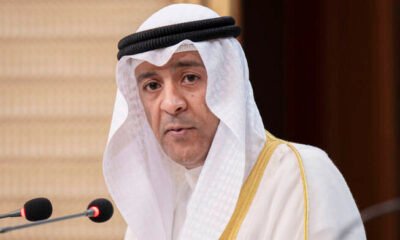
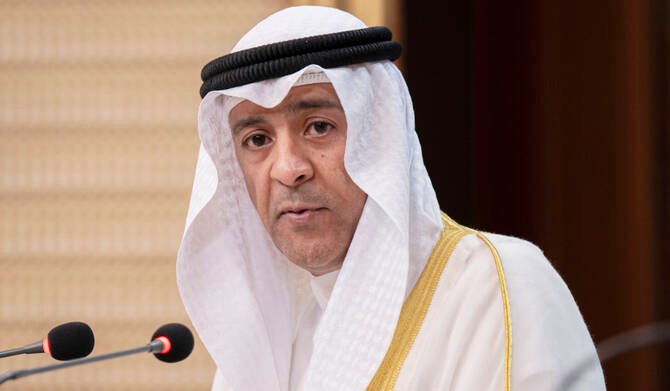
The secretary general of the Gulf Cooperation Council, Jasem al-Budaiwi, has issued one of the strongest regional condemnations yet, accusing Iran of directing more than 85 percent of its recent attacks toward Gulf countries.
The targets, he said, go far beyond military sites.
According to al-Budaiwi, Iranian strikes have hit hotels, embassies, water facilities, airports, and key energy infrastructure—civilian locations that underscore how the conflict is expanding in both scope and consequence.
Oil refineries in Saudi Arabia, Qatar, the United Arab Emirates, and Kuwait have reportedly been among the sites affected, raising immediate concerns about energy supply and economic stability.
The message from Gulf leaders is direct: they are being pulled into a war they insist they are not part of.
Despite repeated efforts to avoid escalation and assurances offered to Tehran, al-Budaiwi said the region has been met with missile attacks and growing instability.
He rejected what he described as attempts to turn Gulf states into arenas for broader geopolitical confrontation, warning that such a trajectory risks igniting a wider regional conflict.
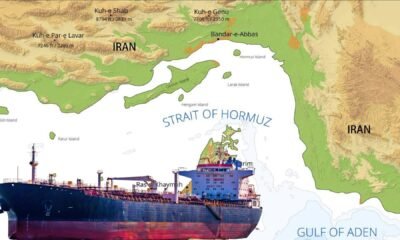
At the heart of the concern is the Strait of Hormuz.
The narrow waterway, through which a significant portion of the world’s oil flows, has become both a strategic lever and a flashpoint. The GCC chief accused Iran not only of targeting infrastructure near the strait but also of attempting to impose transit fees—moves he described as violations of international law governing freedom of navigation.
That combination—military pressure and economic leverage—has elevated the stakes.
For Gulf states, the issue is no longer abstract. Attacks on energy facilities and critical infrastructure threaten not only national security but also the functioning of the global economy. Any sustained disruption could reverberate through oil markets, shipping routes, and supply chains far beyond the region.
The response, for now, remains measured but firm.
Al-Budaiwi emphasized the right of Gulf countries to self-defense while calling for an immediate halt to attacks and greater inclusion of regional actors in any ceasefire negotiations between the United States and Iran. The demand reflects a growing sense that decisions about the conflict cannot be made without those most directly affected by its consequences.
The underlying reality is shifting.
What began as a confrontation centered on Iran, Israel, and the United States is evolving into a broader regional crisis, with Gulf states increasingly exposed to both its military and economic fallout.
And as those pressures mount, the line between indirect involvement and direct participation becomes harder to maintain—raising the risk that a war once seen as contained could expand into something far more difficult to control.
Drones, intelligence, and denial—Russia’s role in Iran’s war may be bigger than it admits.
A new layer of the Iran war is emerging—one that points beyond the battlefield and into a widening network of covert alliances.
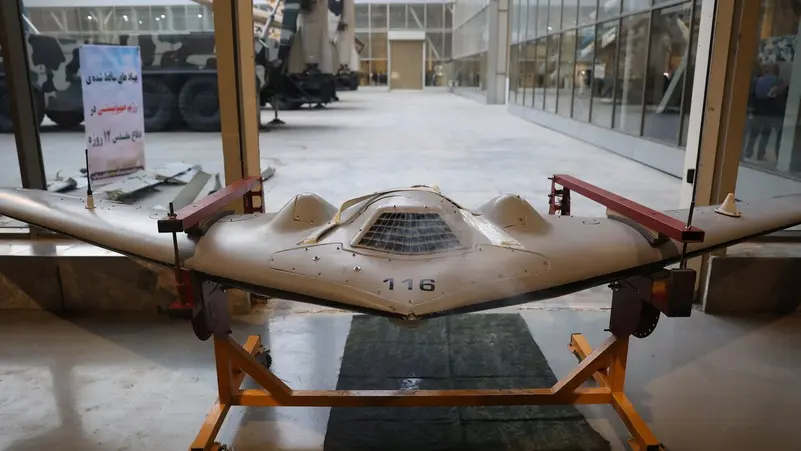
Western intelligence officials say Russia has stepped up support for Iran, supplying advanced drone technology, satellite imagery, and targeting assistance as Tehran struggles to sustain its military campaign. The Kremlin, however, has flatly denied the allegations, calling them “lies.”
The gap between those positions is not just diplomatic—it reflects a deeper strategic shift.
According to officials familiar with the intelligence, discussions between Russian and Iranian leaders began within days of the initial U.S.-Israeli strikes in late February. Preparations for drone shipments reportedly followed in early March, with deliveries expected to be completed within weeks.
The systems in question may include upgraded versions of drones derived from Iran’s own designs—particularly models similar to the Shahed-136, which Russia has already adapted and deployed extensively in Ukraine. These modified drones, analysts say, feature improved navigation, larger payloads, and enhanced resistance to electronic jamming.
If confirmed, such transfers would represent not simply resupply, but technological escalation—giving Iran access to systems potentially more advanced than those it currently produces domestically.
Experts suggest Tehran’s interest is not only operational but developmental. By acquiring upgraded systems, Iran could reverse-engineer improvements and accelerate its own drone capabilities, reinforcing a cycle of innovation driven by conflict.
Russia and Iran formalized a strategic partnership last year, deepening cooperation across military, economic, and political domains. Yet the agreement stopped short of a mutual defense pact, leaving both sides flexibility—and plausible deniability.
Still, the pattern of cooperation appears to be intensifying.
Western officials say Moscow’s support goes beyond hardware, extending into intelligence sharing that could improve targeting accuracy and battlefield coordination. One senior official described the effort as aimed not only at strengthening Iran’s military position but also at stabilizing the regime under pressure.
Russia has reportedly declined to provide some of its most advanced systems, including the S-400 air defense platform, suggesting a calibrated approach—supporting Iran without fully committing to its defense.
That balancing act reflects Moscow’s broader strategy.
By aiding Iran, Russia can complicate U.S. and Israeli operations, raise the cost of Western intervention, and reinforce a multipolar dynamic in which American dominance is contested across multiple fronts. But it also seeks to avoid direct entanglement that could trigger wider confrontation.
The implications extend far beyond Iran.
The war is increasingly interconnected, linking conflicts in the Middle East, Ukraine, and global energy markets into a single strategic landscape. Ukrainian officials have already warned that Russian-Iranian cooperation could reshape the balance of power, arguing that drone technology flows in both directions.
For now, the evidence remains contested, and the denials unequivocal.
But if the intelligence proves accurate, it would confirm what many analysts already suspect: this is no longer a regional war with isolated actors.
It is becoming a networked conflict—where alliances operate in the shadows, technology moves across theaters, and the line between separate wars is rapidly disappearing.
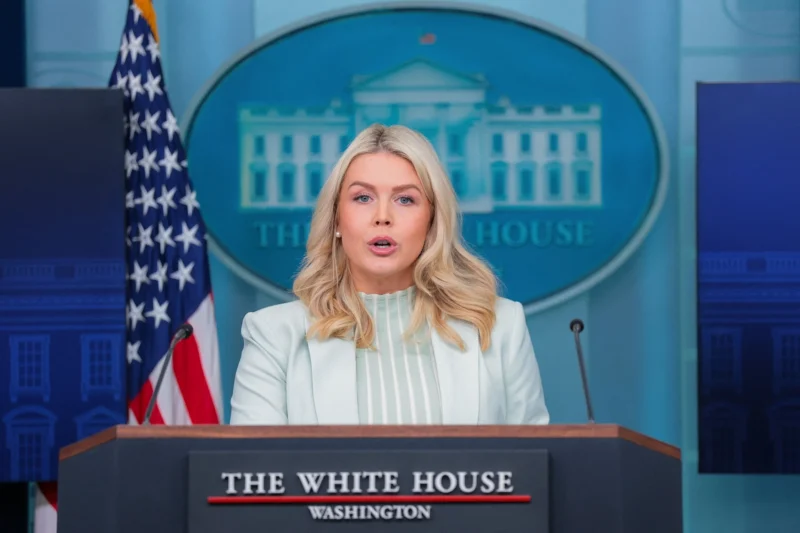
Peace talks continue—but so do the threats. The next move could decide everything.
The United States is now operating on two tracks at once—negotiation and escalation—and the gap between them is narrowing.
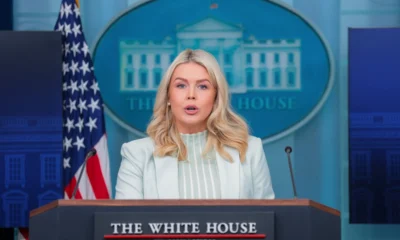
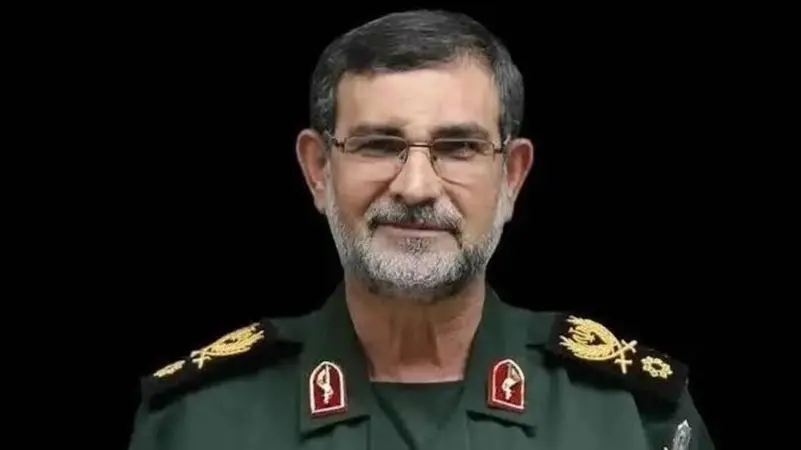
At a White House briefing, press secretary Karoline Leavitt delivered one of the administration’s starkest warnings yet: if Iran refuses a deal, President Donald Trump is prepared to “unleash hell.” The language underscores how quickly diplomacy could give way to renewed military action as the war enters a critical phase.
The administration insists talks are ongoing and “productive,” even as details remain opaque. A reported 15-point U.S. proposal—delivered through intermediaries—has yet to receive public acknowledgment from Tehran, which continues to deny that formal negotiations are taking place.
That contradiction has become a defining feature of the current moment.
Washington portrays a pathway to resolution. Tehran publicly rejects the premise. Between those positions lies a fragile diplomatic space, where signals are often indirect and intentions difficult to verify.
What is clear is the structure of the U.S. approach. The White House is offering what it describes as a final opportunity: Iran must abandon its nuclear ambitions and halt threats against U.S. interests and allies. In return, negotiations could lead to a broader settlement that ends the conflict.
At the same time, military pressure is intensifying.
The United States is deploying additional forces to the region and maintaining readiness for further strikes. A $200 billion supplemental funding request remains under consideration, and elite units—including elements of the 82nd Airborne—are reportedly being prepared for potential operations. Officials say the mission, referred to as “Operation Epic Fury,” is progressing ahead of schedule.
This dual strategy—pressure combined with diplomacy—is designed to force a decision in Tehran.
But it also carries risk.
The more forcefully Washington frames the conflict as nearing resolution, the more it raises expectations of a decisive outcome. If negotiations fail, the credibility of U.S. threats will be tested. If they succeed, the terms of any agreement will determine whether the escalation has achieved its stated goals.
Complicating matters further are mixed signals from both sides. Trump has suggested that recent developments—described cryptically as a “very big present” linked to oil flows—indicate progress. Iranian officials, by contrast, frame the U.S. pause in strikes as a retreat under pressure.
For now, the five-day window created by Trump’s delay on targeting Iranian energy infrastructure remains open—but it is narrowing.
The central question is whether diplomacy can move faster than escalation.
Because if the talks collapse, the rhetoric now coming from Washington suggests that the next phase will not be incremental. It will be decisive—and potentially far more destructive.
In a conflict already defined by rapid shifts, the margin between deal and escalation has rarely been thinner.
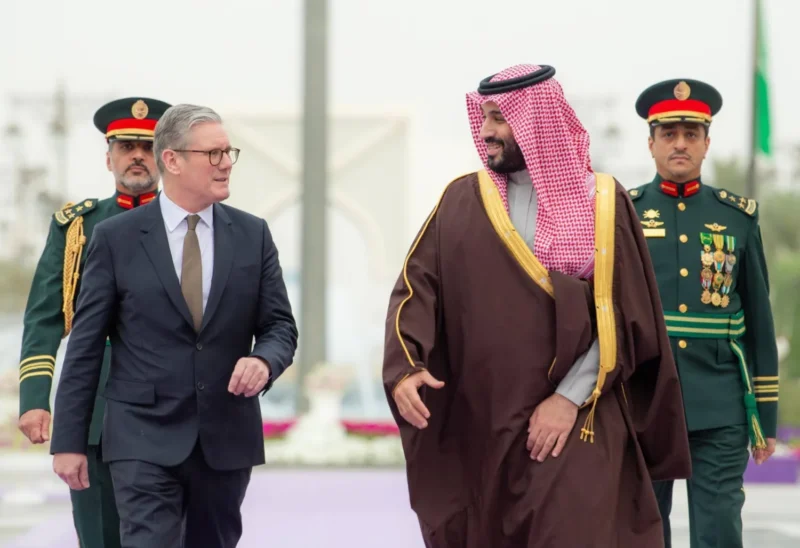
Saudi Arabia is drawing global backing. But will that stop the escalation—or deepen it?
A widening diplomatic front is forming around Saudi Arabia as key allies move to condemn Iran’s escalating attacks, signaling growing concern that the conflict is spreading beyond its original boundaries.
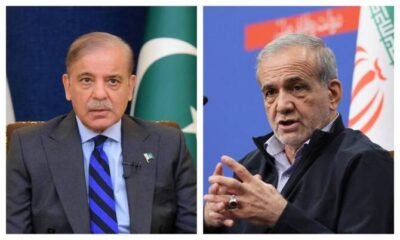
British Prime Minister Keir Starmer and Pakistani Prime Minister Shehbaz Sharif both held separate calls with Mohammed bin Salman, expressing strong opposition to the continued strikes targeting the Kingdom. Their messages were aligned: the attacks represent a direct threat not only to Saudi security, but to regional stability and the global economy.
The coordinated response reflects a broader shift. What began as a conflict centered on Iran, Israel, and the United States is now drawing in additional regional and international actors—politically, if not yet militarily.
During the conversations, leaders focused on the wider implications of the escalation. Maritime security, particularly in key energy corridors, has become a central concern, as attacks risk disrupting global supply chains and intensifying economic pressure worldwide.
The discussion also highlighted fears that continued strikes could trigger a chain reaction across the Gulf, where critical infrastructure remains vulnerable.
Pakistan’s position was especially emphatic. Sharif reiterated what he described as “full support” for Saudi Arabia’s sovereignty and security, emphasizing that Islamabad would stand firmly with Riyadh amid the ongoing crisis. At the same time, he coupled that support with a call for restraint, urging all sides to move toward de-escalation.
That dual message—solidarity alongside caution—captures the delicate balance many countries are attempting to maintain.
Saudi Arabia itself has so far avoided direct escalation, a strategy that has drawn praise from allies who see restraint as essential to preventing a broader regional war. But the pressure is mounting. Continued attacks on Gulf states, including energy and infrastructure targets, risk forcing a stronger response.
The diplomatic coordination between London, Islamabad, and Riyadh also underscores the global stakes. This is no longer a localized confrontation. The risks now extend to international shipping lanes, energy markets, and the broader architecture of regional security.
For the United Kingdom, the concern is tied to both economic exposure and alliance commitments.
For Pakistan, it reflects longstanding strategic ties with Saudi Arabia and a broader interest in regional stability. For Saudi Arabia, the challenge is immediate: how to defend its territory without becoming fully drawn into a widening war.
As the conflict intensifies, these alignments may become more consequential.
Because while statements of support can reinforce deterrence, they can also signal shifting blocs—an early sign that the crisis is evolving into something larger, where the line between regional conflict and wider confrontation becomes increasingly difficult to maintain.
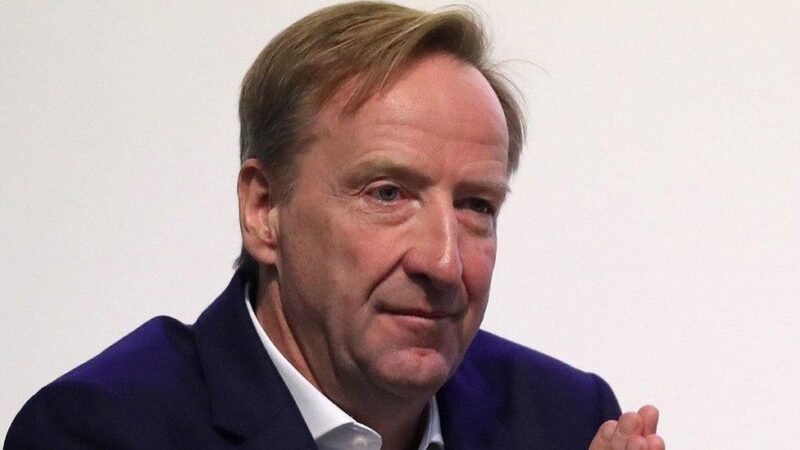
Former MI6 Chief Says U.S. Lost Initiative in War – Airstrikes didn’t decide this war. Strategy did—and Iran may be ahead.
A stark assessment from one of Britain’s most experienced intelligence figures is reshaping how the Iran war is being understood: not as a contest of firepower, but of strategy—and one in which Iran may now hold the advantage.
Sir Alex Younger, the former head of MI6, argues that the United States has already lost the initiative. His conclusion rests on a simple but unsettling observation: Iran has turned a regional conflict into a global one—and done so deliberately.
“Iran has the upper hand,” Younger said, pointing to a series of calculated moves that have allowed Tehran to offset its conventional military disadvantages. Despite early setbacks, including the loss of senior leadership, the Iranian system has proven more resilient than many expected.
Part of that resilience, he suggests, was built long before the war began.
Iran’s decision to disperse key military assets reduced the effectiveness of sustained airstrikes, limiting the damage of one of Washington’s primary advantages.
At the same time, Tehran adopted what military analysts describe as “horizontal escalation”—expanding the conflict beyond its immediate front lines by targeting a wider set of actors across the region.
What initially appeared reckless, Younger argues, has proven effective.
By increasing the number of participants and pressure points, Iran has forced the United States and its partners to absorb rising costs—not just militarily, but economically and politically. The most consequential move, however, has been the use of energy as leverage.
The disruption of the Strait of Hormuz transformed the conflict from a regional confrontation into a global economic crisis. With a significant share of the world’s oil supply passing through that narrow corridor, even partial restrictions have reverberated across markets, raising prices and intensifying pressure on governments far from the battlefield.
In Younger’s view, that shift was decisive.
It allowed Iran to redefine the terms of the war. Rather than competing directly with superior U.S. military power, Tehran expanded the battlefield into areas where it could impose indirect costs—energy markets, shipping routes, and regional stability.
The result is a conflict shaped by asymmetry.
The United States, Younger argues, is fighting a war of choice—one where domestic political pressures, alliance dynamics, and economic considerations constrain its options. Iran, by contrast, sees the conflict in existential terms, a perception that often translates into greater endurance.
That difference matters.
Wars are not only won by capability, but by willingness to absorb cost. If one side views survival as the stake, it may outlast an opponent that seeks limited objectives or faces internal constraints.
Younger also points to messaging as a factor. U.S. rhetoric framing the conflict as existential for Iran may have inadvertently reinforced Tehran’s resolve, strengthening internal cohesion at a critical moment.
None of this suggests a clear or final outcome. The war remains fluid, with ongoing negotiations, shifting military dynamics, and unpredictable escalation risks.
But the broader implication is clear: advantage in modern conflict is not always defined by battlefield dominance.
It can emerge from the ability to shape the environment in which the war is fought.
And by that measure, Younger’s conclusion is sobering: despite weaker initial conditions, Iran may have played its hand more effectively—turning pressure into leverage, and leverage into strategic momentum.
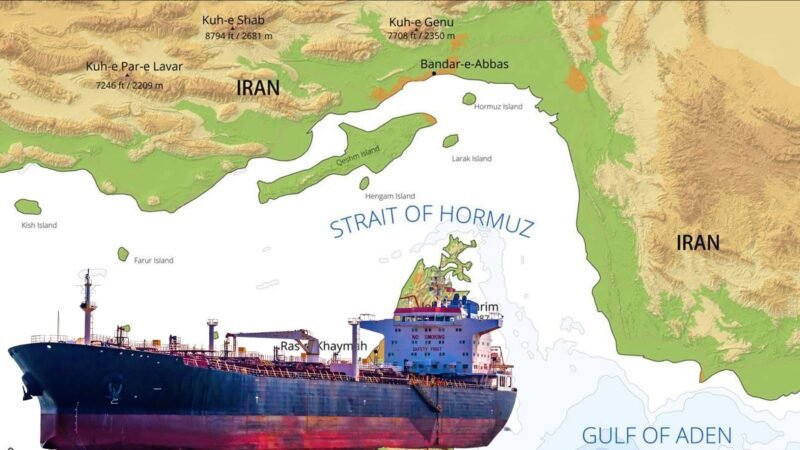
Missiles still flying—but oil is moving again. Is this the first real sign of a deal?
A fragile opening is emerging in the war between the United States, Israel, and Iran—one shaped as much by economic pressure as by battlefield dynamics.
According to multiple reports, Washington has sent a detailed peace proposal to Tehran, even as Iran signaled a partial easing of its blockade on the Strait of Hormuz, allowing “non-hostile” vessels to pass through one of the world’s most critical energy corridors.
The move immediately rattled markets—in reverse. Oil prices fell sharply, reflecting renewed hopes that the conflict may be edging, however cautiously, toward diplomacy.
The timing is not accidental.
For weeks, the Strait of Hormuz has been at the center of the crisis, with Iran’s restrictions disrupting a route that carries roughly a fifth of global oil supply. The resulting price surge has placed pressure not only on global economies but also on the political standing of leaders directly involved in the war.
President Donald Trump, who has alternated between threats of escalation and declarations of imminent peace, described the latest development as a “very big” signal that negotiations are on track. Yet as with previous statements, clarity remains elusive.
Iranian officials have not confirmed formal talks, maintaining a public posture of denial even as indirect diplomacy appears to intensify.
The reported U.S. proposal, said to include multiple points, outlines a potential pathway: a temporary ceasefire, limits on Iran’s nuclear and missile programs, and guarantees of maritime security. In return, Iran could see sanctions lifted and receive support for civilian nuclear development, including at key facilities such as Bushehr.
If accurate, the framework would represent a significant shift—from open conflict to negotiated containment.
But the obstacles remain formidable.
On the ground, the war shows no signs of slowing. Iranian missiles continue to strike Israeli cities, while Israel has expanded its air campaign across Iran and deepened operations in Lebanon against Hezbollah.
Civilian casualties are rising, infrastructure is under strain, and regional tensions continue to spill across borders, with Gulf states intercepting drones and missiles linked to the conflict.
Even as diplomacy unfolds, military preparations continue. Reports indicate that additional U.S. forces are being deployed to the region, underscoring a dual-track strategy: negotiation backed by sustained pressure.
That duality defines the current moment.
For Iran, allowing limited passage through Hormuz may be a tactical move—easing pressure without conceding strategic leverage. For Washington, the peace plan offers a potential off-ramp from a conflict that has already strained global markets and alliances.
Yet mistrust runs deep. Previous negotiations have collapsed under similar conditions, and both sides appear to be testing each other’s intentions while preserving their own bargaining positions.
The central question is whether these early signals can evolve into a structured agreement—or whether they represent another brief pause in a war that continues to expand.
For now, the shift is subtle but significant: oil is flowing again, and proposals are being exchanged.
In a conflict defined by escalation, even that is enough to change the equation—if only temporarily.
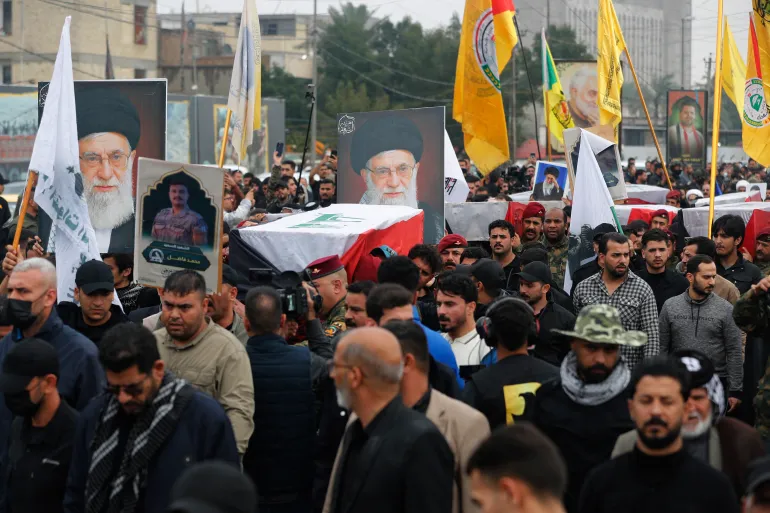
Iraq is being pulled into the war—and now it’s pushing back. But can it stay out of the fight?
Iraq is once again at the center of a dangerous geopolitical storm—caught between the United States and Iran as their escalating conflict spills across its borders.
Baghdad’s decision to summon both the U.S. charge d’affaires and the Iranian ambassador marks a rare dual protest, underscoring the country’s precarious position. Iraqi officials are attempting to send a clear message: the country does not want to become the next frontline in a war it did not start.
But events on the ground suggest that may no longer be a choice.
Deadly strikes in recent days have intensified tensions. A U.S.-linked attack reportedly killed a senior commander and multiple fighters from the Popular Mobilization Forces (PMF), a state-integrated network that includes Iran-backed groups.
In northern Iraq, Kurdish authorities blamed Iran for a ballistic missile strike that killed several peshmerga fighters—the first such deadly attack on Kurdish forces since the war began.
Neither Washington nor Tehran has confirmed responsibility, but the ambiguity is part of the problem.
Iraq has long functioned as a proxy arena for U.S.-Iran rivalry. What is different now is the scale and frequency of strikes, and the formal response from Baghdad.
By granting certain armed factions within its security structure the “right to respond” to attacks, the Iraqi government is walking a fine line—seeking to assert sovereignty while risking further escalation.
That decision reflects internal pressures. The PMF, originally formed to fight ISIS, has evolved into a powerful political and military force with deep ties to Iran. Its leaders have openly accused the United States of carrying out “treacherous” attacks and are calling for retaliation. At the same time, Iraq’s ruling coalition has emphasized that only the state should control decisions of war, highlighting divisions over how to respond.
The contradiction is difficult to manage.
On one hand, Iraq seeks to maintain balanced relations with both Washington and Tehran. On the other, it faces growing pressure from armed groups and political factions that see neutrality as increasingly untenable.
The risk is escalation by accumulation.
As strikes continue—whether by drones, aircraft, or missiles—each incident increases the likelihood of retaliation, miscalculation, or a broader confrontation on Iraqi soil.
The presence of U.S. forces, Iran-linked militias, and competing regional interests creates a volatile mix where even limited actions can trigger wider consequences.
The sound of fighter jets over Baghdad is becoming more frequent. That alone signals how close the conflict is moving toward Iraq’s core.
For now, the government is trying to hold the line—protesting both sides, calling for restraint, and emphasizing sovereignty. But the space for neutrality is narrowing.
Iraq’s experience over the past two decades offers a sobering precedent: when larger powers clash, local stability often becomes the first casualty.
The question now is whether Baghdad can contain the spillover—or whether it will once again become the battleground where others settle their conflicts.

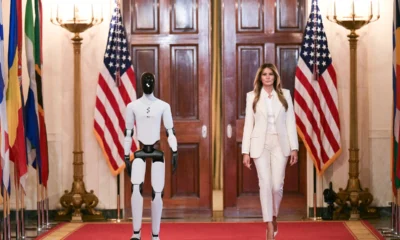
Melania Trump Introduces Humanoid Robot at Global Summit

GCC Accuses Iran of Targeting Civilians and Energy Lifelines

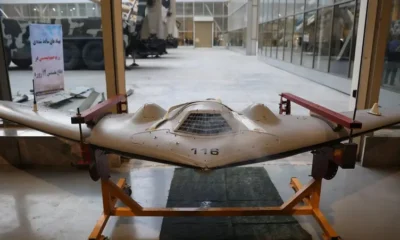
Intelligence Says Russia Arming Iran as Kremlin Denies


-
 Terrorism2 months ago
America Pulls Back From Somalia but Doubles Down Next Door
-

 Analysis2 months ago
How Chinese Speculators Set the Stage for the Gold and Silver Crash
-

 Top stories2 months ago
Rubio Signals Preemptive Military Option as U.S. Tightens Pressure on Iran
-
 Top stories2 months ago
France Blocks EU Push to Let Ukraine Buy British Storm Shadow Missiles
-
 Russia-Ukraine War1 month ago
Russian General Boasted of Torture and Killing of Ukrainian Prisoners
-
 US-Israel war on Iran1 month ago
UK Refuses Iran Strike Access, Trump Fires Back
-
 Russia-Ukraine War1 month ago
Europe’s Spies Challenge Trump’s Ukraine Peace Optimism
-
 Analysis2 months ago
Iran Warns, Qatar Mediates, Washington Deploys: A Crisis Managed in Public and Private