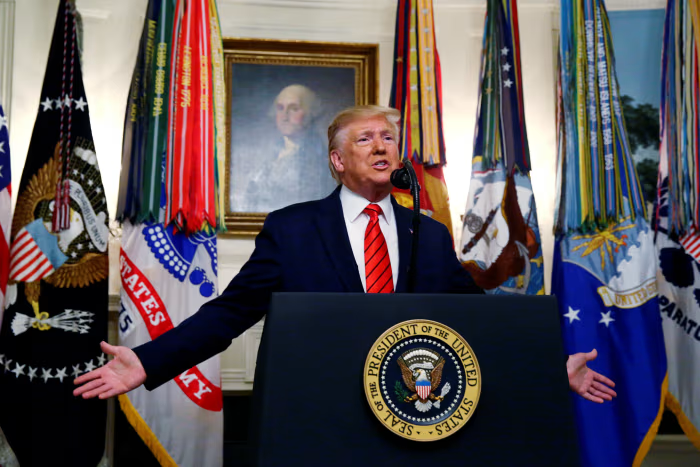
President Donald Trump has crossed a decisive rhetorical and strategic line on Iran, canceling all meetings with Iranian officials and openly urging protesters to “take over” the country’s institutions as the regime’s violent crackdown intensifies.
In a series of posts, Trump framed the uprising not as an internal Iranian crisis, but as a moral confrontation between the Iranian people and a ruling system he now treats as illegitimate. By calling on protesters to keep records of “killers and abusers” and promising they will “pay a big price,” Trump signaled that accountability — potentially international and personal — is now central to US policy.
The numbers driving this escalation are staggering. Rights groups say at least 646 protesters have been killed, while Reuters cited an unnamed Iranian official putting the toll as high as 2,000. Internet shutdowns, mass arrests and live fire against demonstrators suggest the regime is fighting for survival rather than stability.
Trump’s decision to freeze diplomacy comes even as his administration confirms military options are actively under review. The White House insists diplomacy remains the preferred path, but the language has shifted sharply: Iran is no longer treated as a negotiating partner, but as a regime on probation.
International reactions underline the gravity of the moment. German Chancellor Friedrich Merz openly predicted the collapse of Ayatollah Ali Khamenei’s rule, arguing that regimes sustained only by violence are already in their final phase. That assessment, once fringe, is now voiced by mainstream Western leaders.
Strategically, Trump’s message is unmistakable. Washington is positioning itself not merely as a critic of Tehran, but as a potential catalyst for regime change — whether through internal collapse, external pressure, or both. The phrase “HELP IS ON ITS WAY” is deliberately ambiguous, keeping Tehran guessing while energizing protesters.
This marks the most direct US endorsement of popular uprising in Iran in decades. The risk is escalation — militarily and regionally. The calculation is that the regime is weaker than it appears.
Iran is now facing its most dangerous convergence: mass unrest at home, diplomatic isolation abroad, and an American president openly inviting the people to finish the job.