Connect with us

Comment

Putin Says Russia Will Halt War Only if Ukraine Withdraws From Occupied Territories

Published

on

Russian President Vladimir Putin’s latest remarks in Kyrgyzstan signal an unusually blunt negotiating posture: Moscow will halt its nearly four-year war only if Ukrainian forces withdraw from all territories Russia claims as its own—territory Kyiv insists remains sovereign and non-negotiable.

The statement underscores a widening gap between battlefield realities, domestic political constraints, and the frantic U.S. effort to secure a cease-fire before the conflict escalates further.

Putin framed the offer as a straightforward choice: a voluntary Ukrainian withdrawal or a forced one. His confidence reflects the momentum of Russian forces, which have tightened their grip across multiple fronts in Donetsk, Vovchansk and Siversk, and are advancing toward the strategic hub of Guliaipole.

Advertisement

Moscow claims to have encircled Ukrainian formations in Pokrovsk and Myrnograd, though Kyiv disputes any such encirclement. What is clear, however, is that Ukrainian troops—short on ammunition, manpower and air defense—are fighting under conditions that Western officials increasingly describe as unsustainable.

The timing of Putin’s remarks is not accidental. Washington has launched an accelerated diplomatic push built around a revised peace framework, now reduced to roughly 20 points after strong resistance from Kyiv and European allies.

Earlier U.S. drafts proposed Ukrainian withdrawal from parts of Donetsk and implicit recognition of Russia’s hold over Crimea, Luhansk and Donetsk—ideas that provoked immediate backlash.

Advertisement

Even the softened version faces political headwinds in Kyiv, where President Volodymyr Zelenskyy is under pressure to reject any territorial concessions while simultaneously confronting doubts about his own constitutional mandate.

Putin hinted that the latest U.S. proposal could serve as a “basis for future agreements,” but his caveat—that signing anything with Zelenskyy is “almost impossible” due to questions over his legitimacy—introduces a destabilizing complication.

By casting doubt on the Ukrainian leader’s authority, the Kremlin appears to be maneuvering for leverage, perhaps anticipating a fractured or weakened Ukrainian negotiating position.

Advertisement

Meanwhile, U.S. negotiator Steve Witkoff is expected in Moscow next week to continue discussions, and Army Secretary Dan Driscoll will arrive in Kyiv for consultations with Ukrainian officials.

This parallel diplomacy reflects Washington’s attempt to maintain pressure on both sides even as the situation on the ground deteriorates.

According to data compiled by the Institute for the Study of War, Russia has captured roughly 467 square kilometers per month in 2025—an acceleration from the previous year and a trend that strengthens Moscow’s bargaining power.

Advertisement

As Putin put it, “There is little that can be done about it,” a message clearly intended for both Ukrainian leaders and Western capitals debating how much more support to provide.

The war has already reshaped the European security order, displaced millions, and cost hundreds of thousands of lives. Putin’s latest remarks suggest he believes time—and momentum—is now firmly on his side.

What remains unclear is whether Washington’s evolving peace plan can bridge the distance between battlefield realities and political red lines, or whether the conflict is entering a new, more dangerous phase driven by exhaustion, necessity, and geopolitical expediency.


Advertisement

Comment

Ahmed al-Ahmed and the Code of the Righteous: Why His Hanukkah Heroism Matters

Published

on

The Code of the Righteous: Why Ahmed al-Ahmed’s Heroism Is the Antidote We Need.

If there were a Jewish Nobel Prize for saving Jewish lives, Ahmed al-Ahmed would have just won it.

On the eve of Hanukkah, as Jewish families gathered on Bondi Beach to light candles and celebrate openly, gunfire shattered the night. In the chaos, one man ran toward the danger. Ahmed al-Ahmed, a 43-year-old Sydney fruit shop owner and father of two, tackled a gunman from behind, wrestled away his weapon, and forced him to retreat.

Advertisement

He was shot and hospitalized. His action likely saved dozens—perhaps far more.

This moment belongs in the moral tradition Jews know well: the tradition of the Righteous Among the Nations.

Historically, that title is reserved for non-Jews who risked everything to save Jews during the Holocaust—figures like Oskar Schindler, Raoul Wallenberg, Chiune Sugihara, Irena Sendler, and the Ulma family. Different century. Different weapons. Same moral equation.

Advertisement

Jews gather publicly as Jews. Someone decides that visibility itself is a crime. And one person refuses to look away.

That is not politics. That is not “tension.” That is hatred—and courage colliding in real time.

There is something profoundly Hanukkah about Ahmed al-Ahmed’s choice. Hanukkah is not a metaphor. It is a demand. A candle does not debate darkness. It pushes back. Light is not symbolic—it is active, stubborn, and costly.

Advertisement

So what should the Jewish world do when a non-Jew runs into gunfire to save Jewish lives?

First: say thank you—clearly and unapologetically. Not with vague language about “shared humanity,” but with honest words. He saved lives. Gratitude should be loud, especially in an age that rewards moral cowardice dressed up as nuance.

Second: honor him. Publicly. Formally. Memorably.

Advertisement

Jewish institutions—in Australia and globally—should elevate Ahmed al-Ahmed as a living example of moral clarity under pressure. He didn’t issue statements. He didn’t calculate optics. He acted.

And yes, Israel should acknowledge him.

Not because Jews need saviors—but because Jews remember righteousness. Israel exists not only as a state, but as the sovereign memory of the Jewish people. That memory includes those who stood with Jews when it was dangerous, inconvenient, or unfashionable.

Advertisement

Recognition doesn’t require copying Holocaust-specific frameworks. It could mean an invitation to Jerusalem. A meeting with Israel’s president. A national citation for civilian bravery. A tree planted in his honor. A public declaration that saving Jewish life is an act the Jewish people record and repay with lasting gratitude.

This matters for another reason.

Extremists will try to weaponize the Bondi Beach attack—turning it into collective blame, suspicion, and hate. Jews know where that road leads. Ahmed al-Ahmed’s story is the antidote.

Advertisement

There are people in every community who choose darkness. And there are people in every community who choose light.

The gunman chose darkness. Ahmed chose light.

Hanukkah’s lesson is not triumphalism. It is resolve. The miracle was not only that the oil lasted—but that the candles were lit anyway, in a world that preferred Jews to disappear quietly.

Advertisement

This year, Jews everywhere are being asked—sometimes explicitly—to make themselves smaller, quieter, less visible.

The answer is no.

The answer is light.

Advertisement

Ahmed al-Ahmed did not write an essay on coexistence. He did not speak at a conference. He saw Jews under attack and acted.

That is what righteousness looks like.

This Hanukkah, as candles are lit in Sydney, Jerusalem, New York, and beyond, one truth is clear:

Advertisement

When the moment came, a fruit shop owner ran toward the fire—and reminded the world what courage looks like.

Continue Reading

Comment

Drone Strike Kills Six UN Peacekeepers in Sudan

Published

on

A drone strike on a United Nations peacekeeping base in Sudan’s South Kordofan region has killed six UN soldiers from Bangladesh and wounded at least six others, in what the UN has described as a potential war crime and a stark escalation in the country’s deepening conflict.

The attack struck a camp belonging to the United Nations Interim Security Force for Abyei (UNISFA) in Kadugli, the capital of South Kordofan state, on Saturday. Four of the injured are reported to be in critical condition. All casualties were Bangladeshi peacekeepers, according to the UN mission.

UN Secretary-General António Guterres condemned the strike as “horrific” and warned that deliberate attacks on peacekeepers may constitute war crimes under international law. He called for accountability, underscoring the growing risks faced by international forces operating in Sudan’s expanding war zones.

Advertisement

Bangladesh’s interim leader, Muhammad Yunus, confirmed the death toll and said his government was “deeply saddened” by the loss. Dhaka urged the UN to provide urgent medical and logistical support to its personnel and pledged full assistance to the families of those killed.

UNISFA operates in Abyei, a long-disputed territory between Sudan and South Sudan, but the strike occurred further south in Kadugli—a city that has been under siege for more than a year and where famine was declared earlier this month. Medical officials and eyewitnesses confirmed that a drone directly hit the UN facility while personnel were inside.

The Sudanese army released video footage showing fires and smoke rising from the UN base and accused the paramilitary Rapid Support Forces (RSF) of carrying out the attack. Sudan’s Sovereignty Council, led by army chief General Abdel Fattah al-Burhan, described the strike as a “dangerous escalation” and warned it threatened international peacekeeping operations across the country.

Advertisement

The RSF swiftly denied responsibility, rejecting the allegations as “false accusations” and disputing claims that its forces carried out a drone attack. The exchange highlights the fog of war now surrounding Sudan, where both sides routinely trade blame amid a rapidly deteriorating security environment.

Sudan’s Prime Minister Kamil Idris went further, calling the RSF a “terrorist rebel militia” and urging the United Nations to pursue legal action against those responsible. His statement reflects mounting pressure on international bodies to reassess how they engage with armed actors in the conflict.

The strike comes as the RSF consolidates territorial gains. After capturing El-Fasher in late October—the army’s last major stronghold in Darfur—the group has pushed eastward into the oil-rich Kordofan region. Control of Kordofan is strategically vital, serving as a corridor between Darfur and central Sudan and enabling troop movements and supply lines.

Advertisement

Analysts warn that the RSF’s advance is designed to break through army defenses in central Sudan and potentially pave the way for a renewed offensive toward Khartoum. The use of drones, once rare in the conflict, now signals a shift toward more sophisticated and indiscriminate warfare.

Just days earlier, airstrikes on a kindergarten and hospital in Kalogi, also in South Kordofan, killed at least 114 people, including 63 children, according to the World Health Organization. The cumulative toll underscores how civilians and humanitarian workers are increasingly caught in the crossfire.

Since the war began in April 2023, tens of thousands have been killed, millions displaced, and Sudan has plunged into one of the world’s worst humanitarian crises. Diplomatic efforts to end the conflict have repeatedly stalled. Although U.S. President Donald Trump said last month that he intended to move toward ending the war following talks with Saudi Crown Prince Mohammed bin Salman, no concrete initiative has yet emerged.

Advertisement

The drone strike on UN peacekeepers marks a grim milestone. It not only deepens Sudan’s isolation but also raises urgent questions about the viability of international missions operating amid an unchecked, fragmenting war—one where even neutral forces are no longer spared.

Continue Reading

Comment

Trump’s Africa Doctrine, China’s Shadow, and Why Somaliland Sits in the Crosshairs

Published

on

Donald Trump’s new National Security Strategy does something Washington avoided for years: it treats Africa not as a humanitarian afterthought, but as a frontline in great-power competition.

The document frames the continent through three lenses — China, Russia, and security of trade routes — and argues that US engagement must shift from aid language to hard interests: ports, minerals, Red Sea access, and counterterrorism.

For Somaliland, this framing is not abstract. It quietly moves Hargeisa from the margins of US policy into the centre of a strategic map that already pits Washington against Beijing and Ankara along the Red Sea and Gulf of Aden.

Advertisement

Trump’s strategy casts China and Russia as “revisionist powers” using loans, infrastructure and arms to gain leverage over ports and resources. In Africa, that means Chinese-built terminals, opaque debt for rail and highways, and security deals that blend commercial presence with military access.

Overlay that with our previous analysis of Turkey’s projection from Mogadishu — ports, bases, and missile-adjacent testing spaces on Somali soil — and the pattern is clear: the southern Somali coastline is being folded into a Eurasian strategic architecture that is neither transparent nor Western-aligned.

Ankara and Beijing use similar tools: long concessions, state-linked companies, and security “assistance” that blurs where sovereignty ends and dependency begins.

Advertisement

Trump’s Africa doctrine, whatever one thinks of him, is built to counter exactly this model. It calls for:

Protecting sea lanes and chokepoints.

Challenging “predatory” infrastructure and port deals.

Advertisement

Backing partners that can police their territory and coasts.

That is where Somaliland becomes the missing piece.

Unlike Mogadishu, Somaliland has demonstrated something US strategists claim to want: a relatively stable democracy, a functioning coast guard, and a deep-water port at Berbera already tied into GCC and Western commercial networks.

Advertisement

The Berbera corridor sits between two forms of proxy geography: Houthi-influenced Yemen to the north and foreign-captured Somalia to the south.

Recognized or not, Somaliland already behaves like the kind of partner the new strategy describes — one that can secure an 850-kilometre coastline without inviting Chinese or Turkish basing rights.

This is exactly the logic that surfaced in the recent US Senate focus on African maritime security and in Senator Ted Cruz’s description of Somaliland as a “critical U.S. maritime security partner.”

Advertisement

The Senate conversation is, in many ways, the operational translation of Trump’s doctrine: if you are serious about contesting China and Russia along the Red Sea, you cannot ignore the one jurisdiction that is actually keeping its water relatively clean.

Compare the three vectors now on the table:

China’s Africa play: ports, minerals, and dual-use infrastructure extending influence from the Indian Ocean to the Atlantic, often through weak or indebted states.

Advertisement

Turkey’s Somali corridor: an offshore strategic ecosystem — training bases, ports, and missile testing potential — that sits outside NATO constraints but benefits from its cover.

Trump’s US strategy: a call to back “sovereign, resilient states” that resist coercive loans, secure their coasts, and align with US commercial and security interests.

Somaliland sits at the intersection of all three. Beijing views Hargeisa’s ties with Taiwan as an intolerable breach; Mogadishu acts as China’s political proxy in trying to box Somaliland out of recognition; Turkey uses southern Somalia to contest the same waters Berbera seeks to stabilize.

Advertisement

The US, for now, formally clings to the “one Somalia” fiction, but its own strategic logic points in another direction: toward partners that actually deliver security outcomes.

This is where Trump’s strategy and the Cruz-style Senate framing quietly converge. Both are less interested in lines on a colonial map and more concerned with who can keep global trade moving and keep Chinese-built bases, Iranian proxies, and jihadist networks from merging into a single threat picture along the Red Sea corridor.

In that world, the question for Washington becomes brutally simple:

Advertisement

Do you continue to route your Red Sea security through a fragile federal government in Mogadishu that cannot control its coastline and is increasingly entangled with Chinese and Turkish designs — or do you start treating Somaliland as the democratic outpost that already fits your own written doctrine?

Trump’s Africa strategy, China’s expanding footprint, and the latest Senate hearings all point to the same conclusion: the frontline of US–China rivalry in the Horn is not theoretical, and Somaliland is no longer a peripheral actor.

It is the unrecognized state that matches the checklist in Washington’s own strategic documents — and the longer the US pretends otherwise, the more space it leaves for Beijing and Ankara to write the rules of the corridor first.

Advertisement

Somaliland Was Fighting China All Along—And Didn’t Know It

U.S. Senate Hearings Highlight Somaliland as Key to Maritime Security Strategy

Advertisement
Continue Reading

Comment

Israel Breaks the Silence: Mogadishu’s Secret Plea for Help Exposed

Published

on

THE ISRAELI DISCLOSURE: Haskel’s Leak Exposes Mogadishu’s Strategic Desperation on the Horn of Africa Frontline.
Secret Somalia–Israel Communication Confirms FGS Panic Over Houthi–Al-Shabaab Axis.

Israel’s Deputy Foreign Minister Sharren Haskel’s confirmation that “certain communication” has taken place between Jerusalem and Mogadishu marks a geopolitical rupture that Somalia’s government can no longer mask.

Her carefully measured disclosure to i24NEWS doesn’t simply hint at quiet dialogue—it exposes a government scrambling for survival, reaching beyond its ideological orbit because the threat environment has outpaced its capacity to respond.

Advertisement

For the Federal Government of Somalia (FGS), this revelation collides head-on with its earlier denials regarding illicit arms trafficking routes—the “Zoro” vector that remains the backbone of Red Sea destabilization.

The contradiction is now undeniable: Mogadishu insists no weapons flow through its coastline while simultaneously seeking assistance from one of the most sophisticated maritime intelligence powers on Earth to counter the exact networks it claims do not exist.

What Haskel revealed is the truth Mogadishu has tried to bury—Somalia is facing an escalating, transnational threat binding the Houthi movement to Al-Shabaab in a developing operational relationship documented by the United Nations.

Advertisement

This axis represents a new class of maritime insurgency: a hybrid network that exploits the Bab el-Mandeb, the Gulf of Aden, and Somalia’s ungoverned southern coast to maneuver weapons, money, and fighters.

The strategic risk extends far beyond Somalia’s borders. Global shipping lanes, fisheries, energy routes, and foreign commercial interests all remain vulnerable to a growing convergence of regional militant groups. That Mogadishu turned to Israel—quietly, and in contradiction to its public political identity—signals profound strategic desperation.

It is a tacit admission that neither the Arab League, nor the OIC, nor its Gulf partners have been able to help Somalia contain the threat metastasizing along its coastline.

Advertisement

And for a government that has consistently positioned itself within the Arab bloc, engaging Israel represents a political gamble of the highest magnitude—one taken only when all other avenues appear exhausted.

The irony is stark. Somalia denies the presence of trafficking corridors while requesting help from a state whose naval, intelligence, and signals capabilities would be central to exposing and neutralizing precisely those corridors.

This contradiction underscores a deeper structural reality: the FGS lacks the institutional power, maritime oversight, and territorial control to confront the threat environment shaping the Red Sea.

Advertisement

The security vacuum is so entrenched that Mogadishu now seeks clandestine partnerships with states it cannot publicly acknowledge.

For international policymakers, the message is clear. The Horn of Africa has entered an era where political taboos collapse under the weight of urgent security imperatives.

The Houthi–Al-Shabaab linkage is no longer a theoretical risk; it is driving quiet alignments that rewrite the region’s diplomatic architecture.

Advertisement

Israel, with its unmatched visibility into Red Sea militant operations, has become an indispensable, if controversial, partner to a government confronting the limits of its sovereignty.

The secret communication with Jerusalem is not a footnote—it is Mogadishu’s unintentional confession that its internal instability has merged with global maritime threats. It confirms Somalia is not merely a state under pressure, but the front line of a rapidly evolving geopolitical contest where denial is no longer a viable strategy.

Advertisement
Continue Reading

Comment

The Real War for Somaliland Is Online—And the Enemy Is Inside the Gate

Published

on

Internal Information Warfare Now Somaliland’s Greatest National Security Risk.

Somaliland’s greatest threat is not the armed pressure at its borders, but the steady corrosion of its internal cohesion through deliberate, well-financed information warfare. The enemies of the Republic have identified the country’s most sensitive fault line—its clan identity—and turned it into their most effective weapon.

They do not need to invent conflict; they simply energize and amplify what already exists, redirecting political frustrations, identity pride, and community anxieties into a national vulnerability.

Advertisement

By doing so, foreign actors transform a traditional cultural framework into a destabilization tool, injecting division into a population that is already stretched by economic strain and political uncertainty.

The strategy is striking in its simplicity. A single, strategically placed figure—a minor politician craving relevance, a disgruntled activist, a monetized social media personality—can trigger widespread instability by invoking the clan narrative.

These flare-ups are not spontaneous displays of emotion. In many cases, they are funded, curated, and amplified by external state and non-state actors who understand exactly how to weaponize Somaliland’s political psychology.

Advertisement

A local dispute is reframed as a regional insult, a mismanaged administrative issue becomes a tribal conspiracy, and a personal grievance is inflated into a national crisis.

The domestic audience, especially in rural areas with limited access to neutral information, is highly susceptible.

Yet the real accelerant is the diaspora—educated, energetic, and deeply emotional about homeland politics, but detached from the local context that gives nuance to events.

Advertisement

From thousands of miles away, diaspora actors amplify falsehoods as fact, mobilize clan narratives as political truth, and wire cash into conflicts they do not fully understand, turning manufactured tension into combustible reality.

Compounding the threat is the role of Somaliland’s own political elite—particularly the faction often labeled as “failed politicians.” These actors, unable to secure influence through elections, policy, or competence, turn instead to elite capture as their final political weapon.

Their method is as corrosive as it is effective: they approach traditional leaders, individuals who carry generational respect and social legitimacy, and offer financial incentives to speak on their behalf. In doing so, they compromise one of Somaliland’s strongest historic assets—the moral authority of elders who once ended wars and built peace.

Advertisement

When these respected voices are manipulated into repeating clan-coded political messages, the entire architecture of Somaliland’s indigenous conflict resolution system is weakened from within.

Foreign adversaries then have proof that the system can be bought, and that the nation’s most trusted figures can be turned into tools of destabilization.

This dynamic creates a dangerous feedback loop. Politicians exploit clan identities for personal gain. Traditional leaders become entangled in political games that erode their neutrality.

Advertisement

The diaspora amplifies disinformation with emotional intensity.

Foreign adversaries fund the entire cycle, using targeted digital warfare to escalate minor tensions into national crises. What emerges is a battlefield not defined by territory, but by perception—one in which the psychological security of citizens is the primary target.

In this environment, border security becomes secondary; the real fight is for narrative control, institutional trust, and public resilience.

Advertisement

The survival of Somaliland now depends on recognizing that wars are no longer fought solely on the ground. They are waged in WhatsApp groups, TikTok livestreams, diaspora forums, and clan councils—spaces where perception can be manipulated faster than facts can be verified.

Until the government, traditional leaders, and civil society treat information warfare as a national security threat equal to any kinetic force, the Republic remains vulnerable to an enemy that never needs to fire a shot.

Somaliland’s future strength will come not from the guns on its borders, but from the institutions that protect its people from weaponized narratives designed to fracture the nation from within.

Advertisement
Continue Reading

Comment

Why Queen Mary’s Kenya Mission Should Extend to Somaliland

Published

on

Her Majesty Queen Mary’s state visit to Kenya has drawn significant international interest for its focus on climate action, environmental protection, and sustainable development—issues that define the future of the Horn of Africa.

Yet for the thriving Somaliland diaspora in Denmark, the visit has revived an unavoidable question: if Denmark is committed to shaping a greener and more stable East Africa, why is Hargeisa not included in this regional engagement?

The question is not sentimental; it is rooted in existing diplomatic reality.

Advertisement

Denmark already maintains a formal presence in Somaliland through its Representation Office, led by Mathias Kjaer, whose public acknowledgment of the Queen’s arrival in Nairobi served as a subtle reminder that Copenhagen’s engagement with Somaliland is not theoretical.

It is active, structured, and ready for expansion. What is missing is the political momentum to elevate that relationship into a strategic partnership equal to the moment.

The priorities guiding Queen Mary’s Kenyan agenda mirror the urgent challenges facing Somaliland today.

Advertisement

Queen Mary’s state visit to Kenya by State Department for Foreign Affairs

As one of the most climate-exposed territories in East Africa, Somaliland grapples with recurring drought, water scarcity, and rapid urbanization—pressures that demand the very expertise Denmark is showcasing in Nairobi.

Waste management, circular economy systems, renewable energy, and environmental resilience are not optional components of Somaliland’s future; they are existential imperatives.

Hargeisa’s booming population and Berbera’s accelerating economic corridor highlight the need for modern infrastructure, energy diversification, and sophisticated environmental planning.

Danish institutions, companies, and experts excel in precisely these domains. This is not speculative alignment; it is a ready-made partnership awaiting political will.

Advertisement

Denmark’s longstanding involvement in Somaliland through the Danish Refugee Council and other development initiatives has provided stability and humanitarian support for years. The groundwork is already laid.

The next logical step is to transition from fragmented aid projects to a coordinated, high-impact development strategy anchored in green innovation, governance reform, and economic resilience. In this regard, Denmark holds an asset few nations can match: the Somaliland diaspora.

Somalilanders in Denmark—professionals, engineers, entrepreneurs, and academics—form a bridge of trust and capability that perfectly aligns with Copenhagen’s foreign-policy values.

Advertisement

They speak the language of both societies, understand the governance landscape, and are uniquely positioned to turn Danish technical expertise into local success stories. No other external partner benefits from such a culturally integrated, highly skilled advisory community.

A stronger Danish role in Somaliland would also advance Denmark’s own strategic interests. Investments in green energy would reduce Somaliland’s dependence on diesel, opening the door for scalable wind and solar systems that demonstrate the exportability of Danish climate solutions.

Support for governance reforms and financial transparency would reinforce regional stability while helping Somaliland counter the systemic corruption that destabilizes the broader Horn.

Advertisement

And by generating sustainable economic opportunities, Denmark would address the structural drivers of migration—an issue with direct implications for Danish domestic policy.

Queen Mary’s visit to Kenya is a compelling expression of Denmark’s global commitments, but the momentum it generates should not end at Nairobi’s borders.

Somaliland represents one of the Horn of Africa’s strongest and most democratic partners—an unrecognized state de jure, but a functional and credible government de facto.

Advertisement

With Mathias Kjaer already on the ground and a powerful diaspora ready to amplify cooperation, this is a moment for Denmark to expand its footprint with purpose.

A deeper Danish–Somaliland partnership would not only reflect the values Denmark champions on the world stage; it would strengthen stability along the most strategically contested corridor of the Red Sea.

The Queen’s mission highlights what Denmark can offer. Extending that vision to Somaliland would demonstrate what Denmark can achieve.

Advertisement

https://x.com/ForeignOfficeKE/status/1998619123970936844

Continue Reading

Comment

Qatar, Egypt, and Turkey Build Framework Targeting Somaliland

Published

on

How Qatar, Egypt, and Turkey Quietly Built a Unified Framework to Cripple Somaliland’s Sovereignty.

The Doha Forum did not convene to discuss the future of Somalia—it convened to determine the fate of Somaliland. Behind the diplomatic staging, the summit functioned as a high-level coordination platform for states that now view Somaliland’s survival not as a regional question, but as a geopolitical obstacle standing between them and unchallenged influence over the Red Sea corridor.

The pledges delivered by Qatar, Egypt, and Turkey were not routine gestures of partnership; they were the operational architecture of a foreign-backed strategy designed to exploit the domestic vulnerabilities Somaliland has yet to fortify.

Egypt’s role was the most explicit. Foreign Minister Badr Abdelatty made no attempt to conceal Cairo’s strategic calculus: Egypt’s national security is now, by its own declaration, tied to the “unity” of Somalia.

Advertisement

This framing turns Somaliland’s political status into an Egyptian security threat. Abdelatty’s condemnation of “unilateral measures” was intentionally broad—wide enough to target Somaliland’s diplomatic outreach, economic autonomy, and territorial governance.

Cairo’s promised “capacity-building programs” for Somali institutions function as an investment in the bureaucratic and military forces responsible for advancing Mogadishu’s territorial claims. The implication is clear: Egypt is preparing Somalia for confrontation, not federation.

Turkey and Qatar supplied the missing components. Ankara’s security footprint—already entrenched through military training, port concessions, and infrastructure control—provides Mogadishu with the operational muscle it cannot produce internally.

Advertisement

These tools directly undermine Somaliland’s buffer of devolved authority, giving the Somali government the capacity to project power deeper into contested regions.

Qatar’s agreements were even more calculated. The new cooperation framework on customs enforcement stands out as a potential economic choke point.

By standardizing trade and revenue protocols under Somali federal jurisdiction, Doha and Mogadishu gain a legal mechanism to delegitimize and obstruct Somaliland’s commercial routes, including Berbera’s rising international profile. Economic suffocation, rather than military escalation, becomes the preferred method of containment.

Advertisement

President Hassan Sheikh Mohamud’s appeal for “aligned external support” completes the picture. Foreign endorsement of “Somali unity” directly emboldens internal destabilization networks—the diaspora agitators, paid influencers, and political actors WARYATV has identified as the domestic arm of this strategy.

With Doha, Cairo, and Ankara now providing diplomatic cover, financing, and high-level legitimacy, these internal groups gain strategic confidence to escalate efforts to fracture Somaliland from within.

The Doha Forum has thus moved the conflict into a new phase: one where external coordination and internal subversion merge into a single, institutionalized threat.

Advertisement

Somaliland’s response must be immediate—rooted in counter-intelligence, economic shielding, and information-statecraft capable of confronting a coalition that now views Somaliland’s sovereignty as a geopolitical inconvenience.

Continue Reading

Comment

Raids, Fraud Probes and Trump Rhetoric Put Somali Minnesotans on Edge

Published

on

A sweeping federal enforcement campaign, a wave of high-profile fraud prosecutions and escalating anti-Somali rhetoric from former President Donald Trump have converged in Minnesota, placing the nation’s largest Somali community under intense pressure and heightened fear.

Since Dec. 1, Immigration and Customs Enforcement has detained 12 people in the Twin Cities as part of “Operation Metro Surge,” a Department of Homeland Security initiative officials say targets individuals they consider threats to public safety or priorities for removal.

Yet immigration lawyers and community advocates report a different picture: Somali residents with no criminal history being detained during routine check-ins, despite years of compliance with immigration procedures.

Advertisement

“These are people who have done everything the government asked of them,” Minneapolis attorney David Wilson said. “They checked in, they brought their documents, and still they were taken into custody.”

Across Somali neighborhoods, fear is altering daily life. Families report avoiding schools, mosques and workplaces. Community centers—particularly Cedar-Riverside’s Brian Coyle Center, known as “Little Mogadishu”—have become gathering places for urgent legal briefings, know-your-rights sessions and crisis support.

“It is about targeting a whole community,” said Amano Dube, the center’s director. “People are afraid to leave their homes.”

Advertisement

Trump’s recent remarks have amplified the anxiety. He has called Somali immigrants “garbage,” accused them of contributing “nothing,” and tied them to high-profile fraud cases that federal prosecutors have pursued since 2022.

In those cases—spanning pandemic-era nutrition funding, housing stabilization and autism therapy—many defendants are of Somali ancestry, though others are not.

No evidence has been publicly presented linking the schemes to terrorism, despite speculation from conservative lawmakers.

Advertisement

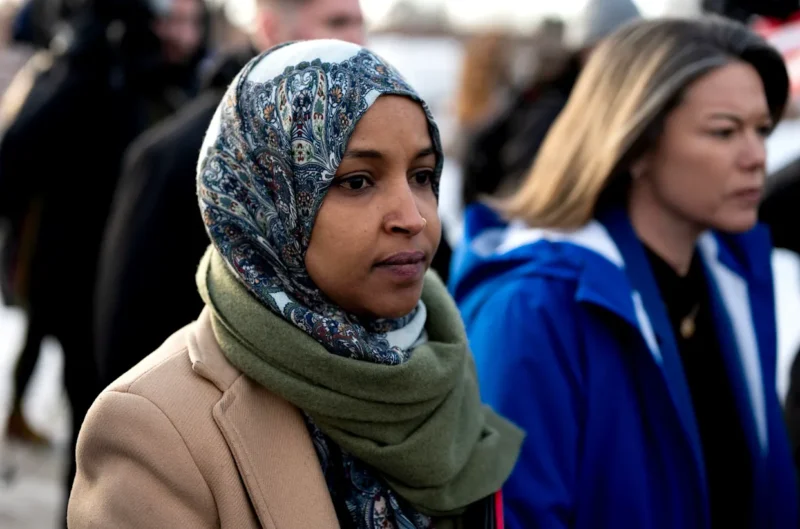
Rep. Ilhan Omar, who represents Minneapolis, warned that Trump’s rhetoric is dehumanizing her community. “These are Americans he is calling garbage,” she said. “This kind of hateful rhetoric can lead to dangerous actions.”

Local officials, from Minneapolis Mayor Jacob Frey to St. Cloud city leaders, have begun openly pushing back, emphasizing that law enforcement must separate criminal accountability from broad cultural suspicion. At the same time, ICE has described Minnesota as having “a large illegal alien community,” insisting its actions are targeted and legally grounded.

For many Somali Minnesotans—refugees who fled dictatorship, war and famine—the moment feels painfully familiar. “It feels like living under dictatorship,” said Minneapolis council member Jamal Osman. “People have déjà vu of the civil war they escaped.”

Advertisement

Yet community leaders say the response is resilience, not retreat. “We are not undocumented,” said St. Cloud social worker Farhiya Iman. “We are not going anywhere.”

Continue Reading

Most Viewed