Mapping the Perpetual Threat: Foreign Intervention and the Siege of Somaliland’s Sovereignty.
By Mo Saeed
Introduction:
This report examines two distinct but thematically linked allegations concerning external military intervention in Somaliland. The first is a well-documented historical case: the hiring of foreign mercenary pilots by the Mohamed Siad Barre regime to conduct a brutal aerial campaign against Hargeisa and other northern cities in 1988–1989. The second is a contemporary genocide against Somaliland that the current Federal Government of Somalia is seeking military support from Turkey, Egypt, and Saudi Arabia for similar purposes. This analysis aims to present the available facts, highlight potential parallels, and assess the implications of such external involvements.
The Historical Case:
Foreign Mercenaries in the 1988–1989 Bombing Campaign:
In May 1988, the Somali National Movement (SNM) launched a major offensive in northern Somalia (present-day Somaliland), capturing parts of Hargeisa as they could no longer watch Barre’s regime systematically wiping Isaq people out from the Horn of Africa . The Siad Barre regime responded with a massive and indiscriminate military campaign aimed at crushing the rebellion and terrorizing the civilian population, actions widely characterized as war crimes and crimes against humanity. The Isaaq genocide, also known as the Hargeisa Holocaust.
Recruitment and Origin of Pilots:
To supplement its air force, the Barre regime hired foreign mercenaries . These pilots were primarily recruited from South Africa and former Rhodesia (Zimbabwe).
One specific account notes that “bombing raids on the towns for one month were conducted mainly by mercenaries recruited in Zimbabwe.
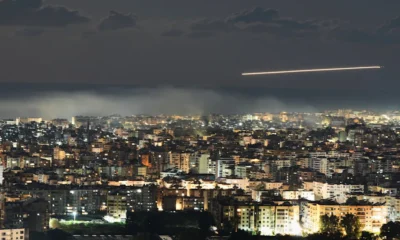
These mercenaries operated during the peak of the conflict in 1988–1989. They flew missions from the Hargeisa airport, targeting not only SNM positions but also conducting widespread, indiscriminate bombing of civilian areas in Hargeisa and surrounding regions. Their role was to provide the regime with additional aerial strike capacity for a campaign of collective punishment.
The objective was to support the Somali army in suppressing the civilians uprising by terrorising the civilian population through sustained aerial bombardment. This campaign resulted in the destruction of a large part of Hargeisa, Burao and caused thousands of civilian casualties, and is a central element of the planned and executed genocide against the Isaaq clan. The use of mercenaries allowed the regime to conduct this intense bombing campaign despite potential constraints within its own military.
Recent reports and statements indicate that the current Federal Government of Somalia is seeking direct military assistance from foreign states specifically Turkey, Egypt, and Saudi Arabia for operations against Somaliland with the aim of committing genocide again past genocide survivors. A prominent fact is that Somalia’s Minister of Defence requested his Saudi counterpart to conduct airstrikes against Somaliland and to facilitate the capture of its president.
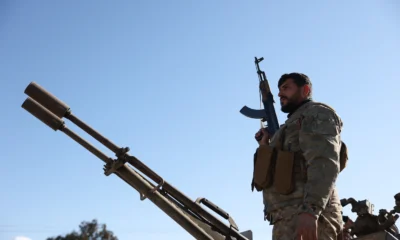
Turkey already has a significant military training and infrastructure presence in Somalia. The current evidence suggests this partnership could be expanded to include direct combat support.
Egypt and Saudi Arabia are being asked by Somalia to provide aerial military capabilities, reminiscent of the mercenary model used in 1988, though ostensibly through state-to-state agreements rather than private contracts.
Turkey has already deployed F-16 fighter jets to Somalia to be precisely part of this plan.
As of February 2026, these specific evidence of requests for bombing and capture operations reflect heightened tensions between Mogadishu and Hargeisa and a genuine fear in Somaliland of a return to large-scale, externally supported violence.
Historical Parallels:
The current requests evoke a direct parallel to the 1988 strategy, the Somali government seeking external aerial firepower to resolve its 60 year occupation with Somaliland. The historical precedent shows that such outsourcing of violence can lead to disproportionate and indiscriminate attacks on civilians, with lasting humanitarian and political consequences.
Key Differences:
The historical case involved private mercenaries, while current evidence point to formal state actors.
The 1988 campaign occurred during the Cold War with less international scrutiny. Today, any such overt foreign military action would face immediate global attention and potential legal ramifications under international law.
Potential Implications:
For Somaliland this reinforces its deep-seated security fears and unhealed genocide scars and it could destabilize the relative peace maintained since the 1990s.
For Regional Stability, it could draw neighboring states into a proxy conflict, escalating tensions in the Horn of Africa.
For International Law, it would raise serious questions about the legality of cross-border military actions at the request of a government against a territory that has maintained de facto independence for decades and has legitimate and legal state continuity.
Conclusion:
The use of South African and Rhodesian mercenary pilots by the Siad Barre regime in 1988–1999 is a documented historical fact that exemplifies how external military capabilities can be harnessed for internal repression, resulting in atrocities. If Israel would not recognise Somaliland , Somalia was seeking support from Turkey, Egypt, and Saudi Arabia for assisting with their planned genocide.
The international community must remain vigilant to ensure that external military involvement, in any form, does not enable further human mainly by mercenaries recruited in Turkey, Egypt or Saudi Arabia.
This recurring threat of genocide from Somalia to Somaliland which is a de jure state underscore the critical need for the failed state of somalia respecting for international law and living peacefully with its neighbours to prevent any recurrence of the devastating genocide and violence witnessed by somaliland in the past.
Somaliland is not claiming a right to secede from a functioning state. it is reclaiming a pre-existing statehood after a failed merger. This makes its case sui generis.
By Mo Saeed
Somaliland legal research (SLR)