Oil chokepoints, burning ships, and missiles over Gulf skies. Is this now a war of global economic attrition?
Tehran Targets Commercial Vessels and Dubai Airport as Energy Supplies Tighten and Oil Markets Tremble.
Iran sharply escalated its campaign across the Gulf on Wednesday, striking commercial vessels and targeting transport infrastructure, including Dubai’s international airport, as U.S. and Israeli forces intensified air operations against Iranian military sites.
The widening attacks mark a shift toward economic warfare. Iranian officials warned of a prolonged “war of attrition,” signaling that energy flows from the oil- and gas-rich region would remain under threat.
Three merchant ships were struck in Gulf waters on Wednesday, according to maritime security monitors, bringing the total number of vessels hit since the conflict began to 14. Crews were evacuated from a Thai-flagged bulk carrier after an onboard explosion sparked a fire.
A Japanese-flagged container ship and a Marshall Islands-flagged freighter also sustained damage.
Meanwhile, Kuwait reported intercepting eight Iranian drones, and Saudi Arabia said it shot down five drones headed toward the Shaybah oil field. Hundreds of vessels remain stalled near the Strait of Hormuz, which carries roughly one-fifth of global oil supplies.
Iran’s Revolutionary Guards declared that not “a single litre of oil” would pass through the strait until U.S. bombing ceases. Iranian officials warned oil prices could surge to $200 per barrel if regional instability continues.
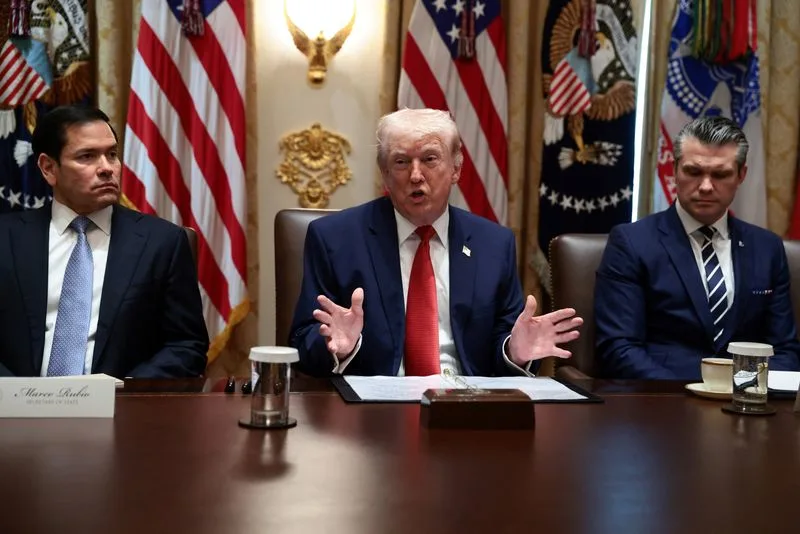
In Washington, Donald Trump offered mixed signals. He told Axios the war would end “soon” because there was “practically nothing left to target,” but vowed to continue strikes if necessary. Israel’s defense minister, Israel Katz, said the campaign would proceed “without any time limit” until objectives were achieved.
The International Energy Agency has urged the release of 400 million barrels of emergency reserves — potentially the largest coordinated action in its history — in an attempt to stabilize markets. Yet there is no sign that commercial shipping can resume safely through Hormuz.
The conflict’s humanitarian toll continues to mount. In Lebanon, where Israeli forces say they are targeting Hezbollah infrastructure, the United Nations reports more than 750,000 internally displaced. In Iran, funerals for senior commanders drew large crowds in Tehran, even as nightly airstrikes send residents fleeing the capital.
U.S. Central Command says Iranian missile and drone launches have declined sharply following strikes on manufacturing facilities. Adm. Brad Cooper confirmed that the military is using advanced artificial intelligence tools to accelerate targeting decisions, though he stressed that humans retain final authority over strikes.
For now, the war shows no clear path to de-escalation. What began as a military campaign against Iran’s strategic capabilities has expanded into a direct contest over trade routes, energy flows and global economic stability. The Gulf’s chokepoints — once geopolitical pressure valves — are now at the center of a confrontation with worldwide consequences.