
Editor's Pick
Democrats Invoke Rare ‘Rule of Five’ to Force Release of Epstein Investigation Files

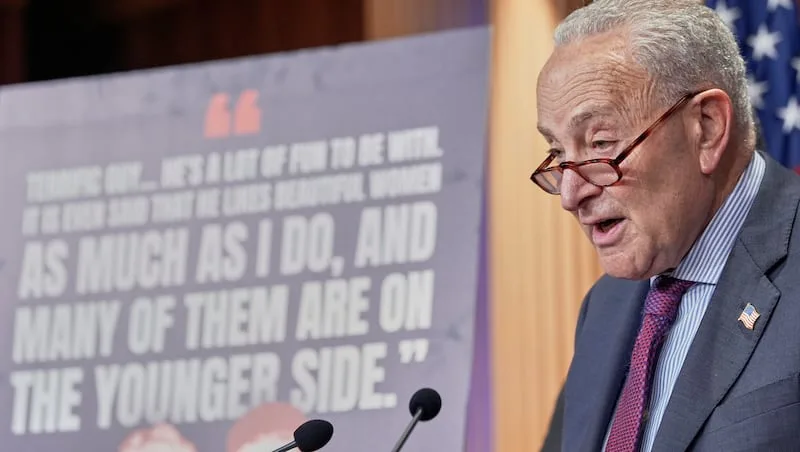
Senate Democrats have invoked a rarely used federal provision known as the “Rule of Five” to compel the Department of Justice (DOJ) to release all documents related to the investigation of convicted sex offender Jeffrey Epstein. Led by Senate Minority Leader Chuck Schumer, Democrats accused the Trump administration of deliberate opacity regarding the Epstein files, highlighting ongoing frustrations over lack of transparency.
This legislative maneuver, established nearly a century ago, enables a group of at least five senators on the Homeland Security Committee to demand the executive branch turn over specific investigative materials. In this case, Democrats seek access to extensive documentation, including recent interviews conducted by the DOJ with Epstein’s co-conspirator, Ghislaine Maxwell. While the request allows for the redaction of sensitive victim information, it nonetheless targets comprehensive disclosure by mid-August, with a detailed briefing scheduled for later that month.
This aggressive approach underscores a strategic escalation by Democrats, spotlighting internal Republican divisions over the Epstein investigation. Notably, the DOJ’s prior announcement dismissing claims of a “client list” or evidence of Epstein blackmailing influential figures intensified public and political outcry. This has created fissures within the GOP, with some members openly supporting greater transparency and others dismissing the Democrats’ push as politically motivated.
Historically, the Rule of Five has been invoked sparingly, often leading to contentious legal battles. Previous uses under presidents George W. Bush and Donald Trump resulted in protracted court disputes, casting doubt over whether Democrats’ current demands will yield immediate results.
The Epstein case, entwined with allegations implicating high-profile individuals, continues to fuel intense public interest and partisan disputes. Democrats argue that withholding investigative details undermines public trust and perpetuates speculation of political shielding. Conversely, Republicans, including former President Trump, portray the issue as politicized and distracting.
Ultimately, the Democrats’ invocation of the Rule of Five sets a crucial precedent, potentially reshaping congressional oversight and executive accountability. The unfolding legal battle promises broader implications beyond Epstein, probing the extent of legislative power and transparency in federal investigations.












While the world watched the Middle East, a silent confrontation was unfolding under the sea.
Britain has revealed a quiet but consequential standoff beneath the surface of the Atlantic—one that underscores how global tensions are expanding beyond visible battlefields.
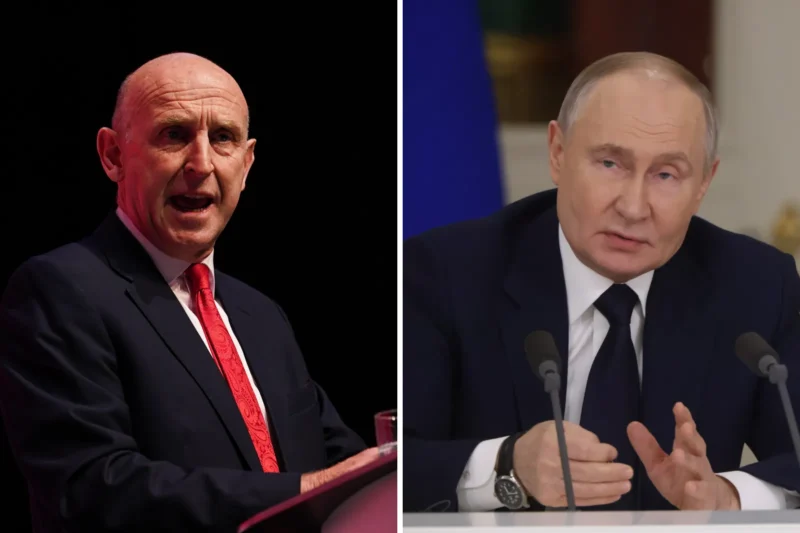
UK Defence Secretary John Healey said British forces tracked and deterred Russian submarines attempting to survey critical undersea infrastructure, including cables and pipelines that underpin global communications and energy flows.
The operation, involving a Royal Navy warship and surveillance aircraft, lasted more than a month. According to Healey, the mission successfully forced the submarines to abandon their activity before any damage was done.
The message was directed squarely at Vladimir Putin: the UK is watching—and prepared to act.
What makes the episode significant is its timing. The activity unfolded while global attention was focused on the Middle East conflict involving Iran, the United States, and Israel. That overlap suggests a broader strategic pattern: exploiting distraction to probe vulnerabilities elsewhere.
The infrastructure in question is not abstract. Undersea cables carry the vast majority of global internet traffic, financial transactions, and communications. Pipelines and seabed networks support energy flows across continents. Any disruption would have immediate and far-reaching consequences.
While Healey confirmed there was no evidence of damage, the nature of the mission raises concerns about intent. The presence of specialized Russian deep-sea vessels—designed for operations at extreme depths—points to capabilities that go beyond routine naval activity.
The response also highlights a shifting defence posture. Britain is emphasizing deterrence not just through visibility, but through persistence—monitoring, tracking, and signaling readiness to respond before threats materialize.
The episode feeds into a larger debate within NATO. As Donald Trump pressures European allies to increase defence spending, incidents like this provide a tangible example of the risks facing the alliance—and the need for coordinated vigilance.
For now, the confrontation remains below the threshold of open conflict. But it reveals a new dimension of competition—one where the most critical battlegrounds are hidden, and the consequences of disruption would be felt globally.
The cables are intact. The warning has been sent.
And the message is clear: the contest for strategic advantage is no longer confined to land, air, or even visible seas—it runs deep beneath them.
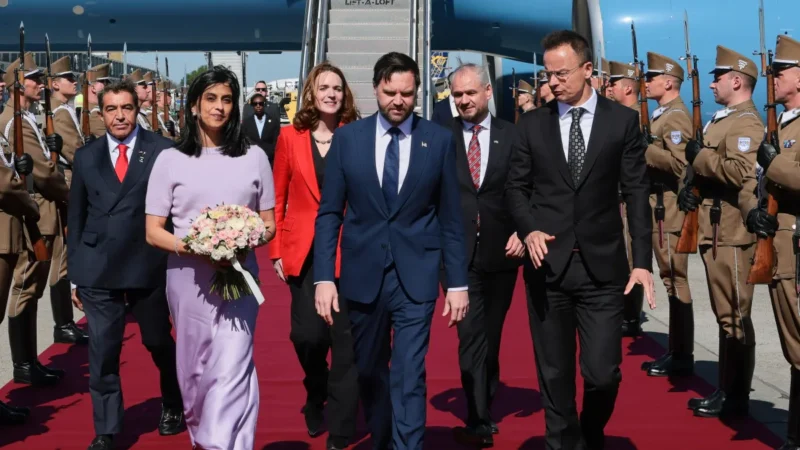
JD Vance Accuses EU of Interference While Campaigning for Orbán in Hungary.
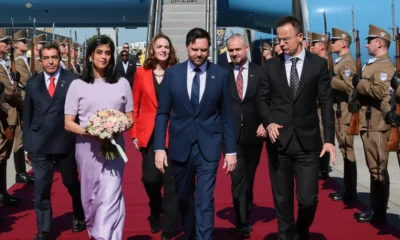
BUDAPEST — JD Vance accused the European Union of election interference in Hungary on Tuesday, even as he made clear his own purpose in visiting the country days before a pivotal vote: to help Prime Minister Viktor Orbán secure another term.
Speaking shortly after arriving in Budapest, Vance delivered a blunt critique of Brussels, calling it “one of the worst examples of foreign election interference” and accusing EU officials of undermining Hungary’s economy and sovereignty.
“Of course, I want to help,” Vance said, acknowledging his support for Orbán ahead of Sunday’s parliamentary election, which has emerged as one of the most consequential political contests in Europe this year.
The visit underscores how Hungary’s election has become a proxy for broader geopolitical tensions.
Orbán, in power for 16 years, is facing a serious challenge from opposition leader Péter Magyar, whose campaign has focused on domestic concerns such as economic stagnation and corruption. Orbán, by contrast, has framed the election around external threats, particularly the war in Ukraine and tensions with the EU.
He warned of alleged foreign influence linked to Ukraine and criticized European leaders for energy policies that reduced reliance on Russian imports. At a rally, he amplified support from Donald Trump, who praised Orbán as a strong leader during a live phone call broadcast to supporters.
Washington’s endorsement reinforces Orbán’s positioning as a central figure in a broader political movement skeptical of EU authority and supportive of national sovereignty. It also places the United States directly into the political dynamics of an EU member state.
Vance’s criticism of foreign interference sits alongside his own active engagement in Hungary’s domestic election. While he framed his remarks as a defense of sovereignty, his presence—and explicit support—highlights the blurred line between influence and interference in modern politics.
Orbán’s relationship with the EU has deteriorated sharply over issues ranging from migration policy to rule-of-law concerns and energy ties with Russia. His government remains one of the most Moscow-aligned within the bloc, maintaining heavy reliance on Russian oil and gas even as other EU states move to reduce dependence.
Magyar has rejected external involvement from any direction, arguing that Hungary’s future should be determined domestically, not shaped by competing pressures from Washington, Moscow or Brussels.
As the election approaches, the dynamics are shifting.
What might once have been a national vote is now embedded in a wider geopolitical contest—between competing visions of Europe, energy policy and political alignment.
The outcome will not only determine Hungary’s direction.
It will signal how far external influence—on all sides—can shape the internal politics of a European state.
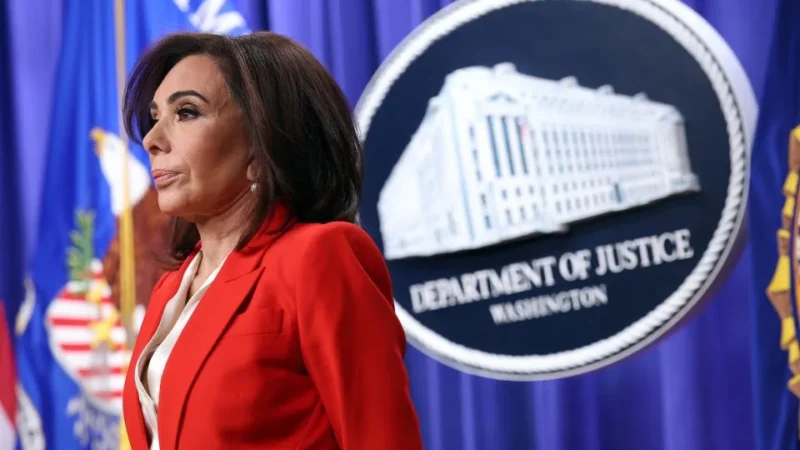
Prosecutors are filing cases—but juries aren’t buying them. Something is shifting inside DC’s courtroom.
WASHINGTON — The U.S. attorney’s office in Washington, led by Jeanine Pirro, is facing an unusual challenge: a growing reluctance among juries to convict in politically sensitive cases, at a time when the Donald Trump administration is pressing for more aggressive prosecutions.
The office has secured convictions in only half of its first eight criminal trials this year, a sharp departure from the roughly 90% conviction rate typically seen in federal courts nationwide. Legal practitioners and former prosecutors say the results reflect more than case-by-case weaknesses. They point to a broader erosion of trust among Washington jurors toward federal institutions, including the Justice Department and the FBI.
Pirro has rejected that interpretation, dismissing criticism of her office’s performance and emphasizing total convictions, including guilty pleas. She said acquittals and mistrials alone do not capture the full picture of prosecutorial success.
Yet courtroom outcomes suggest a more complicated reality.
Several cases have stalled at the earliest stages, with grand juries declining to issue indictments in matters tied to political figures or sensitive allegations. In one instance, prosecutors failed to secure charges against a sitting U.S. senator, while a separate case involving a minor assault allegation collapsed after both a grand jury rejection and a trial acquittal.
Trial juries have also shown increasing resistance. Multiple cases have ended in mistrials due to deadlocked juries, while others have produced split verdicts or full acquittals. In one high-profile case, a former Federal Reserve adviser was cleared of espionage charges but convicted only on a lesser count of making false statements. In another, a defendant accused of endangering the president was acquitted in under two hours.
Legal analysts say the pattern reflects a subtle but consequential shift. Jurors appear more willing to question prosecutorial intent, particularly when cases intersect with political narratives or public controversies.
The dynamic creates a paradox for federal prosecutors. The Justice Department is under pressure to demonstrate enforcement credibility, especially in politically charged cases. But the more visible that pressure becomes, the more it risks undermining confidence among jurors tasked with evaluating those cases.
The issue is compounded by internal disruption. The office has experienced significant turnover in recent years, including the departure of experienced prosecutors involved in past politically sensitive investigations. Defense attorneys say the changing environment has altered courtroom strategy, with some now more willing to take cases to trial rather than seek plea deals.
Despite these setbacks, the office continues to pursue major prosecutions, including cases involving violent crime, national security, and public corruption. Pirro has expressed confidence in upcoming trials and maintains that her office remains effective.
Still, the broader trend raises questions about the limits of prosecutorial power in a polarized environment.
In Washington’s federal courtroom, legal outcomes are no longer shaped solely by evidence and argument. They are increasingly influenced by perception—of institutions, of intent, and of the political context surrounding each case.
For prosecutors, that shift may prove as consequential as any individual verdict.
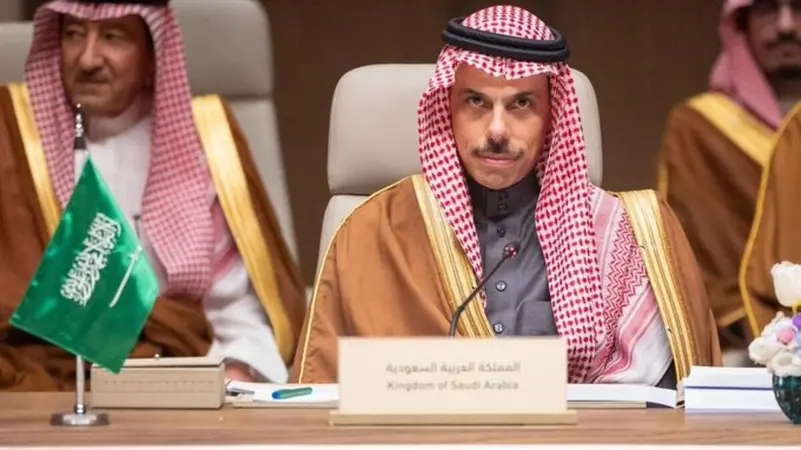
The Shield of the Two Holy Sites: Strategic Patience and the Nuclear Horizon.
In Riyadh, the shift is no longer subtle.
What began as a war largely contained between the United States, Israel, and Iran is increasingly being interpreted by Gulf analysts as a direct test of regional order—and of Saudi Arabia’s role within it. The latest escalation, including missile and drone activity across the region, has hardened rhetoric in the Kingdom and sharpened its strategic posture.
At the center of that response is a recalibration of deterrence.
By the third layer of this emerging doctrine, Saudi Arabia is signaling that its long-standing policy of strategic restraint is being paired with expanded defense partnerships. Recent cooperation with Pakistan—long viewed as a close security partner—has drawn renewed attention, with analysts suggesting it could deepen Riyadh’s access to broader military capabilities, including extended deterrence frameworks.
Saudi officials have not publicly confirmed any shift toward nuclear policy. However, the symbolism of closer defense alignment with a nuclear-armed state is being closely watched across the region.
The timing is significant.
The war has disrupted key economic corridors, including the Strait of Hormuz, and exposed vulnerabilities in regional security architecture. Gulf states, while not direct participants in the conflict, have faced spillover risks—from missile overflight to maritime disruption—forcing a reassessment of defense readiness.
There are competing interpretations of Iran’s strategy.
Some regional observers argue that Tehran, under mounting pressure, is attempting to expand the conflict’s geographic scope to reshape the balance of power. Others caution that such assessments risk overstating intent in a rapidly evolving battlefield where actions and signaling are often blurred.
Saudi Arabia, for its part, continues to emphasize that it does not seek direct confrontation.
Officials have reiterated that the Kingdom’s territory will not be used as a launch point for attacks against Iran. At the same time, they have underscored their right to defend national sovereignty and critical infrastructure, particularly as regional tensions intensify.
There is also a broader dimension.
As the home of Islam’s two holiest sites, Saudi Arabia occupies a unique position in the Muslim world. Any threat to its territory carries symbolic weight beyond conventional geopolitics, influencing public sentiment and regional alignment.
Yet the path forward remains uncertain.
Diplomatic channels—some supported by China—continue to advocate de-escalation, but progress has been limited. Meanwhile, military postures on all sides are hardening, reducing the space for compromise.
The current moment reflects a dual reality.
On one hand, Saudi Arabia is signaling resilience—demonstrating that it can absorb pressure without being drawn into direct conflict. On the other, it is quietly expanding its deterrence architecture, preparing for scenarios in which restraint alone may not be sufficient.
That balance—between patience and preparedness—defines the Kingdom’s strategy.
Because in a conflict where escalation is often incremental and unpredictable, the ability to deter without engaging may prove as decisive as any battlefield outcome.

Sky Shift—Iran War Disrupts Global Aviation as Gulf Airlines Lose Ground to Western Rivals.
At major airports across Europe and Asia, departure boards are quietly telling a different story. Flights that once routed through the Gulf are now bypassing it entirely.
The war with Iran has begun to redraw the map of global aviation.
For decades, airlines such as Emirates, Qatar Airways, and Etihad Airways built a powerful model—connecting Europe, Asia, and Africa through hubs in Dubai and Doha. Geography was their advantage. Efficiency was their edge.
That advantage has been disrupted almost overnight.
Airspace closures across Iran and Iraq, combined with heightened security risks, have forced carriers to reroute or suspend flights. Long-haul connections that once flowed through the Gulf have been reduced, creating gaps in capacity across major international routes.
By the third layer of this disruption, the impact is not just operational—it is competitive.
Western carriers are moving quickly to fill the vacuum. Airlines such as Lufthansa, British Airways, and Air France-KLM have redeployed aircraft toward Asia, adding routes to destinations like India, Thailand, and Singapore. In the United States, United Airlines and Delta Air Lines have expanded long-haul capacity, targeting travelers seeking alternatives.
The shift is measurable—but fragile.
Airlines are navigating a complex trade-off. Fuel prices are rising sharply as the conflict disrupts energy markets, squeezing margins. Carriers must decide whether to raise fares or absorb costs to capture new demand. For many, the opportunity exists—but the timeline is uncertain.
There are also structural limits.
Aircraft availability constrains rapid expansion. Widebody jets suited for long-haul routes are in high demand, with delivery backlogs stretching years. Opening new routes requires months of preparation—securing landing slots, staffing crews, and aligning schedules. What appears as a quick pivot is, in reality, a carefully managed adjustment.
At the same time, the war has tightened airspace corridors. With Russian skies largely closed to Western carriers since 2022 and Middle Eastern routes now restricted, flights between Europe and Asia are being funneled through narrow pathways over Central Asia. This adds time, cost, and complexity—further reshaping competitive dynamics.
Not all carriers are affected equally.
Turkish Airlines has gained market share, benefiting from its position outside the most restricted zones. Asian carriers, including Singapore Airlines and Cathay Pacific, are also expanding routes to Europe, capitalizing on the disruption.
Meanwhile, Gulf airlines face the steepest challenge. Their hub-and-spoke model depends on stability in the region. The longer the war persists, the more that model is strained.
Yet the disruption may not last.
When conditions stabilize, Gulf carriers are expected to return aggressively—likely with competitive pricing to reclaim lost traffic. European and U.S. airlines, for now benefiting from a temporary shift, may find their gains difficult to sustain.
That uncertainty defines the current moment.
What appears to be a redistribution of market share may ultimately prove to be a pause—a reshuffling rather than a transformation.
But there is a deeper shift underway.
The assumption that certain regions are permanently safe corridors for global travel is being tested. Airspace, once a neutral domain, is increasingly shaped by geopolitical risk.
And as airlines reroute, recalibrate, and reposition, the war is doing more than disrupting flights.
It is redefining the architecture of global connectivity itself.

A European vote on Tibet just triggered a sharp response from Beijing — and reignited a global dispute over religion and power.
Tensions between China and the Czech Republic have escalated after Prague’s Senate passed a resolution supporting the Tibetan people’s right to choose the next Dalai Lama—a move Beijing has condemned as interference in its internal affairs.
The dispute centers on one of the most sensitive issues in Chinese politics: succession in Tibetan Buddhism. The resolution urges the Czech government to back the “free choice” of the 15th Dalai Lama, directly challenging Beijing’s longstanding claim that it holds ultimate authority over the process.
Chinese officials reacted swiftly.
In a statement, Beijing’s embassy in Prague accused Czech lawmakers of disregarding China’s “solemn position” on Tibet, insisting that Tibetan affairs are strictly domestic matters. The response reflects how deeply the issue cuts into China’s broader concerns about sovereignty and territorial integrity.
At the heart of the disagreement is the future of Dalai Lama, the exiled spiritual leader who fled Tibet in 1959 following a failed uprising. While widely regarded internationally as a religious figure and symbol of nonviolent resistance, Beijing views him as a political actor advocating separatism.
That divergence has only sharpened under Xi Jinping, whose administration has expanded state control over religious institutions in Tibet. Policies now require Tibetan Buddhism to align with the Chinese political system, reinforcing the government’s position that it will oversee the selection of the next Dalai Lama.
The Czech resolution challenges that framework.
By endorsing Tibetan autonomy in the succession process, Prague is aligning itself with a broader international view that religious leadership should remain independent of state control. The move follows a series of actions by Czech officials—including meetings with the Dalai Lama—that have already strained relations with Beijing.
For China, the implications go beyond symbolism.
Control over the Dalai Lama’s succession is seen as critical to maintaining long-term stability in Tibet. Any external support for alternative mechanisms is viewed as a threat to that objective—and, by extension, to national unity.
For Europe, the episode reflects a familiar dilemma.
Balancing economic ties with China against political commitments to human rights and religious freedom has become increasingly complex. The Czech Senate’s decision signals a willingness, at least in some capitals, to take a more assertive stance—even at the risk of diplomatic fallout.
What emerges is more than a bilateral dispute.
It is part of a broader contest over who defines legitimacy: a state asserting sovereignty over religious institutions, or a global community advocating for autonomy and self-determination.
As the question of succession looms, that contest is likely to intensify—well beyond the borders of Tibet.

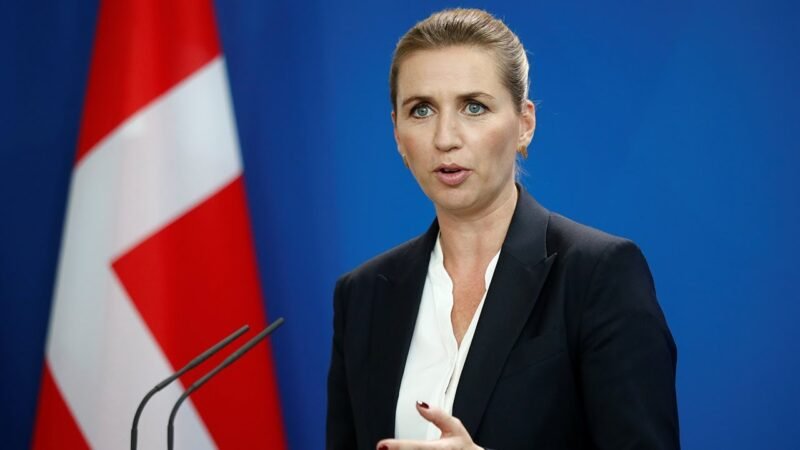
Trump, Greenland, global tension—but Danish voters care about one thing: their bills.
As Denmark heads into a closely contested election, the campaign has been shaped by a paradox: global tensions dominate headlines, but domestic concerns are driving voter decisions.
Prime Minister Mette Frederiksen has framed her bid for a third term around stability, highlighting her handling of international crises—from the war in Ukraine to tensions with Donald Trump over Greenland. Her message, “safe through uncertain times,” aims to capitalize on a moment when geopolitical risks feel unusually close.
That strategy has had some effect. After months of declining support, Frederiksen’s Social Democrats have recovered modestly in the polls, aided in part by a rally-around-the-flag response to renewed disputes over Greenland.
But inside Denmark, the political conversation is far more grounded.
Voters are focused on rising living costs, housing affordability, and inequality. Debates over energy policy—including the country’s long-standing ban on nuclear power—and immigration rules have also taken center stage. Even niche issues, from agricultural policy to animal welfare, have found space in the campaign.
The result is an election where global crises shape the backdrop, but not the ballot.
Frederiksen faces a fragmented field. Troels Lund Poulsen, leader of the center-right Venstre party, has campaigned on tax cuts and tighter immigration controls, while Alex Vanopslagh has pushed a similar economic message alongside promises to reduce bureaucracy. Polling suggests a tight race within the right-leaning bloc, even as internal controversies have complicated campaigns.
Denmark’s political system adds another layer of uncertainty. With multiple parties competing, coalition-building is inevitable—and small shifts can have outsized consequences.
That is where Greenland enters the equation.
As a self-governing territory, Greenland sends two representatives to Denmark’s parliament. In a close election, those seats can help determine which bloc forms a government.
This year, the stakes are higher. Greenland’s own political trajectory—marked by a gradual push toward greater autonomy and eventual independence—means its representatives may use their leverage to secure concessions.
The tensions surrounding Greenland have been amplified by U.S. interest in the territory, but they also reflect deeper historical and political dynamics between Copenhagen and Nuuk.
For Frederiksen, the outcome could be significant. Current projections suggest her “Red Bloc” may remain the largest grouping, though possibly without a clear majority. A third term would cement her as one of Denmark’s longest-serving leaders—but also potentially at the head of a weaker coalition.
For voters, however, the decision appears less about geopolitics and more about everyday realities.
In a world defined by instability, Denmark’s election offers a reminder that even amid global crises, domestic pressures—prices, wages, and public services—often carry the greatest political weight.
And in this race, those pressures may ultimately decide who governs.

Most Americans Think Iran Ceasefire Won’t Last

Ukraine and Russia Edge Toward Possible Peace Deal

Iran Says US Failed to Build Trust in Islamabad Talks


-
 Red Sea6 days ago
Houthis Threaten to Shut Red Sea if War Widens
-
 Terrorism2 weeks ago
Egypt Uncovers Alleged Plan to Down Presidential Plane
-
 Top stories5 days ago
Kremlin Claims EU Is Working Against Orbán
-
 Top stories1 week ago
IRGC Moves to Control Iran’s Future
-
 Top stories2 weeks ago
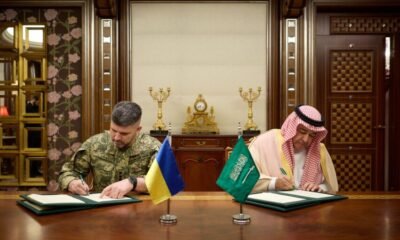
Saudi Arabia Deepens Defense Ties with Ukraine
-

 US-Israel war on Iran4 days ago
Israel’s War Goals Unmet as U.S.-Iran Ceasefire Shifts Conflict Dynamics
-

 Top stories2 weeks ago
France Leads Talks With 35 Nations to Secure Strait of Hormuz
-
 US-Israel war on Iran1 week ago
Iran Warns UN Against Hormuz Resolution