
US-Israel war on Iran
Hezbollah Gains Intel Advantage from Leaked Lebanese Military Secrets

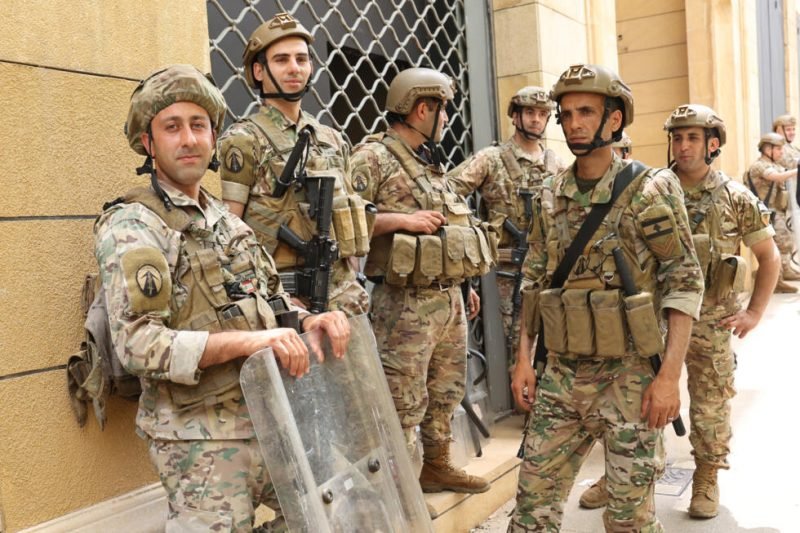
Allegations of Lebanese military officials leaking classified information to Hezbollah raise concerns over ceasefire stability and regional security.
Allegations have surfaced that senior Lebanese military officials, including the head of military intelligence for southern Lebanon, Suhil Bahij Gharb, have leaked sensitive classified information to Hezbollah. According to an intelligence report cited by The Times, Gharb, while stationed in a US-France-UNIFIL war room, provided intel that allowed Hezbollah to relocate personnel and weapons ahead of Israeli searches.
This revelation comes at a critical juncture as a fragile ceasefire holds between Israel and Hezbollah following over a year of hostilities. The reported leaks highlight Hezbollah’s deep infiltration of Lebanese military ranks, allegedly enabled by senior Hezbollah commander Wafiq Safa, who reportedly ensured Gharb’s presence in sensitive security discussions.
The leaked intelligence reportedly enabled Hezbollah to conceal key operations and thwart international monitoring efforts led by UNIFIL and the Lebanese army. The intelligence report emphasized how Hezbollah used these leaks to evade scrutiny south of the Litani River, a region where its activities are supposed to be restricted under the terms of the UN-brokered ceasefire.
Hilal Khashan, a political science professor at the American University of Beirut, noted that despite the Lebanese army’s ties with Western powers like the United States, cooperation between individual officers and Hezbollah remains pervasive.
The alleged leaks pose significant security risks, particularly for Israel, which has faced escalating threats from Hezbollah since October 2023. Israeli operations in southern Lebanon uncovered plans by Hezbollah for large-scale attacks, potentially mirroring Hamas’s October 7 massacre in southern Israel.
These revelations threaten the already tenuous ceasefire agreement, with experts warning of potential renewed hostilities. Hezbollah’s breaches, coupled with its access to sensitive intelligence, could enable it to intensify its operations along Israel’s northern border, undermining stability in the region.
UNIFIL and the Lebanese army, tasked with preventing Hezbollah’s military build-up in southern Lebanon, face increased scrutiny following these revelations. The allegations raise questions about the effectiveness of international monitoring and peacekeeping efforts in curbing Hezbollah’s activities.
Hezbollah’s deep entrenchment in Lebanon’s political and military systems has been a cornerstone of its survival strategy. The group’s influence extends beyond its military presence, leveraging political gains amassed over the past three decades.
However, this latest intelligence breach could escalate tensions, particularly as the international community, including the United States and Israel, reassess their engagement with Lebanon. Any renewed conflict risks further destabilizing a region already fraught with political and economic turmoil.
The allegations underscore the need for greater oversight of international peacekeeping operations and a reassessment of Lebanon’s internal dynamics. The fragile ceasefire remains at risk, with heightened concerns that Hezbollah could leverage its access to sensitive military intelligence to launch new offensives.
As the situation develops, the international community will closely monitor whether these revelations spur stronger action against Hezbollah’s growing influence in Lebanon and its ongoing threats to regional stability.











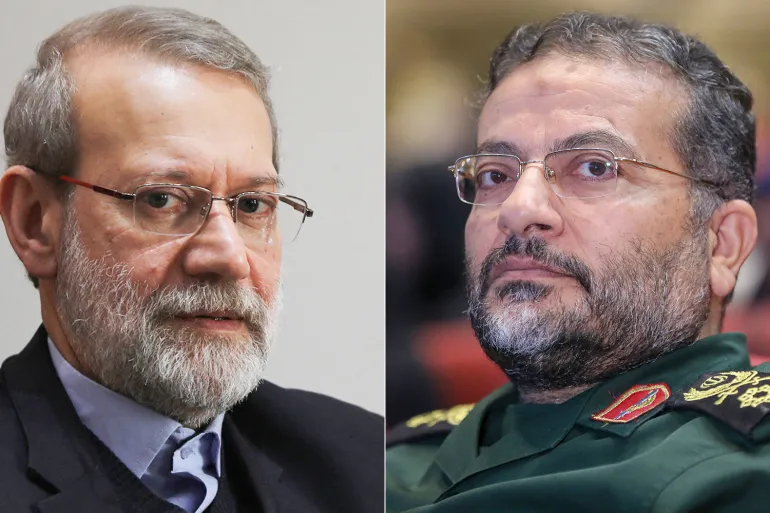
The Islamic Revolutionary Guard Corps has officially confirmed the death of Ali Larijani, the influential head of Iran’s Supreme National Security Council, following a series of joint US-Israeli airstrikes.
Larijani, a former parliamentary speaker and a pivotal advisor to the late Supreme Leader Ali Khamenei, was widely regarded as the most powerful political figure in the country during the current leadership transition.
Reports from the IRGC’s media arm indicate that Larijani was killed alongside his son, Mortaza, and his security deputy, Alireza Bayat.
The operation also resulted in the death of Brigadier General Gholamreza Soleimani, the commander of the Basij militia, as confirmed by Israeli Defense Minister Israel Katz.
The loss of Larijani marks a significant moment in the ongoing conflict, as Western analysts previously identified him as the de facto leader overseeing the selection of a successor to the supreme leadership.
While US and Israeli officials have signaled that regime change remains a primary strategic objective, Iranian officials maintain that the government remains resilient.
They point to the swift appointment of Mojtaba Khamenei to succeed his father as evidence that the administration’s core structure remains intact despite the targeted assassination of its top-tier leadership.
A senior U.S. security official walks away — saying Iran posed no imminent threat. The war debate just moved inside the White House.
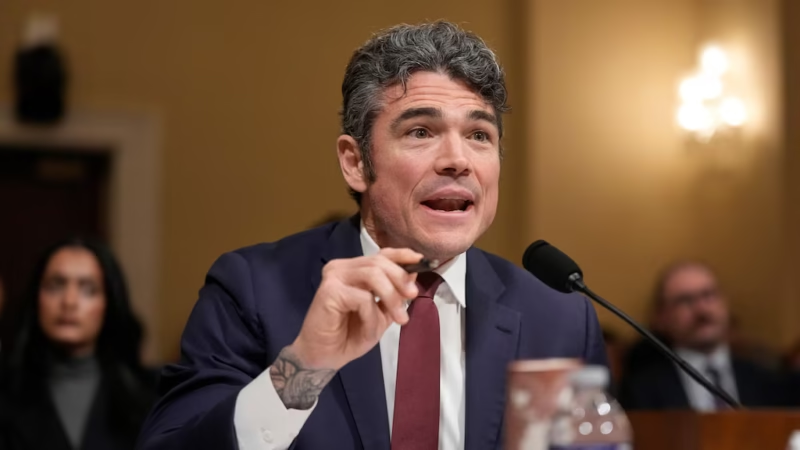
Joe Kent Resigns as National Counterterrorism Center Director, Accuses Israel of Driving U.S. Into Conflict.
Joe Kent, director of the National Counterterrorism Center, resigned Tuesday in protest over the administration’s war with Iran, declaring that he could not support a conflict he believes was unnecessary and influenced by Israel.
In a resignation letter posted publicly, Kent wrote that Iran posed “no imminent threat” to the United States and argued that Washington had been drawn into war under pressure from Israeli officials and their American allies.
Kent, a former U.S. Army Special Forces warrant officer, served under Director of National Intelligence Tulsi Gabbard. His departure marks one of the most senior resignations tied directly to the current conflict.
In his letter, Kent praised Donald Trump for actions taken during his first term, including the killing of Iranian General Qassem Soleimani and operations against ISIS, while avoiding what he described as “endless wars.”
But he accused the administration of abandoning that posture amid what he called a misinformation campaign pushing for confrontation with Tehran.
Kent drew parallels to the run-up to the Iraq war, warning against repeating what he described as strategic misjudgments driven by flawed intelligence narratives.
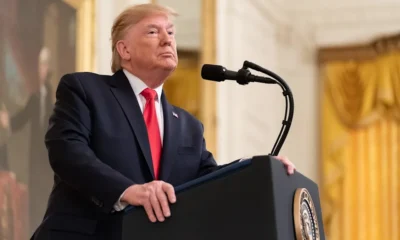
The White House responded sharply. Speaking at a public event, Trump said he had read Kent’s statement and described him as “weak on security.” The president rejected the assertion that Iran was not a threat, insisting that global consensus recognized Tehran’s danger.
Kent’s political background has been controversial. He twice ran for Congress in Washington state and lost.
His campaigns drew scrutiny over associations with far-right activists and conspiracy-driven rhetoric surrounding the 2020 election and the January 6 Capitol attack. He was confirmed to his counterterrorism role on a narrow, partisan Senate vote.
His resignation underscores widening fractures within the administration and the broader conservative coalition over the Iran war. While some Republicans argue the campaign is necessary to degrade Tehran’s military capacity, others fear it risks becoming another prolonged Middle Eastern entanglement.
Kent’s departure does not change U.S. strategy, but it highlights internal dissent at a sensitive moment. Wars abroad often expose divisions at home. In this case, the disagreement is no longer confined to lawmakers or commentators — it has reached the upper ranks of America’s counterterrorism leadership.
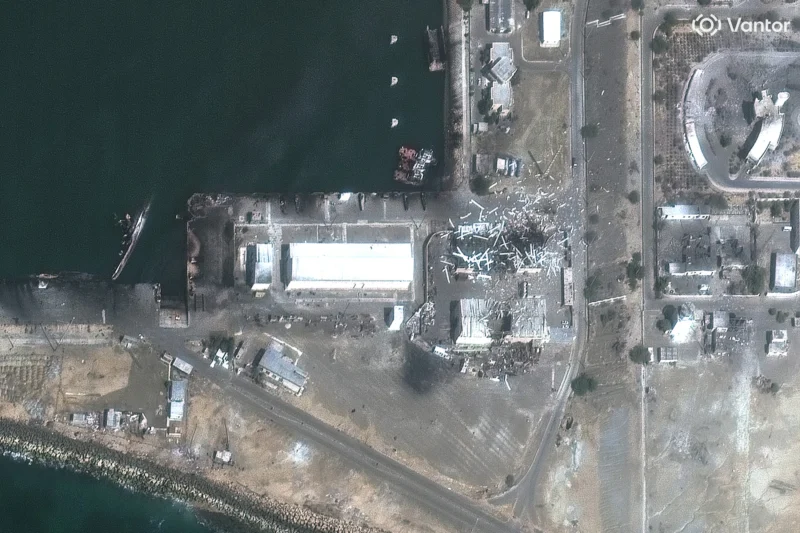
CENTCOM Chief Says Mines, Drone Boats and Torpedo Sites Targeted as Washington Moves to Secure Strait of Hormuz.
It’s no longer just warships. The U.S. is dismantling Iran’s hidden naval weapons — piece by piece.
The U.S. military is broadening its campaign against Iran’s naval capabilities, targeting not only warships but also mines, drone boats and torpedo production sites in a bid to secure the Strait of Hormuz.
Adm. Brad Cooper, commander of US Central Command, said Monday that American forces have destroyed more than 100 Iranian naval vessels and are intensifying efforts to eliminate what he described as Tehran’s “decades-old threat” to maritime commerce.
“We’re also zeroed in on dismantling Iran’s threat to the free flow of commerce through the Strait of Hormuz,” Cooper said in a video statement.
Over the weekend, U.S. forces struck more than 90 military targets on Kharg Island, Iran’s primary oil export hub located roughly 300 miles from the strategic waterway. Among the targets were storage bunkers for naval mines, drone storage facilities and sites producing light- and heavy-weight torpedoes.
While President Donald Trump has said Iranian oil infrastructure at Kharg was spared, he warned that restraint could end if Tehran interferes further with shipping in the strait — a chokepoint through which about one-fifth of global oil supplies pass.
U.S. officials previously said more than 60 Iranian ships and 30 minelayers had been damaged or destroyed since the launch of Operation Epic Fury on Feb. 28. Gen. Dan Caine, chairman of the Joint Chiefs of Staff, confirmed that MGM-140 Army Tactical Missile Systems, or ATACMS, were used to sink multiple vessels, including a submarine.
The shift reflects Washington’s assessment that Iran is more likely to rely on asymmetric naval tactics — mines, fast attack craft and unmanned vessels — than conventional fleet battles. By targeting these tools, U.S. planners aim to blunt Tehran’s capacity to disrupt tanker traffic and destabilize energy markets.
The conflict has exacted heavy costs. Iranian and Israeli officials report hundreds of casualties on both sides. At least 13 U.S. service members have been killed since operations began, including six airmen who died when a KC-135 refueling aircraft crashed in Iraq last week.
As the war enters its third week, Washington’s strategy appears clear: degrade Iran’s ability to threaten Hormuz before the economic shock spreads further. Whether these strikes are enough to deter Tehran — or provoke broader escalation — remains uncertain.
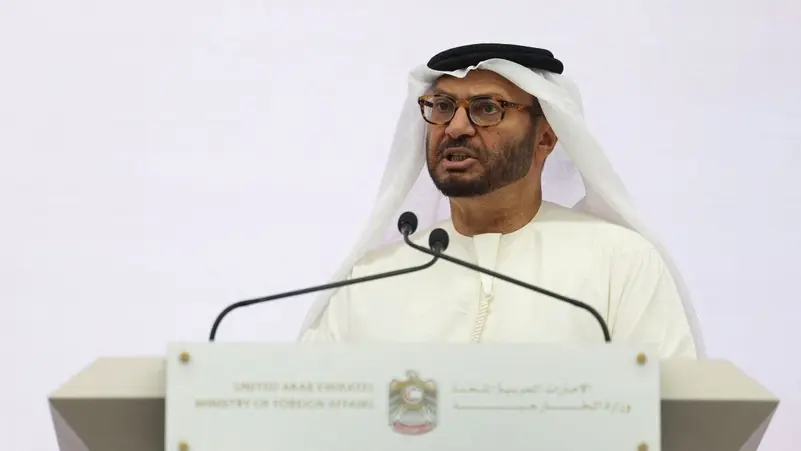
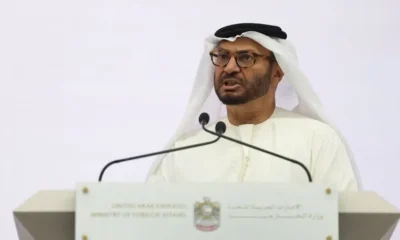
Senior Adviser Anwar Gargash Says Emirates Could Support Effort to Safeguard Shipping as Iran Crisis Deepens.
The Strait of Hormuz is the world’s most dangerous shipping lane — and the UAE may now be ready to act.
The United Arab Emirates could join a U.S.-led international effort to protect shipping through the Strait of Hormuz, a senior Emirati official said Tuesday, signaling a potential shift as tensions with Iran continue to rattle global energy markets.
Anwar Gargash, diplomatic adviser to the UAE president, said discussions were ongoing but no formal agreement had been finalized.
“We all have a responsibility to ensure the flow of trade, the flow of energy,” Gargash said during an online event hosted by the Council on Foreign Relations.
His remarks come as Iran has effectively blocked or severely disrupted traffic through the narrow waterway, through which roughly one-fifth of global oil supplies transit. The disruption has pushed energy prices sharply higher and intensified pressure on governments dependent on Gulf exports.
President Donald Trump has called on allied nations to deploy naval assets to escort commercial tankers and help restore safe passage. So far, responses from major powers have been cautious, with several governments weighing the risks of becoming more directly involved in the conflict.
The UAE’s position is particularly sensitive. While it hosts U.S. military forces and remains a key American security partner, Emirati officials have repeatedly stressed that they do not seek escalation. At the same time, the country’s economy depends heavily on uninterrupted energy exports and maritime trade.
Gargash suggested that any stabilization effort would need to extend beyond reopening the strait. Once the war between the United States, Israel and Iran ends, he said, a broader framework would be required to prevent Tehran from using its nuclear, missile or drone programs to destabilize the region again.
The statement reflects the Gulf’s strategic dilemma: protect vital economic lifelines without being drawn into a prolonged regional war. For now, the UAE appears open to coordination — but careful not to commit until the shape and scope of the mission become clearer.
Whether a multinational naval coalition materializes may determine not only the security of a narrow stretch of water, but also the trajectory of a conflict that is already reshaping the Middle East’s balance of power.
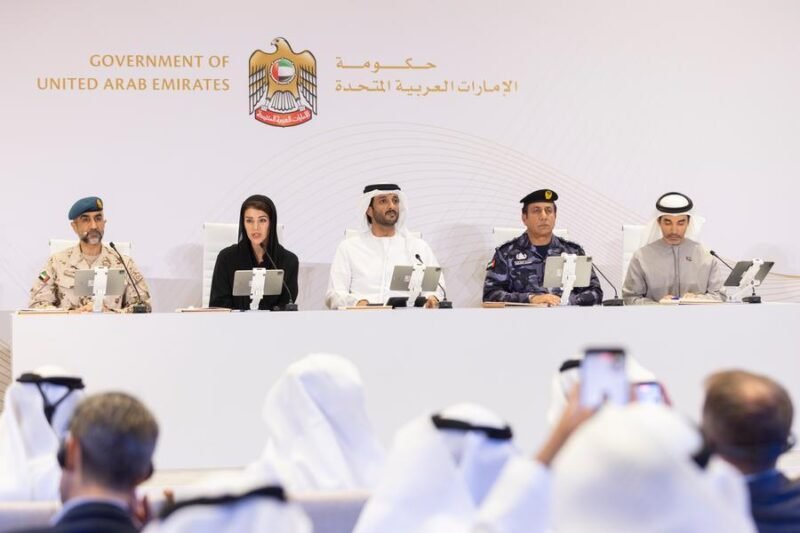
As Hormuz Disruption Deepens, Arab Gulf Leaders Urge Washington to Finish the Job While Avoiding Direct Entry Into War.
They didn’t ask for this war — but now Gulf leaders fear living with a half-finished one.
The Gulf Arab states did not press Washington to launch its war on Iran. But as missiles strike airports, oil terminals and commercial hubs from Doha to Abu Dhabi, many now fear something worse than escalation: an unfinished campaign.
According to regional sources and diplomats, leaders across the Gulf increasingly believe that if the United States and Israel halt operations before decisively degrading Iran’s military capacity, the region could face a permanent state of vulnerability.
Tehran’s ability to disrupt the Strait of Hormuz — the artery carrying roughly one-fifth of global oil — has transformed abstract security concerns into immediate economic threats.
Abdulaziz Sager of the Gulf Research Center described a turning point in sentiment. Gulf governments initially opposed war. But once Iranian missiles and drones struck their territory, the calculus shifted. For some policymakers, the question is no longer whether Iran should be constrained — but whether Washington will see the campaign through.
Yet the Gulf faces a strategic paradox.
While pressing the U.S. not to leave Iran militarily intact, most Gulf states are reluctant to join the fight directly. Collective action might dilute exposure; unilateral intervention would invite retaliation.
The six members of the Gulf Cooperation Council — Bahrain, Kuwait, Oman, Qatar, Saudi Arabia and the United Arab Emirates — have held limited consultations, but no unified military posture has emerged.
The United Arab Emirates has publicly emphasized restraint, stating it does not seek escalation. Saudi Arabia, long Tehran’s principal rival, has signaled red lines — particularly attacks on major oil infrastructure or desalination plants — but appears intent on calibrating any response.
The underlying fear is clear: a weakened but not neutralized Iran could periodically hold the Gulf’s energy lifeline hostage.
The 2019 strike on Saudi oil facilities at Abqaiq and Khurais demonstrated how vulnerable even sophisticated defenses can be. Today’s disruptions go further, shaking the region’s carefully cultivated image as a stable hub for trade, tourism and investment.
Washington, for its part, is urging broader support. President Donald Trump has called for international participation in securing Hormuz. But enthusiasm is limited. Many regional leaders worry that deeper alignment with a U.S.-led offensive would magnify the very risks they seek to contain.
Iran’s leverage lies not only in missiles but in geography. Control over maritime chokepoints grants outsized influence over global markets. Even sporadic disruption sends oil prices soaring and rattles economies far beyond the Gulf.
The Gulf’s dilemma is therefore existential and political at once. Neutralizing Iran decisively could restore deterrence — but risks widening war. Leaving Iran partially intact may preserve short-term calm — but at the cost of enduring insecurity.
For now, Gulf capitals appear to be walking a narrow path: urging Washington to degrade Tehran’s capabilities while avoiding a direct plunge into the conflict. Whether that balance can hold may determine not only the outcome of this war, but the strategic architecture of the Gulf for years to come.
Tel Aviv Says Ali Larijani and Basij Commander Killed in Tehran Strikes; Iran Has Not Confirmed.
Another high-level strike — but Tehran is silent. Has Israel eliminated Iran’s top security figure?
Israel says it has assassinated two of Iran’s most senior security figures, marking what could be one of the most consequential escalations of the war to date.
Israeli Defense Minister Israel Katz claimed that Ali Larijani, secretary of Iran’s Supreme National Security Council, was killed in a targeted strike. The Israeli military also said it eliminated Gholamreza Soleimani, commander of the Basij paramilitary force linked to the Islamic Revolutionary Guard Corps.
Tehran has not confirmed either death.
Iranian state media published a handwritten note attributed to Larijani commemorating sailors killed in a recent U.S. attack, but it was unclear whether the message was intended as proof of life or prepared earlier. Larijani was last seen publicly on Friday attending an al-Quds Day rally in Tehran alongside President Masoud Pezeshkian.
If confirmed, the killing of Larijani would represent the highest-level assassination since U.S.–Israeli strikes at the outset of the war eliminated former Supreme Leader Ali Khamenei and members of his family.
Larijani has long been a central figure in Iran’s political establishment. He previously served as parliamentary speaker and once led Tehran’s nuclear negotiations with Western powers. As head of the Supreme National Security Council, he occupied a critical role in coordinating national defense and strategic policy.
The Israeli military said Soleimani, the Basij commander, was killed in a “precise intelligence-guided strike” in central Tehran. The Basij militia is a powerful internal security force often deployed to suppress unrest and support Iran’s broader military posture.
Neither death has been independently verified.
The claims come amid intensifying cross-border attacks and rising regional tension. Israel has increasingly targeted senior leadership figures, signaling an expansion beyond infrastructure strikes toward decapitation strategy.
Whether Iran confirms the assassinations — or retaliates in response — could determine the next phase of a conflict that has already reshaped the region’s security landscape.
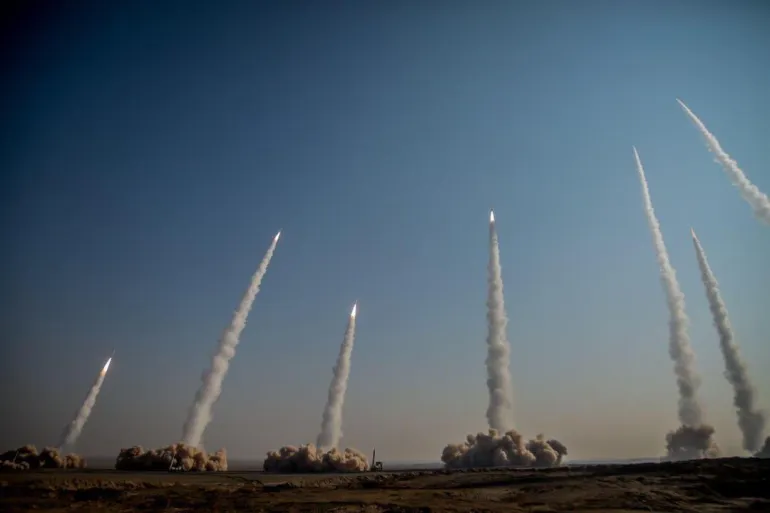
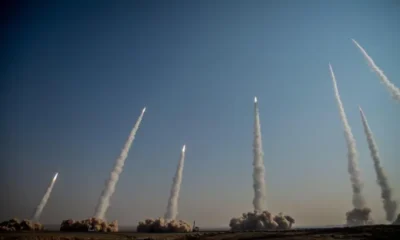
Despite Heavy U.S.–Israeli Strikes, Tehran Retains Enough Launch Capacity to Sustain a War of Attrition.
Air dominance doesn’t mean silence. Iran’s reduced barrages still carry strategic weight.
The White House has declared sweeping success. “Complete and total aerial dominance,” it said, claiming Iran’s ballistic missile capability is “functionally destroyed.” President Donald Trump added that drone manufacturing capacity has been decimated.
Yet missiles continue to fly.
In recent days, Qatar, Saudi Arabia, the United Arab Emirates and Israel have all reported interceptions. A missile strike in Abu Dhabi killed one person. Sirens have echoed across central Israel. Drone-related fires have disrupted areas near Dubai and Fujairah. If Iran’s launch systems are crippled, how is it still firing?
The answer lies in scale, strategy and survivability.
There is little doubt that Iran’s capabilities have been sharply reduced. U.S. officials say missile launches are down roughly 90 percent from the first days of the war, with drone attacks reduced by more than 80 percent. Israeli assessments indicate hundreds of launchers have been destroyed — possibly 290 out of an estimated 410 to 440.
But “functionally destroyed” does not mean eliminated.
Iran entered the war with one of the region’s largest missile inventories, estimated in the thousands. More importantly, it invested heavily over the years in dispersal. Launchers were decentralized. Mobile systems were embedded in civilian or non-traditional locations. Hidden stockpiles were prepared long before the conflict escalated.
Without ground forces inside Iran, fully neutralizing those assets is extraordinarily difficult — even with air superiority.
What has changed is tempo. Instead of mass volleys, Tehran is firing sporadically — one or two missiles, a handful of drones. Militarily, such attacks may be limited. Strategically, they are potent.
Iran appears to be shifting from shock-and-awe retaliation to calibrated attrition. The objective is not overwhelming destruction but sustained pressure. Each launch forces costly intercepts, keeps air defenses on high alert and injects uncertainty into regional markets.
This is classic asymmetric warfare.
Iran’s relatively inexpensive drones, such as loitering munitions derived from the Shahed model, can be produced quickly and launched without sophisticated fixed infrastructure. Even if most are intercepted, the occasional breakthrough is enough to rattle public confidence. As security analysts often note, it takes only one successful strike to shift perceptions.
Tehran’s broader calculation may be economic rather than purely military. The conflict has already pushed oil prices above $100 per barrel. Shipping traffic through the Strait of Hormuz remains constrained, affecting roughly 20 percent of global energy flows. Insurance premiums are rising. Markets are volatile.
If the war becomes a contest of endurance — missile stockpiles versus interceptor inventories, economic resilience versus disruption — Iran may believe time is not entirely on Washington’s side.
The United States and Israel have degraded Iran’s capacity significantly. But degradation is not elimination. As long as Tehran can sustain a credible threat, even at reduced intensity, it retains leverage.
In modern warfare, silence is rarely absolute. The question is not whether Iran can fire as many missiles as before. It is whether firing fewer, more strategically, achieves its aims.
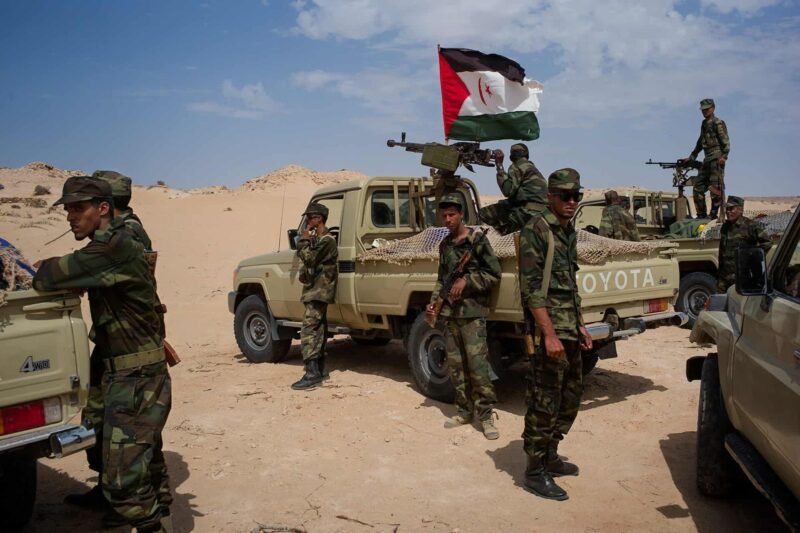
From Lebanon to Yemen — and now the Sahara? Washington fears Tehran’s shadow network is moving west.
U.S. Lawmakers Move to Label Polisario a Terror Group Amid Claims of IRGC and Hezbollah Support in Western Sahara.
For years, analysts tracked Iran’s expanding arc of influence across the Middle East — from Hezbollah in Lebanon to the Houthis in Yemen. Now, U.S. lawmakers warn that Tehran’s shadow war may be stretching beyond the Levant and Gulf, toward North Africa’s Atlantic coast.
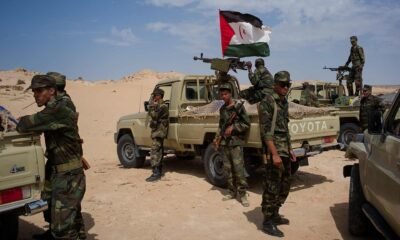
A legislative push in Congress, led by Ted Cruz, seeks to designate the Polisario Front as a foreign terrorist organization. Supporters argue that intelligence pointing to Iranian and Hezbollah involvement with the group has transformed a long-running territorial dispute in Western Sahara into a broader security concern.
The Polisario Front, which seeks independence for Western Sahara from Morocco, has historically framed itself as a nationalist movement with Marxist-Leninist roots.
But reports circulating in Western and regional security circles allege that elements of the Islamic Revolutionary Guard Corps and Hezbollah have provided training, drones, mortars and other advanced weaponry to Polisario fighters in camps near Tindouf, Algeria.
Morocco severed diplomatic ties with Tehran in 2018, citing what it described as Hezbollah-backed military training for Polisario cadres. Iran has denied destabilizing activities in North Africa, and Polisario officials reject accusations of foreign military alignment. Yet the claims have gained renewed traction amid broader tensions between Washington and Tehran.
The strategic implications, if substantiated, would be significant. Iran’s regional model has often relied on cultivating non-state armed groups capable of exerting pressure without direct state confrontation. Extending such a model into the Maghreb would mark a geographic expansion beyond its traditional Middle Eastern theaters.
Western Sahara itself sits near key maritime routes connecting the Atlantic and Mediterranean. Security analysts caution that militarization of the dispute could add volatility to an already fragile belt stretching from the Sahel to Libya.
The proposed U.S. legislation would require annual assessments of alleged military cooperation between Polisario, Iran and Hezbollah. Designation under existing counterterrorism authorities could trigger sanctions and financial restrictions aimed at curbing funding streams.
Yet the situation remains complex. Western Sahara’s status has been contested for decades, and regional rivalries — including tensions between Morocco and Algeria — shape the landscape. Labeling Polisario a terrorist organization could recalibrate diplomatic dynamics in North Africa as much as it constrains Tehran.
The broader question is whether this represents a durable strategic foothold for Iran or a limited convergence of interests in a localized conflict. What is clear is that the map of confrontation between Washington and Tehran no longer appears confined to the Gulf.
If the allegations prove accurate, the U.S.–Iran shadow war may be entering a new phase — one that reaches from the deserts of Western Sahara to the wider Atlantic horizon.

Iran Confirms Death of Ali Larijani

Trump Counterterror Chief Quits Over Iran War

U.S. Expands Strikes on Iran’s Naval Arsenal


-
 Terrorism2 months ago
America Pulls Back From Somalia but Doubles Down Next Door
-
 Somaliland2 months ago
F-35s Over Hargeisa: The Night Somaliland’s Sovereignty Went Supersonic
-

 Somalia2 months ago
Aid Destroyed, Trust Shattered: Somalia Loses U.S. Support for Good
-
 Terrorism2 months ago
Foreign ISIS Pipeline Exposed: Puntland Captures Dozens of Non-Somali Fighters
-

 Somaliland2 months ago
Somaliland at Davos: The Moment Somaliland Entered the World’s Inner Circle
-
 Top stories2 months ago
European Troops Land in Greenland as US Pushes Takeover
-

 Analysis1 month ago
How Chinese Speculators Set the Stage for the Gold and Silver Crash
-
 Top stories2 months ago
France Blocks EU Push to Let Ukraine Buy British Storm Shadow Missiles