No wider war, but rising bills. Starmer says Britain will protect shipping — without escalating the conflict.
Prime Minister Keir Starmer has said the United Kingdom will not be drawn into a broader Middle East war, even as Washington presses allies to help secure the Strait of Hormuz and reopen global shipping routes disrupted by the Iran conflict.
Speaking at Downing Street, Starmer acknowledged that discussions with the United States are ongoing after President Donald Trump urged NATO allies to contribute naval forces. Trump has warned that failure to assist could carry consequences for the alliance’s future.
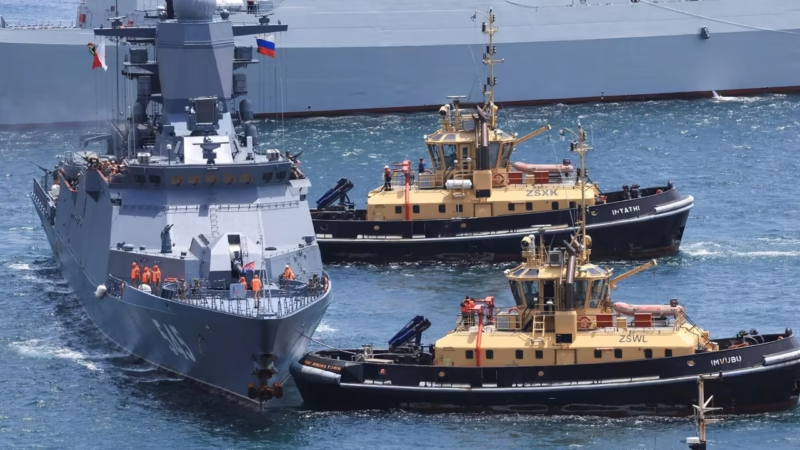
Starmer described the decision as “difficult,” confirming the UK is examining options that could include deploying ships or mine-hunting drones. But he drew a clear distinction between maritime security and direct military escalation.
“While taking the necessary action to defend ourselves and our allies, we will not be drawn into the wider war,” he said, emphasizing that Britain’s approach would remain grounded in national interest rather than pressure from abroad.
The remarks reflect unease within European capitals about the absence of a clear endgame from Washington. Starmer said a negotiated settlement must ultimately follow the current phase of hostilities, adding that his government’s decision not to participate in the initial U.S. offensive was based on principle and a “calm, level-headed assessment” of British interests.
At the same time, the prime minister acknowledged the domestic impact of the conflict. Oil prices have surged amid disruption in the Gulf, feeding into higher energy costs at home.
To cushion households that rely on heating oil, Starmer announced £53 million in targeted support. Lower-income families will receive assistance, and suppliers accused of price gouging could face legal action and tighter regulation.
“We cannot allow the war in the Gulf to turn into a windfall for Putin,” Starmer added, linking energy instability to broader geopolitical risks.
The government has not ruled out broader support if energy bills continue to rise after the price cap expires this summer, though Starmer cautioned that future oil prices remain uncertain. For now, he framed de-escalation as the most effective form of economic relief.
The UK’s position highlights a delicate balance: safeguarding maritime trade without deepening military involvement. As global powers debate how to reopen the Strait of Hormuz, London is signaling that it will help manage the crisis — but on its own terms.