
US-Israel war on Iran
Pentagon Scrambles as Middle East Tensions Explode: U.S. Sends Troops Amid Rising War Fears


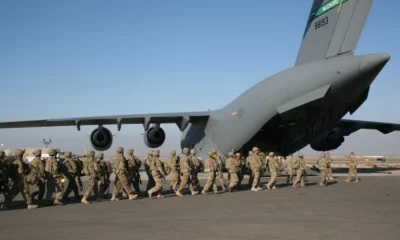
The United States is quietly dispatching a small contingent of additional troops to the region, bracing for a nightmare scenario: a full-blown war that could engulf the entire area. As violence erupts between Israel and Hezbollah in Lebanon, the Pentagon has begun preparing for the unthinkable—the urgent evacuation of American citizens.
The Pentagon, often the steady hand in global crises, made this chilling announcement on Monday. But what they didn’t say spoke volumes. Major General Pat Ryder, the Pentagon’s press secretary, confirmed the deployment but left the details shrouded in secrecy. How many troops? What exactly are they doing? No concrete answers. The urgency is palpable.
However, sources on the inside couldn’t stay silent. According to a senior U.S. official who spoke exclusively to VOA, the numbers are in the dozens, with these elite forces tasked with an absolutely critical mission: preparing for the evacuation of U.S. citizens if the powder keg of regional tensions explodes into a greater war.
Yet, make no mistake—this is no ordinary deployment. These troops aren’t just there to “observe” the chaos. They’re getting ready for what could be a military-assisted departure operation, a phrase that signals the darkest of outcomes. Marines are already stationed nearby, ready to act at a moment’s notice if all hell breaks loose.
For now, U.S. officials stress that the situation hasn’t reached that point yet. But how long can that line hold? One official, speaking under the veil of anonymity, admitted that everything hinges on a delicate balance—a balance that’s being tipped ever closer to disaster with each passing day.
“We are a planning organization,” Ryder said, in an almost ominous understatement. “We’re ready for a wide variety of contingencies.” His words hang in the air, as the world watches the sparks fly between Israel and Hezbollah, each strike inching the region closer to a conflagration.
And this isn’t just about planning; it’s about survival. The Pentagon is more prepared than ever before, with forces on alert after Iran’s recent drone and missile attacks against Israel just this past April. “We have more capability in the region today than we did on April 14,” Ryder emphasized, leaving no doubt that America is bolstering its presence in a region that could erupt at any moment.
Meanwhile, Israel’s military strikes inside Lebanon have already claimed hundreds of lives, and Hezbollah is not backing down. The death toll is rising, and so is the risk of a spiraling regional conflict—one that could engulf Lebanon, Israel, and beyond. In the midst of this chaos, the U.S. State Department isn’t mincing words. They’ve issued a stark, life-or-death warning to American citizens in Lebanon: Get out. Now.
For those still in the region, the clock is ticking. The situation is volatile, unpredictable, and on the edge of collapse. And for the U.S., the question remains: Will this small deployment be enough to avert disaster, or is this the first step in a much larger escalation?
In a region where every second counts, the U.S. military is bracing for what could be its most perilous mission yet. If the situation continues to deteriorate, the next phase could be the evacuation of American lives—under fire, amidst the chaos of a looming war.
As the world watches with bated breath, one thing is clear: the Middle East is a tinderbox, and the match has already been lit.

















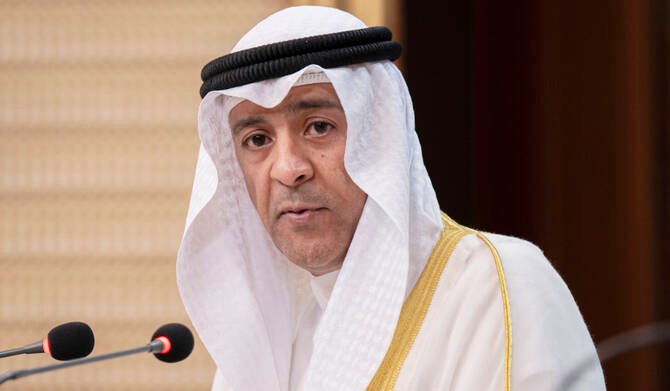
In a rare intervention from Wall Street into wartime strategy, Jamie Dimon offered a blunt assessment: the United States was right to confront Iran—but what comes next remains dangerously unclear.
Speaking as the conflict enters its second month, Dimon argued that Western powers had long tolerated a strategic vulnerability—allowing Iran to exert influence over the Strait of Hormuz, a corridor through which a significant share of the world’s energy flows. That tolerance, he suggested, enabled decades of proxy conflicts across the Middle East.
His argument reframes the war not as a sudden escalation, but as a delayed response to a long-standing imbalance.
By the third layer of this debate, the divide becomes sharper. Supporters of the war see it as a necessary correction—an effort to dismantle a network of influence that has shaped regional instability for decades.
Critics, including analysts at the Brookings Institution, warn that the absence of a clear post-war plan risks creating new crises: refugee flows, energy disruptions, and prolonged instability that could outlast the conflict itself.
That uncertainty is already visible.
Iran’s move to restrict access to Hormuz has sent oil prices higher and exposed how dependent global markets remain on Middle East stability. What began as a military campaign has quickly evolved into an տնտեսական shock, with ripple effects across supply chains and financial systems.
Dimon acknowledges the disruption—but sees a potential payoff. If Iran and its network of regional proxies are significantly weakened, he argues, the result could be a temporary reduction in hostilities and a window for longer-term stability.
The alignment of key actors—including the United States, Saudi Arabia, and the United Arab Emirates—could, in theory, create conditions for a more durable peace.
That view is echoed in parts of the region. Reports indicate that Gulf leaders urged Washington to sustain pressure, framing the conflict as a rare opportunity to reshape regional power dynamics.
But there are competing fears.
Officials in Turkey and elsewhere worry that a collapse of Iran’s central authority could trigger a power vacuum—one that might empower non-state actors and deepen fragmentation across already volatile borders. In that scenario, the war’s end would not bring stability, but a new phase of uncertainty.
The contradiction is central to the current moment.
On one side, a strategic logic: remove a long-standing source of instability and reset the regional balance. On the other, a structural risk: dismantling a system without a clear replacement can produce outcomes that are harder to control.
Dimon’s position sits between those poles. He supports the rationale for the war, but implicitly acknowledges the limits of military success without political follow-through.
The question is no longer whether the war was justified.
It is whether its outcome can be managed.
Because in conflicts like this, the decisive phase often comes after the fighting slows—when the vacuum left behind must be filled, and when the cost of uncertainty can exceed the cost of war itself.
Low over Iranian terrain, rescue aircraft cut across the sky—fast, deliberate, and exposed. The mission was clear: find the crew before someone else does.
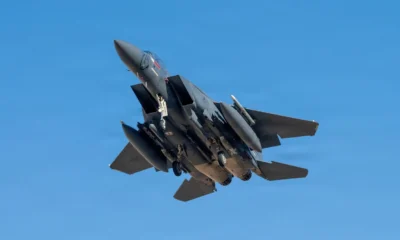
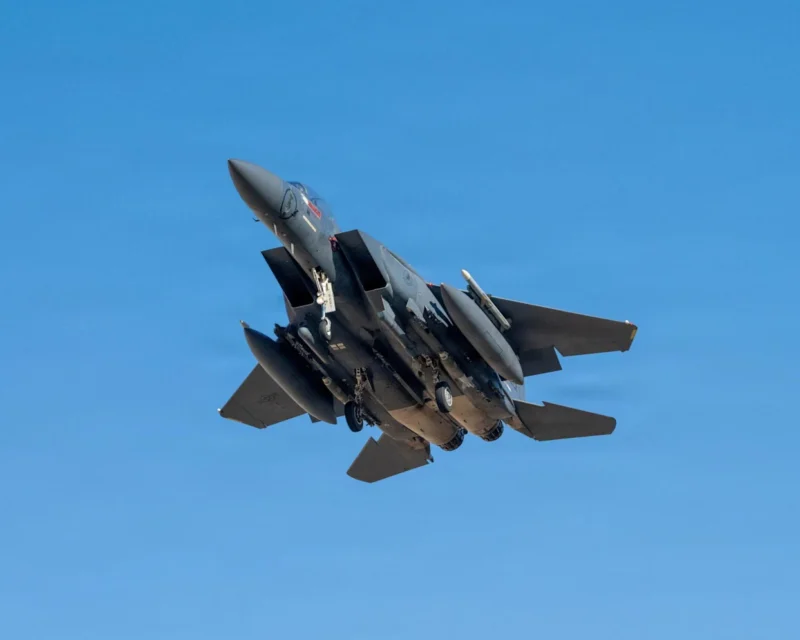
A U.S. F-15E Strike Eagle has been shot down over Iran, marking the first confirmed loss of an American fighter inside Iranian airspace since the war began. U.S. officials, speaking off the record, acknowledged the incident as search-and-rescue operations intensified to locate the two crew members believed to have ejected.
The downing represents a turning point. Until now, U.S. air operations had avoided direct aircraft losses over Iran, reinforcing a perception of air dominance. That assumption is now under strain.
By the third layer of this event, the implications extend beyond a single aircraft. The loss signals that Iran’s air defense network—whether through existing systems or newly deployed capabilities—can impose real costs on U.S. operations. Even if isolated, the incident forces a reassessment of risk in a campaign built on sustained aerial pressure.
Initial confusion added to the tension. Iranian media first claimed a stealth F-35 Lightning II had been destroyed, before analysts identified debris as belonging to an F-15E. Images circulated showing wreckage fragments, including what appeared to be parts of the aircraft’s tail and an ejection seat consistent with U.S. systems.
Subsequent footage showed C-130 Hercules and HH-60 Pave Hawk aircraft operating at low altitude—strong indicators of a combat search-and-rescue mission. Such operations are among the most sensitive in modern warfare, often requiring rapid coordination under hostile conditions.
There are conflicting accounts about the crew’s fate. Iranian sources suggested at one point that a pilot had been captured, while earlier claims indicated the pilot may have been killed. U.S. officials have not confirmed either outcome, leaving the situation unresolved.
The ambiguity is significant. A captured pilot would introduce a new dimension to the conflict—one that extends beyond military engagement into political and psychological territory. Historically, such incidents have carried outsized impact, shaping public perception and diplomatic pressure.
There are also operational questions. The F-15E, while not a stealth platform, is a highly capable strike aircraft typically deployed with support measures designed to mitigate air defense threats. Its loss suggests either a gap in coverage, an evolution in Iranian tactics, or the inherent risks of operating deep within contested airspace.
At the same time, U.S. Central Command had earlier denied Iranian claims of additional aircraft losses, emphasizing that all other fighters remained accounted for. That distinction matters—it suggests the incident, for now, is isolated rather than systemic.
Still, the strategic effect is immediate. Air campaigns rely not only on capability but on perception. Even a single confirmed loss can alter calculations, both for planners and for adversaries seeking to demonstrate resilience.
For Iran, the downing reinforces a narrative of resistance—proof that it can contest the skies despite sustained bombardment. For the United States, it introduces a new variable: vulnerability in a domain where it has long held the advantage.
The rescue effort now becomes the focal point.
Because in wars like this, the fate of two individuals can quickly become something larger—a symbol, a bargaining chip, or a flashpoint that reshapes the next phase of the conflict.
And as aircraft circle low over hostile ground, the question is no longer just how the jet was lost—but what its loss will trigger next.
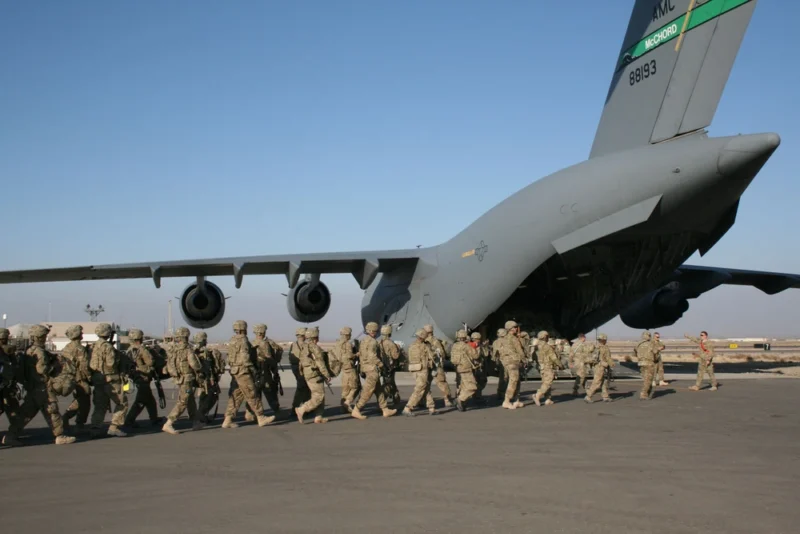
Middle East War Intensifies as Iran Strikes Continue and Hormuz Crisis Deepens.
At dawn on Friday, the region woke not to calm—but to continuity. Sirens sounded again. Missiles were detected again. And across multiple capitals, the war showed no sign of slowing.
Iran launched fresh attacks toward Israel, while Gulf states including Kuwait and Bahrain reported incoming threats, reinforcing a pattern that has come to define this conflict: simultaneous pressure across multiple fronts.
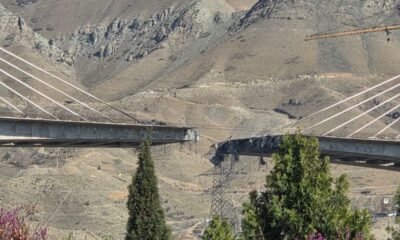
Hours earlier, a strike near Tehran had already shifted the tone. A major bridge—reportedly one of the largest in the region—was hit, killing eight people and injuring dozens who had gathered nearby to celebrate the end of Nowruz, the Persian New Year.
The attack underscored a widening reality: infrastructure and civilian-adjacent areas are increasingly part of the battlefield.
By the third layer of this escalation, the contradiction is stark. Donald Trump insists that Iran’s threat has been largely neutralized and that core objectives are nearing completion. Yet Iran continues to launch missiles, and its military claims it retains hidden stockpiles and operational capacity.
The war, in effect, is advancing on two tracks—declarations of progress alongside evidence of persistence.
Iran’s most effective leverage remains economic. Its disruption of the Strait of Hormuz has sharply reduced shipping traffic, with flows down more than 90% compared to last year. Oil markets have reacted accordingly, with prices surging and global supply chains tightening.
Countries are adapting where they can. Saudi Arabia is rerouting oil through pipelines, Iraq is moving shipments by land, and international coalitions are exploring diplomatic paths to reopen the waterway. But no major power has yet moved to forcibly secure the strait while active fighting continues.
That hesitation reflects the risks. Any direct attempt to reopen Hormuz could escalate the conflict into a broader confrontation involving multiple naval forces.
Meanwhile, the human cost continues to rise. Thousands have been killed across Iran, Israel, Lebanon, and neighboring regions. In Lebanon alone, fighting involving Hezbollah has left over a million displaced, adding another layer to an already fragmented conflict.
There are also signs that the war’s geographic footprint is expanding. Missile threats, drone attacks, and proxy engagements are linking theaters that were once separate, turning localized clashes into a connected regional system.
Still, there is no clear path to de-escalation. Diplomatic efforts are underway, but they remain preliminary. Military operations continue without a defined endpoint. And political messaging on all sides emphasizes strength rather than compromise.
The result is a war that is neither contained nor decisive.
What is unfolding is not a sprint toward resolution, but a gradual entrenchment. Each strike reinforces the next. Each disruption reshapes the stakes.
And as Friday begins much like the days before it—with attacks, responses, and uncertainty—the central question remains unresolved:
Not when the war will end, but how far it will spread before it does.
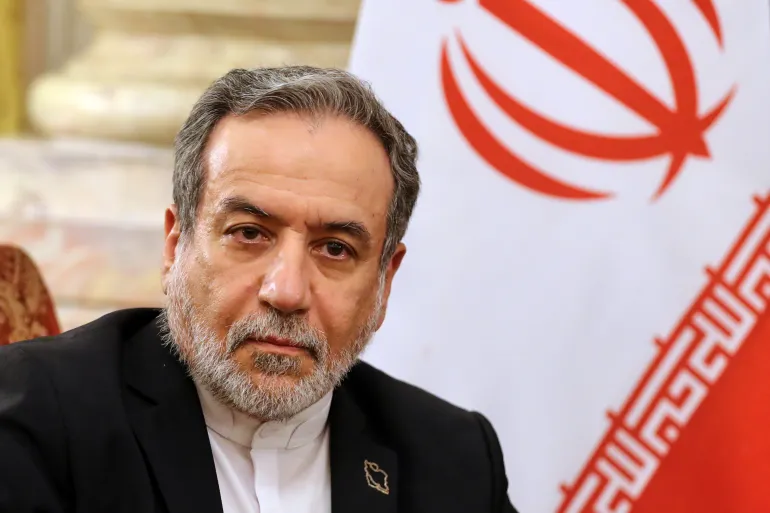
At the United Nations, the tension was visible not in what happened—but in what didn’t. A planned vote on securing the Strait of Hormuz was abruptly postponed, exposing deep divisions over how far the international community is willing to go.
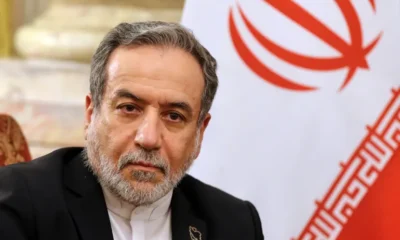
Ahead of the session, Abbas Araghchi issued a warning: any “provocative action” by the Security Council would only escalate the crisis. The message was clear—Tehran views international intervention in Hormuz not as stabilization, but as a potential trigger for wider confrontation.
The draft resolution, introduced by Bahrain and backed by the United States and several affected states, proposed authorizing defensive force to protect commercial shipping. In practical terms, it would have opened the door to multinational naval operations aimed at securing passage through a waterway that remains largely paralyzed.
But the vote never came.
By the third layer of this moment, the postponement reveals more than procedural delay. It highlights a strategic divide among global powers. Countries including Russia, China, and France raised objections to earlier drafts, signaling reluctance to endorse any measure that could legitimize the use of force in an already volatile environment.
That hesitation reflects a broader calculation. Securing Hormuz is not simply a technical task—it carries the risk of direct confrontation with Iran. For some states, the cost of escalation may outweigh the benefits of immediate action.
At the same time, the stakes continue to rise. Since late February, the strait has been effectively shut, disrupting a route that carries a significant share of the world’s oil. Energy markets remain under pressure, and governments are increasingly aware that prolonged disruption could have lasting economic consequences.
For countries backing the resolution, the logic is straightforward: without security guarantees, global trade cannot stabilize. For those opposing it, the concern is equally clear: introducing force into the equation could transform a contained crisis into a broader war.
Iran’s position adds another layer. By framing any Security Council action as “provocative,” Tehran is signaling both deterrence and leverage. It seeks to preserve control over the situation while raising the perceived cost of international intervention.
There are no easy paths forward.
Diplomacy alone has yet to reopen the strait. Military options remain politically and strategically risky. And consensus within the United Nations Security Council—the very mechanism designed to manage such crises—appears increasingly difficult to achieve.
What is unfolding is a test of the international system itself.
Can global powers coordinate under pressure, or will competing interests paralyze decision-making at the very moment collective action is most needed?
For now, the delay answers that question—at least temporarily.
And as the vote is pushed back with no new date, the ships remain stalled, the markets remain tense, and the conflict continues to define the limits of international response.
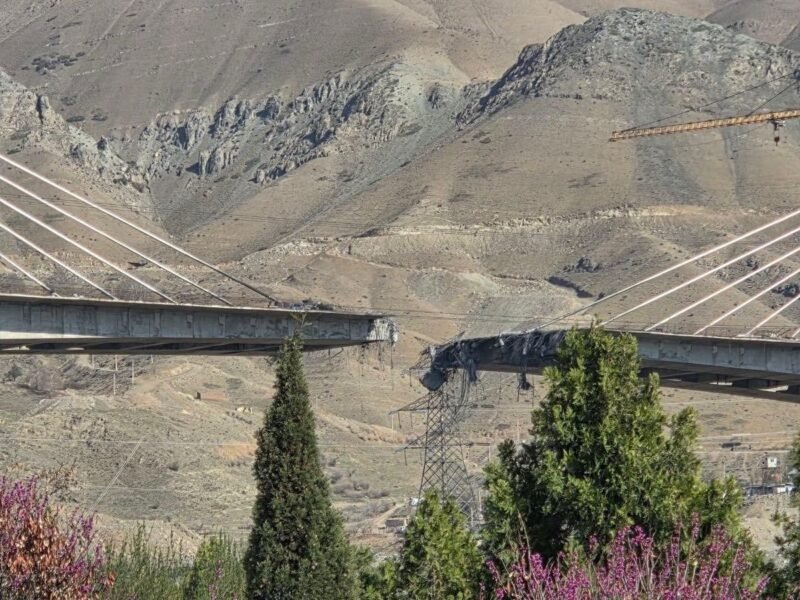
Explosions Rock Tehran as Iran and Israel Trade Missiles in Intensifying War.
In Tehran, windows rattled before dawn. Residents stepped into streets filled with smoke, unsure what had been hit—only that the strikes were closer, louder, and more sustained than before.
On the 34th day of the war, powerful explosions struck multiple across the Iranian capital and nearby Karaj, where an airstrike reportedly destroyed a major highway bridge linking the two cities. The structure, described by local media as one of the largest in the region, had only recently opened—its loss signaling a shift toward infrastructure targets with immediate civilian and logistical impact.
Simultaneously, smoke rose near Mashhad after a strike hit an oil facility, while reports from Ahvaz, Shiraz, and Qeshm Island pointed to a widening campaign against military and industrial sites. The scale was notable: Israeli officials said roughly 15 weapons-related locations in central Tehran were targeted, part of a broader effort to degrade Iran’s production capacity.
By the third layer of this escalation, the pattern is unmistakable. The war is no longer confined to symbolic or strategic targets—it is moving deeper into the systems that sustain both military operations and civilian life.
Iran responded quickly. Missiles were launched toward Tel Aviv and surrounding areas, with Israeli authorities confirming multiple barrages within hours.
Air defense systems intercepted several projectiles, but fragments fell across central regions, including near Beit Shemesh, causing damage and minor injuries. Sirens also sounded in northern Israel after rockets were detected from Lebanon, while a separate missile launched from Yemen was intercepted mid-flight.
The tempo is accelerating. Four Iranian attacks were recorded within a six-hour window, underscoring Tehran’s ability to sustain repeated strikes despite weeks of bombardment.
There are signs of tactical evolution. Israeli media reported the possible use of cluster-style munitions—exploding mid-air and dispersing smaller projectiles—contributing to wider damage patterns even when interception systems succeed. Both sides have previously accused each other of employing such weapons, adding another layer of controversy to an already complex battlefield.
At the same time, the scale of U.S. involvement is becoming clearer. U.S. Central Command stated that more than 12,300 targets have been struck inside Iran since the conflict began, including over 150 vessels. The objective, officials say, is to dismantle Iran’s security apparatus and neutralize immediate threats.
Iran’s response has shifted in tone as well as action. Military leaders have vowed “crushing” and more expansive retaliation following threats from Donald Trump to escalate strikes further. The language suggests preparation not just for continuation, but for intensification.
There are, however, limits to what either side has achieved so far. Despite sustained strikes, Iran continues to launch missiles across multiple fronts. Despite repeated interceptions, Israeli territory remains exposed to residual damage. Each side demonstrates capability—neither delivers a decisive break.
What is changing is the nature of the targets. Infrastructure, transport links, and energy facilities are increasingly in focus. These are not just military objectives—they are pressure points designed to disrupt daily life and strain national resilience.
The strategic trajectory is clear: escalation without resolution.
As strikes deepen and responses multiply, the conflict is shifting from contained exchanges to a broader war of endurance—where the question is no longer how hard each side can hit, but how much damage each can absorb.
And with every bridge destroyed and every missile launched, that threshold moves further away from any quick end.
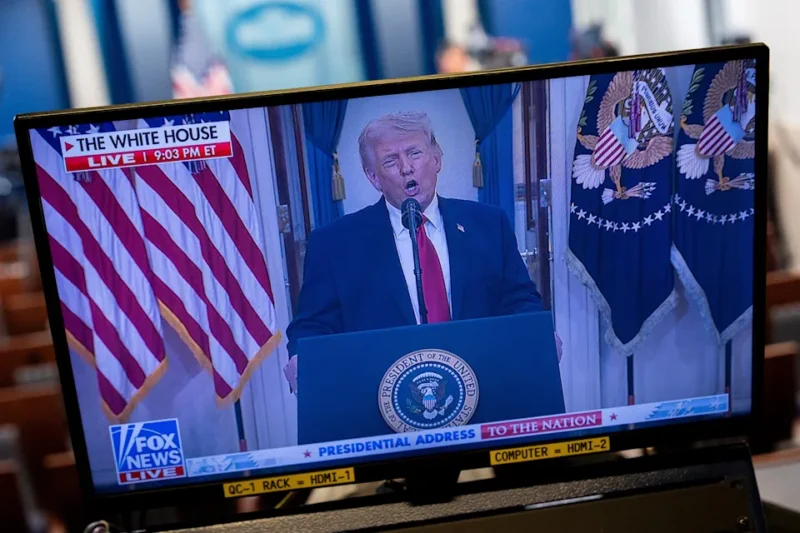
Iran Missile Strikes Continue as Trump Claims Tehran Threat Is Nearly Eliminated.
Explosions echoed across multiple cities just as Donald Trump addressed the American public, declaring that Iran was “no longer a threat.” Minutes later, missiles were already in the air.
On Thursday, Iran launched fresh strikes against Israel and Gulf states, underscoring a stark contradiction between political messaging and battlefield reality. Air defenses activated across the region—from Israel to Bahrain—while reports confirmed continued attacks even as Washington framed the war as nearing its strategic conclusion.
The sequence matters. It reveals a conflict operating on two tracks: narrative control and operational persistence.
By the third layer of this escalation, the gap is widening. Trump insists that U.S. and Israeli strikes have significantly degraded Iran’s capabilities. Tehran, however, signals the opposite—pointing to what it claims are intact stockpiles, hidden facilities, and an ongoing capacity to strike across multiple fronts.
The result is not clarity, but strategic ambiguity.
Iran’s approach appears calibrated. Rather than overwhelming force, it is sustaining pressure—targeting regional adversaries, disrupting shipping, and maintaining a tempo that signals resilience. Its most effective lever may not be missiles alone, but control over the Strait of Hormuz, where shipping traffic has dropped dramatically and energy markets remain under strain.
That economic dimension is now central. Oil prices have surged, supply chains are tightening, and countries far from the conflict are absorbing the cost. Even partial disruption has proven enough to reshape global energy flows, with some producers rerouting exports and others seeking alternatives altogether.
At the same time, the battlefield is expanding. In Lebanon, fighting involving Hezbollah continues alongside Israeli operations, while Gulf states remain exposed to Iranian strikes despite not being direct participants in the war. Casualty figures across multiple fronts continue to rise, reflecting a conflict that is both regional and fragmented.
There are also limits to what military action has achieved so far. Iranian officials argue that key facilities hit by U.S. strikes were “insignificant,” suggesting that core capabilities remain intact. Independent verification remains difficult, but the persistence of attacks reinforces the perception that Iran retains operational depth.
Meanwhile, international efforts to stabilize the situation remain cautious. Dozens of countries are exploring diplomatic pathways to reopen shipping routes, yet no major power has moved to forcibly secure the strait while active conflict continues. The risk of escalation remains too high.
The strategic contradiction is now unavoidable. Washington presents a narrative of nearing success. The battlefield presents a pattern of continued engagement.
That tension defines the current phase of the war.
If Iran can continue to strike while maintaining economic leverage through disrupted trade routes, it preserves influence even under sustained attack. If U.S. and Israeli operations intensify without delivering a decisive outcome, the conflict risks shifting into a prolonged phase of managed escalation.
The question, then, is not whether the threat has been reduced.
It is whether it has simply changed form—less visible, more distributed, and potentially harder to eliminate.
And in that shift, declarations of victory may arrive long before the war itself is ready to end.

Jamie Dimon Backs Iran War but Questions the Plan

Burkina Faso’s Military Leader Rejects Democracy

US F-15E Shot Down Over Iran as Search Underway for Missing Crew


-

 US-Israel war on Iran1 month ago
UK Refuses Iran Strike Access, Trump Fires Back
-
 Russia-Ukraine War1 month ago
Europe’s Spies Challenge Trump’s Ukraine Peace Optimism
-
 Top stories1 month ago
War Expands Across Region as Iranian Militias Join Fight
-
 Top stories1 month ago
India Turns to Brazil in Strategic Minerals Push Against China
-
 US-Israel war on Iran1 month ago
Iran Pledges ‘Never, Ever’ to Hold Bomb-Grade Material
-
 US-Israel war on Iran1 month ago
Syria Under Fire on Two Fronts
-
 Russia-Ukraine War1 month ago
Estonia Warns NATO Would Strike Deep Inside Russia if Baltics Are Invaded
-

 Top stories3 weeks ago
Meloni Breaks Ranks: Italy Warns on Iran War