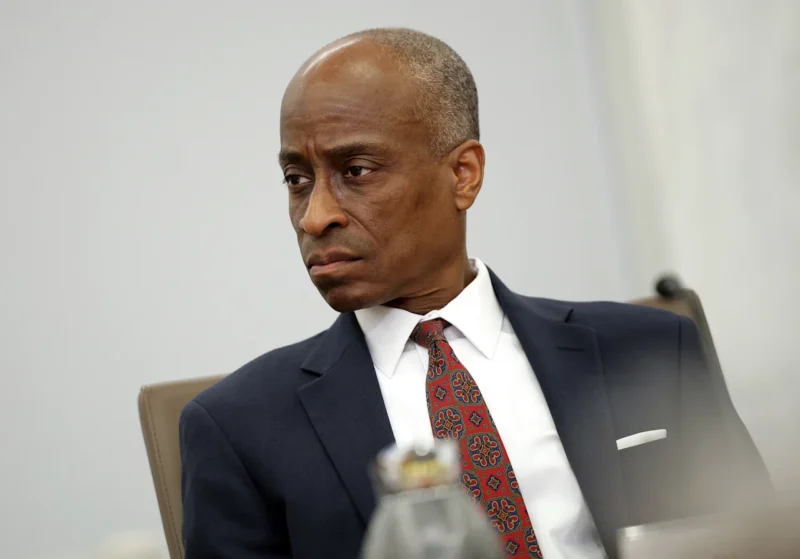
Top General Out—Pentagon Purge Signals New Military Direction.
At the Pentagon, the shift was swift—and unmistakable. Pete Hegseth moved to remove the Army’s top uniformed officer, asking Randy George to step down and retire immediately.
The official language was measured: gratitude for decades of service, best wishes for retirement. The underlying message was not. Leadership, according to officials, needed to align more closely with the administration’s vision.
George, the 41st Chief of Staff of the Army, had been expected to serve until 2027 after his Senate confirmation in 2023. A career infantry officer with deployments spanning the Gulf War, Iraq, and Afghanistan, he represented continuity within an institution built on long-term command stability.
That continuity has now been interrupted.
By the third layer of this decision, the significance moves beyond a single resignation. This is part of a broader recalibration of military leadership under the current administration—one that prioritizes strategic alignment over institutional tenure. More than a dozen senior officers have already been removed, including high-profile figures across multiple branches.
The reshaping is not isolated. Alongside George’s departure, two other senior Army leaders—Gen. David Hodne and Maj. Gen. William Green—were also pushed out, signaling a wider restructuring within the service’s command framework.
In the interim, Christopher LaNeve, the vice chief of staff and a figure closely tied to Hegseth, has been elevated to acting Army chief. Officials describe him as “trusted” to execute the administration’s priorities—language that underscores the central criterion now guiding leadership decisions.
There are competing interpretations of this shift.
Supporters argue that the changes reflect necessary modernization—installing leaders who can rapidly adapt doctrine, training, and force structure to evolving threats. In a period marked by simultaneous global conflicts and technological transformation, they say, alignment at the top is essential.
Critics see a different pattern: the erosion of a long-standing norm that senior military leadership operates with a degree of insulation from political direction. The removal of officers appointed under previous administrations, combined with the pace of turnover, raises concerns about whether continuity—and institutional independence—are being sacrificed.
There are also practical implications. The Army chief of staff plays a central role in shaping readiness, force deployment, and long-term planning. Abrupt leadership changes can disrupt those processes, particularly at a time when U.S. forces are engaged across multiple theaters.
Yet the administration’s approach suggests a different calculation. In a landscape defined by rapid escalation abroad and shifting priorities at home, adaptability may be valued over stability.
The strategic question is what this means for the military’s role going forward.
If leadership becomes more tightly aligned with political direction, decision-making may accelerate—but so may the risks of short-term thinking. If, instead, the changes produce a more cohesive command structure, they could strengthen execution during a period of heightened global tension.
For now, the signal from Washington is clear. The military is not just being asked to respond to new challenges—it is being reshaped to reflect a new way of defining them.
And in that process, even the highest ranks are no longer fixed points, but positions subject to rapid recalibration.