
Russia-Ukraine War
Ukraine’s Incursion into Russia’s Kursk Region Sparks Mass Evacuations and Scramble for Kremlin Response


Surprise Ukrainian Offensive Drives Thousands from Their Homes, Embarrasses Moscow, and Forces Military Reassessment
Ukraine’s recent cross-border offensive into Russia’s Kursk region has triggered mass evacuations and left Russian forces scrambling for an effective response. The surprise attack, which began on August 6, has seen Ukrainian troops and armored units push as far as 30 kilometers into Russian territory, marking the largest incursion into Russia since World War II. This unexpected development has caused widespread panic, with over 76,000 residents fleeing the affected areas.
The situation in the Kursk region remains “very tense,” according to local officials, as Ukrainian forces reportedly continue to hold positions in the town of Sudzha, located 10 kilometers from the border. The strategic significance of Sudzha, which houses an important natural gas transit station, adds to the Kremlin’s growing concerns.
This bold maneuver by Ukraine contrasts sharply with Russia’s ongoing attempts to breach Ukrainian defenses along the eastern front. It has also dealt a significant blow to President Vladimir Putin’s narrative that life in Russia remains largely unaffected by the war. The incursion has not only embarrassed the Kremlin but has also exposed critical vulnerabilities in Russia’s border defenses, sparking criticism from within.
Retired General Andrei Gurulev, a member of Russia’s parliament, openly criticized the military for its lack of preparedness, highlighting the inadequacy of troops and intelligence along the border. The incursion has forced Russia to reconsider its military strategy, potentially requiring the deployment of more assets to secure the extensive border with Ukraine.
The attack has also raised alarms internationally, as concerns grow over the possibility of further escalation. Analysts suggest that the toughest phase of Ukraine’s offensive is yet to come, with Russian reserves now being mobilized to counter the Ukrainian advance. This could lead to intense and prolonged battles, challenging both sides’ operational and strategic capabilities.
Meanwhile, tensions around the Zaporizhzhia Nuclear Power Plant, one of the world’s largest, have been reignited after a fire near the facility. The International Atomic Energy Agency (IAEA) confirmed that the blaze had no impact on the plant’s safety, but reiterated the severe risks posed by ongoing military activities around the site. The IAEA chief called for an immediate cessation of hostilities in the area to prevent a potential nuclear disaster.
As the situation evolves, Ukraine’s incursion into Russia underscores the unpredictability of the conflict and the increasing pressure on both sides to adapt to rapidly changing circumstances.
















The Iran war is no longer regional. Ukraine now wants strikes inside Russia. Here’s why.
The war surrounding Iran is beginning to reshape conflicts far beyond the Middle East, with Ukraine now urging a dramatic expansion of the battlefield—into Russia itself.
At a United Nations session, Ukraine’s ambassador Andriy Melnyk argued that Russian drone production facilities should be considered “legitimate targets,” citing Moscow’s growing military cooperation with Tehran. According to Ukrainian officials, Russia has supplied Iran with modernized versions of the Shahed drones—systems originally developed by Iran and widely used by Russian forces in Ukraine since 2022.
The message was clear: the wars are no longer separate.
Melnyk framed the Iran conflict as directly intertwined with Russia’s invasion of Ukraine, describing Moscow as a key enabler of Tehran’s military capabilities. By providing technology, production licenses, and reportedly even attack helicopters, Russia has, in Kyiv’s view, become an active participant in a broader network of conflict stretching from Eastern Europe to the Gulf.
That framing carries significant implications.
If accepted by Western partners, it could justify expanded military support to Ukraine—not only for defensive operations, but for deeper strikes into Russian territory targeting drone factories and supply chains.
Kyiv has already conducted limited strikes on such facilities, but officials argue that more advanced long-range weapons would increase their effectiveness.
The argument is strategic as much as tactical. By disrupting Russia’s drone production, Ukraine believes it can simultaneously weaken Moscow’s war effort at home and reduce the flow of technology that could empower Iran in the Middle East.
There is also an economic dimension.
Rising oil prices, driven in part by instability in the Strait of Hormuz, are providing Russia with a financial boost, offsetting some of the economic strain caused by sanctions. Ukrainian officials warn that the Iran war risks becoming a “lifeline” for Moscow, strengthening its ability to sustain operations in Ukraine.
This convergence of interests is reshaping how the conflict is perceived.
What once appeared as distinct regional crises—Ukraine on one side, the Middle East on the other—is increasingly viewed as a connected strategic environment. Military technologies, economic shocks, and geopolitical alliances are linking these theaters in ways that complicate efforts to contain escalation.
Melnyk’s call for strikes inside Russia reflects that shift. It suggests that Ukraine sees the Iran war not just as a distant conflict, but as part of a broader struggle that directly affects its own security.
Whether Western governments accept that argument remains uncertain. Expanding the scope of military operations into Russian territory carries obvious risks, including further escalation between NATO and Moscow.
But the fact that such proposals are now being openly discussed at the United Nations underscores how quickly the boundaries of the conflict are changing.
The Iran war is no longer confined to the Middle East. It is feeding into a wider geopolitical contest—one where actions in one region are increasingly shaping outcomes in another.
And as those connections deepen, the line between regional war and global confrontation continues to blur.
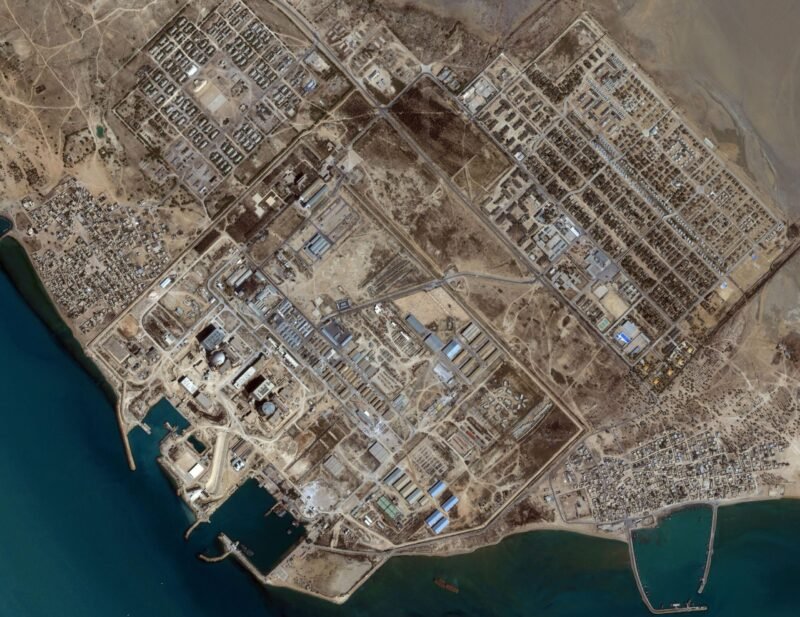
A missile landed near a reactor. Moscow is sounding the alarm.
FSB Chief Orders Protection for Military Officials While Rosatom Warns of “Regional Catastrophe” Risk at Iranian Plant.
Russia will strengthen security for senior military officials, the head of the Federal Security Service said Thursday, as concerns mount over targeted assassinations and rising regional instability linked to the war in Ukraine and escalating tensions in Iran.
Alexander Bortnikov, chief of the FSB, told state-run TASS that enhanced protection measures are being introduced for high-ranking officers. The move follows a series of assassinations of Russian military figures and prominent supporters of the Ukraine war, some of which Ukrainian intelligence has claimed responsibility for.
The announcement came as another senior Russian official warned of the risks surrounding Iran’s Russian-built Bushehr nuclear power plant after a projectile struck near the facility earlier this week.
Alexei Likhachev, head of state nuclear corporation Rosatom, called for the creation of a safety zone around the plant, describing any strike on the site as potentially catastrophic. He said there are 72 tons of fissile material and 210 tons of spent nuclear fuel stored there.
“If an incident were to occur, it would be at least regional in scale and would affect a large number of countries in the Middle East,” Likhachev said, warning that radiation exposure would spare no party in the event of a serious accident.
Iran confirmed that a projectile struck near the Bushehr facility amid ongoing U.S. and Israeli airstrikes. The International Atomic Energy Agency reported that a structure roughly 350 meters from the reactor was damaged but that the reactor itself remained intact and radiation levels were normal.
Bushehr is Iran’s only operational nuclear power plant. Rosatom constructed its first 1-gigawatt unit and is building additional reactors at the site. The company has already evacuated some personnel in recent weeks, with further reductions planned that would leave only a minimal staff presence.
Likhachev appealed to all sides in the conflict to designate the area an “island of safety,” noting that both the United States and Israel are fully aware of the plant’s coordinates.
The twin developments — heightened security in Russia and warnings over Bushehr — underscore how conflicts stretching from Ukraine to the Gulf are increasingly intersecting, raising fears that regional warfare could trigger broader strategic and nuclear risks.
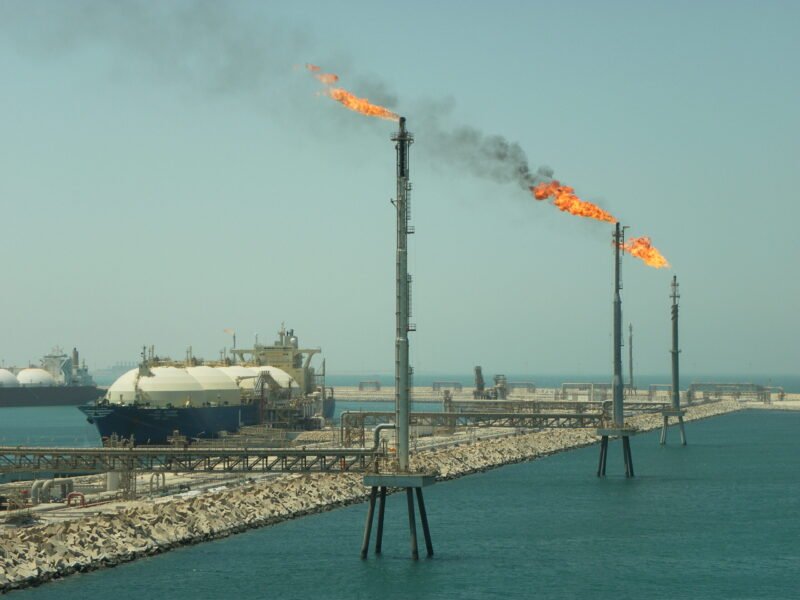
The battlefield is in the Gulf. The aftershocks could hit your grocery bill, your mortgage rate — and global markets.
Economists Warn the Iran War Could Trigger Prolonged Supply Disruptions, Inflation Pressures and Global Stagflation.
Financial markets appear calm. Oil has risen, but not yet spiraled. Equity indices remain resilient. Yet beneath the surface, economists warn that investors may be underestimating how deeply the Iran war could disrupt the global economy if it drags on.
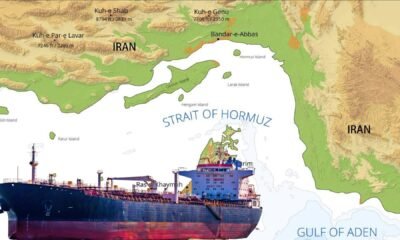
The most visible risk lies in the Strait of Hormuz, the narrow corridor through which roughly one-fifth of global oil and a significant share of liquefied natural gas flows. Even partial disruption there can ripple instantly through energy markets. For Asia and Europe — still adjusting to reduced Russian gas supplies after the Ukraine war — Gulf hydrocarbons remain critical.
Energy is only the first domino.
Higher oil and gas prices quickly feed into transport, manufacturing and electricity costs. That pressure spreads to food production, logistics and consumer goods. If the conflict persists for weeks rather than days, energy markets could tighten further, pushing inflation back upward just as central banks were beginning to contemplate rate cuts.
The risk is not merely inflation. It is inflation combined with slowing growth — the toxic mix known as stagflation.
Less visible vulnerabilities compound the danger. Helium, produced as a by-product of natural gas extraction, is essential for semiconductor manufacturing and medical imaging. Qatar supplies roughly a third of global helium. Disruptions to production or shipping could strain technology and healthcare sectors far beyond the Middle East.
Sulphur, another hydrocarbon by-product used in copper processing and industrial manufacturing, faces similar exposure. Fertiliser markets are particularly sensitive. With planting seasons underway across much of the world, any bottleneck in fertiliser supply could reduce crop yields months from now — translating into higher food prices later in the year.
Even if fighting subsides quickly, restarting damaged infrastructure is not instantaneous. Oil terminals, gas facilities and shipping routes require time and security guarantees to resume normal operations. Meanwhile, insurers may raise premiums for vessels operating in the Gulf, adding hidden costs to global trade.
Businesses are also reassessing risk. Shipping firms may divert routes. Investors may delay projects. Tourism and expatriate talent flows into Gulf economies could slow. Those shifts do not reverse overnight.
The United States, though more energy independent than in past crises, is not immune. Oil prices are set globally. Higher fuel costs influence consumer spending, corporate margins and political sentiment.
If policymakers are forced to choose between combating inflation and supporting growth, the global economy could enter a period of instability reminiscent of past energy shocks — though under far more interconnected financial conditions.
Markets often assume conflicts will be short and contained. History suggests otherwise. Should the Iran war stretch into a prolonged confrontation, today’s modest price movements may prove to be only the opening tremor of a much larger economic adjustment.
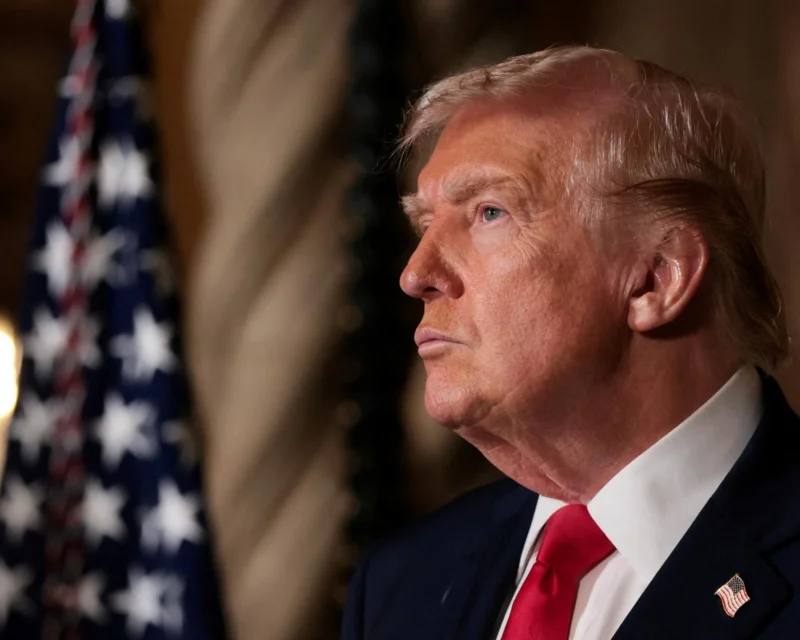
Why the Iran Conflict May Be Easier to Start Than to End — Even for a President Who Declares Victory.
Declaring “we won” is easy. Making Iran accept defeat is something else entirely.
President Donald Trump says the war with Iran is both a victory and “not finished yet.” It was a short “excursion,” he argues — but one that may require Tehran’s “unconditional surrender.” The contradiction captures a deeper problem: modern wars rarely end on command.
Military force can destroy infrastructure, eliminate leaders and degrade arsenals. It cannot easily manufacture political submission.
The White House appears caught in a familiar trap. History is crowded with examples of leaders who believed swift, surgical strikes would yield decisive political outcomes. The Soviet Union expected Afghanistan to fold quickly. The United States anticipated a rapid transformation of Iraq in 2003. Vladimir Putin assumed Ukraine would collapse within weeks. In each case, the initial shock did not translate into lasting political control.
Iran presents a similar dilemma.
The assassination of Supreme Leader Ali Khamenei was meant to decapitate the regime. Instead, hardliners consolidated power around his son, Mojtaba Khamenei — the very outcome Washington publicly opposed. The Islamic Revolutionary Guard Corps has framed the conflict not as a defeat, but as a call for endurance and revenge.
And endurance may be enough.
For Tehran, survival equals victory. The regime does not need to win militarily; it only needs to remain standing. It can absorb strikes, lose commanders, see launch sites destroyed — and still continue low-level retaliation. Missile salvos may shrink, drone attacks may thin out, but persistence alone keeps pressure on Washington.
The United States, by contrast, faces constraints. Sustained air campaigns deplete munitions stockpiles and strain budgets. Casualties erode public support. Oil prices climbing above $100 reverberate through global markets and domestic politics. As midterm elections approach, the appetite for a prolonged confrontation could narrow.
Airpower also has limits. It can weaken regimes. It has rarely forced ideological surrender. Over time, targets grow harder to isolate from civilian infrastructure, increasing the humanitarian and diplomatic costs of each strike.
Meanwhile, Tehran can escalate asymmetrically — through harassment in the Strait of Hormuz, cyber operations, or proxy attacks — without crossing thresholds that would justify full-scale American escalation. That calibrated resistance complicates any clean narrative of victory.
There is another strategic risk. Once a president repeatedly signals a desire to end a war, adversaries notice. If Iran believes Washington wants out, the incentive to simply endure grows stronger.
None of this means the conflict will spiral into a “forever war.” It is still in its early weeks. Quiet diplomacy or mutual exhaustion could produce a face-saving pause. Both sides might claim success. But the structural tensions would remain.
If the war winds down without decisive political change in Tehran, Iran’s leadership may emerge hardened rather than humbled — convinced that it survived the full force of American power. That perception alone could reshape its future strategy.
Starting a war is a presidential decision. Ending one is rarely within a single president’s control. Trump now confronts the oldest paradox in modern conflict: the easier it is to declare victory, the harder it is to secure it.
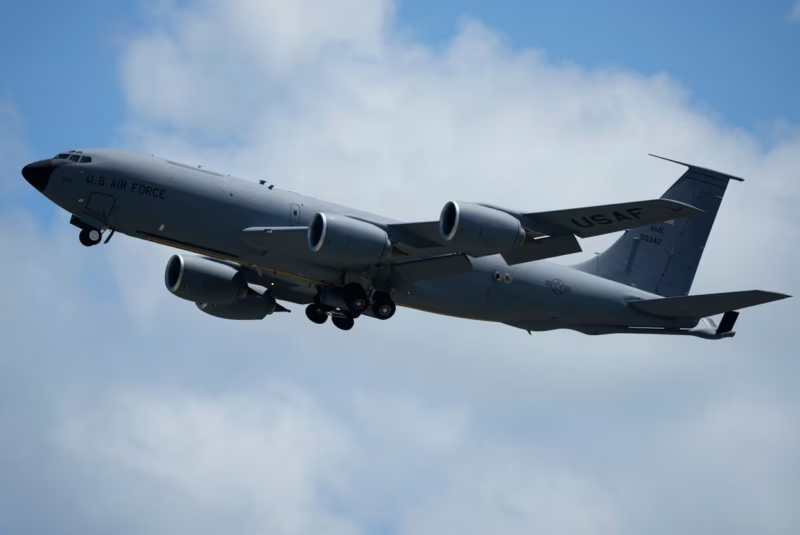
KC-135 Downed in Western Desert During Operation Epic Fury; Rescue Efforts Continue for Two Missing Airmen.
Another deadly setback in the Iran war: four U.S. crew confirmed dead after a refueling plane crashes in Iraq’s western desert.
Four of the six crew members aboard a U.S. military refueling aircraft were killed after their plane crashed in western Iraq, the U.S. military confirmed Friday, as search-and-rescue operations continued for the two remaining personnel.
The KC-135 tanker went down Thursday in Iraq’s vast western desert during what U.S. Central Command described as an incident in “friendly airspace” as part of Operation Epic Fury, the American campaign against Iran. Officials said the crash was not the result of hostile or friendly fire.
A second aircraft involved in the incident landed safely.
Rescue teams, including specialist recovery units deployed to the region, remain on the ground searching for the two missing crew members.
The crash marks the fourth U.S. aircraft lost since Washington and Israel launched strikes on Iran on Feb. 28. In earlier incidents, three U.S. Air Force fighter jets were mistakenly shot down by Kuwaiti air defenses, though all pilots in those cases ejected safely.
The western Iraqi desert, though sparsely populated, has long hosted bases linked to Iran-aligned Shia militias and has been the site of repeated Israeli and U.S. airstrikes. Since the conflict began nearly two weeks ago, pro-Iranian factions have stepped up attacks on foreign military installations across the region.
In Iraq’s autonomous Kurdistan region, French President Emmanuel Macron confirmed that a French soldier was killed in a separate drone attack — the first French military fatality of the war.
The pro-Iranian group Ashab al-Kahf later warned that French interests in Iraq and the wider region would be targeted following the deployment of a French aircraft carrier.
The United States has moved additional aircraft and naval assets into the Middle East as the conflict deepens. According to U.S. officials, 11 American service members have been killed since the start of hostilities, and as many as 150 have been wounded.
Six of those killed died when an Iranian drone struck a logistics operations center at a civilian port in Kuwait. They were Army Reserve personnel responsible for supply operations.
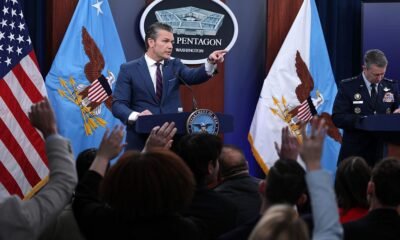
President Donald Trump and Defense Secretary Pete Hegseth have acknowledged that further American casualties are possible as the war continues.
With losses mounting and regional tensions escalating, the downing of the KC-135 underscores the growing risks facing U.S. forces as operations expand across multiple fronts in the Middle East.
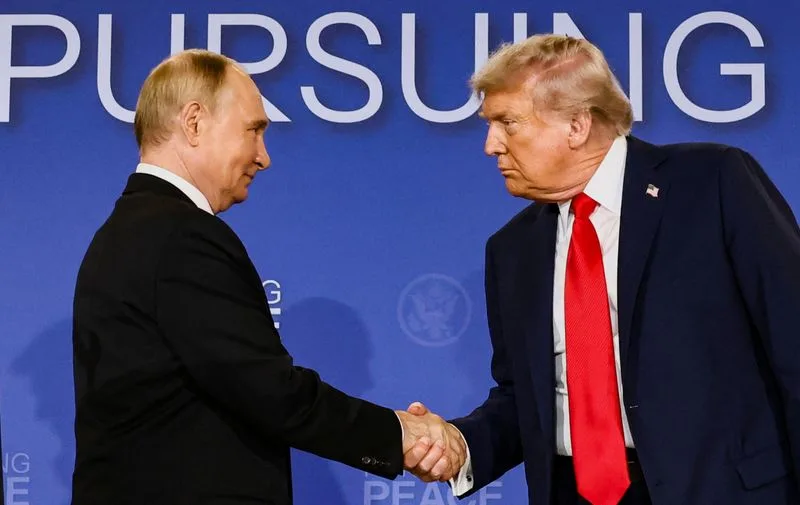
One phone call. Three wars. And oil at the center of it all.
U.S. Weighs Easing Russian Oil Sanctions as Leaders Discuss Iran Conflict and Ukraine Ceasefire.
U.S. President Donald Trump and Russian President Vladimir Putin spoke by phone Monday about the war in Iran, prospects for peace in Ukraine and the growing strain on global energy markets, as Washington considers easing sanctions on Russian oil to stabilize prices.
The call — their first publicly confirmed conversation this year — came amid sharp volatility in oil markets triggered by the U.S.-Israeli assault on Iran and Tehran’s threats to disrupt shipping through the Strait of Hormuz, a chokepoint that carries roughly 20 percent of global crude supplies.
Speaking at his golf club in Florida, Trump described the conversation as “very good,” saying Putin expressed interest in helping reduce tensions in the Middle East. “I said you could be more helpful by getting the Ukraine-Russia war over with,” Trump told reporters, signaling that ending the Ukraine conflict remains a U.S. priority.
Earlier Monday, Putin warned that the Iran conflict risked triggering a full-scale global energy crisis. He cautioned that oil production dependent on transit through the Strait of Hormuz could grind to a halt if fighting escalates further. Russia, the world’s second-largest oil exporter, is positioned to benefit from any prolonged disruption.
Against that backdrop, the Trump administration is weighing options to ease certain oil-related sanctions on Russia, according to sources familiar with internal discussions. The aim would be to increase global supply and cool prices that have surged since the outbreak of the Iran war. Any move could include targeted exemptions for countries such as India, which rely heavily on discounted Russian crude.
Trump confirmed that his administration was reviewing “certain oil-related sanctions” to help bring prices down but did not specify which countries would benefit.
The potential shift presents a delicate balancing act. Loosening restrictions could help stabilize markets and lower fuel costs, but it risks undermining efforts to restrict Moscow’s revenue stream as the war in Ukraine drags on.
Putin, meanwhile, reiterated that Russia remains open to long-term energy cooperation with Europe if political conditions allow — a signal that Moscow sees opportunity in the current turmoil.
The call underscores a widening geopolitical realignment driven by energy. As conflict in the Middle East collides with unresolved fighting in Ukraine, oil flows — and the leverage they create — are once again shaping diplomacy at the highest level.
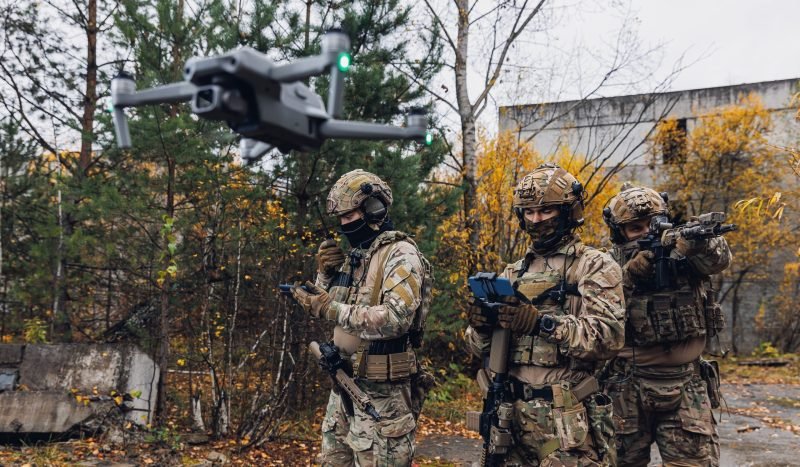
Ukraine Says 137 Drones Launched Overnight as Strikes Hit Apartment Blocks and Residential Areas
Another night, another wave of drones — and civilians once again in the line of fire.
Russian drones struck Ukraine’s second-largest city, Kharkiv, and the southeastern city of Dnipro late Monday and into the early hours of Tuesday, injuring more than 20 people and damaging residential buildings, Ukrainian officials said.
In Kharkiv, a drone hit near a high-rise apartment block, wounding seven people, shattering windows and setting cars ablaze, according to Mayor Ihor Terekhov and local police. A second overnight strike injured four more when a drone hit a road between residential buildings, Terekhov said in a message posted on Telegram.
From Oil Prices to Missile Stockpiles, the US-Iran Conflict Could Reshape the Battlefield in Eastern Europe.
If Washington is tied down in Tehran, what happens in Kyiv?
The widening war between the United States, Israel and Iran may appear geographically distant from Ukraine. Strategically, it is anything but. The trajectory of the Iran conflict — whether swift resolution, grinding stalemate or strategic overreach — carries direct consequences for Kyiv’s military position and political confidence.
Three broad scenarios stand out.
A quick U.S. success
If Washington forces Tehran into rapid concessions or regime restructuring, the immediate signal would be one of restored American deterrence. That could embolden U.S. policymakers elsewhere, reinforcing perceptions that American power remains decisive despite years of strain.
For Ukraine, such an outcome would likely lift morale and strengthen expectations of sustained Western backing. A demonstration of U.S. military effectiveness could reinforce confidence in Washington’s capacity to sustain pressure on Moscow.
However, there would also be economic consequences. A swift de-escalation in the Gulf would likely push oil prices lower, reducing revenue for Russia — a financial setback for the Kremlin’s war effort.
A prolonged war of attrition
A drawn-out conflict in the Persian Gulf would create a very different dynamic. Sustained missile exchanges and naval operations would consume large volumes of precision-guided munitions and air-defense interceptors — the same categories of equipment Ukraine relies on.
The U.S. and its NATO partners already face production constraints in replenishing advanced missile systems. If inventories are redirected to protect Gulf bases and allies, deliveries to Kyiv could slow further.
At the same time, prolonged instability would likely keep oil prices elevated, bolstering Russian export revenues. Higher energy income would provide Moscow with additional fiscal breathing room as it sustains operations in Ukraine.
Politically, global attention would drift. A major Middle Eastern war inevitably competes for diplomatic bandwidth, media focus and legislative funding priorities in Washington.
A stalemate
Perhaps the most complex outcome is an inconclusive standoff — one in which Washington scales back operations without achieving decisive change in Tehran.
Such a scenario could dent perceptions of U.S. leverage. For Kyiv, which depends heavily on American military and financial support, doubts about U.S. resolve or capacity would be unsettling.
At the same time, missile stockpile depletion in a stalemate scenario would still constrain Western resupply to Ukraine, regardless of political messaging.
The broader pattern is clear: the Iran war stretches U.S. resources across multiple theaters. Every interceptor launched over the Gulf is one less available elsewhere. Every additional deployment complicates long-term planning.
For Moscow, distraction and resource dilution are strategic advantages. For Kyiv, sustained focus and material flow are existential necessities.
The coming weeks in the Gulf will therefore resonate far beyond Tehran. In modern great-power competition, conflicts are rarely isolated. They overlap, interact and amplify each other — and Ukraine may soon feel the consequences of a war fought hundreds of miles away.

Yemen Sounds Alarm as Iran Eyes Bab al-Mandab

US Warns UK Against Scrapping King Charles Visit

Melania Trump Introduces Humanoid Robot at Global Summit


-

 Terrorism2 months ago
America Pulls Back From Somalia but Doubles Down Next Door
-

 Analysis2 months ago
How Chinese Speculators Set the Stage for the Gold and Silver Crash
-

 Top stories2 months ago
Rubio Signals Preemptive Military Option as U.S. Tightens Pressure on Iran
-
 Top stories2 months ago
France Blocks EU Push to Let Ukraine Buy British Storm Shadow Missiles
-
 Russia-Ukraine War1 month ago
Russian General Boasted of Torture and Killing of Ukrainian Prisoners
-

 US-Israel war on Iran1 month ago
UK Refuses Iran Strike Access, Trump Fires Back
-
 Russia-Ukraine War1 month ago
Europe’s Spies Challenge Trump’s Ukraine Peace Optimism
-
 Analysis2 months ago
Iran Warns, Qatar Mediates, Washington Deploys: A Crisis Managed in Public and Private