
Analysis
Analysis of Kenya’s Flood Situation and Recommendations for Mitigation

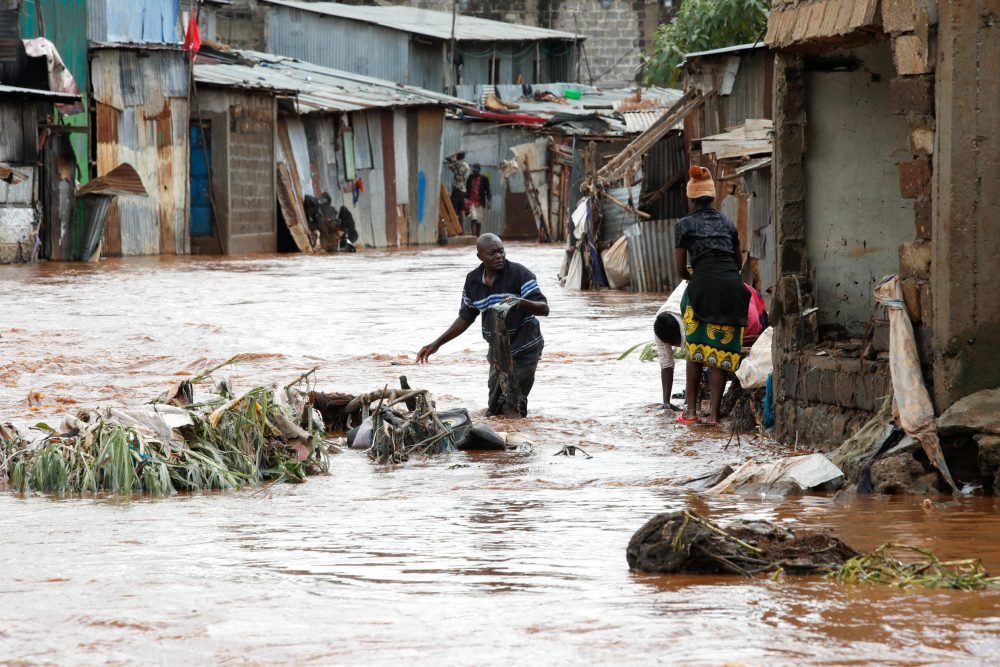
Analysis of Kenya’s Flood Situation and Recommendations for Mitigation
Overview: Kenya’s recent devastating floods, resulting in significant loss of life and property damage, highlight systemic issues in urban planning and land management. The analysis delves into the causes behind the escalating flood damage, primarily focusing on rural and urban areas. Sean Avery, an expert in flood and drainage studies, identifies key factors exacerbating flood risks and proposes targeted solutions to mitigate these risks.
Causes of Increased Flood Damage:
- Land Use Changes in Rural Areas: Settlements, roads, deforestation, livestock grazing, and cultivation have altered the natural landscape, leading to increased storm runoff and reduced groundwater recharge. The conversion of forested catchments into pasturelands significantly amplifies peak flood magnitudes, triggering landslides and infrastructure damage.
- Urbanization Pressure: Rapid urbanization, particularly in Nairobi, has led to encroachment into riparian zones and the destruction of natural flood buffers like wetlands. Informal settlements lacking drainage infrastructure exacerbate flood risks, as nearly all storm rainfall translates into rapid and catastrophic flooding.
- Settlement in Vulnerable Areas: People settling in low-lying areas and floodplains face inevitable inundation by floodwaters, exacerbating risks and damages.
- Groundwater Depletion in Nairobi: The proliferation of boreholes due to water supply shortages in Nairobi has led to aquifer compression and ground level subsidence, creating low spots prone to stormwater flooding.
Recommendations for Mitigation:
Rural Areas:
Regenerating natural vegetation cover in flood plains attenuates floods, reducing the force of runoff and erosion. Enforcement of laws protecting riverbanks and controlling livestock movements in riparian areas is essential.
Urban Areas:
- Address Corruption and Unsafe Developments: Combat corruption hindering the physical planning process, which allows inappropriate and unsafe developments to proliferate. Ensure adequate water supply, wastewater management, and solid waste disposal infrastructure.
- Enforce Laws Protecting Riparian Zones: Strict enforcement of laws protecting riparian zones against illegal developments is crucial. Demarcate riparian boundaries and designate buffer zones that cannot be developed to prevent further encroachment.
- Improve Stormwater Drainage Infrastructure: Municipalities must provide effective engineered stormwater drainage networks, including adequately sized channels, pipes, and culverts. Regular maintenance is vital to prevent blockages and ensure functionality before the onset of rains.
- Implement Flood Mitigation Measures: Develop flood storage basins where possible and address constrained channels causing upstream flooding. Reverse urban riparian zone encroachments and hold developers accountable to prevent further violations.
Conclusion: Kenya’s flood crisis underscores the urgent need for comprehensive measures to address the root causes of escalating flood damage. Balancing rural and urban solutions, including restoring natural habitats, enforcing laws, improving infrastructure, and combating corruption, is essential for sustainable flood mitigation and resilience building.










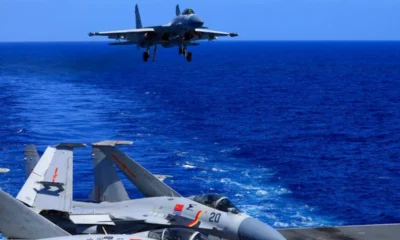



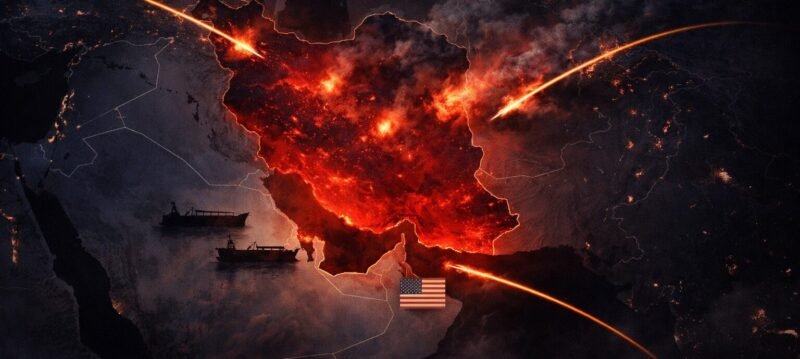
This war was never meant to see the spring of 2026. When the first cruise missiles crossed the Iranian border on February 28, the architects of the offensive spoke of a “decisive window”—a surgical strike to dismantle a regime’s nuclear ambitions and collapse its internal authority within weeks. Tehran, in turn, signaled that a 48-hour disruption of the global energy supply would send the West into a populist retreat.
Both were wrong. What began as a clinical confrontation has devolved into a grinding war of attrition, fueled not by a balance of power, but by a shared, stubborn logic of misperception.
The Nut Graph: The Architecture of Failure
The transition from a “Decisive Victory” to an “Open-Ended War” is the defining strategic failure of the decade. The conflict continues not because either side is nearing a win, but because both Washington and Tehran mistakenly believe that victory remains achievable using the same failed tools.
By misidentifying each other’s points of vulnerability—Washington looking for a domestic collapse that never came, and Tehran seeking an economic leverage that didn’t exist—the two powers have entered a self-sustaining cycle where time, once considered an ally, has become the primary enemy.
The Washington Fallacy: The Myth of the Internal Fracture
The U.S. strategy rested on a classic Western wager: that the Iranian populace, crushed under the combined weight of “obliterated” power plants and hyper-sanctions, would finally turn against the clerical establishment. It was a strategy built on conventional sociology, but it ignored the “survivalist DNA” of the Iranian state.
External threats, historically, do not fracture the Iranian system; they cauterize it. The coercive capacity of the IRGC, combined with an ideological framework that prioritizes regime survival above civilian comfort, has allowed the state to absorb immense pressure. Instead of an internal upheaval, Washington found a “cohesion of crisis,” where the cost of dissent during a hot war became prohibitively high.
The Tehran Paradox: A Weapon That Hit the Wrong Target
Tehran’s counter-strategy was equally flawed. The gamble was that by “making the world bleed” through the closure of the Strait of Hormuz and attacks on Gulf energy infrastructure, the global community would force a U.S. retreat.
However, Tehran overlooked a structural reality of the 2026 global economy: the United States, as a major energy producer protected by geography, is relatively insulated from the shocks it helped create. The true victims of Iran’s “Energy War” were not the decision-makers in Washington, but the industrial engines of China, India, and Europe.
By targeting the energy security of the “host countries” and neutral neighbors, Tehran didn’t pressure its primary adversary; it merely alienated its remaining diplomatic lifelines.
Human Color: The Sound of the Grind
In the streets of Riyadh and the boardrooms of Dubai, the war is felt in the “crystalline rain” of intercepted debris and the fluctuating glow of a strained power grid. In Iran, it is the silence of the shuttered petrochemical plants in Khuzestan.
These are the sensory markers of a war of attrition—a conflict that has moved beyond military objectives to target the very “Professional Domain” that sustains modern society.
The Iranian assumption that missile strikes would exhaust Israeli society similarly failed to account for a decade of civilian hardening. The “Iron Dome” and “David’s Sling” systems did more than intercept metal; they intercepted the psychological impact Tehran was counting on.
The Strategic Reflection: A War Without an Exit
The harsh conclusion of 2026 is that miscalculations do not cancel each other out—they amplify their costs. With every expired 48-hour ultimatum and every retaliatory drone strike, the “Strategic Coherence” of both sides degrades.
We are now witnessing a war that continues simply because both sides are too invested in their initial errors to admit that the shortcut to victory has become a long, dark path to exhaustion.
For the strategists and leaders watching from the Gulf, the lesson is clear: when you misidentify your enemy’s breaking point, you ensure that your own resources will be the first to break.
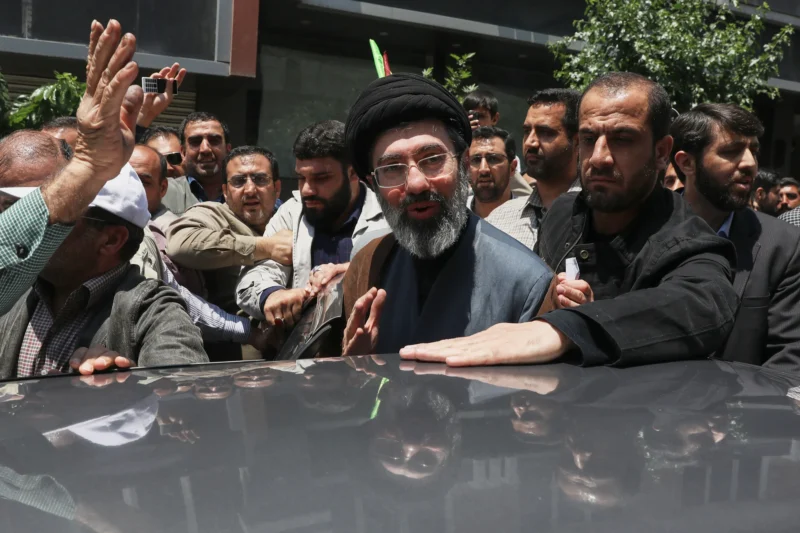
A Harder Iran May Emerge From War—Weaker Militarily, Stronger Internally.
In Tehran, power is shifting quietly.
Airstrikes have hit infrastructure, commanders have been killed, and military capabilities have been degraded. Yet inside the system, something else is taking place: not collapse, but consolidation. What is emerging is a more centralized, security-driven order—one increasingly defined by the dominance of the Islamic Revolutionary Guard Corps.
This transformation reflects a familiar pattern in wartime regimes.
By the third layer of this conflict, external pressure is not loosening control—it is tightening it. As political space narrows, authority migrates toward institutions built for survival: intelligence services, paramilitary networks, and internal security organs. In Iran, that shift has been underway for years. The war is accelerating it.
There are two competing realities.
On one hand, Iran’s conventional and nuclear capabilities have been significantly weakened by sustained strikes. On the other, the internal balance of power is tilting toward more hardline actors—those least inclined toward compromise and most invested in coercion.
That contradiction matters.
Historically, weakening a state’s external capabilities does not necessarily moderate its behavior. In some cases, it produces the opposite effect: a system that compensates for strategic losses with increased repression and asymmetric leverage.
The Strait of Hormuz is central to that leverage.
By restricting access to one of the world’s most critical energy routes, Iran has demonstrated that it retains the capacity to shape global markets even as its military assets are degraded. The blockade transforms geography into influence—allowing Tehran to project power without direct confrontation.
There are also internal dynamics at play.
The loss of senior figures has created openings within the hierarchy. Promotions are increasingly driven by loyalty rather than expertise, reinforcing a system that prioritizes control over competence. Decision-making may become less coordinated, but more uncompromising.
At the same time, public pressure inside Iran is rising—driven by economic strain, disruption, and uncertainty. Yet these pressures do not necessarily translate into reform. For a system oriented around survival, internal dissent often leads to tighter control, not political change.
The United States, under Donald Trump, has framed the campaign as a decisive effort to eliminate threats. But the strategic question is no longer limited to battlefield outcomes.
It is about what comes after.
There are competing interpretations of the trajectory. Some argue that sustained pressure could eventually force concessions or weaken the regime’s grip. Others warn that the current path risks producing a more rigid, militarized state—less capable in conventional terms, but more willing to use disruptive tools.
That second scenario carries broader implications.
A state that is weaker but more ideologically hardened, and still able to influence global energy flows, may prove harder to contain. Its incentives shift—from projecting stability to managing crisis as a form of leverage.
The debate over ceasefire reflects this tension.
In Western frameworks, a ceasefire implies de-escalation and a path toward resolution. In Tehran’s evolving system, pauses may function differently—tactical adjustments within a longer cycle of confrontation.
That divergence complicates diplomacy.
What is unfolding is not simply the degradation of a regime, but its reconfiguration.
And in that reconfiguration lies the central risk: that the war produces not a more compliant Iran, but a more controlled, more insular, and potentially more unpredictable one.
Because in conflicts like this, weakening a state is not the same as reshaping it.
And the difference can define the next phase of instability.
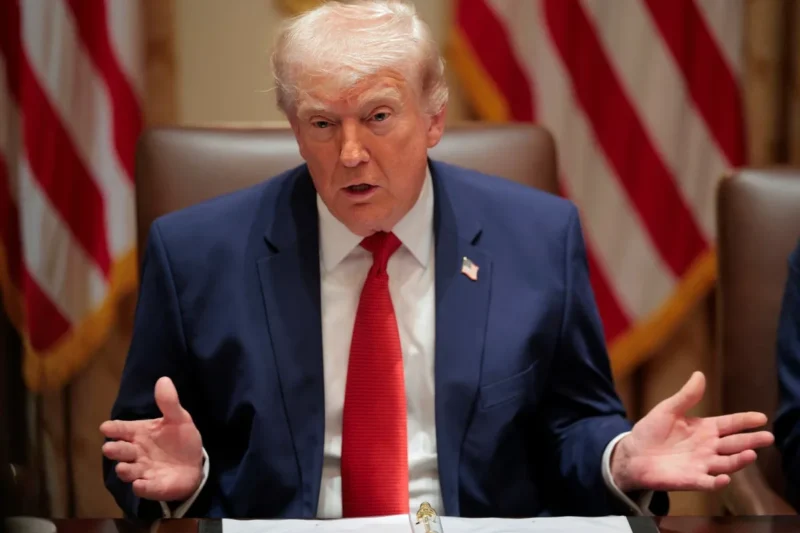
“48 Hours to Hell”—Trump’s Iran Ultimatum Raises Stakes as Rhetoric and Strategy Collide Over Hormuz.
The deadline is blunt. The language, even more so.
Donald Trump has issued a stark warning: reopen the Strait of Hormuz within days—or face overwhelming force. The phrasing, delivered through social media, strips away the traditional diplomatic language that usually surrounds military escalation.
But the message is not just about Iran. It is about how this war is being framed.
By the third layer of analysis, the significance lies less in the threat itself—military escalation has already been underway—and more in the rhetoric shaping it. Trump’s language abandons the calibrated ambiguity that has long defined U.S. war messaging. Instead, it embraces directness, even brutality, projecting strength through confrontation rather than restraint.
That shift has consequences.
Historically, U.S. administrations have relied on carefully constructed language—“operations,” “stabilization,” “deterrence”—to frame military action within legal and political boundaries. Even controversial campaigns were often wrapped in terms that softened their perception.
Now, that linguistic buffer is eroding.
Statements emphasizing destruction, “lethality,” and overwhelming force are not merely stylistic. They signal a broader recalibration—one where the projection of power is itself part of the strategy. In this framework, rhetoric becomes a tool of deterrence, intended to shape adversary behavior through fear and uncertainty.
There are competing interpretations.
Supporters argue that clarity strengthens deterrence. By removing ambiguity, the United States communicates resolve, reducing the risk of miscalculation by adversaries like Iran. In a region where signals are often tested, direct threats may be seen as more credible than nuanced diplomacy.
Critics, however, see a different risk.
Unrestrained language can narrow diplomatic space, making de-escalation more difficult. It can also blur the line between signaling and commitment—raising the stakes of any response. When rhetoric escalates faster than strategy, it can lock decision-makers into paths that are harder to reverse.
There is also a legal and institutional dimension.
The avoidance of formal terms like “war” reflects ongoing tensions between executive authority and congressional oversight in the United States. By framing the conflict through alternative language, the administration maintains operational flexibility—while sidestepping debates that a formal declaration would trigger.
Meanwhile, the strategic environment continues to tighten.
The Strait of Hormuz remains partially restricted, energy markets are volatile, and global supply chains are under pressure. The ultimatum, therefore, is not only military—it is economic, aimed at restoring a critical artery of global trade.
Yet the underlying question remains unresolved.
What is the end state?
The administration has emphasized pressure—reopening shipping lanes, degrading Iran’s capabilities—but has offered limited clarity on what follows. Without a defined political outcome, escalation risks becoming an end in itself rather than a means to a broader objective.
This is where rhetoric and strategy intersect.
Language can project power. It can shape perceptions. But it cannot substitute for a coherent long-term plan.
And as the deadline approaches, the risk is not only that the threat will be carried out—but that it will deepen a conflict whose trajectory is already becoming harder to control.
Because in modern warfare, how leaders speak about war can be as consequential as how they fight it.
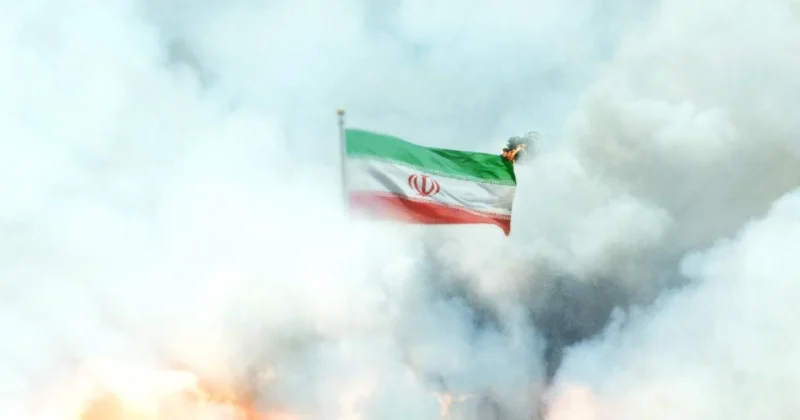
The glass didn’t shatter with an explosion. It cracked under falling debris.
On a humid night in Dubai, fragments from an intercepted projectile struck a building linked to Oracle Corporation, sending shards onto the pavement below. There were no casualties. No sirens. Just a brief disruption—almost mundane by wartime standards.
But the location made it something else entirely.
For years, districts like Dubai Internet City symbolized insulation—zones where global capital, cloud infrastructure, and executive decision-making operated far from regional instability. That illusion is now harder to sustain.
By the third layer of this conflict, the significance becomes clear: the battlefield is no longer confined to deserts, coastlines, or military installations. It is expanding into commercial ecosystems once considered neutral. The war that began with strikes on Iran is now testing the resilience of the global digital and financial architecture itself.
The implications extend beyond symbolism.
In the Strait of Hormuz, maritime traffic has become conditional—filtered through political alignment and perceived affiliations. Ships move, but selectively. Insurance costs rise. Delays compound. What was once a high-volume artery of global trade now operates under a logic of risk management rather than efficiency.
Onshore, the atmosphere has shifted in subtler ways.
Across Gulf cities, daily life continues—but with a new undertone. In Bahrain and elsewhere, residents describe the physical sensation of nearby interceptions: vibrations, fragments, the quiet realization that proximity to conflict is no longer abstract. The geography of risk is expanding, even if the scale of incidents remains limited.
Diplomatically, positions are hardening.
Iran’s leadership has issued stark warnings about escalation, particularly around sensitive infrastructure such as nuclear facilities.
In Washington, Donald Trump has maintained a posture of pressure, emphasizing control over maritime routes and strategic dominance. Meanwhile, divisions within the United Nations Security Council have constrained collective action, leaving the conflict to evolve without a unified diplomatic framework.
There are competing interpretations of what this moment represents.
Some view incidents like the Dubai strike as isolated—byproducts of a contained conflict that has not fundamentally altered the region’s commercial viability. Others see them as early signals of a broader shift, where the boundaries between military and economic spaces continue to erode.
For global business, that distinction matters less than the outcome.
Risk is being recalibrated in real time. Data centers, logistics hubs, and financial corridors—once evaluated primarily through efficiency and cost—are now assessed through exposure and resilience. The question is no longer whether operations can be optimized, but whether they can be protected.
There are limits to how far this shift will go.
The Gulf’s infrastructure remains among the most advanced in the world, and its role in global trade is not easily replaced. Markets have a tendency to adapt, to absorb shocks, and to return to equilibrium.
But adaptation does not erase precedent.
What has changed is the perception of distance. The idea that certain spaces—commercial, digital, financial—exist outside the reach of conflict is being challenged.
And once that perception shifts, it rarely returns to its previous state.
The war has not reached every boardroom.
But it no longer needs to.
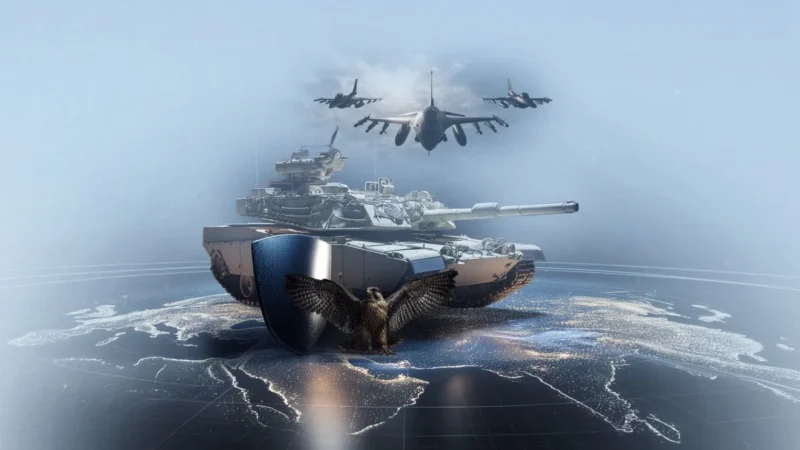
A Force Without Unity—Why an Arab Joint Security Force Remains Unlikely Despite Rising Regional Threats.
In moments of crisis, ideas often move faster than reality. Across the Arab world, renewed calls for a joint security force have surfaced as the war with Iran intensifies and regional vulnerabilities become more visible.
On paper, the concept is straightforward: a unified military framework capable of defending Arab states against external threats. In practice, it remains elusive.
The gap between the idea and its feasibility reveals deeper structural limits within the regional system.
By the third layer of this debate, the most immediate obstacle is strategic alignment. Military alliances are built around a clearly defined threat. During the World War II, disparate powers aligned against a single adversary. NATO later formed around a shared perception of Soviet expansion.
In the Arab context, that clarity does not exist.
Even now, amid direct tensions, there is no consensus on whether Iran constitutes a common enemy. Some states view Tehran as a strategic threat; others maintain pragmatic or even cooperative ties. Without agreement on the nature of the threat, a unified military doctrine becomes difficult to define—let alone execute.
The second constraint lies in state capacity.
Several Arab countries are dealing with internal instability, economic strain, or unresolved conflicts. Military alliances depend not only on intent but on institutional strength—coherent command structures, sustainable funding, and political continuity. By comparison, NATO’s effectiveness is underpinned by stable economies and coordinated defense spending at scale.
In contrast, the regional landscape is uneven. Some states possess advanced capabilities; others struggle to maintain basic security. That imbalance complicates any attempt to build an integrated force.
There is also a third, less visible factor: public sentiment.
Across parts of the region, political narratives and media discourse have shaped perceptions of global conflicts in ways that do not always align with government positions. In some cases, segments of the public express sympathy for actors confronting Western powers, even when those actors are in tension with neighboring states.
That divergence matters.
Governments operating without domestic consensus face limits on how far they can commit to collective military action. External alignment can quickly translate into internal pressure, particularly in times of heightened tension.
There are counterarguments. Advocates of a joint force point to shared geography, cultural ties, and common security challenges as a foundation for cooperation. They argue that fragmented responses leave states vulnerable and that collective defense could enhance deterrence.
But those arguments often assume a level of cohesion that has yet to materialize.
The role of Arab League illustrates the broader pattern. It remains effective as a platform for political coordination and symbolic unity, but it has not evolved into a mechanism for integrated military planning or operations.
That distinction is not incidental—it reflects the limits of the system itself.
The strategic reality is that security in the region continues to be shaped through bilateral partnerships, ad hoc coalitions, and external alliances rather than a unified Arab framework.
For now, the concept of an Arab joint security force functions more as an expression of aspiration than a blueprint for action.
And in a region where alignment remains fluid, capacities uneven, and priorities divided, the challenge is not designing such a force.
It is creating the conditions under which it could realistically exist.
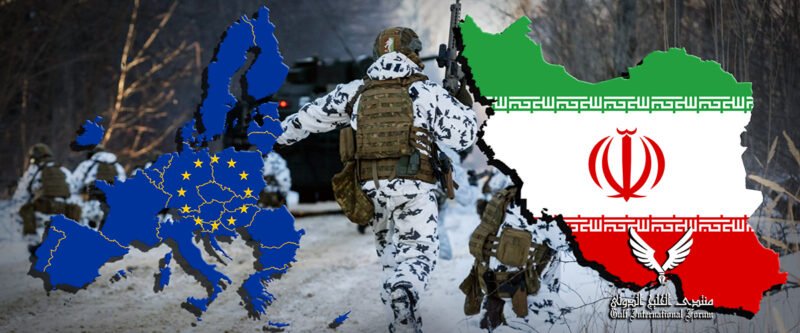
How the Ukraine and Iran Wars Are Merging into a Single Strategic Conflict.
In Kyiv, drones strike Russian oil facilities. In the Gulf, similar drones hit U.S. positions. The distance between these battlefields is vast—but the technology, intelligence, and consequences are increasingly shared.
What once appeared as two separate wars—Russia’s invasion of Ukraine and the U.S.-Israel confrontation with Iran—are beginning to converge into a single strategic system.
The overlap is not theoretical. It is operational.
Russia’s use of Iranian-made drones in Ukraine marked the first link. Now, according to multiple assessments, Moscow is returning the favor—providing intelligence, targeting support, and potentially advanced drone systems to Tehran. That exchange has transformed the relationship from transactional to integrated.
By the third layer of this shift, the implications become global. Battlefield outcomes in one theater are directly shaping the other. When Iran disrupts the Strait of Hormuz, oil prices rise—benefiting Russia and easing pressure on its war economy. When Ukraine strikes Russian energy infrastructure, it attempts to offset that advantage, targeting up to 40% of export capacity in recent weeks.
The wars are now economically linked.
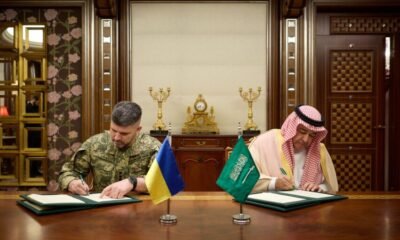
They are also diplomatically entangled. Volodymyr Zelenskyy has leveraged the Middle East conflict to deepen ties with Gulf states, offering drone and counter-drone technology to countries like Saudi Arabia and the United Arab Emirates. Ukraine is no longer just a recipient of aid—it is positioning itself as a security provider.
That evolution complicates traditional alliances.
Meanwhile, the United States faces a strategic dilemma. Officially, Washington treats the wars as separate. In practice, its policies are linking them—easing pressure on Russia’s energy exports while simultaneously confronting Iran. Critics argue this approach risks strengthening Moscow at the very moment it is assisting Tehran.
There are competing interpretations of this convergence.
Some analysts see it as a coordinated axis forming—Russia and Iran aligning against Western influence across multiple fronts. Others caution that the overlap is opportunistic rather than orchestrated, driven by shared interests rather than a unified command.
But even without formal coordination, the effect is the same: escalation in one theater amplifies pressure in another.
There are also second-order consequences. Countries far from both conflicts—particularly in Asia—are turning to Russian energy supplies as Hormuz disruptions tighten markets. European states are increasingly concerned about being drawn into a broader confrontation that stretches from Eastern Europe to the Middle East.
The risks extend beyond conventional warfare. As Fiona Hill has argued, the conflict already operates across cyber, economic, and hybrid domains—blurring the line between localized war and systemic confrontation.
That raises a deeper question: are these still separate wars, or are they becoming different fronts of a single, evolving conflict?
The answer may lie in how they end—or fail to.
If the current trajectory holds, the world is moving toward a model of interconnected conflict, where alliances are fluid, battlefields are dispersed, and outcomes are interdependent. Victory in one arena will not be isolated; it will ripple outward, reshaping balances elsewhere.
For now, the wars remain formally distinct.
But in strategy, economics, and technology, they are already merging.
And once conflicts begin to overlap in that way, separating them again becomes far harder than fighting them.
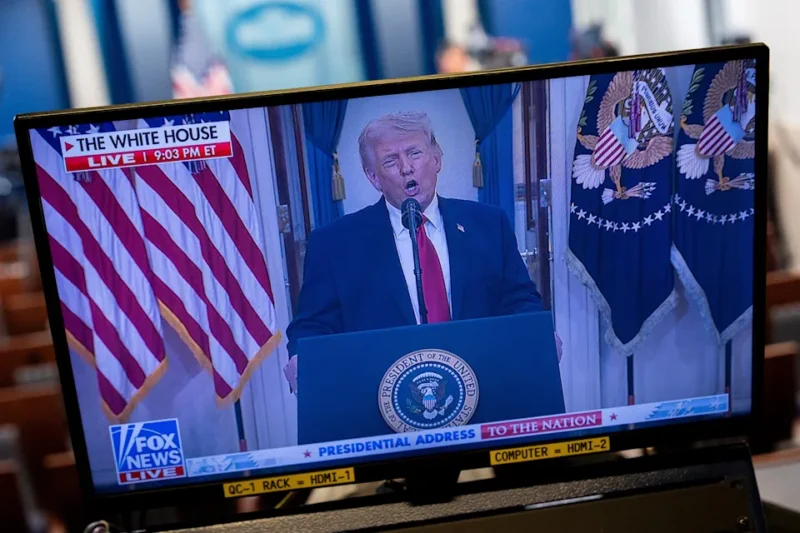
Iran Missile Strikes Continue as Trump Claims Tehran Threat Is Nearly Eliminated.
Explosions echoed across multiple cities just as Donald Trump addressed the American public, declaring that Iran was “no longer a threat.” Minutes later, missiles were already in the air.
On Thursday, Iran launched fresh strikes against Israel and Gulf states, underscoring a stark contradiction between political messaging and battlefield reality. Air defenses activated across the region—from Israel to Bahrain—while reports confirmed continued attacks even as Washington framed the war as nearing its strategic conclusion.
The sequence matters. It reveals a conflict operating on two tracks: narrative control and operational persistence.
By the third layer of this escalation, the gap is widening. Trump insists that U.S. and Israeli strikes have significantly degraded Iran’s capabilities. Tehran, however, signals the opposite—pointing to what it claims are intact stockpiles, hidden facilities, and an ongoing capacity to strike across multiple fronts.
The result is not clarity, but strategic ambiguity.
Iran’s approach appears calibrated. Rather than overwhelming force, it is sustaining pressure—targeting regional adversaries, disrupting shipping, and maintaining a tempo that signals resilience. Its most effective lever may not be missiles alone, but control over the Strait of Hormuz, where shipping traffic has dropped dramatically and energy markets remain under strain.
That economic dimension is now central. Oil prices have surged, supply chains are tightening, and countries far from the conflict are absorbing the cost. Even partial disruption has proven enough to reshape global energy flows, with some producers rerouting exports and others seeking alternatives altogether.
At the same time, the battlefield is expanding. In Lebanon, fighting involving Hezbollah continues alongside Israeli operations, while Gulf states remain exposed to Iranian strikes despite not being direct participants in the war. Casualty figures across multiple fronts continue to rise, reflecting a conflict that is both regional and fragmented.
There are also limits to what military action has achieved so far. Iranian officials argue that key facilities hit by U.S. strikes were “insignificant,” suggesting that core capabilities remain intact. Independent verification remains difficult, but the persistence of attacks reinforces the perception that Iran retains operational depth.
Meanwhile, international efforts to stabilize the situation remain cautious. Dozens of countries are exploring diplomatic pathways to reopen shipping routes, yet no major power has moved to forcibly secure the strait while active conflict continues. The risk of escalation remains too high.
The strategic contradiction is now unavoidable. Washington presents a narrative of nearing success. The battlefield presents a pattern of continued engagement.
That tension defines the current phase of the war.
If Iran can continue to strike while maintaining economic leverage through disrupted trade routes, it preserves influence even under sustained attack. If U.S. and Israeli operations intensify without delivering a decisive outcome, the conflict risks shifting into a prolonged phase of managed escalation.
The question, then, is not whether the threat has been reduced.
It is whether it has simply changed form—less visible, more distributed, and potentially harder to eliminate.
And in that shift, declarations of victory may arrive long before the war itself is ready to end.
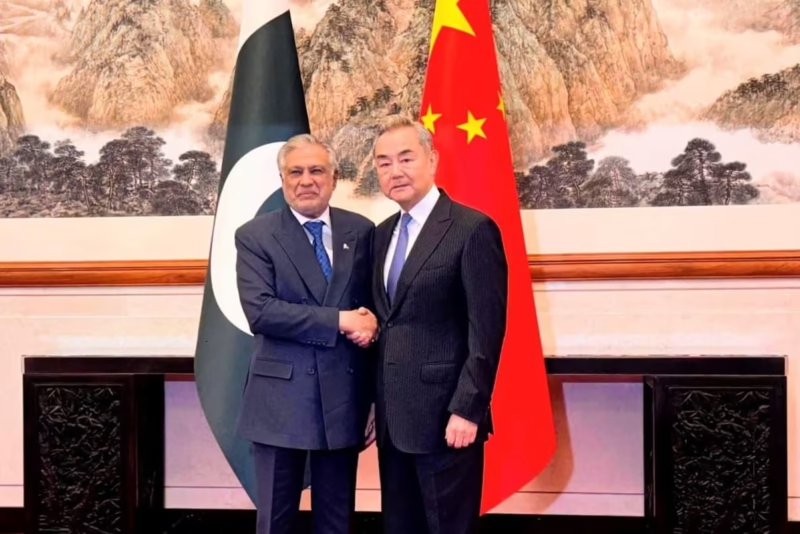

Not Nuclear—Yet: Why the Real Danger Lies After the War

UAE Plant Shuts After Intercepted Missiles Rain Down

The Architecture of Exhaustion: A War Without an Exit


-

 TECH3 weeks ago
China Bets on an AI-Powered Military Future
-
 US-Israel war on Iran2 weeks ago
Waves of Mystery Drones Breach U.S. Nuclear Base Airspace
-

 Terrorism7 days ago
Egypt Uncovers Alleged Plan to Down Presidential Plane
-
 US-Israel war on Iran2 weeks ago
Saudi Arabia Warns of Military Action After Iranian Missile Strike
-
 US-Israel war on Iran2 weeks ago
Former CIA Chief Blames White House for Escalating Iran War Crisis
-
 Top stories1 week ago
Saudi Arabia Deepens Defense Ties with Ukraine
-

 US-Israel war on Iran2 weeks ago
Iran’s Guard Leadership Hit Hard in Escalating Strikes
-
 Analysis2 weeks ago
Inside the IRGC’s Quiet Rebuild of Hezbollah