Sudan’s China Copper Deal: Is the SAF Mortgaging the Country’s Future?
Sudan’s military-led authorities are facing growing accusations that they are preparing to bind the country to a decades-long Chinese copper concession while Sudan remains at war, without an elected parliament, public consultation or publication of the full agreement.
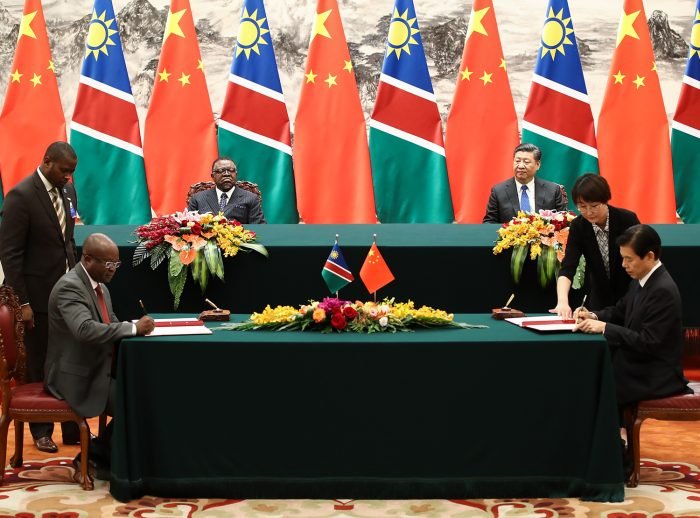
The controversy centers on reports that Sudan’s minerals minister travelled to Beijing to negotiate a 30-year copper exploration agreement in Red Sea State.
The Eastern Sudan Advisory Council says the proposed arrangement would leave Sudan with only 30 percent of profits and could allow Chinese debts to be deducted from future mineral revenues.
The reported investment value is approximately $300 million, although the complete agreement has not been publicly released and its terms have not been independently confirmed.
That uncertainty is itself the central problem.
Sudan desperately needs foreign investment. But a wartime government without an electoral mandate should face a much higher threshold of transparency before committing strategic resources for a generation.
The political sensitivity intensified after China cancelled four interest-free Sudanese loans worth approximately $50 million in June.
The debt waiver was formally presented as a separate agreement, and there is no published evidence proving that Beijing exchanged the debt relief directly for copper rights.
Yet the timing has fueled suspicion.
To critics, Sudan receives limited immediate financial relief while China positions itself for long-term access to a mineral increasingly essential to electricity grids, renewable energy, electric vehicles and global industrial supply chains.
Analyst Cameron Hudson described the broader Chinese engagement as carrying political value for the SAF-led authorities because foreign agreements help them project the image of legitimate state authority during the civil war.
That may ultimately be the most valuable commodity being exchanged.
Not copper.
Legitimacy.
Eastern Sudanese organizations have demanded that long-term mineral agreements be suspended until the war ends and representative institutions exist to scrutinize them. Their objections include the absence of legislative oversight, local consultation and transparent environmental and economic assessments.
The dispute therefore raises a question larger than whether Sudan negotiated a good mining deal.
Who has the authority to sell the economic future of a country at war?
The concern is amplified by the broader political environment around the Sudanese Armed Forces.
Reuters documented in 2025 that Islamist networks associated with the former Bashir-era political system had regained influence by supporting the SAF militarily, with thousands of Islamist-linked fighters participating alongside the army.
SAF officials have denied that Islamists control the military, but the movement’s growing wartime influence has become an established element of Sudan’s political struggle.
That distinction matters.
It would be inaccurate to state as established fact that “the Muslim Brotherhood controls the copper agreement.” There is currently insufficient public evidence for that conclusion.
But it is legitimate to ask whether a military government increasingly dependent on Islamist-aligned political and military networks should be allowed to make irreversible decisions over Sudan’s strategic resources without democratic oversight.
China, meanwhile, is expanding across precisely the sectors that will matter most in any postwar Sudan.
Its companies have longstanding interests in Sudanese energy and mining. Chinese firms are also examining port infrastructure and mineral opportunities, while China remains an important economic partner to authorities operating from Port Sudan.
For Beijing, this is rational statecraft.
Sudan contains valuable minerals, sits on the Red Sea and will eventually require enormous reconstruction investment.
For Sudan, however, wartime weakness creates bargaining risk.
A stable government can negotiate competitively, publish contracts, demand environmental safeguards and ensure that local communities receive infrastructure and employment.
A government fighting for survival negotiates from a different position.
Its priority may be obtaining money, diplomatic recognition and immediate political support.
That is precisely why generational agreements signed during war deserve exceptional scrutiny.
WARYATV ASSESSMENT
The central issue is not whether Sudan should accept Chinese investment.
It should.
Sudan will need foreign capital, technology and infrastructure to rebuild.
The issue is who negotiates, under what authority, and on whose behalf.
If the proposed copper agreement truly lasts 30 years, the SAF-led authorities are making decisions whose consequences could outlive the current war, the current government and an entire generation of Sudanese citizens.
Before any such deal proceeds, the contract should be published.
The Chinese company should be identified.
The concession boundaries, investment obligations, tax provisions, profit-sharing formula and debt deductions should be disclosed.
Eastern Sudanese communities should know what environmental risks they will carry and what economic benefits they will receive.
Until that happens, the controversy will continue to look less like reconstruction than wartime resource diplomacy.
China may be securing copper.
The SAF may be securing political recognition.
And Sudan risks discovering years from now that the price of both was paid with an asset its people were never asked whether they wished to surrender.