Giuseppe Antoci survived a mafia hit. Now he’s taking on Europe’s biggest crime rings — and Brussels’ red tape.
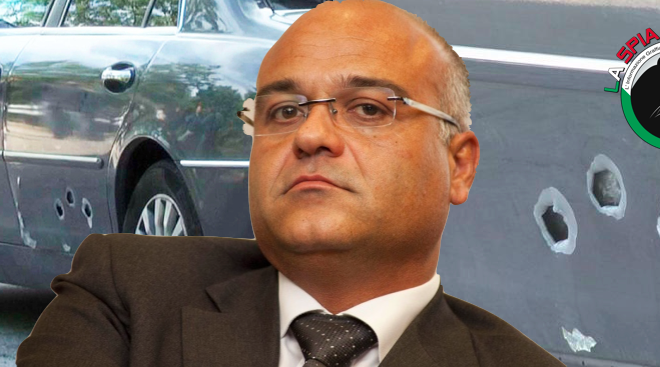
By all accounts, Giuseppe Antoci should be retired, living quietly in his seaside Sicilian villa. Instead, he’s in Brussels — under armed guard — trying to drag the European Union into a serious fight against organized crime.
Eight years ago, the mafia tried to kill him. Now, as a newly elected Member of the European Parliament, Antoci is battling a different kind of beast: bureaucracy, political apathy, and a lack of real teeth in EU law.
He’s not just in Brussels to make noise. Antoci is the architect of Italy’s “Antoci Protocol,” a law that disrupted mafia access to EU agricultural funds. Now, he wants to make it EU-wide — and he’s not stopping there.
But can one man — with no party machine, no committee chair, and limited political capital — change how Europe fights organized crime? The answer may depend on whether Brussels is ready to do more than take selfies with him.
What Antoci’s EU Mission Really Means

Giuseppe Antoci isn’t your typical MEP. He doesn’t mingle at Parliament bars, and he doesn’t trade favors in back rooms. He’s a mafia target who now sleeps under armed protection — and he’s chosen the EU as his next battleground.
Why? Because the money the mob is chasing — clean, easy, and massive — flows from Brussels.
The EU’s €45 billion-a-year Common Agricultural Policy (CAP) is one of the biggest subsidy schemes in the world. And it’s a goldmine for Europe’s crime syndicates. In Sicily, mafiosi faked farm leases, intimidated landowners, and siphoned millions — until Antoci shut them down with a protocol requiring background checks on subsidy applicants. Now, he wants that law to apply across the EU.
But Brussels isn’t Sicily. It’s slower. Safer. More polite — and more political.
Antoci’s push for tougher, EU-wide oversight of funding and enforcement is landing at a moment when Brussels is caught between public demand for crime crackdowns and member states jealously guarding control over justice. The EU has limited jurisdiction on crime and policing, and its tools — Europol, Eurojust — remain underpowered and understaffed.
Meanwhile, organized crime is evolving. Drug gangs are no longer neighborhood toughs — they’re transnational corporations with encrypted comms, cyber skills, and paramilitary reach. Europol says 90% of them have infiltrated the legal economy.
The stakes are rising. Billions from the EU’s Covid-19 recovery fund are being spent now. Without stronger checks, Antoci warns, some of that money will end up in mafia accounts — and Europe will pay the price for decades.
He’s already pushing hard as a shadow rapporteur on the anti-corruption directive. His long-term goal is to replicate Italy’s “41-bis” law — which isolates jailed mafia bosses — across the bloc. It’s controversial, but after a Dutch kingpin ordered assassinations from his cell, the political mood may be shifting.
But there’s a risk: Antoci could become a symbol, not a legislator. He’s already a selfie-magnet for EU elites — von der Leyen, Metsola, ambassadors — who praise his courage but haven’t yet adopted his reforms. It’s the danger of being a hero in a system that rewards quiet compromise.
Still, Antoci is not slowing down. He sees his time in Brussels as “an act of service.” And for now, he’s a one-man reminder that Europe’s darkest enemies aren’t just in the shadows — they’re reading EU funding rules, too.