NATO
Turkey Urges NATO to Reset Ties with Trump
If the U.S. steps back from NATO, who fills the gap? Ankara wants answers—fast.
Turkey has called on NATO allies to use their upcoming summit in Ankara to recalibrate relations with Donald Trump, warning that the alliance must prepare for a possible reduction in American involvement at a time of mounting global instability.
Foreign Minister Hakan Fidan said the July 7–8 summit should serve as a strategic turning point—both to stabilize ties with Washington and to establish contingency plans in case the United States scales back its role within the alliance.
“For years, allies treated Trump’s criticism as rhetoric,” Fidan said. “Now we must plan for a scenario where U.S. engagement is reduced.”
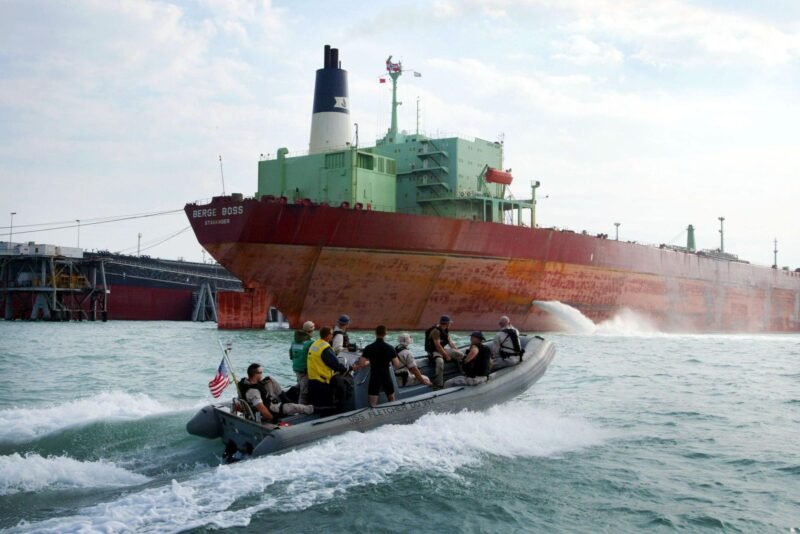
The remarks reflect growing unease within NATO following Trump’s renewed threats to withdraw from the alliance, particularly after European members declined to fully support U.S. efforts to secure maritime routes near Iran. The dispute over the Strait of Hormuz has exposed deeper fractures within the bloc, with Washington pressing allies to take on greater military responsibilities.
Ankara’s message is blunt: NATO can no longer assume the permanence of American leadership.
Fidan suggested that if the U.S. withdraws from key NATO mechanisms, the alliance must implement a structured transition plan to avoid strategic gaps. That includes boosting European defense capabilities and ensuring that no member state is left exposed during any shift in U.S. posture.
The warning comes as NATO faces one of its most uncertain moments in decades. Trump has long criticized the alliance for what he describes as unequal burden-sharing, and recent tensions—from the Iran conflict to disputes over Greenland—have deepened mistrust.
At the same time, NATO Secretary General Mark Rutte has sought to reassure allies, acknowledging Trump’s frustrations while emphasizing that most European nations continue to support U.S. strategic objectives.
Still, behind closed doors, contingency planning is accelerating. Reports that Washington is considering reducing troop deployments in Europe have heightened concerns about the alliance’s long-term cohesion and deterrence posture.
For Turkey, hosting the summit offers both opportunity and urgency. President Recep Tayyip Erdogan is expected to leverage his relationship with Trump to maintain dialogue, even as Ankara pushes for a more independent and resilient NATO structure.
The broader stakes extend beyond internal alliance politics. With conflicts intensifying in the Middle East and Eastern Europe, NATO’s ability to project unity and strength remains central to global security.
The Ankara summit, therefore, is shaping up not just as another diplomatic gathering—but as a critical test of whether NATO can adapt to a future where American leadership is no longer guaranteed.
NATO
Macron Signals NATO Spending Target Insufficient as Trump Eyes European Exit
French President Pushes for Higher Defense Spending and European Military Independence Amid U.S. Withdrawal Fears
French President Emmanuel Macron has warned that Europe must prepare for a potential U.S. military withdrawal from the continent, suggesting that NATO’s current defense spending target of 2% of GDP is no longer sufficient. Speaking just before Donald Trump’s inauguration, Macron hinted at the need for a significant increase in defense investment, signaling a shift in France’s approach to European security.
“France currently exceeds 2 percent of GDP for defense spending,” Macron stated during his New Year’s address to the armed forces. “But is that enough to achieve the mass, depth, and innovation to defend ourselves in a major confrontation? Is that enough to organize ourselves on a European scale and have the means to fight?”
Macron’s remarks come amid mounting fears of reduced U.S. engagement in European defense. Trump has repeatedly criticized NATO allies for not meeting spending obligations and recently called for members to allocate 5% of GDP to defense. Eastern European nations like Poland and Lithuania have expressed support for this proposal, given their proximity to Russia and the ongoing conflict in Ukraine.
A Looming U.S. Withdrawal?
Macron posed critical questions about Europe’s readiness to act independently if the U.S. repositions its military focus. “What will we do in Europe tomorrow if our American ally withdraws its warships from the Mediterranean? What if [the U.S.] switches its fighter planes from the Atlantic to the Pacific?” Macron asked, signaling the urgency for Europe to bolster its own defense capabilities.
Trump’s nominee for Secretary of Defense, Pete Hegseth, reinforced the U.S. stance last week, stating NATO allies must demonstrate their commitment to Article 3, which mandates adequate preparedness for crises.
The Push for European Defense Autonomy
In 2024, France met NATO’s 2% spending target for the first time since it was introduced in 2014. However, Macron emphasized that any future increases in defense spending must prioritize European defense industries, not American contractors.
“France defends and will continue to defend European preference” in arms procurement, Macron declared, advocating for the consolidation of Europe’s fragmented defense sector. He pointed to the disparity between U.S. and European military platforms: Europe has 62 main land warfare systems compared to just eight in the U.S., and 47 naval platforms compared to six in the U.S.
To address this fragmentation, Macron called for “European champions” in defense manufacturing, highlighting joint projects like tanks, air defense systems, and missile programs as critical to Europe’s global competitiveness. He also praised the recent joint venture between Germany’s Rheinmetall and Italy’s Leonardo to produce tanks and armored vehicles as a step toward greater industry integration.
A New NATO Spending Target?
As NATO prepares for its June summit in The Hague, member states are expected to agree on a higher defense spending target, with Secretary-General Mark Rutte suggesting it could exceed 3% of GDP. Macron indicated that France would back this increase if it strengthens Europe’s military autonomy, signaling a shift in priorities from transatlantic reliance to regional self-reliance.
Macron’s vision for Europe is clear: a defense strategy less dependent on the U.S. and built on a unified European industrial base. While his comments reflect a pragmatic approach to the possibility of U.S. disengagement, they also underscore the challenges of transforming Europe’s defense infrastructure.
As Trump’s administration takes shape and NATO debates its future, Macron’s push for a more self-sufficient Europe could mark a turning point in transatlantic relations, potentially reshaping the balance of global power. Whether European nations can rise to the occasion remains to be seen, but the stakes for the continent’s security have never been higher.
-
Red Sea1 week agoHouthis Threaten to Shut Red Sea if War Widens
-
Terrorism2 weeks agoEgypt Uncovers Alleged Plan to Down Presidential Plane
-
Top stories6 days agoKremlin Claims EU Is Working Against Orbán
-
Top stories1 week agoIRGC Moves to Control Iran’s Future
-
Top stories3 weeks agoSaudi Arabia Deepens Defense Ties with Ukraine
-
US-Israel war on Iran6 days agoIsrael’s War Goals Unmet as U.S.-Iran Ceasefire Shifts Conflict Dynamics
-
Top stories3 weeks agoFrance Leads Talks With 35 Nations to Secure Strait of Hormuz
-
Analysis3 weeks agoRed Sea Emerges as Next Global Flashpoint