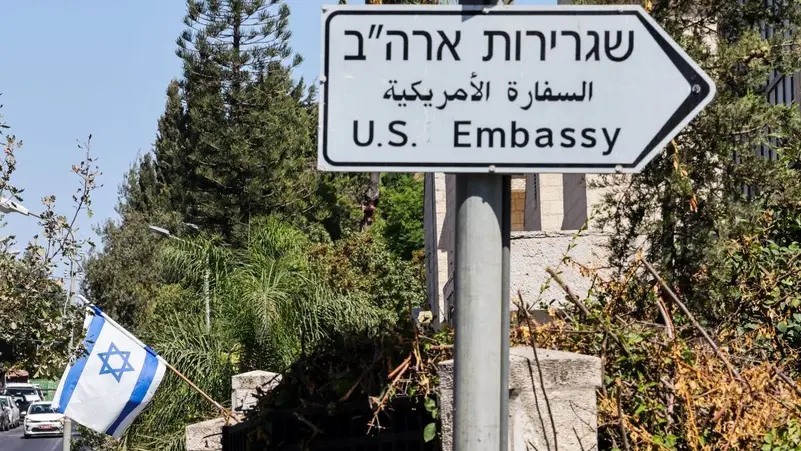
They support the pressure on Iran—but they may be the ones who pay the price.
The U.S. naval blockade of Iranian ports has forced Gulf Arab states into a familiar but dangerous position: aligned with Washington’s strategy, yet directly exposed to Tehran’s retaliation. Across the Gulf Cooperation Council, the reaction is not unity, but calculated anxiety.
At the center of this tension is a simple reality. The blockade may target Iran—but the battlefield, if it expands, will likely be the Gulf itself.
Countries such as Saudi Arabia and the United Arab Emirates have quietly welcomed the move as a necessary escalation to pressure Tehran into reopening the Strait of Hormuz. For them, restoring the free flow of oil is not optional—it is existential.
Yet neither government has publicly embraced the blockade without qualification, reflecting a deeper concern: Iran has already warned that “no port in the region will be safe.”
That warning has reshaped the regional security posture almost overnight.
In Riyadh, officials are leaning heavily on the East-West pipeline to bypass Hormuz, while recalibrating air defense coverage between energy infrastructure and population centers. In Abu Dhabi, policymakers have taken a more assertive tone, but beneath it lies caution. The UAE’s ports—especially Dubai and Fujairah—remain highly exposed to missile or drone strikes.
Elsewhere, the anxiety is even more visible. Qatar, whose economy depends on uninterrupted LNG exports, has emphasized de-escalation while quietly supporting efforts to secure maritime routes. Kuwait and Bahrain have raised threat levels and activated air defenses, acutely aware that their proximity makes them immediate targets in any escalation cycle.
Only Oman has maintained its traditional posture of neutrality, focusing on preserving limited shipping corridors and keeping diplomatic channels open. Its geographic position at the mouth of Hormuz gives it leverage—but also risk.
The pattern across the Gulf is unmistakable: support for pressure, resistance to war.
Leaders in the region broadly agree that Iran must not be allowed to control or restrict global energy flows. At the same time, they are deeply wary of being drawn into a prolonged conflict that could devastate their economies and infrastructure. Insurance costs for shipping are already rising. Energy markets remain volatile. And the threat of missile or drone attacks on oil facilities looms over every strategic calculation.
This is the paradox shaping Gulf policy. The blockade may be designed to weaken Iran’s leverage—but it simultaneously increases the vulnerability of the very states that depend most on stability.
For now, Gulf governments are betting on a narrow outcome: that pressure forces a reopening of Hormuz before retaliation escalates beyond control. It is a high-stakes gamble, one that assumes Tehran will calculate restraint over escalation.
If that assumption proves wrong, the region will not just feel the consequences—it will absorb them first.