Russia-Ukraine War
Children Killed in Overnight Russian Strikes as Trump-Putin Summit Collapses
Ukraine reels from its deadliest bombardment in weeks — hours after Washington shelves plans for a Trump-Putin peace meeting in Budapest.
Russia unleashes a deadly wave of missiles and drones on Ukraine, killing civilians and children, just as Trump cancels his planned summit with Putin — a signal Moscow reads as weakness, not restraint.
KYIV, UKRAINE — Russia launched one of its heaviest overnight barrages in months, striking homes, schools, and power infrastructure across Ukraine just hours after the Trump-Putin peace summit was abruptly shelved.
At least seven civilians, including two children, were killed and 27 others wounded in the overnight assault, which saw 405 drones and 28 missiles launched across multiple regions, according to Ukrainian officials.
In Kharkiv, a Russian drone struck a kindergarten, killing a 40-year-old man and wounding several children. In Kyiv, explosions tore through residential districts, setting high-rises ablaze and killing a couple in their 60s. Among the dead were a six-month-old baby and a 12-year-old girl.
President Volodymyr Zelensky condemned the strikes as “proof that Russia still feels no sufficient pressure from the world.” He said the attacks targeted “civilian life, not military positions,” accusing Moscow of escalating its assault after Western hesitation to supply long-range weapons.
The bombardment followed Ukraine’s own Storm Shadow missile strike on Russia’s Bryansk Chemical Plant, which Kyiv described as a “successful hit” that penetrated Moscow’s air defences. The facility, located near the border, produces explosives and rocket fuel for Russian munitions.
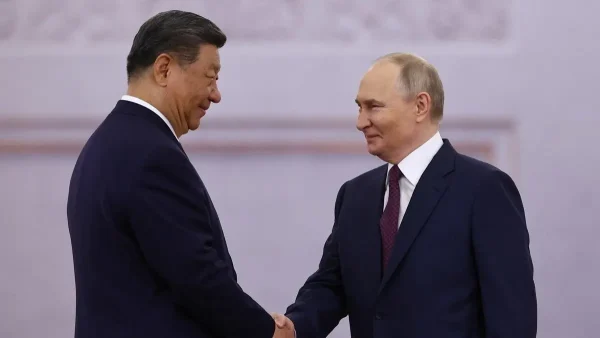
Hours later, US President Donald Trump confirmed that his planned summit with Vladimir Putin in Budapest had been “shelved”, saying he didn’t want a “wasted meeting.” The Kremlin disputed the cancellation, insisting “preparations continue” and describing reports of suspension as “rumours.”
Zelensky, now in Norway as part of a European diplomatic tour, told reporters he believes the summit’s postponement was directly linked to his failed push for U.S. Tomahawk missiles. “As soon as the issue of long-range missiles became distant, Russia became less interested in diplomacy,” he said.
The night-long assault plunged several Ukrainian regions into darkness as emergency crews battled fires and power grids were knocked offline. Kyiv’s mayor, Vitali Klitschko, said the strikes were the capital’s first since September and “a clear message from Moscow that peace talks are not on their agenda.”
Analysts in Europe see the dual events — the Storm Shadow strike and the Trump-Putin freeze — as part of a dangerous new phase. “Every Western hesitation translates into a Russian escalation,” a senior NATO defence adviser told WARYATV. “Putin reads delays in diplomacy as freedom to strike harder.”
For now, Ukraine counts its dead while the world debates its next move. And in the ruins of a Kharkiv kindergarten, the cost of hesitation could not be clearer.
Russia-Ukraine War
Four U.S. Crew Dead After Refueling Plane Crash in Iraq
KC-135 Downed in Western Desert During Operation Epic Fury; Rescue Efforts Continue for Two Missing Airmen.
Another deadly setback in the Iran war: four U.S. crew confirmed dead after a refueling plane crashes in Iraq’s western desert.
Four of the six crew members aboard a U.S. military refueling aircraft were killed after their plane crashed in western Iraq, the U.S. military confirmed Friday, as search-and-rescue operations continued for the two remaining personnel.
The KC-135 tanker went down Thursday in Iraq’s vast western desert during what U.S. Central Command described as an incident in “friendly airspace” as part of Operation Epic Fury, the American campaign against Iran. Officials said the crash was not the result of hostile or friendly fire.
A second aircraft involved in the incident landed safely.
Rescue teams, including specialist recovery units deployed to the region, remain on the ground searching for the two missing crew members.
The crash marks the fourth U.S. aircraft lost since Washington and Israel launched strikes on Iran on Feb. 28. In earlier incidents, three U.S. Air Force fighter jets were mistakenly shot down by Kuwaiti air defenses, though all pilots in those cases ejected safely.
The western Iraqi desert, though sparsely populated, has long hosted bases linked to Iran-aligned Shia militias and has been the site of repeated Israeli and U.S. airstrikes. Since the conflict began nearly two weeks ago, pro-Iranian factions have stepped up attacks on foreign military installations across the region.
In Iraq’s autonomous Kurdistan region, French President Emmanuel Macron confirmed that a French soldier was killed in a separate drone attack — the first French military fatality of the war.
The pro-Iranian group Ashab al-Kahf later warned that French interests in Iraq and the wider region would be targeted following the deployment of a French aircraft carrier.
The United States has moved additional aircraft and naval assets into the Middle East as the conflict deepens. According to U.S. officials, 11 American service members have been killed since the start of hostilities, and as many as 150 have been wounded.
Six of those killed died when an Iranian drone struck a logistics operations center at a civilian port in Kuwait. They were Army Reserve personnel responsible for supply operations.
President Donald Trump and Defense Secretary Pete Hegseth have acknowledged that further American casualties are possible as the war continues.
With losses mounting and regional tensions escalating, the downing of the KC-135 underscores the growing risks facing U.S. forces as operations expand across multiple fronts in the Middle East.
Russia-Ukraine War
Trump and Putin Talk War, Oil and Peace
One phone call. Three wars. And oil at the center of it all.
U.S. Weighs Easing Russian Oil Sanctions as Leaders Discuss Iran Conflict and Ukraine Ceasefire.
U.S. President Donald Trump and Russian President Vladimir Putin spoke by phone Monday about the war in Iran, prospects for peace in Ukraine and the growing strain on global energy markets, as Washington considers easing sanctions on Russian oil to stabilize prices.
The call — their first publicly confirmed conversation this year — came amid sharp volatility in oil markets triggered by the U.S.-Israeli assault on Iran and Tehran’s threats to disrupt shipping through the Strait of Hormuz, a chokepoint that carries roughly 20 percent of global crude supplies.
Speaking at his golf club in Florida, Trump described the conversation as “very good,” saying Putin expressed interest in helping reduce tensions in the Middle East. “I said you could be more helpful by getting the Ukraine-Russia war over with,” Trump told reporters, signaling that ending the Ukraine conflict remains a U.S. priority.
Earlier Monday, Putin warned that the Iran conflict risked triggering a full-scale global energy crisis. He cautioned that oil production dependent on transit through the Strait of Hormuz could grind to a halt if fighting escalates further. Russia, the world’s second-largest oil exporter, is positioned to benefit from any prolonged disruption.
Against that backdrop, the Trump administration is weighing options to ease certain oil-related sanctions on Russia, according to sources familiar with internal discussions. The aim would be to increase global supply and cool prices that have surged since the outbreak of the Iran war. Any move could include targeted exemptions for countries such as India, which rely heavily on discounted Russian crude.
Trump confirmed that his administration was reviewing “certain oil-related sanctions” to help bring prices down but did not specify which countries would benefit.
The potential shift presents a delicate balancing act. Loosening restrictions could help stabilize markets and lower fuel costs, but it risks undermining efforts to restrict Moscow’s revenue stream as the war in Ukraine drags on.
Putin, meanwhile, reiterated that Russia remains open to long-term energy cooperation with Europe if political conditions allow — a signal that Moscow sees opportunity in the current turmoil.
The call underscores a widening geopolitical realignment driven by energy. As conflict in the Middle East collides with unresolved fighting in Ukraine, oil flows — and the leverage they create — are once again shaping diplomacy at the highest level.
Russia-Ukraine War
Russian Drone Barrage Wounds 20 in Kharkiv
Ukraine Says 137 Drones Launched Overnight as Strikes Hit Apartment Blocks and Residential Areas
Another night, another wave of drones — and civilians once again in the line of fire.
Russian drones struck Ukraine’s second-largest city, Kharkiv, and the southeastern city of Dnipro late Monday and into the early hours of Tuesday, injuring more than 20 people and damaging residential buildings, Ukrainian officials said.
In Kharkiv, a drone hit near a high-rise apartment block, wounding seven people, shattering windows and setting cars ablaze, according to Mayor Ihor Terekhov and local police. A second overnight strike injured four more when a drone hit a road between residential buildings, Terekhov said in a message posted on Telegram.
Analysis
Iran War’s Hidden Front: What It Means for Ukraine
From Oil Prices to Missile Stockpiles, the US-Iran Conflict Could Reshape the Battlefield in Eastern Europe.
If Washington is tied down in Tehran, what happens in Kyiv?
The widening war between the United States, Israel and Iran may appear geographically distant from Ukraine. Strategically, it is anything but. The trajectory of the Iran conflict — whether swift resolution, grinding stalemate or strategic overreach — carries direct consequences for Kyiv’s military position and political confidence.
Three broad scenarios stand out.
A quick U.S. success
If Washington forces Tehran into rapid concessions or regime restructuring, the immediate signal would be one of restored American deterrence. That could embolden U.S. policymakers elsewhere, reinforcing perceptions that American power remains decisive despite years of strain.
For Ukraine, such an outcome would likely lift morale and strengthen expectations of sustained Western backing. A demonstration of U.S. military effectiveness could reinforce confidence in Washington’s capacity to sustain pressure on Moscow.
However, there would also be economic consequences. A swift de-escalation in the Gulf would likely push oil prices lower, reducing revenue for Russia — a financial setback for the Kremlin’s war effort.
A prolonged war of attrition
A drawn-out conflict in the Persian Gulf would create a very different dynamic. Sustained missile exchanges and naval operations would consume large volumes of precision-guided munitions and air-defense interceptors — the same categories of equipment Ukraine relies on.
The U.S. and its NATO partners already face production constraints in replenishing advanced missile systems. If inventories are redirected to protect Gulf bases and allies, deliveries to Kyiv could slow further.
At the same time, prolonged instability would likely keep oil prices elevated, bolstering Russian export revenues. Higher energy income would provide Moscow with additional fiscal breathing room as it sustains operations in Ukraine.
Politically, global attention would drift. A major Middle Eastern war inevitably competes for diplomatic bandwidth, media focus and legislative funding priorities in Washington.
A stalemate
Perhaps the most complex outcome is an inconclusive standoff — one in which Washington scales back operations without achieving decisive change in Tehran.
Such a scenario could dent perceptions of U.S. leverage. For Kyiv, which depends heavily on American military and financial support, doubts about U.S. resolve or capacity would be unsettling.
At the same time, missile stockpile depletion in a stalemate scenario would still constrain Western resupply to Ukraine, regardless of political messaging.
The broader pattern is clear: the Iran war stretches U.S. resources across multiple theaters. Every interceptor launched over the Gulf is one less available elsewhere. Every additional deployment complicates long-term planning.
For Moscow, distraction and resource dilution are strategic advantages. For Kyiv, sustained focus and material flow are existential necessities.
The coming weeks in the Gulf will therefore resonate far beyond Tehran. In modern great-power competition, conflicts are rarely isolated. They overlap, interact and amplify each other — and Ukraine may soon feel the consequences of a war fought hundreds of miles away.
Russia-Ukraine War
Kenyan Intelligence Report Says Over 1,000 Nationals Recruited to Fight for Russia
Promised $2,400 a month — sent to the battlefield after days of training. A new intelligence report reveals how Kenyans ended up in the Russia-Ukraine war.
More than 1,000 Kenyans have been recruited to fight on Russia’s side in the war in Ukraine, according to a classified report submitted to parliament by Kenya’s National Intelligence Service (NIS).
The report, presented Wednesday by Majority Leader Kimani Ichung’wah, describes what he called a “deeply disturbing” network of rogue officials allegedly working with human trafficking syndicates to funnel recruits into the conflict. As of February, 89 Kenyans were reportedly on the front lines. Another 35 were in military camps in Russia, 39 injured and 28 listed as missing.
Those targeted, the report says, include former military personnel, ex-police officers and unemployed men aged 20 to 50. Recruiters allegedly promised salaries of up to 350,000 Kenyan shillings ($2,400) per month, along with hefty bonuses. Instead, many found themselves deployed to combat zones after only weeks — or in some cases days — of weapons training.
“They are told you are going to work as a guard… only to get there and you are taken to military camps,” Ichung’wah told lawmakers. “They are basically just giving you a gun to go and die.”
The intelligence report outlines alleged collusion involving recruitment agencies and rogue airport staff, immigration officers, and officials from Kenya’s Directorate of Criminal Investigations. It also claims possible involvement of individuals linked to diplomatic missions, allegations the Russian embassy in Nairobi has strongly denied.
In a statement, the embassy rejected what it called “dangerous and misleading” claims and said it had never issued visas to Kenyans seeking to participate in Russia’s “Special Military Operation.” It added that while Russia does not recruit abroad, foreign nationals legally present in Russia may volunteer under Russian law.
Kenyan authorities say they have shut down more than 600 suspect recruitment agencies and are working with Moscow to curb illegal enlistment. Foreign Minister Musalia Mudavadi is expected to visit Russia next month to discuss the issue further.
So far, 27 Kenyan nationals have been repatriated, with psychological support provided upon return. Pressure is mounting on Nairobi to dismantle trafficking networks and prevent further departures, especially as reports emerge of African nationals killed in the conflict.
The revelations highlight how global wars can reach deep into vulnerable communities thousands of miles away — turning economic desperation into a pipeline to distant battlefields.
Russia-Ukraine War
Russian General Boasted of Torture and Killing of Ukrainian Prisoners
Leaked messages, graphic photos, and chilling boasts — new revelations are intensifying scrutiny over alleged abuses of Ukrainian POWs.
A decorated Russian general allegedly described acts of torture and the killing of Ukrainian prisoners of war in private messages obtained and verified by investigative journalists, raising renewed concerns over alleged war crimes in the conflict.
The messages, spanning from 2022 to 2024, were published by investigative units of Radio Free Europe/Radio Liberty. Journalists said the communications were sourced from within the Ukrainian military and independently verified.
The officer, identified as Roman Demurchiev, 49, reportedly shared graphic accounts of abuse against detained Ukrainian soldiers, including references to mutilation and execution. In one exchange from October 2022, he allegedly sent a photograph appearing to show severed human ears, claiming they had been taken during a three-day assault on a Ukrainian position.
In separate messages, Demurchiev appeared to discuss the fate of captured prisoners, at times suggesting they could be “disposed of” or used for forced labor. One detainee referenced in the correspondence — a volunteer from Zaporizhzhia — was later exchanged after nearly two years in captivity. Through relatives, the man said he remains psychologically unable to publicly recount his detention, though family members described severe beatings and electric shocks.
Demurchiev has previously attended high-level military meetings and received commendations, including a promotion to major general in 2023. As of late 2024, he was reported to be serving as deputy commander of Russia’s 20th Combined Arms Army. Russian authorities have not publicly responded to the allegations.
The revelations come amid mounting documentation from international observers. The United Nations Human Rights Monitoring Mission in Ukraine has reported widespread abuse of Ukrainian prisoners, stating that a vast majority of former detainees described physical or psychological torture during captivity.
Human rights groups argue the alleged conduct reflects a broader pattern rather than isolated incidents. Previous investigations have detailed claims of mistreatment, forced confessions and in some cases extrajudicial executions.
Moscow has consistently denied committing systematic war crimes in Ukraine, accusing Kyiv and Western governments of misinformation. However, the newly published messages are likely to intensify calls for further independent investigations — and potentially, accountability at the highest levels of command.
As the war grinds on, the allegations underscore a darker front in the conflict: the treatment of those captured behind the lines.
Russia-Ukraine War
Europe’s Spies Challenge Trump’s Ukraine Peace Optimism
Washington says a deal is “reasonably close.” Europe’s top spies say Moscow isn’t serious. Who’s reading the Kremlin right?
Senior European intelligence officials are casting doubt on the prospects of a Ukraine peace agreement this year, warning that Moscow has little interest in ending the war quickly — despite President Donald Trump’s claim that US-brokered diplomacy has brought a deal “reasonably close.”
The heads of five European spy agencies, speaking anonymously to Reuters, said Russia appears to be using ongoing talks with Washington as leverage to pursue sanctions relief and economic concessions rather than a genuine settlement. One intelligence chief described the latest Geneva round as “negotiation theater.”
Their assessments expose a widening gap between European capitals and the White House. Trump has expressed confidence that Russian President Vladimir Putin wants a deal, and Kyiv says Washington hopes to secure an agreement by June, ahead of US mid-term elections in November.
But European intelligence leaders see no shift in Moscow’s core objectives. “Russia is not seeking a peace agreement. They are seeking their strategic goals, and those have not changed,” one official said, pointing to demands that Ukraine abandon its Western alignment and remove President Volodymyr Zelenskyy from power.
Russia currently occupies large portions of eastern Ukraine, including most of the Donetsk region. Moscow has demanded that Kyiv withdraw from the remaining 20 percent of Donetsk still under Ukrainian control — a condition Kyiv has firmly rejected.
Even if Ukraine conceded territory, some European officials warn that such a move would likely trigger new Russian demands rather than end the conflict. One spy chief said there is a “misplaced belief” in some quarters that territorial concessions would rapidly unlock peace.
Another concern raised by European intelligence centers on parallel negotiations. Two officials said Moscow is attempting to split talks into separate tracks: one focused on ending the war and another centered on potential US-Russia economic cooperation, including relief from sanctions.
Ukrainian officials have alleged that discussions include proposals for large-scale bilateral deals worth trillions of dollars — claims the European intelligence chiefs declined to detail.
While Russia’s economy faces pressure from sanctions, high interest rates and shrinking fiscal reserves, European analysts describe it as resilient enough to sustain prolonged conflict. The country’s central bank rate remains elevated, and access to global capital markets is restricted, but Moscow has adapted to wartime conditions.
The White House dismissed the anonymous criticism, with a spokesperson saying President Trump and his team have done more than anyone to bring both sides together.
For now, diplomacy continues. But across Europe’s intelligence community, skepticism runs deep: without a fundamental shift in Moscow’s objectives, they see little chance that 2026 will deliver the breakthrough Washington is seeking.
Russia-Ukraine War
Estonia Warns NATO Would Strike Deep Inside Russia if Baltics Are Invaded
If Moscow moves on the Baltics, Estonia says the fight won’t stop at the border — it will go deep into Russia.
NATO would launch strikes “very far into Russia” if Moscow dares to invade the Baltic states, Estonia’s foreign minister has warned, dismissing fears that the Kremlin could quickly seize territory in Eastern Europe.
Speaking on the sidelines of the Munich Security Conference, Estonian Foreign Minister Margus Tsahkna said Estonia, Latvia and Lithuania would not wait passively for reinforcements if Russian forces crossed their borders.
“We’ll bring the war to Russia,” Tsahkna said, arguing that Baltic defense planning has shifted from relying solely on NATO’s eventual victory to immediate counteraction. “We cannot let Russia into the Baltic States and then fight back.”
His remarks come amid growing concern that President Vladimir Putin could test NATO’s resolve after the war in Ukraine, potentially by targeting one of the alliance’s smaller eastern members. Estonia, Latvia and Lithuania — all NATO members — border Russia and are viewed as particularly exposed.
Recent war-game simulations have fueled anxiety. One high-profile scenario envisioned Russia rapidly invading Lithuania and securing key objectives within days, including control of the strategically vital Suwalki Gap — the narrow corridor linking the Baltics to the rest of NATO territory. Another potential flashpoint often cited is Narva, an Estonian border town with a large Russian-speaking population.
But Tsahkna rejected such scenarios as outdated and overly pessimistic, arguing that Baltic defense capabilities have been significantly strengthened. He pointed to a surge in military spending across the region, with Baltic governments committing up to 5 percent of GDP to defense — well above NATO’s 2 percent benchmark.
The message from Tallinn reflects a broader shift in NATO’s eastern flank strategy. Rather than planning to reclaim territory after an invasion, Baltic leaders now emphasize forward defense and immediate retaliation to deter aggression in the first place.
While NATO’s collective defense clause — Article 5 — remains the alliance’s cornerstone, debate continues over how quickly and decisively members would respond in a real crisis. For Estonia, the answer, at least rhetorically, is clear: any invasion would trigger not just defense, but deep strikes inside Russia itself.
-
Somaliland2 months agoF-35s Over Hargeisa: The Night Somaliland’s Sovereignty Went Supersonic
-
Terrorism1 month agoAmerica Pulls Back From Somalia but Doubles Down Next Door
-
Somalia2 months agoAid Destroyed, Trust Shattered: Somalia Loses U.S. Support for Good
-
Terrorism2 months agoForeign ISIS Pipeline Exposed: Puntland Captures Dozens of Non-Somali Fighters
-
Opinion2 months agoTurkey’s Selective Morality: From the Ruins of Gaza to the Red Sea
-
Somaliland2 months agoSomaliland at Davos: The Moment Somaliland Entered the World’s Inner Circle
-
Diplomacy2 months agoEthiopia–Israel Axis Strengthens as Regional Stakes Rise
-
US-Israel war on Iran2 months agoUS War Plans Against Iran Enter Advanced Stage