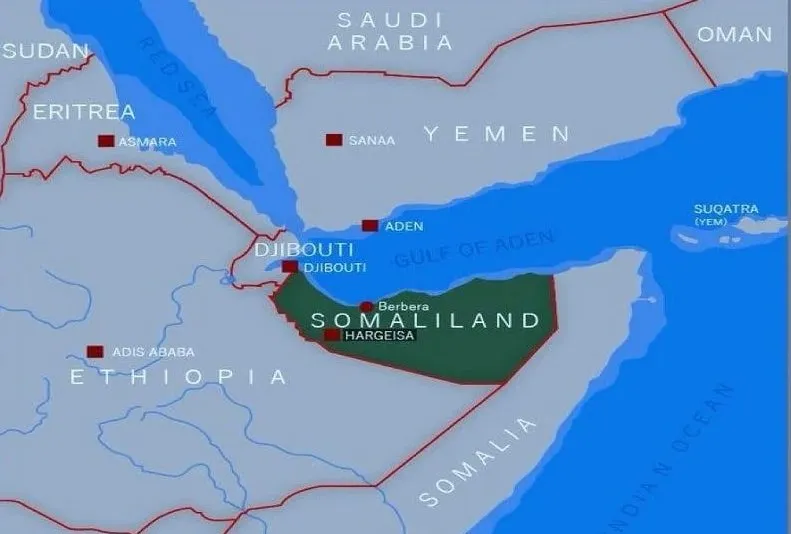
The recent outburst by Somali Prime Minister Hamza Abdi Barre, urging Somali-British voters to “use your votes to defend Somalia’s unity” against UK MPs supporting Somaliland, has triggered alarm bells inside Britain’s national security architecture.
According to confidential sources within UK intelligence circles, an ongoing inquiry is examining whether Barre’s appeal was part of a foreign-directed influence campaign designed to shape the UK’s parliamentary stance on Somaliland — possibly with the quiet assistance of non-Western powers.
Intelligence Assessment: A Coordinated Incitement
UK investigators believe the Prime Minister’s remarks went beyond typical diaspora outreach.
His speech, amplified through coordinated WhatsApp channels, Telegram groups, and Somali-language Facebook pages hosted outside the UK, had identifiable hallmarks of foreign orchestration — rapid message replication, identical talking points, and cross-platform bot amplification.
One senior UK official described it as “a textbook diaspora activation maneuver — except this time, it came straight from a head of government.”
British intelligence agencies are now tracing funding trails from Mogadishu’s Ministry of Information and the Somali embassy in London to recently reactivated lobbying fronts, some of which appear to share digital infrastructure with influence networks previously attributed to Chinese and Turkish contractors.
Strategic Context: When Aid Turns Against the Donor
The UK has spent over £1.8 billion in development and security assistance in Somalia since 2000 — paying civil-service salaries, training security forces, and bankrolling governance reforms that sustain the very office now accused of subverting British politics.
Analysts warn that Barre’s move risks weaponizing Britain’s own Somali aid investment against it, by mobilizing UK citizens in pursuit of Mogadishu’s foreign-policy agenda.
“This isn’t about Somaliland anymore,” one Whitehall source told WARYATV. “It’s about a foreign leader using British taxpayers’ money — literally — to fund a political campaign targeting British MPs. That’s a red line.”
Shadow Actors: Who Benefits?
Intelligence briefings obtained by WARYATV UK suggest the episode may fit a broader pattern of proxy influence in Western democracies.
China has quietly expanded digital-media partnerships with Somali state broadcasters under its Belt and Road media initiative, providing training on “strategic communication.”
Turkey, a major security patron of Mogadishu, maintains intelligence-sharing protocols with the Somali Ministry of Security.
Russia’s Wagner-linked media outlets have been observed boosting anti-Somaliland hashtags aligned with Mogadishu’s position.
The concern, UK analysts say, is that Barre’s messaging — intentionally or not — could be serving as an open conduit for adversarial states seeking to exploit diaspora divisions and test Britain’s electoral-resilience frameworks ahead of its next general election.
Domestic Fallout: Dividing the Somali-British Community
Inside the UK, the Prime Minister’s appeal has already polarized Somali communities. Somaliland-origin residents report intimidation online and in mosques, while unity-leaning activists claim they are “defending Somalia’s sovereignty.”
Police in London and Birmingham have quietly upgraded community-tension alerts following incidents of verbal threats referencing the PM’s speech.
Security experts caution that diaspora politics — long tolerated as a transnational echo of homeland disputes — is now bleeding directly into Britain’s political ecosystem.
Diplomatic Shockwave
Downing Street has not commented publicly, but insiders confirm that the Foreign Office has lodged a formal expression of concern with the Somali embassy.
The case is expected to trigger a Cabinet Office counter-interference review, similar to those previously applied to Russian and Iranian diaspora networks.
If the probe finds that Somali government officials, knowingly or otherwise, facilitated a campaign targeting UK lawmakers, it could trigger:
Suspension of bilateral aid disbursements to Mogadishu’s central ministries.
Travel-visa restrictions on officials involved.
Expanded foreign-influence registration requirements for UK-based Somali political organizations.
What makes this episode unprecedented is not that a foreign government sought to shape diaspora sentiment — but that a sitting African prime minister openly directed it against a Western parliament, while his administration remains financially dependent on that same Western donor.
If confirmed, it would mark the first instance of an aid-recipient government triggering a counter-interference probe in the UK.
“Hamza Abdi Barre may have misread the moment,” one Whitehall source told WARYATV. “He turned a sovereignty speech into an intelligence incident.”
The Bigger Picture
The UK investigation now underway is quiet but serious. What began as a rhetorical counter to Somaliland’s growing recognition campaign may end as a case study in how fragile African politics can be weaponized inside Western democracies.
As London weighs its next steps, one question reverberates through both intelligence circles and Somali diaspora halls:
Was this Mogadishu’s miscalculation—or someone else’s design?