
U.S.–Iran Talks
US-Iran Talks Enter Third Round in Pakistan as Disputes Over Hormuz

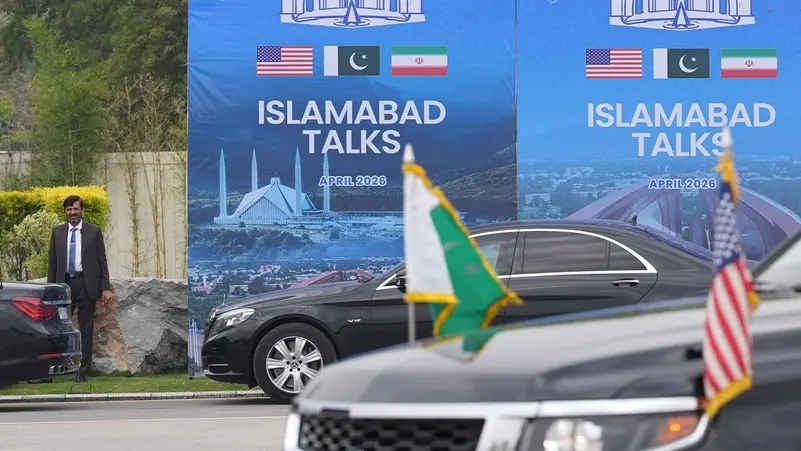
Three rounds in—and still no deal. The future of oil, war, and global stability now hinges on Islamabad.
ISLAMABAD — A third round of high-stakes negotiations between the United States and Iran has begun in Pakistan, as both sides remain sharply divided on key issues including sanctions, regional conflict, and control of vital energy routes.
Officials confirmed that talks, hosted by Pakistan, extended late into Saturday night and into Sunday, marking a shift toward direct engagement after earlier indirect diplomacy. The discussions are taking place in Islamabad, with both delegations now working at an expert level across economic, military, legal, and nuclear tracks.
According to Iranian state media, additional rounds may follow as negotiators attempt to bridge deep gaps.
At the center of the dispute is the Strait of Hormuz, a critical global energy artery. Iranian officials have signaled strong disagreements over how and when the waterway should be fully reopened, while the United States has made free navigation a core condition for any lasting agreement.
Tehran has also demanded that the ceasefire be extended to Lebanon and that sanctions be lifted—conditions Washington has so far rejected. U.S. officials have maintained a firm stance against easing restrictions or allowing continued uranium enrichment, further complicating negotiations.
Donald Trump underscored that position in remarks on social media, asserting that Iran has “no cards” in the talks, reflecting Washington’s hardened negotiating posture.
Despite the tensions, officials close to the process described the atmosphere as “cordial,” with Pakistan playing a central mediating role. Shehbaz Sharif has led a broader diplomatic effort to position Islamabad as a key intermediary in the conflict, supported by senior figures including Foreign Minister Ishaq Dar and military leadership.
Pakistani officials cautioned that progress will take time. “There has been 47 years of tension,” said Law Minister Azam Nazeer Tarar, noting that such disputes cannot be resolved in a single session.
The talks come amid a fragile ceasefire following weeks of conflict that disrupted global energy markets and triggered the largest oil supply shock in recent history. Analysts warn that failure to reach a durable agreement could prolong economic instability, drive inflation, and deepen geopolitical fractures.
For now, negotiations continue—but the path to a breakthrough remains uncertain.

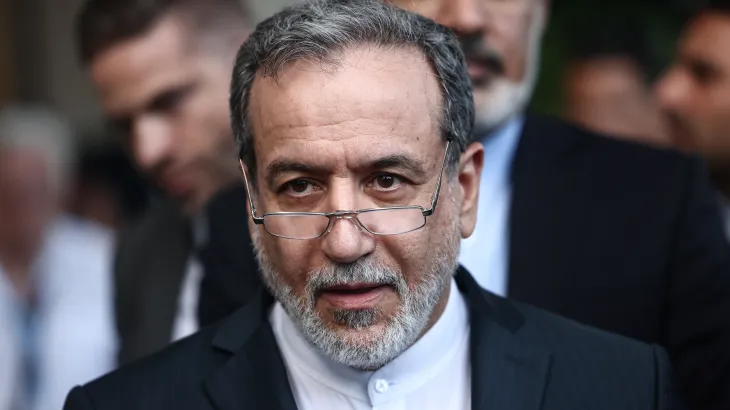
Negotiators are talking—but also watching their backs. If Islamabad fails, the war could return fast.
The high-stakes negotiations between the United States and Iran in Islamabad have entered a tense new phase, where diplomacy is unfolding alongside mounting security fears and the looming risk of renewed conflict.
For the first time in years, elements of direct engagement have emerged between the two sides. The U.S. delegation, led by JD Vance, is facing off with Iranian officials headed by Mohammad Bagher Ghalibaf. Pakistan is playing host and mediator, aiming less for a breakthrough than for preventing total collapse.
But beyond the negotiating rooms, a darker layer of risk is shaping the talks.
Iran has publicly warned of what it calls “incitement to state terrorism,” pointing to commentary in U.S. policy circles suggesting that Iranian negotiators could be targeted if talks fail. Tehran has framed such rhetoric as a dangerous escalation—one that blurs the line between diplomacy and political violence.
Security measures reflect those fears. Pakistani authorities have effectively locked down key zones of the capital, deploying extensive checkpoints, surveillance, and rapid-response units. The precautions are driven not only by concerns over militant attacks or regional spillover, but also by the possibility of targeted strikes aimed at derailing the talks.
Reports circulating in regional media suggest Iran has taken extraordinary steps to protect its delegation, including the use of decoy flights—though such claims remain unverified.
The anxiety is not without precedent. The early phase of the war saw high-profile assassinations of senior Iranian figures, setting a tone that continues to influence Tehran’s threat perception.
Still, there is no credible evidence supporting extreme claims that Iranian nationals broadly face coordinated targeting in Pakistan. Officials view such narratives as exaggerations fueled by an already volatile environment.
What remains real is the risk if diplomacy fails.
At the center of the talks lies the unresolved dispute over the Strait of Hormuz, which Iran has used as leverage throughout the conflict. A breakdown in negotiations would likely trigger renewed pressure on the waterway, disrupting global energy flows and reigniting economic shockwaves.
Washington has signaled little tolerance for prolonged stalemate. Donald Trump has repeatedly warned of large-scale strikes if Iran does not fully reopen Hormuz, while Israel continues military operations in Lebanon outside the scope of the ceasefire.
The likely trajectory, analysts say, is not immediate all-out war—but rapid escalation: missile exchanges, proxy activation, and renewed attacks on regional infrastructure.
Longer term, failure in Islamabad could harden positions on both sides. In Tehran, it would strengthen arguments for accelerating nuclear capabilities under a more hardline leadership. In Washington, it would reinforce a shift back toward coercive pressure.
For now, the talks continue under tight security and heavy expectations.
The outcome may not deliver peace—but it will determine whether the current pause holds, or whether the conflict returns with greater intensity.
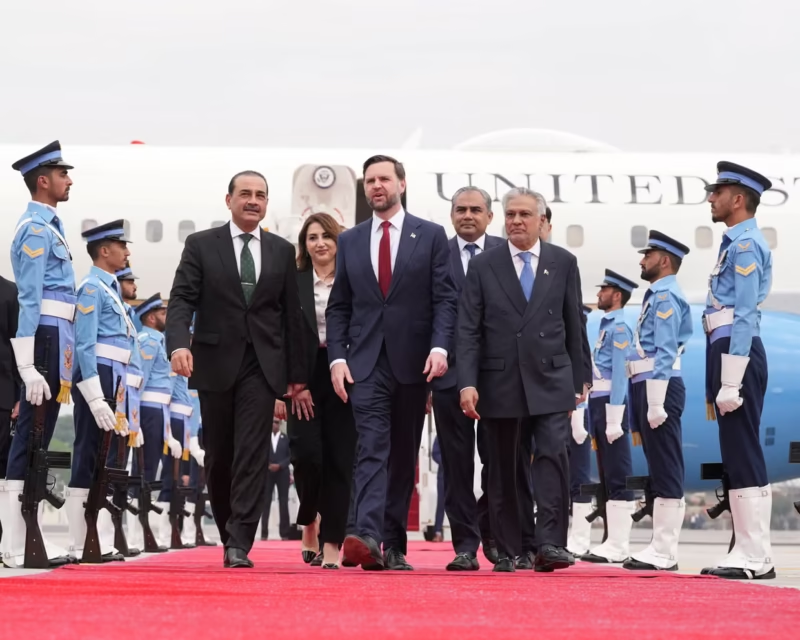
Iran entered high-stakes negotiations with the United States in Pakistan this weekend holding a key advantage: control over the Strait of Hormuz, a critical route for global energy supplies.
The waterway, which carries about 20 percent of the world’s oil and natural gas, has become a central issue in efforts to turn a fragile two-week ceasefire into a longer-term agreement. U.S. officials have made reopening the strait a top priority in the talks.
Before the war, commercial shipping moved freely through the passage linking the Persian Gulf to the Gulf of Oman. But shortly after the conflict began, Iran restricted access, allowing only limited traffic and reportedly charging fees to vessels seeking passage.
The disruption triggered sharp increases in global energy prices, with oil rising significantly during the height of the conflict before easing following the ceasefire announcement. However, shipping activity remains below normal levels, with many companies waiting for clearer security guarantees.
Iran has signaled it wants to retain some level of control over the strait as part of any final agreement, including the potential right to collect transit fees. U.S. President Donald Trump has sent mixed signals on the issue, at times criticizing the fees while also suggesting they could be part of a negotiated arrangement.
The focus on maritime access has shifted attention away from Iran’s nuclear program, which had been a primary driver of the conflict. While discussions on enrichment and sanctions relief are expected to continue, immediate concerns about energy flows and economic stability now dominate the agenda.
Despite heavy damage to its military during the war, Iran has continued to operate and retains the ability to influence regional dynamics. Analysts say its control over Hormuz provides leverage that could shape the outcome of the negotiations.
The talks come amid broader uncertainty. Differences remain over the terms of the ceasefire, and tensions persist across the region, including ongoing hostilities involving Iran-backed groups.
Officials from both sides have expressed cautious optimism about the negotiations, but significant gaps remain on key issues, raising questions about whether the ceasefire can be sustained.

US-Iran Talks Face Assassination Fears and Risk of Ceasefire Collapse

US-Iran Talks Enter Third Round in Pakistan as Disputes Over Hormuz

US Moves to Reopen Hormuz as War Risks Linger


-
 Red Sea5 days ago
Houthis Threaten to Shut Red Sea if War Widens
-
 Terrorism2 weeks ago
Egypt Uncovers Alleged Plan to Down Presidential Plane
-

 Top stories3 days ago
Kremlin Claims EU Is Working Against Orbán
-
 Top stories2 weeks ago
Saudi Arabia Deepens Defense Ties with Ukraine
-
 Top stories1 week ago
IRGC Moves to Control Iran’s Future
-
 US-Israel war on Iran3 weeks ago
Iran War Sparks Global Crisis Warning
-
 US-Israel war on Iran3 days ago
Israel’s War Goals Unmet as U.S.-Iran Ceasefire Shifts Conflict Dynamics
-
 US-Israel war on Iran1 week ago
Iran Warns UN Against Hormuz Resolution