
Nuclear
Iran Rejects Limits on Uranium Enrichment Ahead of U.S. Talks

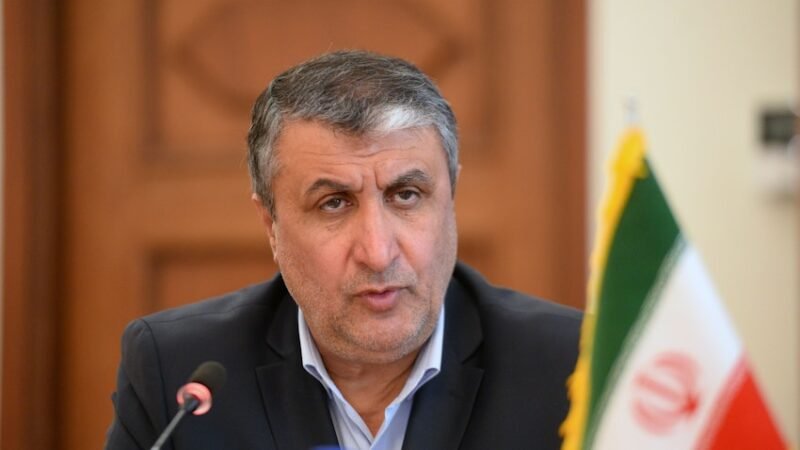
Talks are coming—but Iran just made its position clear: no limits, no compromise.
Just days before high-stakes negotiations with Washington, Iran has hardened its stance on the most sensitive issue in the conflict—its nuclear program.
Mohammad Eslami, Iran’s nuclear chief, flatly rejected any possibility of restricting uranium enrichment, dismissing U.S. and Israeli demands as unrealistic. His message was blunt: such conditions “will not come true.”
The statement lands at a critical moment. Talks between Iran and the United States, expected to take place in Pakistan, are intended to build on a fragile ceasefire and explore a path toward a longer-term agreement. But Eslami’s remarks highlight the central obstacle: both sides remain far apart on core issues.
For Washington, limiting enrichment is non-negotiable. For Tehran, it is a sovereign right.
This clash is not new—but it is now sharper.
After months of war and strikes on nuclear facilities, Iran’s leadership appears less willing, not more, to compromise. Instead, officials are framing enrichment as both a national entitlement and a strategic necessity, particularly in the wake of military pressure.
The position reflects a broader shift inside Iran. With power consolidated under a more hardline leadership, concessions that could be interpreted as weakness carry higher political risk. In that context, the nuclear program has become more than a technical issue—it is a symbol of resilience.
At the same time, the timing suggests negotiation strategy. By drawing a clear red line before talks begin, Tehran may be seeking to shape expectations—signaling that any agreement must accommodate, rather than dismantle, its enrichment capabilities.
That leaves negotiators with a narrow path.
Potential compromise could revolve around limits rather than elimination—caps on enrichment levels, stricter monitoring, or the handling of existing stockpiles. But even those options require trust and verification mechanisms that are currently in short supply.
The implications extend beyond the negotiating room. Without progress on the nuclear file, the broader ceasefire risks becoming unstable. For Israel and Gulf states, enrichment without constraint remains a central security concern. For the United States, it is a line tied directly to proliferation risk.
The talks are meant to reduce tensions.
But Iran’s latest signal suggests they may begin with confrontation—at least on paper.
And in this phase of the crisis, what is said before negotiations can matter just as much as what is agreed after.










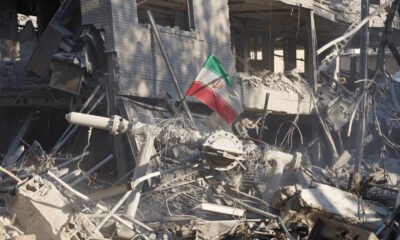



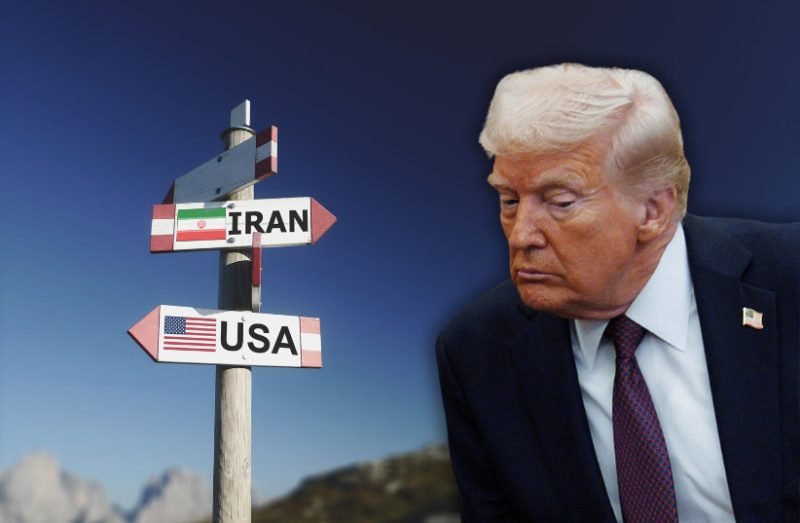
Bombed, damaged, delayed—but not destroyed. Iran’s nuclear clock is still ticking.
Iran’s nuclear program has been significantly damaged by months of U.S. and Israeli strikes—but it has not been eliminated. What remains is a reduced, disrupted system that still holds the core ingredients for future recovery.
Before the war began on February 28, Iran had already reached a critical threshold. It was enriching uranium up to 60 percent purity—just short of weapons-grade—and had accumulated more than 400 kilograms of highly enriched uranium, enough for multiple nuclear weapons if further processed. Its breakout time had shrunk to weeks, a sharp departure from the constraints imposed under the 2015 nuclear deal.
Key facilities—including Natanz, Fordow, and Isfahan—formed the backbone of that capability. Over the past year, repeated strikes targeted these sites, damaging infrastructure, power systems, and associated research centers.
According to Rafael Grossi and international assessments, enrichment capacity at major facilities is now severely degraded, with recovery likely taking years rather than months.
Yet destruction has not equaled dismantlement.
Large portions of Iran’s enriched uranium stockpile are believed to remain buried or sealed within underground complexes, particularly near Isfahan. Retrieving or neutralizing this material presents a major challenge. Meanwhile, Iran retains what may be its most critical asset: knowledge. Its scientists, technical networks, and dispersed expertise have not been erased.
The International Atomic Energy Agency also faces a significant limitation—restricted access. Without full inspections, it cannot verify whether undeclared sites or hidden activities are underway. Locations such as the deeply buried Pickaxe Mountain facility remain difficult to assess or target.
Strategically, the war has achieved its immediate aim: delaying Iran’s nuclear timeline. What was once a near-term breakout risk has likely been pushed back by years. But the deeper risk may now be political. Hardline voices in Tehran are increasingly arguing that the attacks prove the necessity of a nuclear deterrent.
That shift matters. A damaged program can be rebuilt. A determined political decision can accelerate it.
The ceasefire creates a narrow window for diplomacy—but only if it addresses the core issues: the fate of the enriched uranium stockpile, limits on future enrichment, and the restoration of credible monitoring. Without these, the current pause may simply mask a quieter, more concealed phase of development.
Iran’s nuclear capability is no longer at the brink—but it is far from gone.
And in a region already on edge, that distinction could define the next crisis.
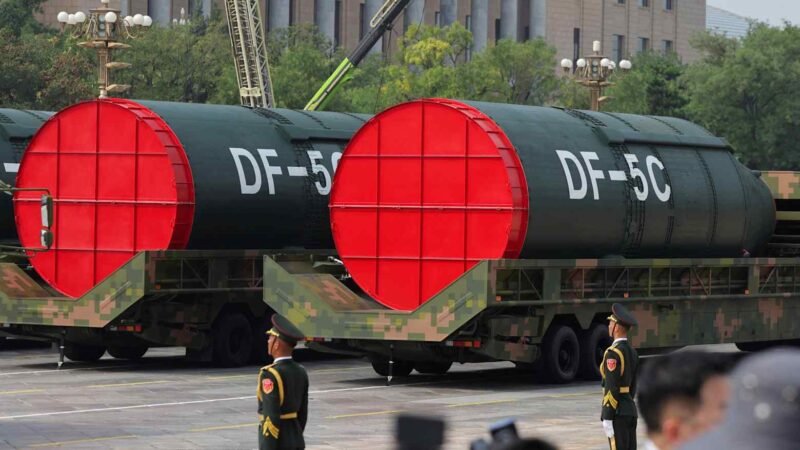
A mysterious seismic signal in 2020 is back in the spotlight — and Washington says it may point to a hidden Chinese nuclear test.
A senior U.S. official has disclosed new details about what Washington believes was a covert Chinese underground nuclear test in June 2020, an allegation Beijing firmly denies.
Speaking at the Hudson Institute in Washington, Assistant Secretary of State Christopher Yeaw said seismic data from a monitoring station in Kazakhstan detected what he described as a magnitude 2.75 “explosion” on June 22, 2020, near China’s Lop Nor test site in western China.
Yeaw said the signal, recorded roughly 450 miles away, was inconsistent with mining activity or natural earthquakes. Based on his review of additional data, he argued that the event matched what would be expected from a nuclear explosive test, possibly conducted using a method known as “decoupling” to muffle seismic signatures.
China’s last officially acknowledged nuclear test took place in 1996. Beijing has signed, but not ratified, the Comprehensive Nuclear-Test-Ban Treaty (CTBT), which prohibits all nuclear test explosions. The United States has also signed but not ratified the treaty.
The Comprehensive Nuclear-Test-Ban Treaty Organization (CTBTO), which operates a global monitoring network, said the data were insufficient to confirm that a nuclear test had occurred. Executive Secretary Robert Floyd noted that the seismic station in question recorded two small events spaced seconds apart but said they were below the threshold typically associated with nuclear explosions detectable with confidence.
China’s embassy in Washington rejected the U.S. accusation as “entirely unfounded,” calling it political manipulation aimed at justifying a possible resumption of American nuclear testing. Beijing urged Washington to reaffirm commitments by the five recognized nuclear-weapon states to refrain from testing and to support global nonproliferation efforts.
The renewed allegation comes amid heightened tensions over nuclear arms control. The New START treaty between the United States and Russia expired in February, raising fears of a new arms race. U.S. President Donald Trump has pressed China to join trilateral arms negotiations with Washington and Moscow, but Beijing has resisted, arguing that its arsenal remains far smaller than those of the two superpowers.
According to the Pentagon, China now possesses more than 600 operational nuclear warheads and could surpass 1,000 by 2030 — a buildup that continues to reshape the global nuclear balance.
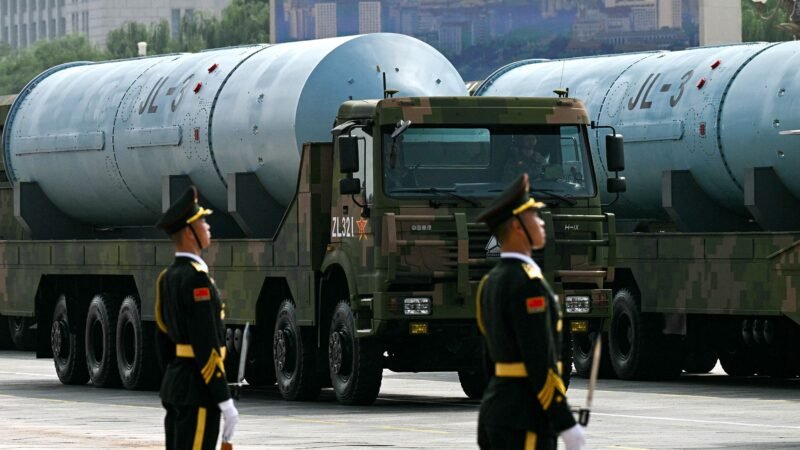
The last nuclear arms cap is gone — and Washington says it wants a bigger, tougher deal.
U.S. President Donald Trump has rejected a proposal by Russian President Vladimir Putin to voluntarily extend limits on strategic nuclear weapons deployments after the expiration of the New START treaty.
In a post on Truth Social on Thursday, Trump dismissed the idea of a one-year extension, calling New START a “badly negotiated deal” and urging instead the negotiation of a “new, improved and modernized” arms control agreement that could last longer and include additional powers.
Putin had proposed that both countries continue to observe New START’s caps — limiting each side to 1,550 deployed nuclear warheads on 700 delivery systems — for one year after the treaty’s expiry. The pact, signed in 2010, was the last remaining arms control agreement between the world’s two largest nuclear powers and expired after its sole five-year extension, agreed in 2021.
Arms control advocates warn that the treaty’s end removes key inspection and transparency measures, raising the risk of miscalculation and a renewed nuclear arms race. Trump, however, argued that Russia had already undermined the agreement by suspending on-site inspections in 2023, a move Moscow justified by citing U.S. support for Ukraine.
The Kremlin said it remains open to dialogue if Washington responds constructively, while the United Nations urged both sides to restore arms control mechanisms. China called the treaty’s expiration regrettable and encouraged renewed U.S.-Russia talks, though it has declined to join trilateral negotiations.
With no replacement agreement in place, analysts warn the U.S. and Russia could each deploy hundreds of additional warheads within a few years, further destabilizing global nuclear security.

The war hit Iran hard—but didn’t finish the job

Ceasefire Exposes Hezbollah’s Grip and State Fragility

Iran Rejects Limits on Uranium Enrichment Ahead of U.S. Talks


-
 Terrorism2 weeks ago
Egypt Uncovers Alleged Plan to Down Presidential Plane
-
 US-Israel war on Iran3 weeks ago
Former CIA Chief Blames White House for Escalating Iran War Crisis
-
 Top stories2 weeks ago
Saudi Arabia Deepens Defense Ties with Ukraine
-
 Red Sea3 days ago
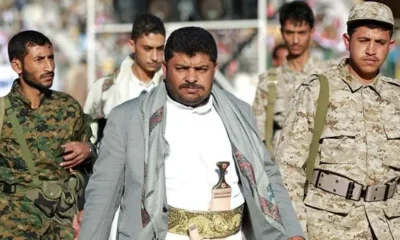
Houthis Threaten to Shut Red Sea if War Widens
-

 Analysis3 weeks ago
Inside the IRGC’s Quiet Rebuild of Hezbollah
-

 Top stories1 day ago
Kremlin Claims EU Is Working Against Orbán
-
 US-Israel war on Iran3 weeks ago
Iran War Sparks Global Crisis Warning
-
 Top stories2 weeks ago
France Leads Talks With 35 Nations to Secure Strait of Hormuz