“80% Must Go Back”—Germany Scrambles to Contain Fallout Over Syria Plan.
At a London policy forum, the question came without warning—and the answer shifted the narrative. Ahmed al-Sharaa distanced himself from a claim that had already begun to reverberate across Europe: that most Syrians in Germany would soon return home.
Days earlier in Berlin, Friedrich Merz had stood beside the Syrian leader and suggested that roughly 80 percent of the nearly one million Syrians living in Germany could go back within three years. The remark, delivered in the language of long-term planning, quickly evolved into a political flashpoint.
By Wednesday, the German government was trying to contain the fallout.
Officials declined to clarify whether the figure originated with Merz or Sharaa, with government spokesman Stefan Kornelius sidestepping direct attribution. Instead, he emphasized a broader point: Syria has an interest in the return of its citizens, particularly to support reconstruction after years of war. Germany, he added, cannot indefinitely extend protection if the conditions that justified asylum no longer exist.
The dispute may appear semantic. It is not.
By the third layer of this story, the tension reflects a deeper European dilemma: how to balance domestic political pressure with the uncertain realities on the ground in Syria. For Berlin, the issue intersects directly with rising support for the far-right Alternative for Germany, which has capitalized on migration concerns and is now polling competitively with Merz’s conservative bloc.
Merz’s remarks, in that context, were not simply diplomatic—they were political signaling.
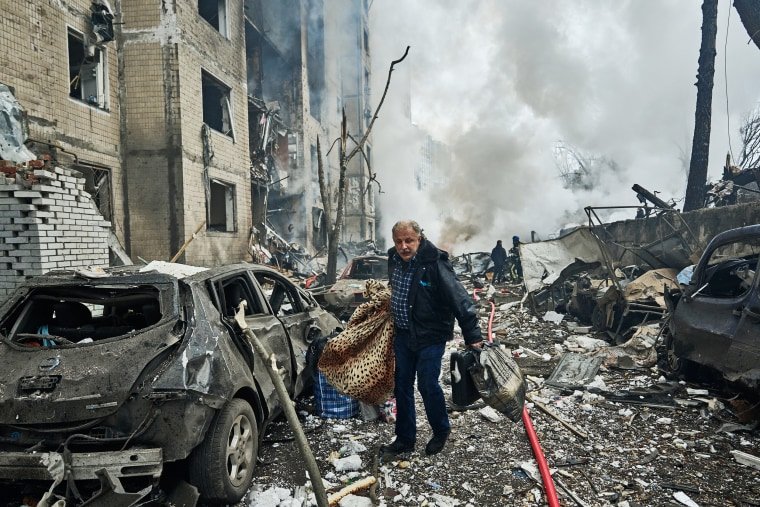
Yet the facts remain unsettled. Syria, while no longer under the rule of Bashar al-Assad, continues to face instability, economic fragility, and episodes of sectarian violence. Conditions for large-scale return are uneven at best. For many refugees, the question is not willingness, but safety and opportunity.
There are also practical constraints. Organizing the return of hundreds of thousands of people within a fixed timeline would require coordination across governments, infrastructure inside Syria capable of absorbing them, and legal frameworks in Europe that can withstand scrutiny. None of those elements are fully in place.
At the same time, European governments are recalibrating. The fall of Assad has altered the legal and political basis for asylum claims, prompting discussions about whether protection obligations should evolve. Germany’s position—carefully worded but increasingly firm—suggests that migration policy is entering a new phase shaped by post-conflict calculations.
Still, the disagreement between Merz and Sharaa highlights a key uncertainty. Even as Europe explores pathways for return, Syria’s leadership appears cautious about being seen as endorsing large-scale repatriation timelines that may be difficult to fulfill.
The result is a gap between political ambition and operational reality.
Germany’s effort to play down the controversy signals recognition of that gap. Too much pressure risks appearing premature. Too little risks fueling domestic backlash.
The strategic question now is whether Europe can move from rhetoric to a sustainable framework—one that aligns political demands at home with conditions abroad.
Because in the end, the issue is not simply how many refugees return. It is whether the region they return to can hold them—and whether the policies shaping that return can endure the pressures that brought them to Europe in the first place.