
US-Israel war on Iran
Trump Blocks Israeli Push for Iran Uprising

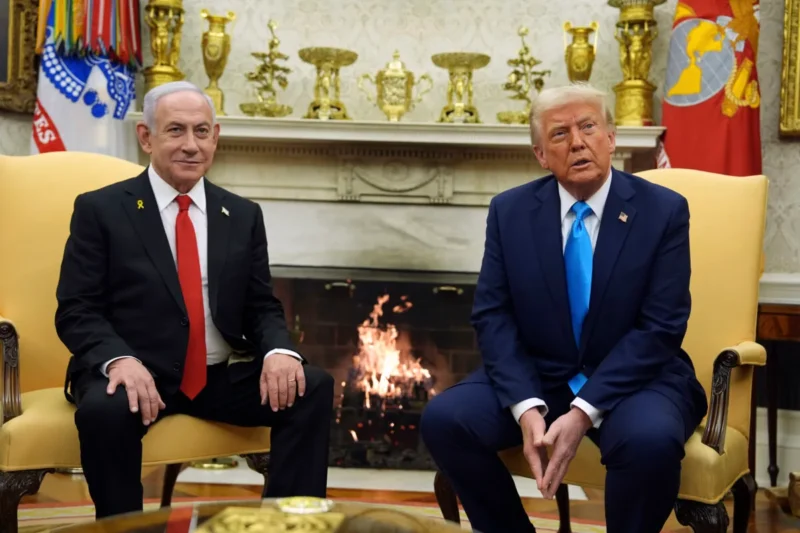
Trump refuses Netanyahu’s plan—fearing civilians would pay the price.
In a revealing glimpse into wartime decision-making, President Donald Trump has reportedly rejected a proposal from Israeli Prime Minister Benjamin Netanyahu to encourage mass protests inside Iran—warning the move could put civilian lives at extreme risk.
According to officials familiar with the conversation, Netanyahu suggested urging Iranians to take to the streets in a bid to destabilize the government. Trump, however, pushed back sharply.
“Why the hell should we tell people to take to the streets when they’ll just get mowed down,” Trump reportedly said, underscoring concerns that such a strategy could trigger a violent crackdown.
The exchange highlights a growing divergence between Washington and Tel Aviv—not over military operations, but over the political endgame of the war.
Both countries remain aligned on weakening Iran’s military capabilities. But their approaches to regime change differ significantly.
For Netanyahu, creating conditions for internal unrest appears to be a core objective. For Trump, U.S. officials say, regime change is secondary—an outcome that might emerge, but not one worth pursuing at the cost of widespread civilian casualties or uncontrollable instability.
This divide has surfaced repeatedly in recent weeks.
Trump has also expressed unease over Israeli strikes on Iran’s energy infrastructure, warning that such attacks risk triggering global economic fallout, including surging oil prices and broader market instability. His administration has instead leaned—at least intermittently—toward diplomatic openings, including pauses in planned strikes and proposals for negotiations.
The disagreement reflects a deeper strategic question: how far should external powers go in attempting to reshape a rival state from within?
Historically, efforts to incite uprisings under external pressure have produced mixed—and often dangerous—results. Without guarantees of protection or sustained support, civilian movements can face severe repression, sometimes strengthening rather than weakening entrenched regimes.
For Trump, the calculus appears rooted in that risk.
Encouraging protests without the means to protect those who answer the call could not only lead to mass casualties but also damage U.S. credibility—turning a strategic gamble into a humanitarian and political liability.
As the war grinds on, the episode underscores a broader reality: even among close allies, agreement on tactics can fracture when the consequences—human, economic, and geopolitical—become too high to ignore.













From energy to nuclear sites—this war just crossed into its most dangerous phase.
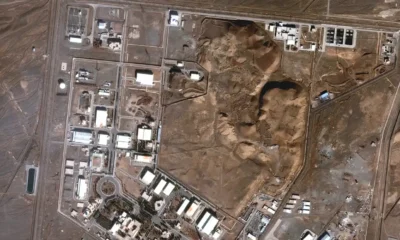
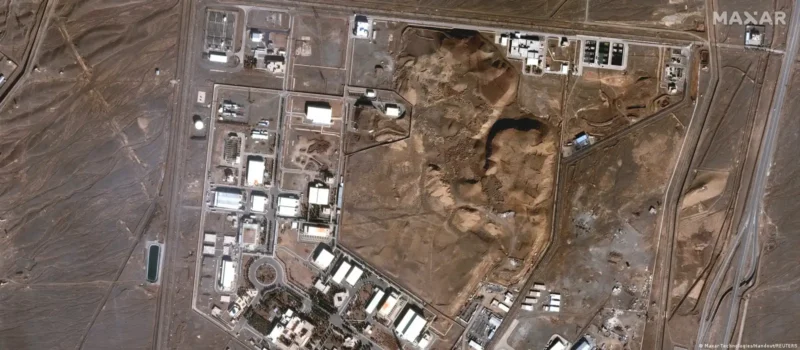
The Israeli military has confirmed it carried out strikes on two key nuclear-related facilities in Iran, marking a sharp escalation in a war already reshaping the region’s strategic landscape.
According to official statements, the Israeli Air Force targeted a heavy water reactor at Arak—also known as the Khondab complex—and a uranium processing facility near Yazd. Both sites are considered critical components of Iran’s nuclear infrastructure, though their exact operational status remains contested.
The Arak facility, long a point of international concern, was originally designed to produce plutonium—a material that can be used in nuclear weapons. However, under the 2015 nuclear agreement, its core was removed and rendered inoperable.
The International Atomic Energy Agency has previously assessed that the reactor has not been fully operational in recent years.
Iranian authorities said the strikes caused no casualties and did not result in any radioactive leakage—an outcome that, if confirmed, may have prevented a far more severe humanitarian and environmental crisis.
Still, the symbolism of the attack is unmistakable.
By striking nuclear-linked facilities, Israel is signaling that it is willing to push beyond conventional military targets—into areas that carry global security implications. For Israel, the objective remains clear: to prevent Iran from acquiring nuclear weapons capability.
Tehran, however, continues to insist that its nuclear program is strictly civilian, focused on energy and medical research.
This latest development raises the stakes dramatically.
Attacks on nuclear infrastructure carry inherent risks—not only of radiation release but also of triggering broader international involvement. Any escalation involving nuclear sites tends to draw heightened scrutiny from global powers and watchdog agencies, given the potential for long-term consequences beyond the battlefield.
The strikes also come amid an already volatile environment, where the war—sparked by joint U.S.-Israeli attacks in late February—has expanded to include missile exchanges, maritime disruptions, and cyber operations.
In strategic terms, the conflict is entering a new phase.
What began as an effort to degrade military capabilities is now touching the core of Iran’s long-contested nuclear program. That shift increases both the pressure on Tehran and the risks of miscalculation.
The immediate question is whether this escalation forces Iran toward restraint—or provokes a broader retaliation that could pull more actors into the conflict.
Either way, the line between conventional war and strategic confrontation is becoming increasingly blurred.
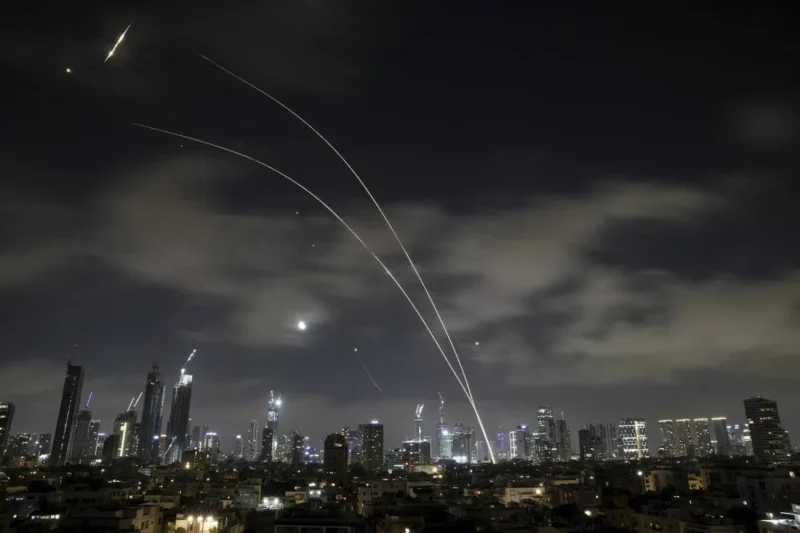
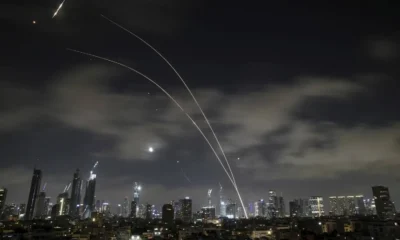
Missiles fall. Air defenses rise. The Gulf fights back—while calling for diplomacy.
As the war between Iran and the United States stretches into its fourth week, Gulf states are confronting an intense wave of missile and drone attacks—while insisting that diplomacy, not escalation, remains their preferred path.
The Gulf Cooperation Council says roughly 85 percent of Iranian strikes have targeted Gulf countries, compared to a smaller share aimed at Israel, underscoring how the conflict has expanded far beyond its original front lines.
Across the region, defense systems have been working at full capacity.
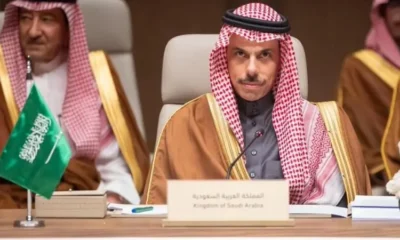
In Saudi Arabia, authorities said more than 20 drones were intercepted over the Eastern Province within a single 24-hour period. Officials warned that Tehran’s continued attacks would deepen its political and economic isolation rather than yield strategic gains.
Kuwait reported shooting down multiple drones while simultaneously dismantling a suspected militant network linked to Hezbollah, accused of planning assassinations targeting state leadership.
In Bahrain, prosecutors referred 14 suspects to court on espionage charges tied to Iran’s Revolutionary Guard. The country’s military says it has intercepted more than 150 missiles and hundreds of drones since the conflict began.
United Arab Emirates reported one of the highest interception rates, dealing with hundreds of ballistic missiles and nearly two thousand drones. Despite these defenses, casualties have been recorded, highlighting the persistent risks to civilian populations.
Meanwhile, Qatar has intensified defense coordination with Washington, reinforcing its role as a key strategic partner amid rising regional tensions.
Beyond the battlefield, Gulf governments say they are also dismantling espionage networks and “sleeper cells,” signaling a parallel internal security effort to counter infiltration and destabilization.
Despite the scale of the attacks, Gulf leaders continue to emphasize restraint.
The GCC has outlined a three-part strategy: ensuring a clear understanding of the conflict’s realities, building a unified international stance against Iranian actions, and securing a role in shaping any post-war regional order.
At the same time, the United Nations Human Rights Council has condemned strikes targeting Gulf infrastructure and called for an immediate halt to hostilities, including Iran’s disruption of shipping through the Strait of Hormuz.
The stakes extend far beyond the region.
Officials warn that continued escalation could disrupt global energy flows, destabilize supply chains, and transform critical maritime routes into conflict zones. The Gulf, long a pillar of energy stability, is now at the center of a widening geopolitical storm.
Yet even under sustained attack, the message from Gulf capitals remains consistent: military defense is necessary—but a political solution is essential.
The question is whether diplomacy can keep pace with a conflict that is expanding faster than efforts to contain it.
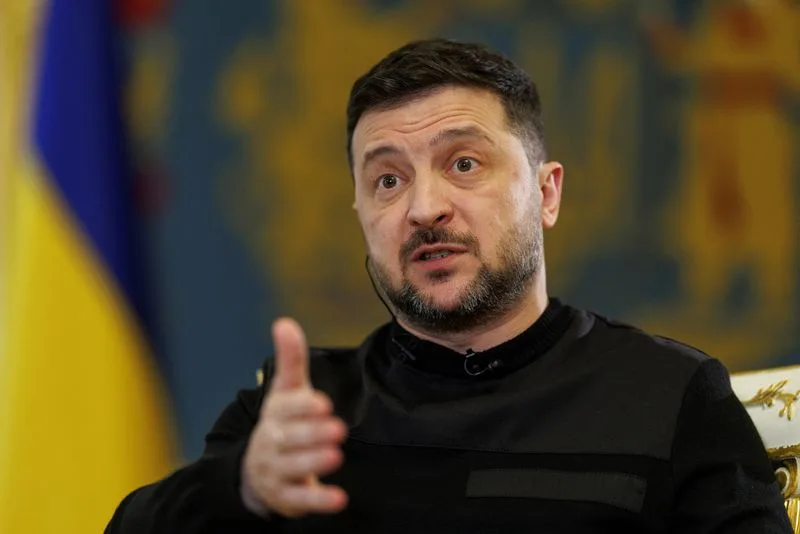
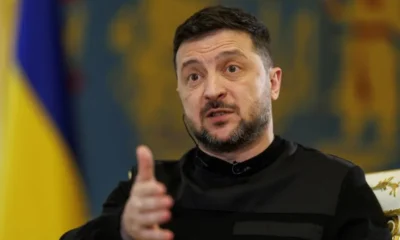
From Kyiv to Tehran—Zelenskyy claims Russia tried to bargain intelligence like a weapon.
President Volodymyr Zelenskyy has accused Russia of attempting to leverage its ties with Iran in a high-stakes geopolitical exchange—offering to limit intelligence support to Tehran if the United States reduced its own intelligence sharing with Ukraine.
Speaking from Kyiv, Zelenskyy said Ukrainian intelligence services had gathered what he described as “irrefutable” evidence that Moscow continues to provide military intelligence to Iran amid the ongoing Middle East war. He did not publicly release the data but insisted the information had been verified at the highest levels.
“I have reports from our intelligence services showing that Russia is doing this,” Zelenskyy said. “Isn’t that blackmail? Absolutely.”
The allegation, if substantiated, would point to a widening strategic overlap between two major conflicts: Russia’s war in Ukraine and the escalating confrontation involving the United States, Israel, and Iran.
Zelenskyy’s claim suggests that Moscow is attempting to convert its influence in one theater into leverage in another—turning intelligence flows into bargaining chips in a broader contest with Washington.
The Kremlin has denied providing support to Iran, a position it has previously communicated directly to U.S. officials. Still, concerns about growing military cooperation between Moscow and Tehran have intensified in recent months.
Ukrainian officials say some drones used in attacks across the Middle East contain Russian components, raising questions about technological exchange and coordination between the two countries. Iran-designed Shahed drones have already played a central role in Russia’s campaign against Ukraine since 2022.
The overlap is increasingly operational as well as strategic.
Zelenskyy said Ukraine is now assisting Gulf states—including Saudi Arabia, the UAE, and Qatar—in defending against drone threats linked to the broader conflict.
That support underscores Kyiv’s evolving role, not only as a recipient of international aid but as a security partner in a rapidly expanding network of conflicts.
The implications extend beyond the battlefield.
If intelligence-sharing becomes a tool of coercion between global powers, it could complicate alliance structures and deepen mistrust across multiple regions.
For the United States, any attempt to link support for Ukraine with Middle East dynamics would present a difficult strategic dilemma—forcing policymakers to balance commitments across two critical fronts.
For Zelenskyy, the message is clear: the war in Ukraine cannot be viewed in isolation.
Instead, it is increasingly part of a larger geopolitical contest, where alliances shift, conflicts intersect, and leverage is exercised not only through force—but through information, influence, and timing.
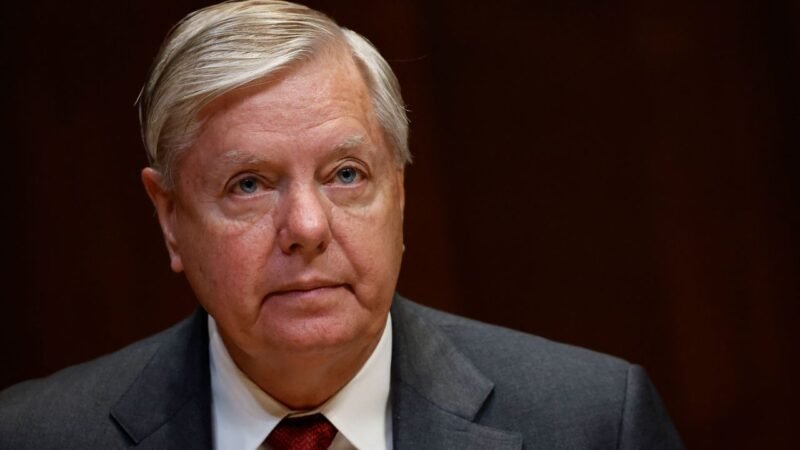
He once urged escalation—now he says “war is hell.” What changed in Washington?
Sen. Lindsey Graham is signaling a notable shift in tone on the Iran war, saying he now prefers a diplomatic resolution—even after previously advocating for aggressive military options.
In a public statement, Graham said he supports efforts by President Donald Trump to negotiate an end to the conflict, emphasizing that diplomacy would be the preferable path if it can achieve U.S. objectives.
“War literally is hell,” Graham wrote, adding that while he remains focused on limiting Iran’s nuclear and military capabilities, the method—military or diplomatic—is secondary to the outcome.
The comments come at a fragile moment in the conflict. The White House recently paused planned strikes on Iranian energy infrastructure for five days while floating a 15-point ceasefire proposal. Tehran, however, has publicly rejected the plan, even as indirect communication continues through intermediaries.
Graham’s position reflects a broader tension inside Washington: how to reconcile maximalist war aims with the mounting risks of escalation.
Until recently, the South Carolina senator had been among the most vocal advocates of expanding the war. He urged the U.S. to seize or blockade Iran’s Kharg Island—one of the country’s most critical النفط export hubs—arguing it would cripple Tehran’s economic lifeline.
That proposal drew sharp criticism from fellow lawmakers, including Rep. Anna Paulina Luna, who accused Graham of downplaying the human cost of military intervention and invoked the heavy casualties of past conflicts.
The exchange highlights a widening divide within U.S. political circles. While some officials argue that decisive military action could force Iran into submission, others warn that such steps risk triggering a broader regional war—with unpredictable consequences for global energy markets, U.S. forces, and civilian populations.
Graham’s recalibration does not signal a retreat from hardline objectives. He continues to call for a deal that eliminates Iran’s nuclear ambitions, halts its ballistic missile program, and ends support for regional proxies.
But his language now reflects a growing recognition of the stakes.
After weeks of escalating strikes, threats, and shifting red lines, even some of the war’s strongest proponents are acknowledging a reality long understood in strategic circles: once conflict expands beyond control, the cost is rarely contained—and rarely predictable.
In that sense, Graham’s pivot may be less about changing goals than confronting the limits of military power in a rapidly widening war.
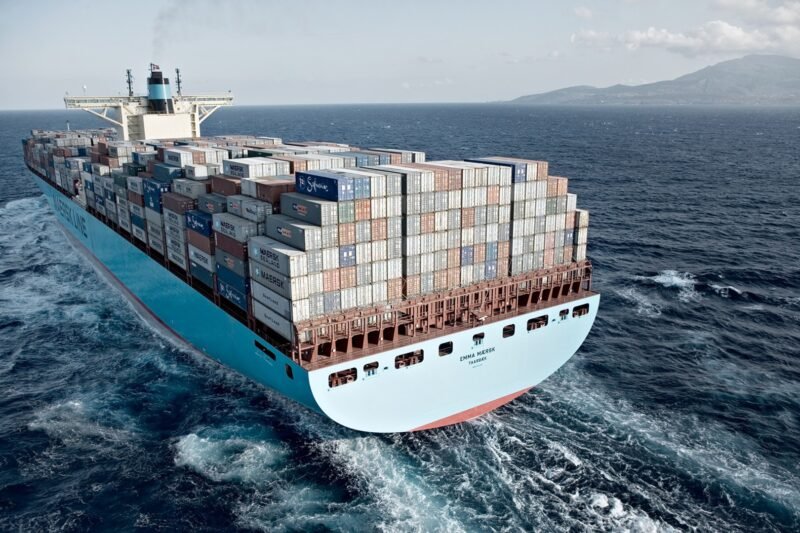
When sea routes shut down, the Gulf turned to land. Here’s how food and medicine are still getting through.
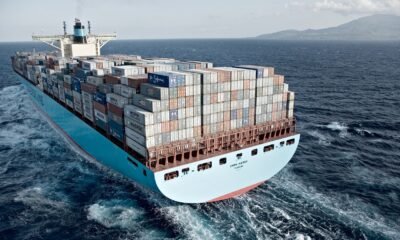
As the war in the Gulf disrupts one of the world’s most critical shipping corridors, global logistics giant Maersk is racing to keep essential goods moving—by land.
With traffic through the Strait of Hormuz reduced to a near standstill following Iranian strikes and heightened security risks, traditional maritime supply chains have been severely disrupted. In response, Maersk has activated and expanded a “land-bridge” network across the region to ensure the continued delivery of food and medical supplies.
The system is both improvised and strategic.
Cargo is rerouted through key regional ports—Jeddah, Salalah, Sohar, and Khor Fakkan—before being transported overland to destinations across the Gulf. These alternative routes, some of which were developed during earlier disruptions in the Red Sea, are now operating at significantly higher capacity.
The scale of the shift is striking.
Maersk reports that cargo volumes into Jeddah alone have surged by 40 percent since the conflict began. The company, which previously handled around 35,000 containers weekly in and out of the Gulf, is now channeling much of that volume through land-based logistics corridors.
For now, the focus is clear: prioritize survival goods.
Food and medicines—especially temperature-sensitive shipments like chilled and frozen products—are being fast-tracked through the network. Governments across the Gulf Cooperation Council have coordinated with logistics providers to introduce “green lane” procedures, streamlining customs and border processing to reduce delays.
The urgency reflects a deeper vulnerability.
Gulf countries import up to 85 percent of their food, making them heavily dependent on uninterrupted supply chains. Any prolonged disruption risks not only price increases but also shortages of critical goods.
So far, Maersk says there is still spare capacity in these alternative routes. But that margin may not last.
The cost of keeping goods moving is rising sharply. Higher fuel prices, increased insurance premiums, and the added complexity of multimodal transport are driving up logistics expenses—costs that are likely to be passed on to consumers.
And the situation remains fluid.
Security conditions could force further route adjustments, while any escalation in the conflict could strain even these backup systems. What was once a contingency plan is now a primary lifeline.
The broader lesson is clear.
Modern supply chains are resilient—but only to a point. When a chokepoint like Hormuz falters, the entire system must adapt in real time. And while land corridors can temporarily bridge the gap, they come with limits—both in capacity and cost.
For now, the Gulf is still being fed.
But the longer the disruption continues, the harder—and more expensive—it will become to keep that lifeline intact.
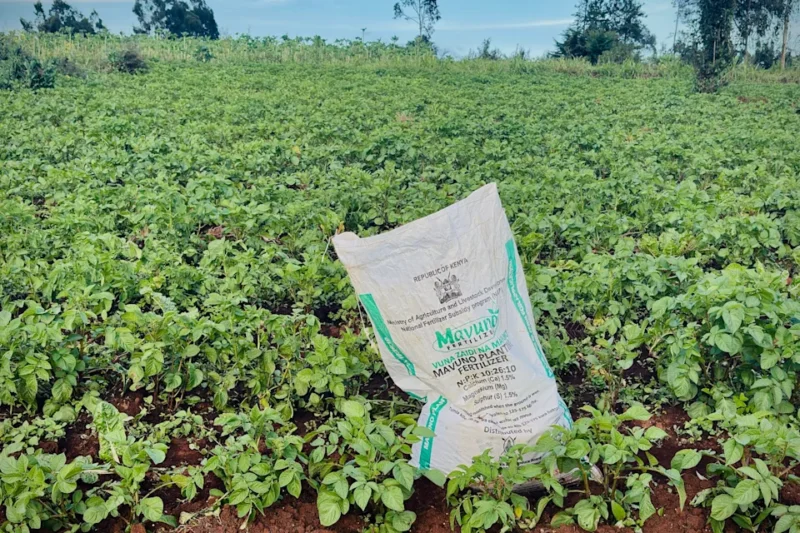
The war isn’t just about oil anymore — it could hit your food next.
The war around Iran is no longer confined to missiles and maritime chokepoints. It is now rippling through one of the most fragile systems on earth: global food production.
At the center of this emerging crisis lies the disruption of the Strait of Hormuz, a narrow waterway that typically carries not only a fifth of the world’s oil but also a significant share of fertilizer trade. As Tehran restricts shipping in response to U.S. and Israeli strikes, the consequences are cascading far beyond energy markets.
Fertilizer—often overlooked outside agricultural circles—is the backbone of modern farming. Without it, yields fall. With shortages, costs surge. And when both happen at once, the effects move quickly from fields to supermarket shelves.
The immediate shock is already visible. Supplies of nitrogen-based fertilizers, particularly urea, have tightened sharply as natural gas prices spike and shipping routes falter.
Analysts estimate that nearly a third of global urea trade has been disrupted. For farmers, timing is everything: fertilizers must be applied at the start of planting. Miss that window, and even late deliveries cannot fully recover lost yields.
For smallholder farmers, the stakes are existential. In countries like India, where millions depend on subsidized inputs, uncertainty is spreading just as planting season begins.
In parts of Africa, where fertilizer imports are heavily dependent on Gulf supply chains, shortages are already forcing farmers to cut usage—an early signal of reduced harvests ahead.
The warning from the World Food Programme is blunt: in the worst case, the world could face crop failures in the next season. In the more likely scenario, higher production costs will translate directly into higher food prices.
The pressure is compounded by structural vulnerabilities. Fertilizer production depends heavily on natural gas, meaning energy shocks feed directly into agricultural costs. At the same time, alternative suppliers are constrained.
China is prioritizing domestic needs, while Russia is already operating near full capacity. There is no immediate replacement for disrupted Gulf flows.
Even if the war were to end tomorrow, recovery would not be immediate. Shipping insurers, already wary of the risks in Hormuz, are likely to raise premiums sharply. Producers may hesitate to resume exports without clear security guarantees.
The result is a lag that could extend the crisis well into the next agricultural cycle.
What makes this moment particularly dangerous is timing. The global food system is entering a sensitive phase, with planting underway across Europe and North America and about to begin in large parts of Asia. A disruption now does not just affect current prices—it shapes next year’s supply.
This is how geopolitical conflict becomes a food crisis.
The connection is often invisible at first. A blocked strait leads to higher gas prices. Higher gas prices reduce fertilizer production. Reduced fertilizer lowers crop yields. And lower yields, eventually, raise the price of bread, rice, and basic staples worldwide.
In that chain reaction lies the broader significance of the Iran war. It is no longer just a test of military power or diplomatic leverage. It is a stress test for the global systems that sustain everyday life.
And for millions of farmers—and consumers—the impact is already beginning to be felt.
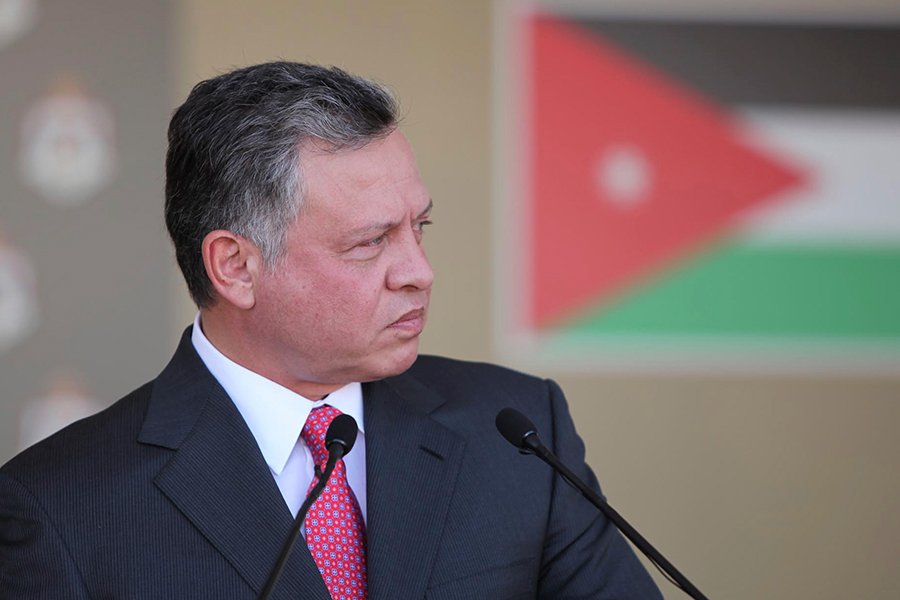
Jordan just set the condition for peace: no deal unless Arab states are protected.
As diplomatic efforts to end the war intensify, Abdullah II has issued one of the clearest warnings yet: any agreement that ignores Arab security will not hold.
Speaking after consultations with Haitham bin Tariq, the Jordanian monarch framed the stakes in stark terms. Ending the war, he said, is not enough. The outcome must guarantee the security of Arab states—particularly the Gulf—if it is to bring lasting stability.
This intervention comes at a moment when the conflict has already spilled far beyond Iran’s borders. Since the outbreak of fighting involving Iran, Israel and the United States, retaliatory strikes have hit civilian infrastructure across the region, including airports, ports, and energy facilities.
Jordan itself has not been spared. Its air force has intercepted more than 200 missiles and drones, underscoring how quickly a regional war can redraw the map of vulnerability.
For Amman, this is no longer a distant geopolitical contest. It is a direct national security threat.
King Abdullah’s message reflects a broader Arab concern: that any U.S.-Iran arrangement focused narrowly on nuclear or military issues risks overlooking the wider regional balance. Without explicit guarantees, Gulf states—and frontline countries like Jordan—could remain exposed to the same pressures that fueled the conflict in the first place.
That concern also explains the emphasis on diplomacy. Oman, long a quiet intermediary in regional crises, has re-emerged as a key channel for de-escalation. By praising Muscat’s efforts, Jordan is signaling support for a negotiation track that includes—not bypasses—regional actors.
The underlying logic is simple but consequential. Security in the Gulf is not a localized issue; it is a global one. The region sits at the heart of energy flows, trade routes, and financial stability. Disruptions there reverberate far beyond the Middle East, affecting markets and economies worldwide.
Yet the political message is even sharper.
Arab states are no longer willing to be passive observers in agreements that shape their security environment. The era in which deals were struck over their heads—whether in Washington, Tehran, or elsewhere—is increasingly contested.
Jordan’s position suggests a shift toward a more assertive regional role: one that insists on inclusion, coordination, and collective security guarantees as preconditions for peace.
Whether negotiators take that message seriously could determine not just how this war ends—but whether it ends at all.
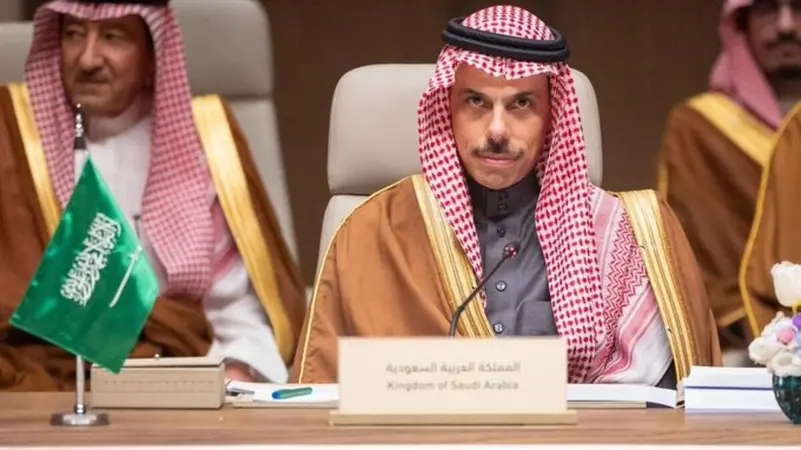
Saudi Arabia isn’t fighting the war — it’s waiting to win it. Here’s how.
In a region defined by escalation, Saudi Arabia is choosing something far more deliberate: restraint.
As the war between the United States, Israel, and Iran enters a dangerous phase, Riyadh has resisted the gravitational pull of direct confrontation. Instead, it is executing a strategy built on patience, selective engagement, and calculated distance—an approach that reflects not weakness, but discipline.
At the center of this strategy lies a fundamental tension. Iran’s revolutionary model poses a direct ideological and geopolitical challenge to the Kingdom’s monarchical system and its alignment with Western security structures.
Yet Saudi Arabia has concluded that outright war would be self-defeating. Any large-scale escalation—especially one targeting energy infrastructure or maritime routes—would strike at the heart of its economic transformation.
That transformation, anchored in Vision 2030, is no longer theoretical. Non-oil sectors now account for a majority share of economic output, while tourism and investment flows have accelerated beyond early expectations. Megaprojects like NEOM and the Red Sea initiative are not just prestige ventures; they are pillars of a post-oil future that depends on stability above all else.
War threatens that stability.
This is why Riyadh’s approach is less about confrontation and more about positioning. Saudi Arabia benefits when its rivals are contained, distracted, or weakened—but it seeks those outcomes indirectly.
A prolonged conflict that drains Iran’s capacity, tests U.S. commitments, and constrains Israeli dominance can shift the regional balance without requiring Saudi Arabia to absorb the costs.
Recent diplomacy reflects this logic. Despite deep rivalry, Saudi officials have maintained communication channels with Tehran, reinforcing the détente brokered by China in 2023.
These contacts are not signs of reconciliation, but tools of risk management—designed to prevent spillover into Saudi territory and keep escalation within limits.
At the same time, Riyadh’s relationship with United States is evolving. While security ties remain essential, the Kingdom is no longer operating as a passive partner. It is diversifying its alliances, expanding engagement with China and Russia, and asserting greater independence in energy and foreign policy decisions.
This recalibration reflects a broader reality: the Middle East is no longer shaped by a single dominant power. In this emerging multipolar landscape, influence accrues not only through force, but through flexibility.
Saudi Arabia is adapting accordingly.
Its stance toward Israel illustrates this balance. Tactical alignment against Iranian threats coexists with strategic caution. Riyadh has avoided full normalization, linking any progress to credible steps toward Palestinian statehood—preserving both domestic legitimacy and regional leverage.
The result is a strategy that operates in the background rather than the battlefield.
It is not without risk. A miscalculation—whether by Iran, Israel, or Washington—could still draw Saudi Arabia into a wider conflict.
Attacks on energy facilities, shipping routes, or critical infrastructure would have immediate and severe consequences. But Riyadh appears to be betting that disciplined restraint, combined with active diplomacy, can contain those risks.
In doing so, Saudi Arabia is redefining what power looks like in the modern Middle East.
Not dominance through force, but influence through timing. Not escalation, but endurance.
As others exhaust themselves in confrontation, Riyadh is positioning for what comes next—quietly, deliberately, and with an eye on a future where survival depends less on military victories and more on strategic patience.

Israel Confirms Strikes on Iran Nuclear Sites in Arak and Yazd

Gulf States Intercept Hundreds of Iranian Missiles and Drones

Red Sea Emerges as Next Global Flashpoint


-
 Terrorism2 months ago
America Pulls Back From Somalia but Doubles Down Next Door
-

 Analysis2 months ago
How Chinese Speculators Set the Stage for the Gold and Silver Crash
-

 Top stories2 months ago
Rubio Signals Preemptive Military Option as U.S. Tightens Pressure on Iran
-

 Russia-Ukraine War1 month ago
Russian General Boasted of Torture and Killing of Ukrainian Prisoners
-

 US-Israel war on Iran1 month ago
UK Refuses Iran Strike Access, Trump Fires Back
-
 Russia-Ukraine War1 month ago
Europe’s Spies Challenge Trump’s Ukraine Peace Optimism
-
 Top stories4 weeks ago
War Expands Across Region as Iranian Militias Join Fight
-
 Analysis2 months ago
Iran Warns, Qatar Mediates, Washington Deploys: A Crisis Managed in Public and Private