
US-Israel war on Iran
Trump Counterterror Chief Quits Over Iran War

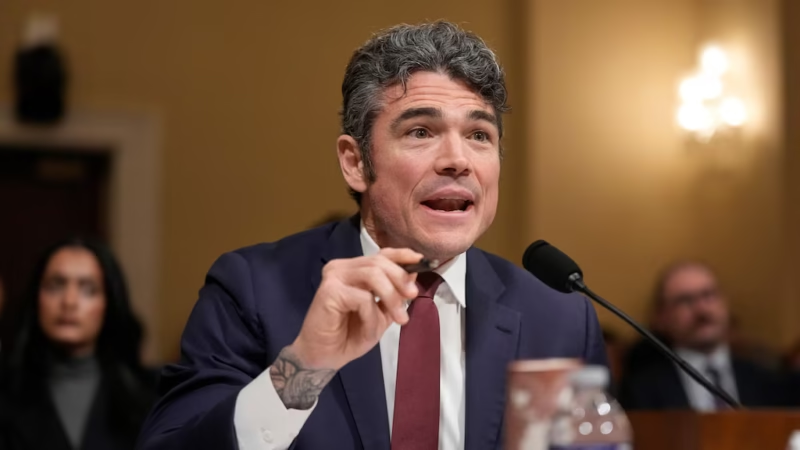
A senior U.S. security official walks away — saying Iran posed no imminent threat. The war debate just moved inside the White House.
Joe Kent Resigns as National Counterterrorism Center Director, Accuses Israel of Driving U.S. Into Conflict.
Joe Kent, director of the National Counterterrorism Center, resigned Tuesday in protest over the administration’s war with Iran, declaring that he could not support a conflict he believes was unnecessary and influenced by Israel.
In a resignation letter posted publicly, Kent wrote that Iran posed “no imminent threat” to the United States and argued that Washington had been drawn into war under pressure from Israeli officials and their American allies.
Kent, a former U.S. Army Special Forces warrant officer, served under Director of National Intelligence Tulsi Gabbard. His departure marks one of the most senior resignations tied directly to the current conflict.
In his letter, Kent praised Donald Trump for actions taken during his first term, including the killing of Iranian General Qassem Soleimani and operations against ISIS, while avoiding what he described as “endless wars.”
But he accused the administration of abandoning that posture amid what he called a misinformation campaign pushing for confrontation with Tehran.
Kent drew parallels to the run-up to the Iraq war, warning against repeating what he described as strategic misjudgments driven by flawed intelligence narratives.
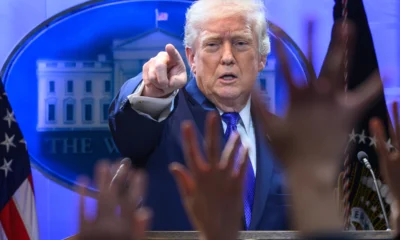
The White House responded sharply. Speaking at a public event, Trump said he had read Kent’s statement and described him as “weak on security.” The president rejected the assertion that Iran was not a threat, insisting that global consensus recognized Tehran’s danger.
Kent’s political background has been controversial. He twice ran for Congress in Washington state and lost.
His campaigns drew scrutiny over associations with far-right activists and conspiracy-driven rhetoric surrounding the 2020 election and the January 6 Capitol attack. He was confirmed to his counterterrorism role on a narrow, partisan Senate vote.
His resignation underscores widening fractures within the administration and the broader conservative coalition over the Iran war. While some Republicans argue the campaign is necessary to degrade Tehran’s military capacity, others fear it risks becoming another prolonged Middle Eastern entanglement.
Kent’s departure does not change U.S. strategy, but it highlights internal dissent at a sensitive moment. Wars abroad often expose divisions at home. In this case, the disagreement is no longer confined to lawmakers or commentators — it has reached the upper ranks of America’s counterterrorism leadership.












Behind Enemy Lines: A wounded pilot, a mountain hideout, and a deception campaign—this rescue was anything but routine.
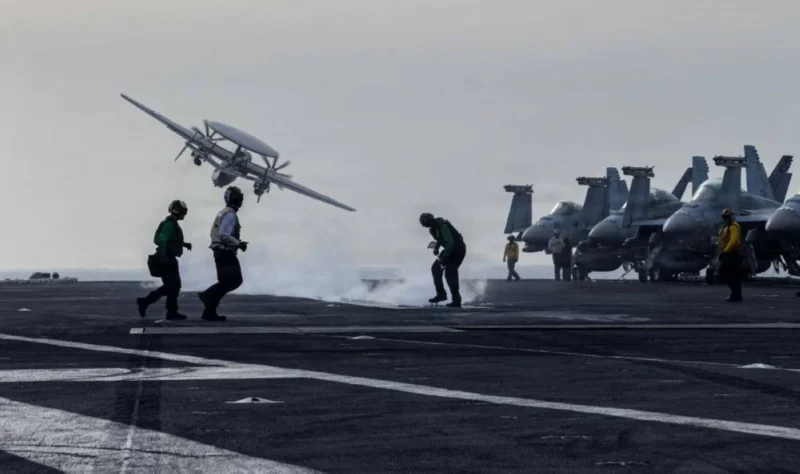
WASHINGTON — The United States carried out a complex and high-risk operation to rescue two aircrew members after their fighter jet was downed over Iran, combining intelligence deception, sustained surveillance and force projection deep inside hostile territory.
According to U.S. officials, the mission unfolded in two stages, with each service member recovered separately under markedly different conditions. The first aviator was extracted in a daylight operation that took several hours, while the second—injured and isolated—evaded capture in mountainous terrain before being located and rescued.
Central Intelligence Agency played a central role in shaping the operation’s early phase. Officials said the agency conducted a deception campaign designed to mislead Iranian authorities, spreading false signals that the missing airman had already been located and was being moved by ground. The tactic appears to have bought critical time, allowing U.S. intelligence to identify the aviator’s actual position.
The second crew member, a weapons systems officer, had climbed to higher ground and concealed himself in a remote mountain area despite injuries. His coordinates were eventually relayed to military planners, triggering the extraction phase.
The rescue itself faced significant operational challenges. U.S. helicopters operating in Iranian airspace reportedly came under fire, though they were able to withdraw without confirmed losses. A separate technical failure forced the deployment of additional aircraft, and U.S. forces destroyed two transport planes that could not be recovered during the mission.
Donald Trump described the operation as unprecedented, emphasizing that both aircrew were recovered without fatalities. He also highlighted the scale of the effort, which involved multiple aircraft and continuous monitoring of the pilot’s location as Iranian forces sought to locate him.
Iranian state media had called on civilians to report sightings of the downed pilot, underscoring the urgency of the operation and the risk of capture.
The mission highlights the evolving nature of combat search and rescue in contested environments.
Unlike traditional recovery operations, which rely heavily on air superiority and rapid extraction, this effort required a combination of intelligence manipulation, prolonged evasion by the survivor and flexible deployment of rescue assets under fire.
It also underscores a broader contradiction in the current conflict.
While U.S. forces demonstrated the ability to operate deep inside Iranian territory, the loss of multiple aircraft in a short span points to persistent risks and the limits of air dominance in a contested theater.
The rescue succeeded tactically.
Strategically, it reflects a conflict in which even successful operations carry signals of both capability and vulnerability.
Behind Enemy Lines—The High-Risk Race to Save a Downed Pilot
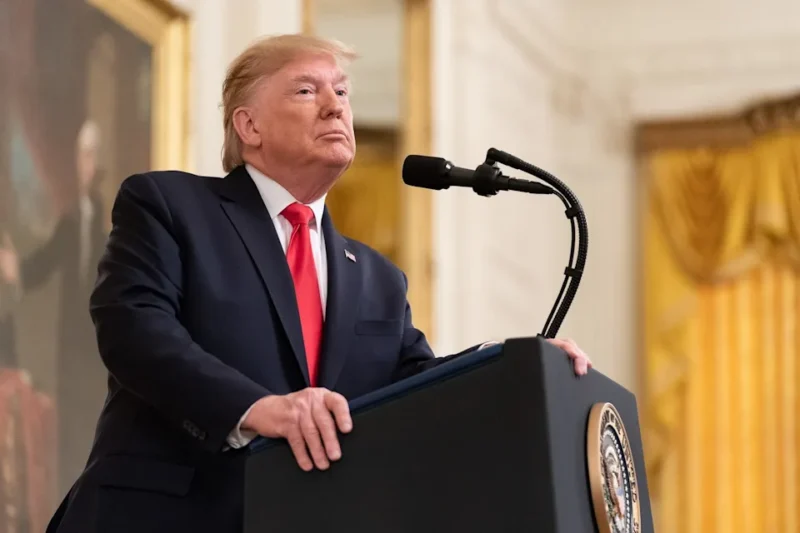
A deadline. A rejected deal. And a war that could escalate within hours.
WASHINGTON — Donald Trump said the deadline he set for Iran to reach a deal is final, raising the prospect of expanded U.S. strikes if Tehran does not comply by Tuesday night.
Speaking at a White House event, Trump described a recent Iranian proposal as “significant” but insufficient, signaling that negotiations have made progress without resolving core demands. He indicated that a rapid end to the conflict remains possible, but only if Iran accepts terms that include curbs on its nuclear program and the reopening of the Strait of Hormuz.
Iran has rejected the deadline, reiterating that it seeks a permanent end to the war rather than a temporary ceasefire tied to external conditions. The position reflects a fundamental gap between the two sides, with Washington prioritizing immediate concessions and Tehran focusing on longer-term guarantees.
U.S. officials have been pursuing indirect talks through regional intermediaries, including Pakistan, in an effort to secure an agreement. The framework under discussion centers on two objectives: limiting Iran’s nuclear capabilities and restoring maritime traffic through the Strait of Hormuz, a chokepoint critical to global energy markets.
Trump suggested that the current Iranian negotiating team may be more pragmatic than previous leadership figures targeted in recent strikes, describing them as “not as radicalized.” The remark points to a possible shift in Washington’s assessment of Tehran’s internal dynamics, even as military pressure continues.
At the same time, the president reiterated the potential consequences of failure. He has warned that the United States could target Iranian infrastructure, including energy and transport systems, if the deadline passes without agreement. Such actions would mark a significant escalation, expanding the conflict beyond military assets into the economic backbone of the Iranian state.
The situation highlights a narrowing window for diplomacy.
Negotiations are active but constrained by incompatible objectives. The United States is leveraging military pressure to force immediate compliance, while Iran is resisting interim arrangements that could leave it exposed to renewed attacks.
The contradiction is increasingly stark.
Both sides signal openness to a deal, yet both continue to escalate in parallel—reducing the space for compromise as the deadline approaches.
If no agreement is reached, the next phase of the conflict may be defined less by negotiation than by the scale of the response that follows.
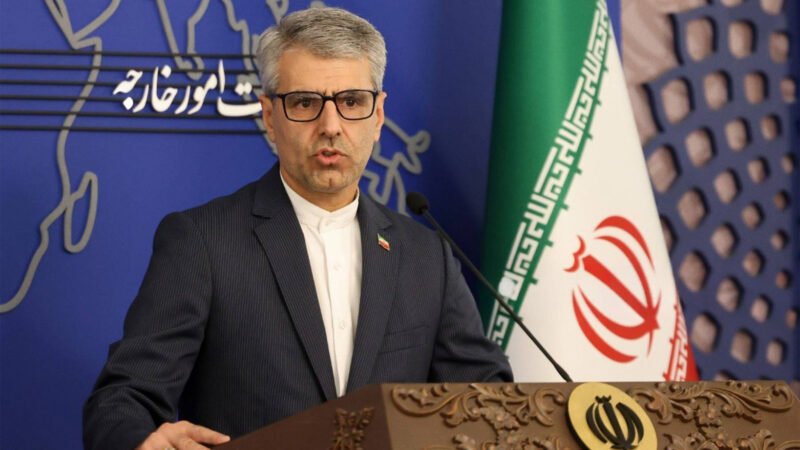
Peace plan on the table. Missiles in the air. And a deadline ticking toward escalation.
WASHINGTON / TEHRAN — Iran has rejected a proposed temporary ceasefire even as Israeli strikes intensify and the United States signals a potential escalation tied to the reopening of the Strait of Hormuz, underscoring a widening gap between diplomacy and battlefield realities.
A proposal backed by multiple countries calling for a 45-day ceasefire and the reopening of the strait has not been approved by Donald Trump, according to a White House official. Tehran, for its part, dismissed the idea outright, arguing that any pause would allow the United States and Israel to regroup and continue military operations.
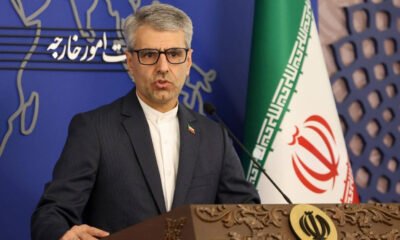
Iranian Foreign Ministry spokesperson Esmail Baghaei said the priority was ending the war permanently, not suspending it. The position reflects a broader skepticism in Tehran toward U.S.-led diplomacy, particularly after indirect talks collapsed when hostilities began.
The rejection comes as Israel expands its targeting of Iran’s economic infrastructure. Israeli officials said strikes hit a major petrochemical complex, a sector critical to Iran’s export revenues. Separate operations reportedly killed senior members of the Islamic Revolutionary Guard Corps, signaling a continued focus on both economic and leadership targets.
Civilian casualties are also rising. Iranian state media reported that six children were among those killed in strikes on Tehran, while Israeli authorities said four people died in an Iranian missile attack on Haifa. The exchange highlights the increasingly reciprocal and urban nature of the conflict.
At the center of the crisis remains the Strait of Hormuz, a critical artery for global energy flows. Trump has set a Tuesday deadline for Iran to reopen the waterway, warning of potential strikes on power plants and transport infrastructure if it remains closed. Tehran has responded by warning that any such attacks would trigger consequences extending beyond the region.
Diplomatic efforts continue, but without clear momentum. Countries including Pakistan, Turkey and Egypt have sought to broker talks, with Islamabad offering to host negotiations and relaying proposals addressing Iran’s nuclear and missile programs. Yet both Washington and Tehran have publicly questioned the credibility of negotiations, even as backchannel communications persist.
The trajectory of the conflict reveals a central contradiction.
Diplomacy is active but not decisive. Military pressure is intensifying while political conditions for compromise remain absent. Each side appears to view escalation as leverage rather than risk, reducing the incentive to accept interim solutions such as a temporary ceasefire.
As a result, the war is entering a phase where economic targets, infrastructure threats and strategic chokepoints are becoming as central as battlefield engagements. The absence of alignment between military and diplomatic tracks suggests that, for now, escalation is moving faster than any effort to contain it.

Kremlin Warns Middle East ‘On Fire’ as Trump Escalates Threats Against Iran.
The war is spreading. The rhetoric is escalating. And Russia says the entire region is already burning.
MOSCOW — The Kremlin warned that the Middle East is “on fire” as tensions escalate in the war involving Iran, following renewed threats from Donald Trump to strike critical infrastructure if the Strait of Hormuz remains closed.
Kremlin spokesman Dmitry Peskov said the conflict is expanding both geographically and economically, describing the situation as increasingly volatile with global consequences. He declined to directly address Trump’s remarks but acknowledged that Moscow is closely monitoring developments.
“The level of tension in the region is growing and continues to grow,” Peskov said. “In fact, the entire region is on fire.”
His comments come after Trump warned that Iran could face strikes on power plants and bridges if it fails to reopen the strategically vital shipping route. The Strait of Hormuz remains a central flashpoint in the conflict, with disruptions already affecting global energy markets.
Peskov framed the crisis as a result of what he called aggression against Iran, emphasizing that the fallout now extends beyond the immediate battlefield. He pointed to widening economic consequences, including pressure on global trade flows and energy supplies.
The Kremlin’s position reflects a broader concern in Moscow that the conflict is evolving into a wider regional crisis with systemic implications. Russia has so far avoided direct involvement in the fighting but has increasingly aligned its rhetoric with Tehran, while benefiting indirectly from higher oil prices linked to the disruption.
The situation highlights a growing contradiction.
As military pressure intensifies on Iran, the conflict is simultaneously expanding in scope, pulling in new economic and strategic variables that are harder to contain. For global markets and regional actors, the risk is no longer confined to isolated strikes or localized escalation.
It is the cumulative effect of a conflict that is spreading faster than diplomatic efforts can respond.
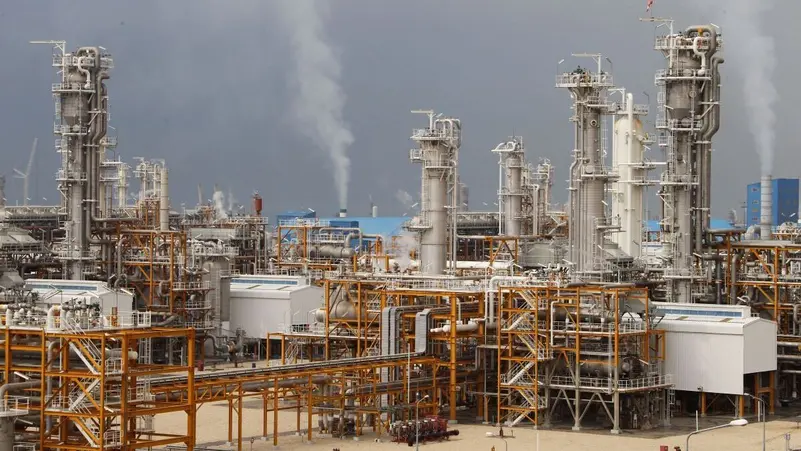
This is no longer just military targets—this is economic warfare at scale.
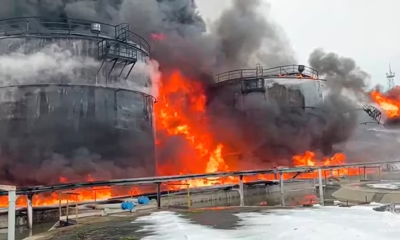
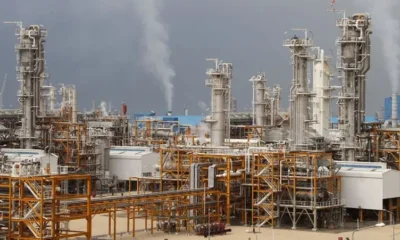
ASALUYEH — Israel said it carried out a major strike on Iran’s largest petrochemical complex on Monday, intensifying a campaign that is increasingly targeting the country’s economic infrastructure.
Israeli Defense Minister Israel Katz said the military hit facilities in Asaluyeh, a key hub for Iran’s energy sector, describing it as a “central target” responsible for roughly half of the country’s petrochemical production.
Iranian state media confirmed explosions at the site but said the situation was under control. The National Petrochemical Company, cited by IRNA, reported that a fire had been contained and that no injuries were recorded. Damage assessments are ongoing.
Strikes on Core Economic Assets
The attack marks a shift toward sustained strikes on industrial capacity.
Asaluyeh hosts major facilities linked to the South Pars field, the world’s largest natural gas reserve, shared with Qatar. The site is central to Iran’s petrochemical exports and a critical source of state revenue.
Katz said the strike, combined with earlier attacks, had taken multiple facilities offline, dealing what he described as a severe economic blow.
Iranian officials have not confirmed the extent of the disruption.
Expanding Target List
The Asaluyeh strike follows a series of recent attacks on Iran’s industrial sector.
Iranian media reported that another petrochemical site in Marvdasht was also targeted within the past 24 hours, while officials in Khuzestan province said a strike on the Mahshahr Petrochemical Special Zone over the weekend killed five people.
Israeli Prime Minister Benjamin Netanyahu said last week that strikes had significantly reduced Iran’s steel production capacity, targeting another sector tied to both economic output and military manufacturing.
Strategic Direction
The latest developments reflect a broader shift in Israel’s campaign.
Rather than focusing solely on military installations, strikes are increasingly directed at sectors that underpin Iran’s economy and its ability to sustain long-term operations, including energy, petrochemicals, and industrial production.
Katz said Israel would continue targeting what he described as Iran’s “national infrastructure.”
Wider Implications
The expansion of targets carries broader risks.
Attacks on energy infrastructure raise the potential for disruption beyond Iran, particularly given the region’s role in global energy markets. The South Pars field’s shared status also introduces sensitivities involving neighboring states.
At the same time, the strategy signals an effort to apply economic pressure alongside military force, increasing the cost of continued conflict for Tehran.
The immediate impact remains unclear.
But the trajectory is evident: the war is moving deeper into the economic foundations of the Iranian state.
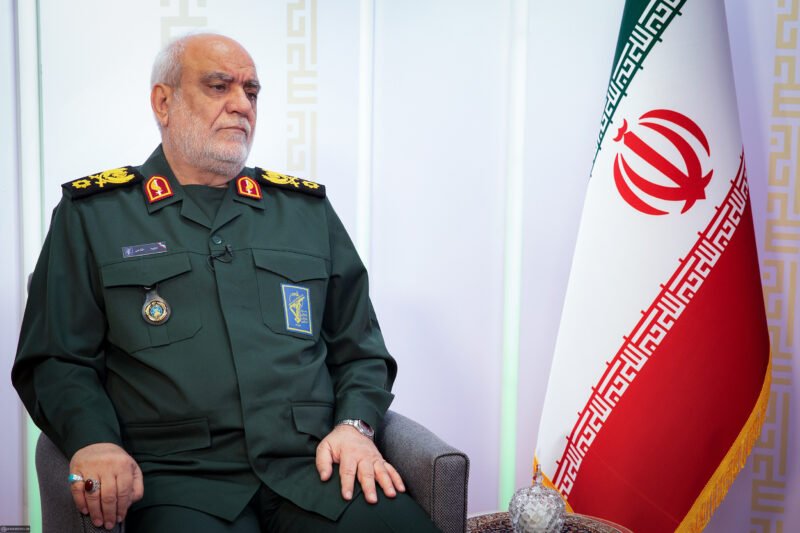
US-Israeli Strikes Kill IRGC Intelligence Chief in Latest Escalation. Another senior figure down. The war is moving deeper into Iran’s power structure.
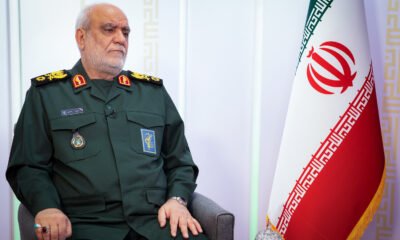
TEHRAN — U.S. and Israeli strikes have killed the intelligence chief of Iran’s Islamic Revolutionary Guard Corps (IRGC), Iranian authorities said Monday, marking a further escalation in the conflict now entering its sixth week.
The IRGC said Major General Majid Khademi, head of its intelligence organization, was killed in an early-morning strike. In a statement posted on its official channels, the Guards described the attack as a “criminal” operation carried out by U.S. and Israeli forces.
Israeli Defense Minister Israel Katz later confirmed the killing and said Israel would continue targeting senior Iranian figures, vowing to pursue leaders “one by one.”
Khademi was a senior figure within the Islamic Revolutionary Guard Corps, overseeing intelligence operations tied to internal security and regional activities. His death follows a series of strikes targeting high-ranking officials since the war began on February 28.
Among those killed in earlier attacks was Iran’s Supreme Leader, Ali Khamenei, along with several senior military commanders.
The latest strike comes as fighting between Iran, the United States, and Israel continues across multiple fronts, including missile exchanges and airstrikes targeting military and infrastructure sites.
Iran has responded to the campaign with missile and drone attacks against Israel and regional targets, raising concerns about further escalation.
There was no immediate comment from U.S. officials on the reported killing.

One war just became two. Lebanon is now burning—and the region is stretching toward something bigger.
BEIRUT / TEL AVIV — What began as a war centered on Iran has now spilled decisively into Lebanon, opening a second front that is rapidly reshaping the trajectory of the wider conflict.
As fighting enters its sixth week, Hezbollah’s intervention has transformed the war from a contained confrontation into a multi-theater crisis—one that is stretching military resources, deepening humanitarian costs, and complicating any path to de-escalation.
The escalation was swift. Within days of U.S. and Israeli strikes on Iran, Hezbollah launched rockets and drones into northern Israel, framing the move as solidarity with Tehran. Israel responded with sustained airstrikes across Lebanon, followed by ground incursions into the south.
Since then, the conflict has intensified into a grinding exchange.
Israeli forces have targeted Hezbollah’s infrastructure, command centers, and weapons depots across Beirut’s southern suburbs, Tyre, and Nabatieh, while expanding operations along the border. Hezbollah, in turn, has deployed rockets, drones, and anti-armor strikes, aiming to impose costs and divert Israeli focus from the Iran theater.
The human toll is rising sharply. More than 1,000 people have been killed in Lebanon, according to local authorities, with hundreds of thousands displaced in a country already strained by economic crisis. In northern Israel, communities have again been pushed into a cycle of sirens and sheltering, reviving memories of previous wars.
At the strategic level, the second front introduces a dangerous paradox.
Hezbollah entered the fight weakened from earlier confrontations, yet still capable of sustaining prolonged pressure through its arsenal of rockets and drones. Israel, while maintaining air superiority, now faces a more complex battlefield—one that divides attention between Iran and Lebanon while raising the risk of overextension.
For Lebanon, the consequences are existential. The government has attempted to distance itself from Hezbollah’s actions, even moving to restrict its military activities, but its ability to assert control remains limited. The result is a familiar but increasingly fragile reality: a state pulled into war by forces it does not fully command.
Regionally, the implications are widening. The Lebanon front risks drawing in additional actors, from Syria to other non-state groups, while reinforcing the interconnected nature of the conflict. What happens in southern Lebanon now directly affects calculations in Tehran, Washington, and Tel Aviv.
The broader outcome is becoming clearer.
This is no longer a single war with multiple incidents. It is an interconnected conflict system—where escalation in one theater fuels escalation in another, and where local battles carry global consequences.
And as the second front intensifies, one conclusion is hard to ignore: the longer the war expands, the harder it becomes to contain.
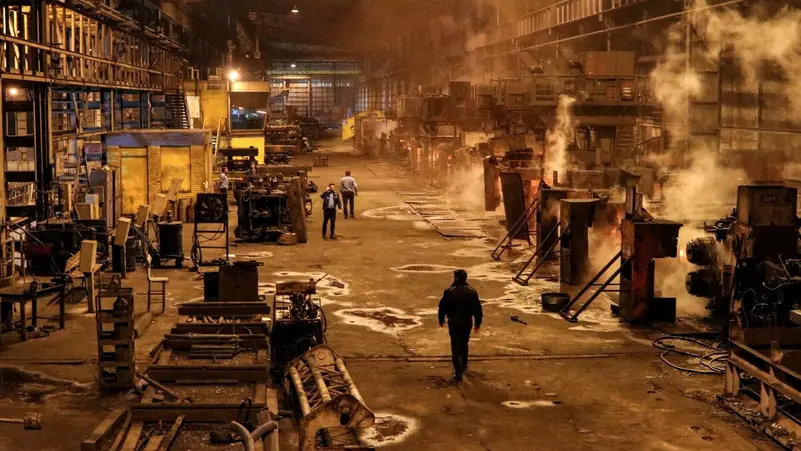
Week six—and the war is widening, not ending. Cities targeted, infrastructure threatened. Where does this stop?
TEL AVIV / TEHRAN — The war between Iran, the United States and Israel has entered its sixth week with no sign of de-escalation, as airstrikes deepen inside Iranian territory and missile fire continues to reach Israeli towns, underscoring a conflict expanding in both scope and risk.
Iranian state media reported that U.S. and Israeli strikes targeted Qassem Soleimani International Airport in Ahvaz, a key facility in the southwestern province of Khuzestan. Local officials described the strike as part of a sustained campaign against strategic infrastructure. Additional attacks were reported near Isfahan, where Iranian sources said at least five people were killed, while explosions in Karaj—near Tehran—highlighted the growing proximity of strikes to the capital.
The U.S. military, through United States Central Command, released footage showing the interception and destruction of Iranian drones it said were targeting American personnel across the region.
Iran responded with missile launches toward Israel. Air defense systems intercepted projectiles over Haifa, according to Israeli authorities, though debris fell in multiple locations. Sirens sounded across northern and southern Israel, reflecting the continued reach of Iran’s retaliatory capabilities despite weeks of sustained bombardment.
Israeli Defense Minister Yisrael Katz signaled a further escalation, warning that Israel would intensify strikes on Iranian leadership, military assets and critical infrastructure if attacks persist. His remarks point to a strategy that increasingly blends battlefield pressure with targeted decapitation of command structures.
At the same time, Donald Trump renewed threats to expand the conflict’s scope, warning that U.S. forces could strike Iranian power plants and bridges if Tehran does not reopen the Strait of Hormuz. The warning marks a potential shift toward targeting infrastructure with civilian impact—raising the stakes of an already volatile conflict.
Since the war began on February 28, both sides have broadened their targeting frameworks. U.S. and Israeli operations have focused on degrading Iran’s missile systems, industrial base and command networks. Iran, in turn, has pursued a strategy of distributed retaliation, using missiles and drones to strike Israel and regional actors while maintaining pressure on global energy routes.
The result is a war without a clear off-ramp.
The continued closure of the Strait of Hormuz remains a central flashpoint, amplifying economic risks and increasing the likelihood of wider international involvement. Meanwhile, the geographic spread of strikes—from Ahvaz to Haifa—signals a shift toward deeper, more sustained confrontation.
Six weeks in, the trajectory is clear: diplomacy is absent, escalation is accelerating, and the conflict is moving toward a broader and more dangerous phase.

Inside the U.S. Rescue Mission That Outsmarted Iran

Trump Draws the Line as Iran Rejects Deal and War Nears Escalation

Brands Flee Wireless Festival Over Kanye West Booking


-

 TECH3 weeks ago
China Bets on an AI-Powered Military Future
-
 US-Israel war on Iran2 weeks ago
Waves of Mystery Drones Breach U.S. Nuclear Base Airspace
-
 Terrorism1 week ago
Egypt Uncovers Alleged Plan to Down Presidential Plane
-
 US-Israel war on Iran3 weeks ago
Saudi Arabia Warns of Military Action After Iranian Missile Strike
-
 Top stories2 weeks ago
Saudi Arabia Deepens Defense Ties with Ukraine
-
 US-Israel war on Iran2 weeks ago
Former CIA Chief Blames White House for Escalating Iran War Crisis
-
 US-Israel war on Iran3 weeks ago
Iran’s Guard Leadership Hit Hard in Escalating Strikes
-
 Analysis2 weeks ago
Inside the IRGC’s Quiet Rebuild of Hezbollah