A New Security Equation for the Red Sea and Horn of Africa
The Mecca Defence Pact
ANKARA — Turkey’s parliament has ratified a trilateral defence agreement with Saudi Arabia and Pakistan, advancing the formation of a regional security partnership with potential consequences for the Gulf, Yemen and the wider Red Sea corridor.
The agreement, known as the Mecca Joint Defence Agreement, was approved on November 5 by 279 votes to 119, with 398 lawmakers participating in the vote, according to the Associated Press and Reuters.
Signed by Turkish President Recep Tayyip Erdogan, Saudi Crown Prince Mohammed bin Salman and Pakistani Prime Minister Shehbaz Sharif in Mecca on August 7, 2026, the 16-article agreement establishes a framework for collective defence, military coordination, intelligence sharing and defence-industry cooperation.
Its central provision treats an armed attack against one member as an attack against all three.
The ratification comes as Saudi Arabia faces attacks by Yemen’s Houthi movement and regional governments remain concerned about further escalation involving Iran.
Beyond a Traditional Defence Partnership
The agreement represents a significant development in the security relationships among three influential regional powers.
Turkey brings NATO’s second-largest military and an expanding defence industry. Pakistan contributes substantial military experience, strategic depth and established security ties with Saudi Arabia. Riyadh provides financial resources, strategic geography and considerable influence across the Gulf.
The partnership also reflects Saudi Arabia’s efforts to diversify its security relationships rather than depend exclusively on traditional American protection.
However, an important distinction remains: parliamentary ratification does not automatically authorize Turkish troops to deploy to Saudi Arabia. Such a deployment would require separate parliamentary approval under Turkey’s constitutional framework.
Turkish officials have described the arrangement as defensive and rejected the suggestion that it constitutes an offensive alliance against Iran or another country.
The Houthi Factor and the Red Sea
The agreement’s strategic importance is particularly visible in the context of Yemen.
Houthi attacks have expanded the security concerns of governments bordering the Red Sea and the Gulf of Aden. Saudi Arabia faces direct threats to its territory, while shipping routes connecting the Indian Ocean to the Suez Canal remain exposed to regional instability.
The defence arrangement creates a framework through which the three countries can coordinate military capabilities, intelligence and logistical support.
For Saudi Arabia, this could strengthen deterrence and provide additional options for responding to threats.
For Turkey, the agreement offers a deeper security relationship with Riyadh and an expanded role in regional security affairs.
Implications for Somaliland and Berbera
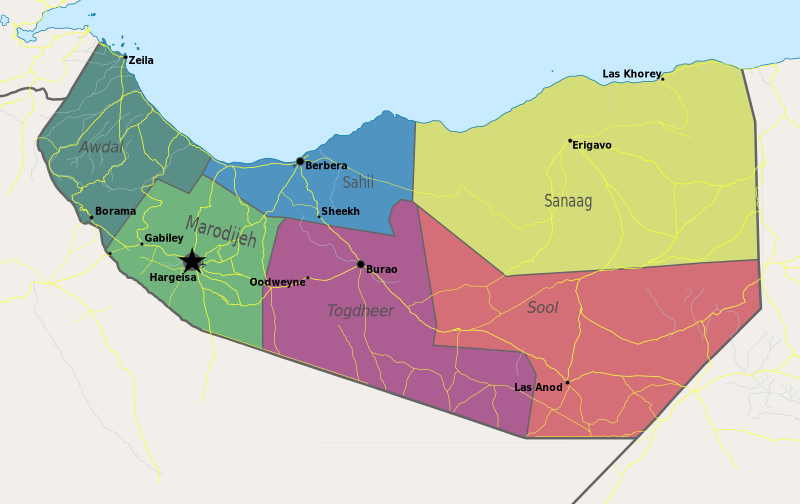
The development has direct strategic relevance for Somaliland, although it does not establish a new military arrangement involving Hargeisa.
Berbera occupies a position along the Gulf of Aden, close to one of the world’s most consequential maritime corridors.
As regional governments strengthen their security relationships, Berbera’s commercial port, logistical infrastructure and potential contribution to maritime security become increasingly relevant to international strategic calculations.
Three developments deserve monitoring:
First, maritime security coordination. Greater Turkish-Saudi-Pakistani cooperation could influence future security arrangements around the Gulf of Aden and Red Sea.
Second, regional military presence. Any expansion of military deployments, surveillance capabilities or logistical infrastructure in Saudi Arabia and Yemen could alter the regional security balance.
Third, diplomatic competition. Somaliland must understand how emerging regional partnerships interact with its existing relationships involving the UAE, Israel, Ethiopia and Western security institutions.
These are potential implications, not evidence that the three countries have agreed to establish military facilities in Somaliland or Berbera.
A Wider Regional Security Realignment
The agreement also highlights the changing nature of Middle Eastern security relationships.
Saudi Arabia is strengthening partnerships with countries that possess different military capabilities and strategic interests. Turkey is expanding its regional diplomatic and security role, while Pakistan is reinforcing its longstanding relationship with Riyadh.
There are also questions about possible future membership. Syria has expressed interest in joining, although existing members have indicated that institutionalizing the current arrangement remains the immediate priority.
Whether the partnership develops into a broader regional security structure will depend on how its members interpret collective defence obligations and respond to future crises.
WARYATV Assessment
The ratification of the Mecca Joint Defence Agreement represents a meaningful development in the regional security architecture.
Its importance lies in the formalization of collective defence commitments among Turkey, Saudi Arabia and Pakistan at a time of heightened instability involving Iran, Yemen and the Red Sea.
For Somaliland, the strategic lesson is that the security environment around Berbera is becoming increasingly interconnected with decisions made in Ankara, Riyadh, Islamabad and other regional capitals.
Hargeisa should closely monitor the agreement’s implementation, particularly its implications for maritime security, military logistics and the future distribution of regional influence.
Somaliland should also avoid assuming that the emergence of a new defence partnership automatically creates opportunities or threats. Its actual consequences will depend on operational decisions, military deployments and diplomatic arrangements that have yet to be fully established.
The central question is whether the Mecca Defence Agreement will remain a framework for deterrence or become the foundation of a more active regional security architecture extending toward the Red Sea and the Gulf of Aden.