
US-Israel war on Iran
The Invisible Front: GPS Warfare Spreads Across the Gulf

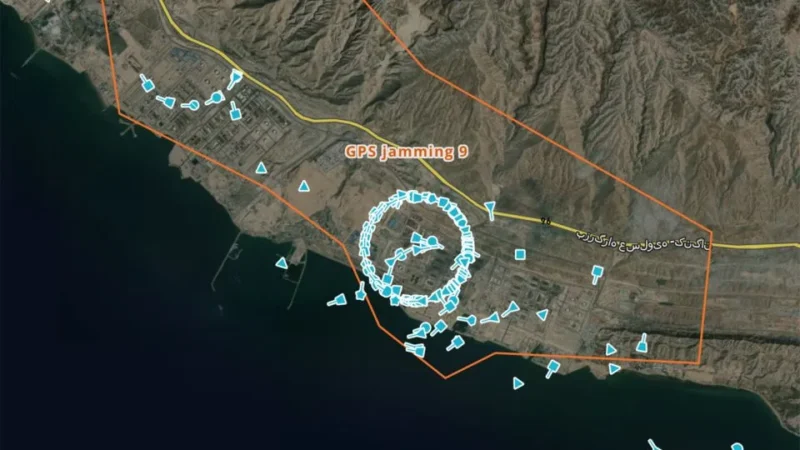
As Iran Conflict Escalates, Satellite Jamming and Spoofing Disrupt Shipping, Aviation, and Global Trade.
When ships think they’re at airports and planes “drift” off course, the battlefield has gone digital.
Within hours of the first U.S.-Israeli strikes on Iran, a different kind of weapon began reshaping the conflict — not missiles, but signals.
Commercial vessels navigating Gulf waters suddenly appeared to be located at airports, nuclear facilities or deep inland. The culprit was widespread jamming and spoofing of global navigation satellite systems, the digital backbone that keeps ships, planes and drones on course.
According to maritime intelligence firm Windward, more than 1,100 commercial vessels in UAE, Qatari, Omani and Iranian waters experienced navigation disruptions in the first 24 hours after hostilities began. Traffic through the Strait of Hormuz — the narrow artery that carries roughly 20% of the world’s oil and gas — slowed sharply. Some tankers reversed course. Others went dark, switching off their Automatic Identification System (AIS), the transponder designed to prevent collisions.
“You don’t know where ships are,” said Michelle Wiese Bockmann, a senior maritime intelligence analyst at Windward. “The whole point of AIS is collision avoidance.”
The tactic itself is simple. Militaries broadcast high-powered radio signals on the same frequencies used by satellite navigation tools. Jamming blocks the signal; spoofing manipulates it, feeding false coordinates to receivers. The result can be vessels moving in strange geometric “crop circles” on tracking maps or appearing thousands of miles from their actual position.
Data from Lloyd’s List Intelligence recorded 1,735 GPS interference events affecting 655 vessels in just a few days. Daily incidents have nearly doubled since the conflict began.
The practice is not new. Satellite interference became common during Russia’s 2022 invasion of Ukraine, where drone warfare surged. But experts say the problem has now become “endemic” in conflict-adjacent regions such as the Baltic, Black Sea and Middle East.
Ramsey Faragher, director of the Royal Institute of Navigation, describes jamming as an “easy shield” against GPS-guided drones. The complication is that the electronic fog affects everything else in the area — commercial ships, civilian aircraft, even rescue equipment.
The aviation sector is already feeling the strain. The International Air Transport Association reports a 220% rise in global GPS signal loss events affecting aircraft between 2021 and 2024. Pilots have described cockpit displays “drifting away from reality,” with map shifts and false altitude warnings increasing workload during critical flight phases.
The vulnerability stems from physics. GPS signals weaken dramatically as they travel more than 20,000 kilometers from orbit, making them relatively easy to overpower. While Europe’s Galileo system now offers authentication features, most civilian satellite signals remain largely unprotected.
The stakes extend beyond inconvenience. Modern ships rely heavily on automation. Younger mariners often have less experience navigating by radar, visual watchkeeping or celestial methods. Interference can also trigger compliance alarms if a vessel’s spoofed location appears inside sanctioned territory.
The most alarming scenario is humanitarian. If a vessel were struck and crew forced to abandon ship, emergency beacons dependent on satellite positioning could transmit false coordinates, delaying rescue.
Satellite navigation transformed global trade by making positioning instantaneous and precise. But as the Gulf conflict demonstrates, that era of assumed reliability is ending.
Electronic warfare has moved from the margins to the mainstream. And in this war, the most powerful weapon may be the one no one can see.

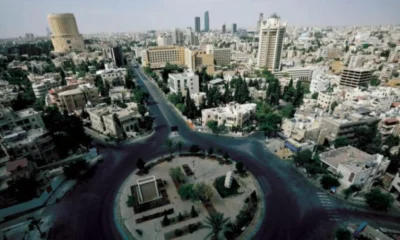
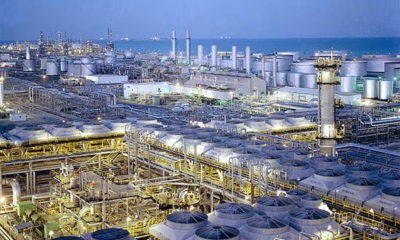











World Without the U.S.—35 Nations Scramble to Break Iran’s Grip on Global Oil Route.
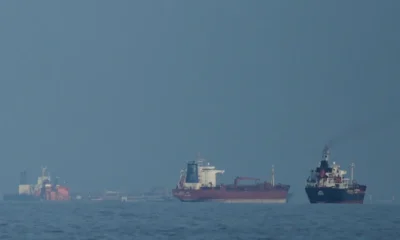
Oil tankers sit idle at the mouth of the Strait of Hormuz, their routes stalled by a war that has turned one of the world’s most critical shipping lanes into a zone of calculated risk. For crews onboard, the threat is immediate. For global markets, the impact is already unfolding.
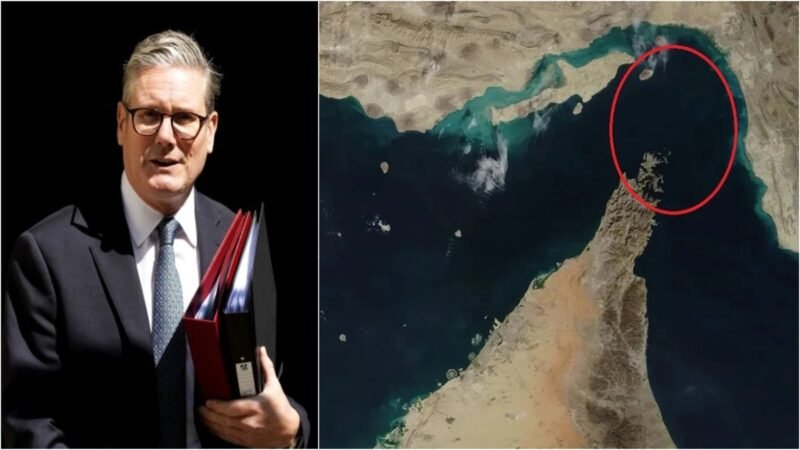
On Thursday, more than 30 countries—led by the United Kingdom—will convene to map out a response. The goal is straightforward, if not simple: restore the flow of commerce through a passage that carries a significant share of the world’s oil.
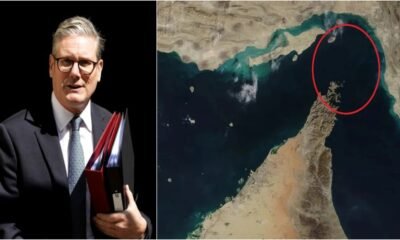
Keir Starmer framed the meeting as an effort to align diplomatic and political pressure, while also laying the groundwork for eventual security arrangements. Chaired by Yvette Cooper, the virtual gathering will focus on reopening the strait, protecting trapped vessels, and stabilizing energy flows disrupted by Iranian-linked attacks.
By the third layer of this crisis, the deeper shift becomes clear. This is not only about maritime security—it is about leadership. The absence of the United States from the meeting marks a departure from decades of American dominance in safeguarding global shipping lanes. President Donald Trump has signaled that responsibility now rests with other nations, telling allies to secure their own energy routes.
That decision is forcing a recalibration. Countries including the UK, France, Germany, Italy, Canada, Japan, and the United Arab Emirates have signed onto a joint statement urging Iran to halt its attempts to block the strait and pledging to support efforts to ensure safe passage. The coalition reflects a broad recognition that the economic stakes extend far beyond the region.
Still, the options are constrained. No country appears willing to forcibly reopen the waterway while active conflict continues. Iran retains the capacity to target vessels through missiles, drones, mines, and fast-attack craft—tools that can disrupt shipping without triggering a full-scale naval confrontation.
For now, diplomacy leads. Military planning is being deferred to a later phase, once conditions stabilize. Starmer acknowledged that restoring normal traffic will require both political coordination and eventual security guarantees—likely involving naval deployments and close cooperation with the maritime industry.
There are parallels to earlier coalition-building efforts, including European-led initiatives to support Ukraine’s long-term security. In both cases, the objective is not only operational but symbolic: to demonstrate that Europe and its partners can act collectively in the absence—or retreat—of U.S. leadership.
Yet the risks are immediate. With traffic through Hormuz largely halted, oil prices have surged, and supply chains are tightening. For countries dependent on energy imports, the disruption is not abstract—it translates into higher costs, inflationary pressure, and economic uncertainty.
The emerging coalition faces a narrow path. Move too slowly, and the economic damage deepens. Move too aggressively, and the conflict risks widening.
What is taking shape is a test of whether multilateral coordination can substitute for a single dominant power. If successful, it could mark a shift toward a more distributed model of global security. If not, it may expose the limits of collective action in moments of crisis.
Either way, the stakes extend far beyond the Gulf. The question is no longer just how to reopen a strait—but who, in this new landscape, has both the will and the authority to keep it open.
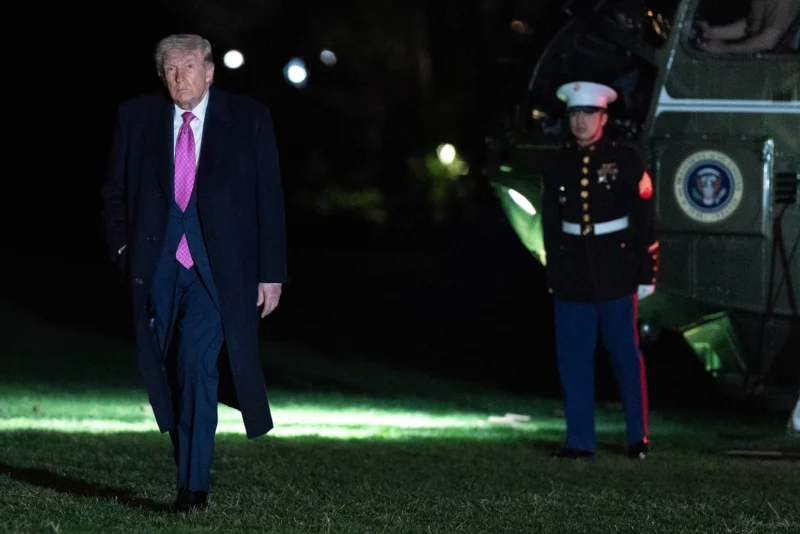
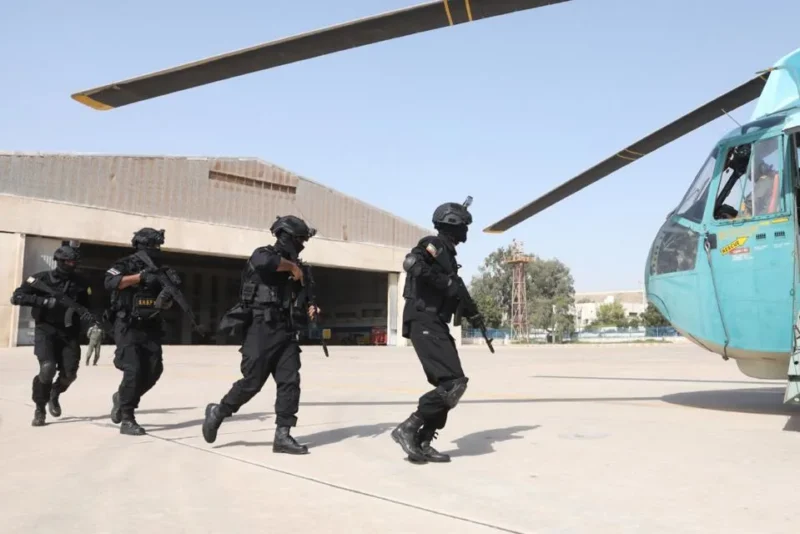
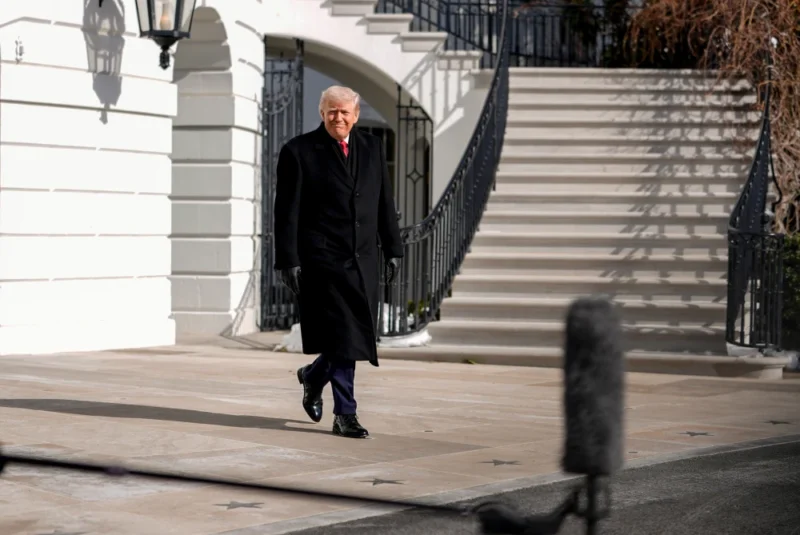
Trump’s Shadow Negotiations Rattle Iran’s Power Structure as War Strategy Shifts Beyond the Battlefield.
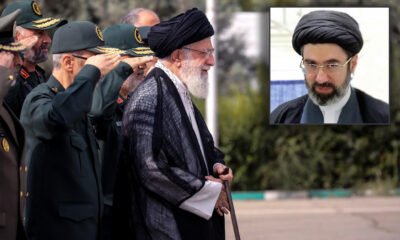
When Donald Trump speaks of a “strong” figure inside Iran—unnamed, unseen, and allegedly protected—he is not revealing a diplomatic channel. He is introducing a fault line.
Within hours, speculation filled the vacuum. Israeli media pointed toward Mohammad Bagher Ghalibaf as a possible interlocutor. Tehran denied it. But denial, in this context, does little to contain the damage. The suggestion alone reshapes internal dynamics, casting quiet suspicion across a system already built on layered authority and competing power centers.
By the third beat of this unfolding story, the question is no longer whether negotiations exist. It is what the idea of a “trusted insider” does to Iran’s internal cohesion. In a system where legitimacy is tightly guarded, even the hint of backchannel engagement redistributes power—and doubt.
Who speaks for the state? Who is trusted? Who is exposed?
Signals from the region suggest something is indeed moving beneath the surface. Requests not to target specific individuals. Subtle delays in responses hinted at by Abbas Araghchi. Quiet mediation efforts threading through regional capitals. None confirm a deal—but together, they point to a channel that is deliberately obscured.
At the same time, the war itself is being managed with a dual logic. Publicly, pauses and ceasefire language create the appearance of restraint. In practice, strikes deepen—targeting infrastructure tied to Iran’s military, industrial, and nuclear capacity. The message is calibrated: control the narrative, escalate the pressure.
Regionally, that pressure is reshaping Iran’s network of influence. Hezbollah remains the most viable lever, while Iraqi militias have largely receded under sustained countermeasures.
The Houthis, once positioned as a disruptive force in maritime chokepoints, now appear constrained—focused less on escalation than survival after repeated strikes on leadership and missile capabilities.
There are, however, limits to how much this external pressure can achieve. Iran retains asymmetric options. A shift toward what some analysts describe as “collective damage”—targeting Gulf infrastructure, activating sleeper cells, or expanding drone operations—would move the conflict into a more fragmented and unpredictable phase.
At that point, the battlefield dissolves into dispersed, low-visibility confrontations where deterrence becomes harder to measure.
Attention is already turning to the Strait of Hormuz. The objective may not be outright closure, but something more subtle: raising the risk profile high enough that insurers withdraw, shipping hesitates, and global energy flows tighten without a formal blockade. It is pressure by uncertainty.
Trump’s timeline—framed as a deadline before potential strikes on energy infrastructure—fits within this broader strategy. It is less about forcing an immediate concession than about accelerating the cost curve. At a certain point, continuing the confrontation becomes as costly as stepping back—perhaps more.
What is taking shape is not a conventional war aimed at swift collapse. It is a slow compression. External strikes weaken capacity. Internal suspicion fractures trust. Economic pressure narrows options.
And at the center of it all sits a destabilizing question—not who Washington is speaking to, but whether anyone inside Tehran can still speak with authority.
That is where the real battle is shifting: from missiles and markets to legitimacy itself.
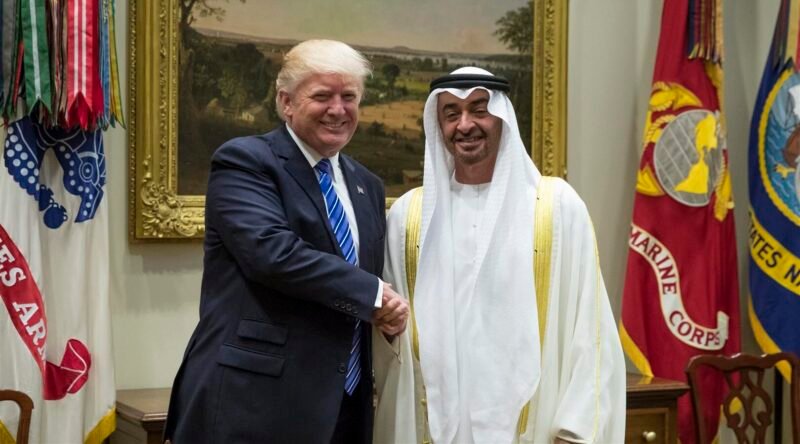
UAE and U.S. Leaders Discuss Iran Attacks as Regional Tensions Threaten Global Trade Routes.
The call came at a moment when the Gulf’s airspace has grown quieter—but only on the surface. Beneath it, the pressure is building.
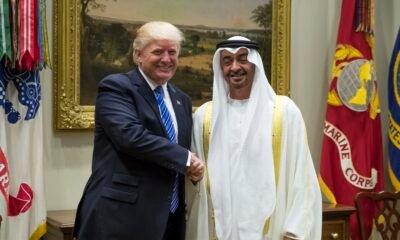
On Wednesday, Mohamed bin Zayed Al Nahyan and Donald Trump spoke by phone as Iranian-linked strikes continued to ripple across the region, according to the Emirati state news agency WAM. The conversation focused on what both sides described as ongoing attacks targeting civilian infrastructure in the United Arab Emirates and neighboring states.
The language was direct. Emirati officials characterized the strikes as “terrorist aggression,” signaling both the severity of the threat and the political framing taking shape among Gulf capitals.
By the third layer of this moment, the significance moves beyond a single call. The Gulf is no longer a peripheral theater—it is becoming central to the conflict’s economic and strategic gravity. What happens here affects not only regional stability, but the flow of global trade.
Both leaders discussed the broader implications, including risks to maritime routes and the global economy. The concern is not hypothetical. Disruptions in key shipping corridors—particularly those linked to energy exports—carry immediate consequences for markets far beyond the Middle East.
The timing underscores the urgency. Since late February, multiple countries in the Gulf Cooperation Council have reported repeated strikes, despite publicly maintaining that they are not parties to the conflict between Iran, the United States, and Israel. That gap—between non-involvement and exposure—has become increasingly difficult to sustain.
For Gulf states, the challenge is strategic as much as defensive. They must protect infrastructure, reassure markets, and avoid deeper entanglement—all while navigating a conflict that is steadily expanding in scope.
For Washington, the calculus is equally complex. Supporting regional partners now involves not only military coordination, but also managing escalation risks that could draw additional actors into the conflict.
There are, however, limits to alignment. Gulf states have historically balanced security ties with the United States against pragmatic engagement with Iran. That balance is now under strain. Each new strike narrows the space for neutrality, pushing countries toward clearer positioning.
At the same time, Iran’s approach appears calibrated. Rather than triggering a single decisive confrontation, the pattern of attacks spreads pressure across multiple fronts—testing defenses, probing responses, and raising the cost of stability.
The result is a region operating under sustained tension rather than open war.
The phone call between Abu Dhabi and Washington reflects that reality. It is less about immediate decisions than about coordination in a landscape where risks are no longer contained.
The longer-term question is whether this pattern can hold. If attacks continue to target civilian infrastructure and critical trade routes, the Gulf may shift from being an exposed bystander to an active front.
And once that threshold is crossed, the conflict’s center of gravity will move—not just geographically, but strategically—reshaping how power is projected and contested across the region.
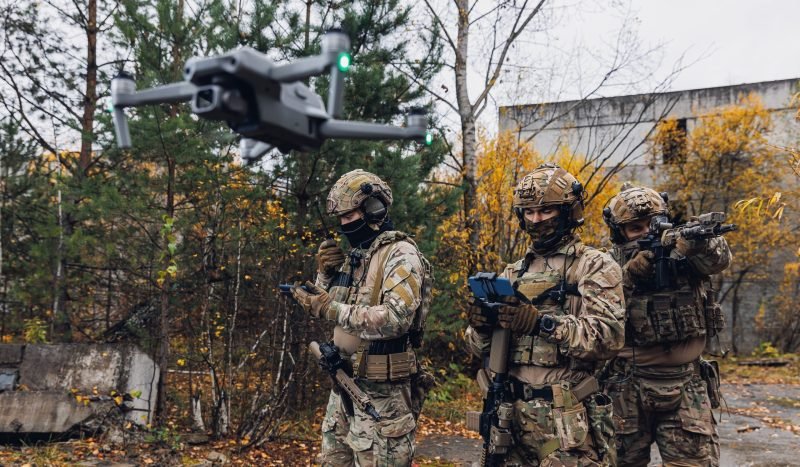
Drones were supposed to change everything. They did—but not in the way armies expected.
The search for a decisive weapon—one that ends wars quickly and cheaply—has shaped military thinking for centuries. From gunpowder to nuclear arms, each technological leap promised a shortcut to victory.
Yet one month into the war involving Iran, a familiar reality is reasserting itself: new weapons rarely deliver clean endings. Instead, they reshape the battlefield—and often prolong the fight.
Drones are the latest example of this paradox. Their appeal is obvious. They are relatively cheap, widely accessible and capable of delivering both surveillance and precision strikes in real time.
In conflicts like the war in Ukraine, and now across the Middle East, unmanned systems have become central to military operations. They allow weaker actors to punch above their weight, while enabling stronger powers to extend their reach without risking pilots or expensive platforms.
But this “democratization” of firepower carries a cost. Because drones are affordable and easy to produce—even with off-the-shelf components—they lower the threshold for sustained conflict.
A single cruise missile can cost millions; a loitering drone may cost tens of thousands. The result is not decisive victory, but endurance warfare—where both sides can keep fighting longer than expected.
Iran has embraced this logic. Despite heavy airstrikes, it continues to deploy waves of drones across the region, targeting infrastructure and threatening maritime routes like the Strait of Hormuz.
These systems may lack the sophistication of advanced missiles, but they compensate with volume, flexibility and psychological impact. The constant presence of drones—often heard before they are seen—creates a persistent climate of fear among civilian populations.
This psychological dimension is as important as the physical damage. Warfare is no longer confined to front lines; it is experienced in cities, ports and even digital spaces. The line between military and civilian targets becomes increasingly blurred, amplifying both disruption and uncertainty.
Yet drones are not a magic solution. Their rise has exposed a deeper imbalance: defending against cheap weapons is often far more expensive than deploying them. Interceptors, radar systems and advanced defenses strain resources, creating an unsustainable equation.
As former U.S. commander David Petraeus has argued, no military can indefinitely counter low-cost threats with high-cost responses.
The next phase is already taking shape. Militaries are racing to develop cheaper countermeasures—electronic jamming, laser defenses and AI-driven detection systems. But history suggests this cycle will continue: innovation followed by adaptation, advantage followed by erosion.
What emerges is a sobering conclusion. Technology changes how wars are fought, but not the fundamental nature of war itself. There is no single breakthrough that guarantees victory. Instead, each new tool expands the battlefield, deepens the complexity and often extends the conflict.
The age of drones has arrived. But rather than ending wars, it is making them harder to finish—and easier to sustain.
Australia isn’t in the war—but it’s already feeling the pain. Leaders warn the crisis could drag on for months.
Australia’s government has issued one of its clearest warnings yet about the global fallout from the war involving Iran, cautioning that the economic shock is far from over and could linger for months.
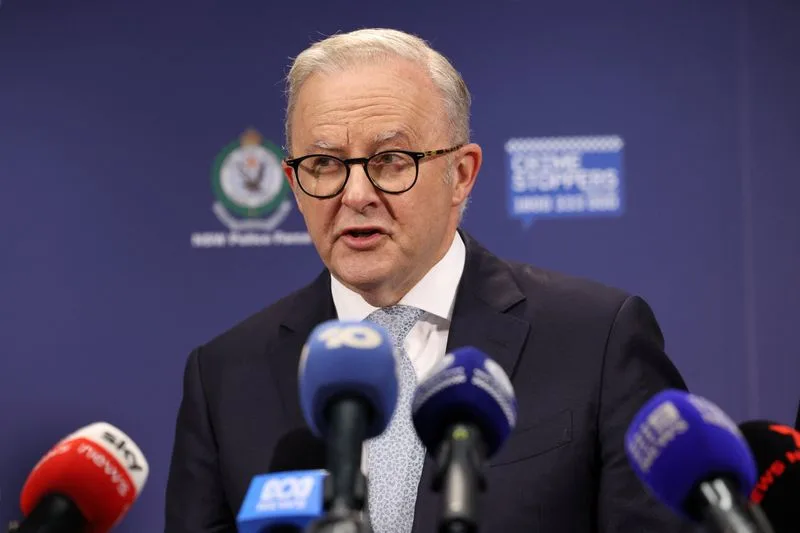
In a rare nationwide address, Prime Minister Anthony Albanese told citizens that the conflict—though geographically distant—has triggered the most severe spike in fuel costs in the country’s history. The message, broadcast across major television and radio networks, echoed crisis-era communications typically reserved for moments like the 2008 financial collapse or the COVID-19 pandemic.
Australia imports roughly 90 percent of its fuel, leaving it highly exposed to disruptions in global supply chains. The effective blockade of the Strait of Hormuz—a vital artery for global oil shipments—has sharply reduced available supply and sent petrol and diesel prices soaring. Localized shortages have already begun to emerge in parts of the country.
Albanese struck a measured but urgent tone, urging restraint rather than panic. He asked Australians not to stockpile fuel ahead of the Easter travel period and encouraged a shift toward public transportation where possible. The appeal reflects growing concern within the government that consumer behavior—particularly hoarding—could worsen supply pressures and accelerate price increases.
“We are not participants in this war,” Albanese said, “but every Australian is paying the price.”
The government has moved quickly to cushion the blow. Officials announced a temporary halving of fuel excise taxes and the suspension of heavy-road-user charges for three months, a package expected to cost around A$2.55 billion. At the same time, authorities are releasing fuel from strategic reserves and relaxing fuel standards to boost immediate availability.
Yet structural vulnerabilities remain. Despite holding its highest fuel reserves in 15 years, Australia still falls well short of the 90-day supply benchmark recommended by the International Energy Agency. That gap leaves the country particularly sensitive to prolonged disruptions in global energy markets.
Treasurer Jim Chalmers signaled additional support for businesses, including easier access to credit for sectors hit hardest by rising transport and operating costs. Still, officials acknowledge that policy measures can only soften—not eliminate—the impact.
This is not a short-term shock. It is a sustained global adjustment, driven by disrupted energy flows and geopolitical instability, that will test economies far beyond the battlefield.
For Australians, the war may be distant. But its consequences are now embedded in everyday life—from the price at the pump to the broader cost of living—and there is little expectation of relief anytime soon.

The Hidden Economic Front Reshaping the Middle East

Beyond Hormuz—Gulf Powers Redraw the Map of Global Energy Routes

Germany Backtracks After Merz’s Remarks on Syrian Refugee


-
 US-Israel war on Iran1 month ago
UK Refuses Iran Strike Access, Trump Fires Back
-
 Russia-Ukraine War1 month ago
Europe’s Spies Challenge Trump’s Ukraine Peace Optimism
-
 Top stories1 month ago
War Expands Across Region as Iranian Militias Join Fight
-
 Top stories1 month ago
India Turns to Brazil in Strategic Minerals Push Against China
-
 US-Israel war on Iran1 month ago
Iran Pledges ‘Never, Ever’ to Hold Bomb-Grade Material
-
 US-Israel war on Iran1 month ago
Syria Under Fire on Two Fronts
-

 Top stories3 weeks ago
Meloni Breaks Ranks: Italy Warns on Iran War
-
 Russia-Ukraine War1 month ago
Estonia Warns NATO Would Strike Deep Inside Russia if Baltics Are Invaded