An apology in the morning — a warning by night. Is Iran widening the war?
Tehran Signals Continued Attacks on Regional States It Accuses of Assisting US-Israeli Operations.
Iran signaled a harder line on Saturday, with senior officials declaring that attacks on neighboring countries will continue if their territory is used — openly or covertly — in operations against Tehran.
Gholamhossein Mohseni-Ejei, Iran’s judiciary chief and a member of the interim leadership council, said “heavy attacks” would persist against regional targets that provide what he described as “points… used in aggression against our country.”
“Evidence from Iran’s armed forces shows that the geography of some countries in the region is openly and covertly at the disposal of the enemy,” Mohseni-Ejei said. “The government and other pillars of the system are in agreement.”
The comments came hours after Iranian President Masoud Pezeshkian struck a more conciliatory tone, apologizing to Gulf neighbors for earlier strikes and promising restraint unless their territory was directly used to launch attacks on Iran.
Gulf governments have denied allowing their soil to be used in US or Israeli strikes and have repeatedly said they seek to avoid being drawn into the conflict.
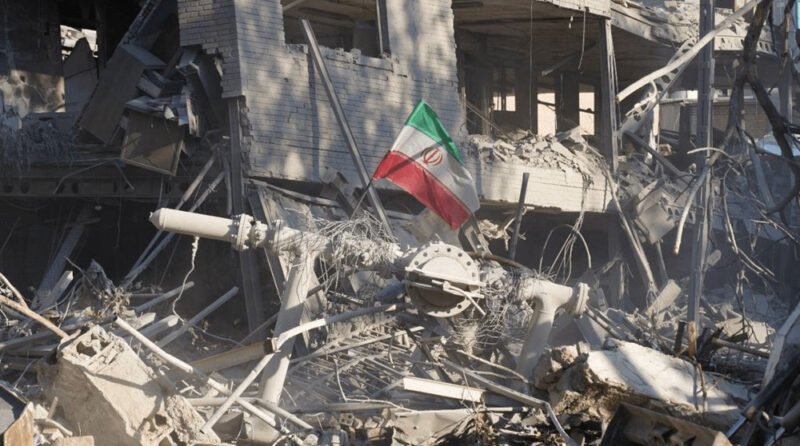
Despite those assurances, Iranian forces have targeted sites across the Gulf since US-Israeli airstrikes killed Supreme Leader Ali Khamenei on February 28. Some attacks have struck civilian infrastructure.
Thirteen people, including seven civilians, have been killed in Gulf countries since the war began. Among them was an 11-year-old girl in Kuwait who died after being hit by falling debris in a residential neighborhood.
Iran’s parliamentary speaker, Mohammad Bagher Ghalibaf, reinforced the confrontational message, arguing that “as long as American bases exist in the region, countries will not see peace.”
The dual messaging — apology paired with escalation — reflects Tehran’s balancing act. On one hand, it seeks to deter regional cooperation with Washington. On the other, it risks pushing wary Gulf states closer to the United States by widening the battlefield.
For Gulf capitals that have long tried to insulate themselves from direct confrontation, the warning sharpens an already stark choice: maintain neutrality under fire, or openly align in a war they insist is not theirs.